Archery Cafes in Seoul: Korea's Most Unique Recreation Trend

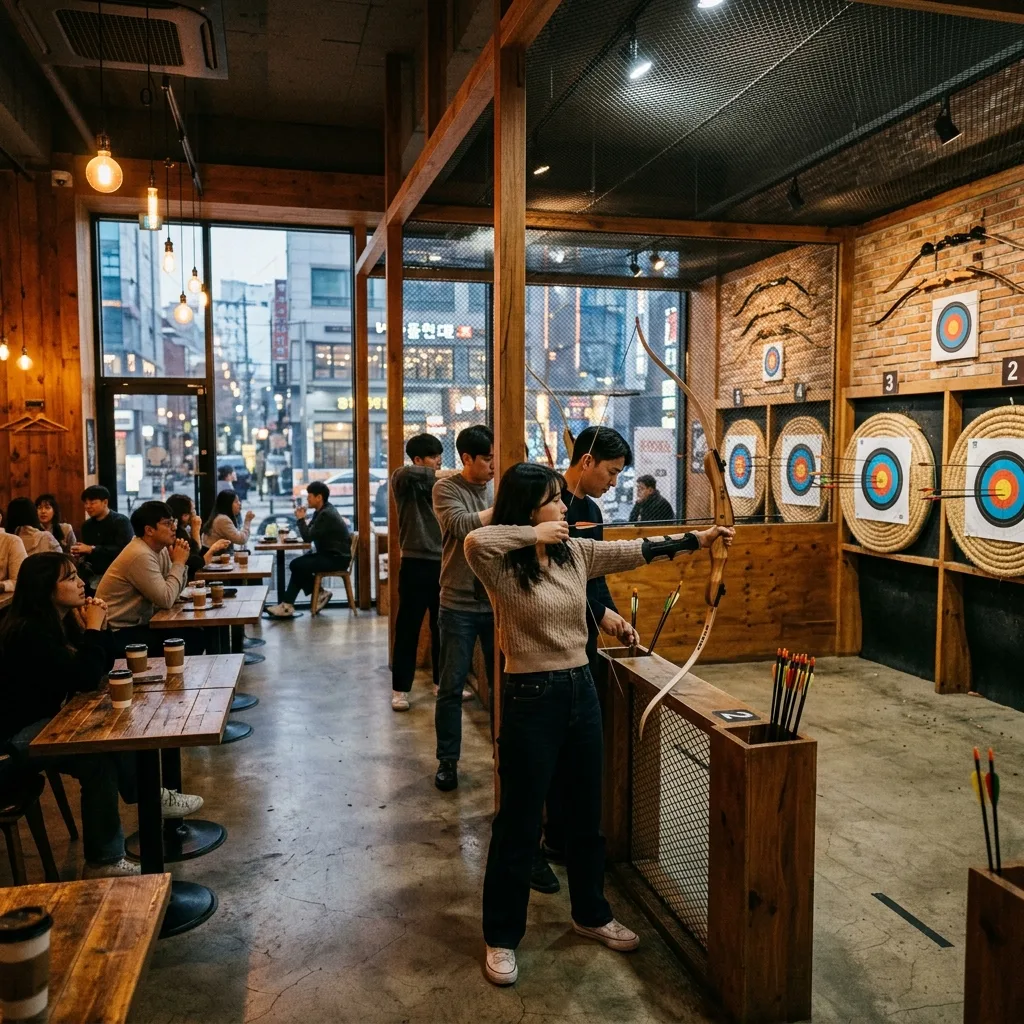
Seoul is full of things you can only really understand once you try them in person, and archery cafes are one of the best examples. They look unusual, sound a little niche, and then turn out to be exactly the kind of hands-on, low-pressure activity that makes a trip feel memorable. If you are looking for a Seoul experience that is not another shopping street, karaoke room, or standard coffee stop, archery cafes deliver a rare mix of novelty, focus, and fun.
Introduction
If you have been trying to build a Seoul itinerary that feels fresh instead of repetitive, archery cafes deserve a spot on your list. They solve a common travel problem: what do you do in a city when you want something active, social, weatherproof, and a little different from the usual tourist circuit? Archery cafes answer that with an indoor experience that works for solo travelers, couples, small groups, and even travelers who have never touched a bow before.
For first-time visitors, the appeal is not only the sport itself. It is the whole format. You usually walk into a compact indoor space, get a brief safety explanation, learn how to hold the bow, and start shooting at a target lane under the guidance of staff. The activity is structured enough to feel safe and beginner-friendly, but casual enough that you do not need to be an athlete or a hobby archer to enjoy it. That balance is what makes the trend so distinct in Seoul.
In this guide, you will learn why archery cafes fit Seoul so well, what a first visit usually looks like, which current Seoul spots are worth knowing about, and how to plan around opening hours, transit, and reservations. I will also cover the mistakes most first-timers make, plus a short FAQ so you can go in with realistic expectations rather than guesswork.
Why Archery Cafes Feel So Different
Archery cafes are not just “cafes with bows.” In Seoul, they sit at the intersection of recreation, date activity, and niche local culture. That matters because many travelers want an experience that feels personal without requiring a huge amount of planning. An archery cafe gives you a clear activity, a built-in learning curve, and a satisfying sense of progress in a single visit.
They are beginner-friendly without feeling childish
One reason archery cafes stand out is that they do not reduce the activity to a gimmick. The experience still feels like a real sport. You are using proper equipment, following lane rules, and working toward accuracy. At the same time, the format is forgiving enough that beginners can enjoy it immediately. Staff usually help with stance, grip, and aim, which means the learning curve starts low and improves quickly.
That matters for travelers because it removes the “I am not good at this, so I should not try” barrier. You do not need prior training, and you do not need a long commitment. A first session is usually enough to understand the basic mechanics and have a good time. That is very different from activities that require a lesson package, specialized gear, or a full day of commitment.
Seoul is a strong fit for this kind of indoor recreation
Seoul is dense, transit-connected, and full of neighborhoods that people already explore on foot. That makes it easy to add a compact indoor activity between bigger sightseeing stops. If the weather turns hot, rainy, or icy, archery is one of the easier “replace the outdoor plan” options because it does not depend on sunshine or a large venue.
It also fits the way many visitors move through the city. A traveler might spend the morning in the historic core, pause for lunch, then head to Sinchon, Hongdae, or Gangnam for an evening activity. An archery cafe can fit into that kind of schedule much more naturally than a full museum visit or a suburban day trip.
If you are already mapping out a broader route, it helps to pair the activity with one of your existing neighborhood plans. For example, readers planning a fuller city itinerary can use The Ultimate Seoul Travel Guide: Where to Stay & What to See to organize districts first, then slot an archery stop into the right part of the day.
It is social, but not noisy
Another reason archery cafes work is that they hit a sweet spot between social and focused. You can talk to friends or a partner between shots, but the activity itself creates enough concentration that it never feels empty. That combination makes it ideal for travelers who want something memorable without the loud chaos of nightlife.
If you enjoy activities that have a visible skill element, you will probably appreciate archery more than another themed cafe visit. There is a simple, satisfying loop: listen, try, adjust, improve, repeat. That loop is addictive in a calm way. Even if you are not competitive, seeing your shots tighten up over 20 or 30 minutes is surprisingly rewarding.
What a First Visit Actually Looks Like
At a good archery cafe, a first visit usually follows a simple rhythm: arrival, briefing, setup, practice, scoring, and a final free-shooting stretch if the staff allows it. The exact flow varies by shop, but the basic structure is consistent enough that you can walk in prepared.
Step 1: Check in and get oriented
When you arrive, staff will usually ask whether you are a beginner. If you are, they will explain the lane rules and how the session works. This part is worth paying attention to, because the safety instructions are not there for decoration. Archery is controlled and safe when done correctly, but it relies on staying behind the line, handling arrows properly, and shooting only when the lane is clear.
For travelers worried about language, the good news is that the core instructions are easy to demonstrate physically. Even when English is limited, staff can usually show stance, finger placement, and where to stand. One current TripAdvisor review for Sinchon Robinhood Archery Cafe described helpful guidance for a first shoot, which is exactly the kind of support you want on a first visit.
Step 2: Learn the basics of form
You generally start by learning how to hold the bow and position your body. Good archery is more about consistency than strength. Most beginners expect it to be an arm exercise, but the first lesson is usually about stance, shoulder alignment, and steady release. If the staff is attentive, they will correct the common mistakes immediately.
This is where archery cafes differ from generic entertainment venues. You are not just renting a lane and hoping for the best. The staff are part of the experience, and that coaching is a big part of why beginners leave with the feeling that they actually learned something.
Step 3: Shoot, adjust, and score
Once you start shooting, the activity becomes more intuitive than you might expect. The first arrows usually tell you whether you are gripping too hard, leaning too much, or releasing unevenly. You will almost always see improvement within the first few rounds.
That quick feedback loop is one reason archery feels so good as a travel activity. It gives you measurable progress in a short period. You are not waiting for a giant outcome; you are adjusting shot by shot. If you are traveling with friends, the scoring element adds a playful layer without making the atmosphere intense.
Step 4: Stay longer if the place allows it
Some visitors treat archery as a quick novelty stop. Others stay much longer because they get hooked on the learning curve. A Tripadvisor reviewer for Sinchon Robinhood Archery Cafe said they stayed longer than expected because the experience was so enjoyable. That is a useful sign: the venue works not just as a curiosity, but as a place you can actually spend meaningful time in.
If you only have one or two hours free, that is usually enough. But if you are building a relaxed Seoul day and want a break from walking, an archery session can easily become the centerpiece rather than the filler.
Practical Guide
This is the section most travelers actually need: where to go, how the hours look, what prices are publicly visible, and how to avoid showing up at the wrong time.
Current Seoul spots worth knowing
Sinchon Robinhood Archery Cafe
Sinchon Robinhood Archery Cafe is one of the clearest Seoul archery-cafe listings currently visible in public travel sources. It is located at 32 Myeongmul-gil in Seodaemun-gu, on the 4th floor, and TripAdvisor currently lists it as about a 5-minute walk from Sinchon Station. The same listing shows opening hours of 1:00 PM to 11:00 PM on weekdays and Saturday, with Sunday hours ending at 10:00 PM.
That schedule makes it especially useful for afternoon and evening plans. If you are already spending time in the Sinchon or Hongdae orbit, it is easy to add after lunch, before dinner, or as a rainy-day indoor backup. It also pairs well with a neighborhood walk, so you can treat the archery stop as part of a wider west-Seoul itinerary.
Archery Center in Seoul
Another current listing to know is Archery Center in Seoul. TripAdvisor currently shows it near Nonhyeon Station, about a 9-minute walk away. The listed hours are 2:00 PM to 10:00 PM Monday through Friday, 2:00 PM to 11:00 PM on Saturday, and 2:00 PM to 10:00 PM on Sunday.
That schedule is a little later in the day than Sinchon Robinhood, which makes it useful if you are building a Gangnam-area evening. It is also a good reminder that archery cafes are not all identical. Some lean into after-work and late-afternoon traffic, while others are more convenient for early evening visitors.
Hours, admission, and prices
Here is the honest version: the public listings I found for current Seoul archery cafes clearly show hours and addresses, but they do not consistently show a posted walk-in price. That is common in small activity businesses in Korea. Some places package the visit as a lesson plus a fixed number of arrows, while others prefer to confirm the rate directly by phone or direct message.
For that reason, the safest current advice is to treat any unseen pricing as something to confirm before you go. If you are building a tight schedule, message the cafe ahead of time or call the number listed in the business profile. For Sinchon Robinhood Archery Cafe, MapQuest currently shows a contact number and an Instagram link on the business profile, which suggests direct contact is part of the normal booking process. For Archery Center, the current TripAdvisor listing says “reach out directly,” which points in the same direction.
If you want a practical budget rule, plan for a paid beginner session rather than assuming free admission. The exact amount may vary by package, session length, and whether equipment or instruction is bundled. In other words, do not base your plan on a fixed public ticket price unless the shop has confirmed it recently.
How to get there
For travelers using Seoul’s subway, this is one of the easiest parts of the experience. The current Sinchon Robinhood listing places it close to Sinchon Station, which makes it convenient for anyone already moving through the western university and nightlife districts. Archery Center’s current listing places it near Nonhyeon Station, which is better for the Gangnam side of the city.
That transit convenience is a major reason these places work so well for visitors. You are not committing to a complicated suburban transfer. You are choosing a district you were probably going to visit anyway, then dropping in for a compact activity.
If you are building a neighborhood-based itinerary, remember that Seoul rewards clustering. A day in Sinchon can be combined with Hongdae browsing and late-night snacks, while a Gangnam plan can be combined with shopping, cafes, and dinner. If you need help deciding which neighborhoods to pair with your stop, use Hongdae Street Performances: The Ultimate 2026 Guide to Seoul's Living Stage for the west side of town and Myeongdong Shopping Guide: Best Beauty Brands and Street Food if your day is already centered on central Seoul shopping streets.
Booking links and reservations
I did not find a clean official online booking flow in the current public search results for the two Seoul archery spots above. That does not mean reservations are impossible. It usually means the business prefers direct contact, local-platform messaging, or same-day walk-ins depending on traffic.
For travelers, the practical takeaway is simple: do not assume a walk-in policy, but also do not overcomplicate it. Check the business profile, confirm the time you want, and ask whether the package includes instruction, a set number of arrows, or lane time. If you are visiting during a busy evening or on a weekend, direct contact is smarter than hoping the venue will have a last-minute opening.
Best time to go
The best time depends on your itinerary. For a more relaxed feel, weekday afternoons are usually easier because the lanes are less likely to be full. For a more social atmosphere, early evening can be fun because the space often has more energy and the activity feels like a natural pre-dinner plan.
If you are trying to avoid rushed travel pacing, I would treat archery as a two-hour block, not a ten-minute novelty stop. That gives you enough time to learn the basics, warm up, and actually improve. It also leaves room for transit and a snack afterward, which matters more than people expect.
Tips & Common Mistakes
The biggest mistake first-timers make is treating archery as if it were just another casual arcade activity. It is casual in format, but it still rewards attention. The people who enjoy it most are the ones who slow down long enough to listen to the basic instructions and adjust their form.
Wear clothing that lets you move cleanly
Avoid oversized sleeves, dangling accessories, and anything that interferes with your draw hand or elbow line. You do not need special sportswear, but you do need clothes that stay out of the way. A fitted T-shirt, comfortable pants, and shoes you can stand in for a while are enough.
Do not rush the first three arrows
The first arrows are not about score. They are about calibration. Your stance, shoulder position, grip pressure, and release are all being established at once. If you rush through them, you miss the chance to improve quickly. Slow down and treat the first round as learning, not performance.
Ask for correction early
If the staff offers help, take it. Small corrections at the start make a huge difference. Even a tiny adjustment to elbow height or the way you anchor the string can tighten your shots more than brute force ever will.
Do not overestimate how much strength matters
Beginners often assume archery requires arm power. In reality, clean technique matters more than strength. If you are tense, your shots will usually scatter. If you are relaxed and consistent, you will probably shoot better than you expected. This is one of the reasons archery is so satisfying as an intro activity.
Plan around the neighborhood, not just the venue
The best Seoul archery stop is the one that fits the rest of your day. If you are already near Sinchon, make the archery cafe part of a western Seoul plan with food and student-district energy. If you are in Gangnam, build it into a smoother evening schedule. That is a better use of time than forcing the activity into the wrong side of the city just because it sounds interesting.
Do not confuse novelty with quality
Some travelers choose strange-sounding activities because they sound photogenic. Archery cafes work better than that because the activity itself is the draw. You should still care about the quality of instruction, the lane setup, and the convenience of the location. The novelty matters, but the experience has to function well enough to be worth your travel time.
Use it as a break, not a replacement for a full day
Archery cafes are best when they complement a broader Seoul plan. They are excellent as a reset between walking-heavy attractions, as a rainy-day fallback, or as a date-night activity. They are not the kind of place you need to build an entire day around unless you are a serious hobbyist. Think of them as a strong supporting experience with memorable upside.
FAQ
Is an archery cafe in Seoul good for complete beginners?
Yes. That is arguably the main audience. The format is designed to be approachable, with staff guidance, clear safety rules, and a short learning curve. If you can follow instructions and keep your attention on the lane, you can usually have a good first session even with no prior experience.
How long does a session usually take?
Most travelers should plan for about one to two hours. That gives you enough time to check in, learn the basics, shoot several rounds, and settle into the rhythm of the activity. If you are the type of traveler who likes to move slowly and practice, you may stay a little longer.
Do I need to book in advance?
Not always, but you should not assume walk-in availability. Current public listings for Seoul archery cafes do not always show a clean reservation widget, so direct contact is the safest approach. If you are going on a weekend or with a group, ask ahead rather than gambling on an open lane.
What should I wear?
Wear comfortable, non-restrictive clothes that allow your arms to move freely. Avoid anything that tangles around your draw arm or hand. There is no need for specialized athletic gear, but neat, practical clothing makes the experience easier and safer.
Is it worth doing if I only have a short stay in Seoul?
Yes, if you want one activity that feels both local and memorable. It is compact, weatherproof, and easy to fit into a transit-based itinerary. For shorter trips, that combination matters a lot because it gives you a strong experience without consuming a whole day.
Which neighborhood is best for an archery cafe visit?
Sinchon is a strong choice if you want to combine the session with Hongdae and the city’s younger, livelier west-side energy. Nonhyeon is a strong choice if you are already spending time in Gangnam. The best neighborhood is the one that matches the rest of your route.
Conclusion
Archery cafes are one of Seoul’s most unexpectedly practical travel experiences. They are unusual enough to feel memorable, structured enough to feel safe, and flexible enough to fit into real-world itineraries. For beginners, they offer an easy entry into an activity that looks more intimidating from the outside than it feels once you are actually standing at the lane.
The current Seoul options I found, including Sinchon Robinhood Archery Cafe and Archery Center, both show convenient hours and transit access, which is exactly why the trend works so well in a city like Seoul. You can pair the activity with a bigger neighborhood plan, go after lunch, use it as a rainy-day substitute, or turn it into a relaxed evening outing.
If you are assembling a Korea itinerary and want more ideas beyond the obvious tourist checklist, archery cafes are worth the detour. They give you a small challenge, a bit of coaching, and a concrete memory to take home. That combination is hard to beat when you are trying to make a city trip feel personal rather than generic.
For more Seoul planning ideas, browse the neighborhood guides linked above and use them to build a day that combines food, walking, and one unusual indoor activity. That is usually the easiest way to turn an interesting stop into a genuinely good travel day.