Where to stay in Seoul: a neighborhood decision guide
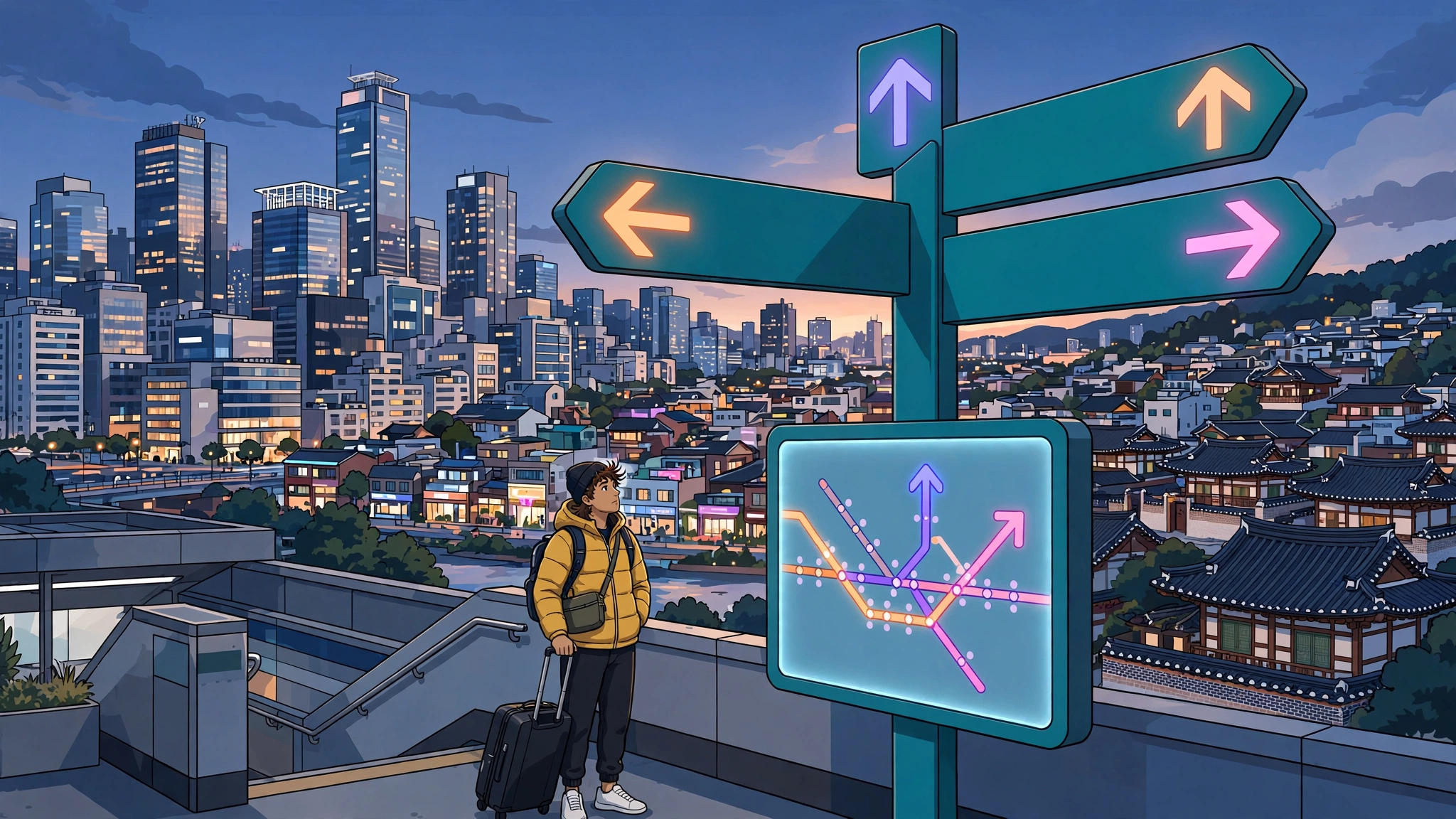
Last-train times and late-night taxi fares from Hongdae, Gangnam, and Jongno
Seoul subways stop near midnight. Your neighborhood decides if late nights end with a cheap train or a costly taxi. Hongdae trains run latest, Gangnam follows, Jongno closes earliest. Always check your station last-train time on arrival, as weekend times differ.
Hongdae rewards night owls. The area around Hongik University station stays loud until 2am, and even if you miss the last train, the taxi fare to most central hotels runs 15,000 to 25,000 won. Gangnam is pricier after midnight: the wide avenues mean longer taxi rides, and late-night fares from Gangnam to Hongdae or Jongno often land between 25,000 and 40,000 won. Jongno is the calm choice. Its guesthouses sit near palaces and traditional streets that go quiet by 10pm, so you will rarely need a late taxi at all, but if you do venture out to Hongdae for the night, budget for the ride back.
The practical move is to match your base to your bedtime. If you plan late dinners and bar-hopping, Hongdae keeps your transport costs low. If you are an early riser chasing palace opening times, Jongno puts you within walking distance of Gyeongbokgung before the crowds. Gangnam suits business travelers who expense their taxis and want the COEX and Apgujeong corridors close by. Write down the last-train time for your station on day one; it is the single most useful number for planning your evenings.
Airport limousine stops and AREX stations serving each neighborhood
Getting from Incheon Airport to your neighborhood sets the tone for the whole trip, and each area has a different best option. Hongdae is the easiest: the AREX airport railroad stops at Hongik University station, delivering you from the airport in about 45 minutes for a fraction of a taxi fare. The airport limousine buses also serve Hongdae with stops along the main road, which helps if you carry heavy luggage and want to avoid subway stairs.
Jongno has solid limousine bus coverage, with stops near Jongno 3-ga and Anguk that drop you within walking distance of most guesthouses in the area. The ride takes 60 to 80 minutes depending on traffic, and buses run frequently through the evening. There is no direct AREX station in Jongno itself, so you would transfer at Seoul Station if you prefer the train, which adds a connection with luggage.
Gangnam is the trickiest airport arrival of the three. The limousine buses serve the area well, but the ride can stretch past 90 minutes in traffic, and the bus stops are spread along the wide boulevards, sometimes leaving a 10-minute walk with your bags. The SRT and subway connections from Suseo help if you land during rush hour, but for most travelers the limousine bus remains the simplest choice. If your flight lands late at night, confirm the last bus departure before you leave the terminal; missing it means a taxi that can cost 70,000 won or more to Gangnam.
For departures, reverse the logic. Hongdae's AREX access makes early-morning flights painless. Jongno travelers should allow extra buffer for the bus. Gangnam travelers should seriously consider booking a private transfer for dawn flights, because the first limousine buses may not align with check-in times.
Which subway transfers punish travelers with heavy luggage
Seoul's subway is excellent until you try to change lines with a 23-kilo suitcase. Some transfers are short and flat; others are quarter-mile underground marathons with stairs. Knowing the difference before you book your neighborhood saves real pain on travel days.
Hongdae's Hongik University station is one of the kinder hubs: the AREX, Line 2, and Gyeongui-Jungang lines connect through relatively compact passages, and elevators are well marked. Myeongdong station, by contrast, is notorious for long transfer corridors and staircases that punish heavy bags. If you stay in Myeongdong, plan to minimize transfers on your arrival and departure days, or take the limousine bus instead.
Gangnam station is vast. The transfer between Line 2 and the Sinbundang line involves long walks, and the station's many exits can leave you 15 minutes from your hotel even after you surface. Jongno's stations are older and smaller, which paradoxically helps: shorter distances, fewer escalators to hunt for, but also fewer elevators, so check the station map for the elevator icon before you commit to a route with luggage.
The general rule: on travel days, prefer direct lines over optimal routes. A 40-minute direct ride beats a 25-minute two-transfer sprint when you are hauling bags. Seoul's subway apps show elevator locations and transfer distances; spend two minutes checking before you roll your suitcase into a station. And if your accommodation is near a station with a reputation for stairs, the airport limousine bus becomes the better choice regardless of what the map says.
Euljiro's retro revival: the after-dark pick for repeat visitors
If you have done Seoul before and want a neighborhood with character, look at Euljiro. This old industrial district between Jongno and Chungmuro has reinvented itself as Seoul's retro-hipster quarter, with machine shops by day and moody bars and eateries by night. It is the after-dark pick for repeat visitors who found Myeongdong too polished and Hongdae too young.
Euljiro's appeal is its texture. The alleys mix decades-old tool shops with vinyl bars, craft beer pubs, and late-night noodle joints. Prices run lower than Gangnam, and the crowd skews toward Koreans in their late twenties and thirties rather than tour groups. For a Singapore traveler who has already seen the palaces and wants to feel the city's working pulse, an evening in Euljiro delivers something the guidebook neighborhoods do not.
Logistically, Euljiro sits between Euljiro 3-ga and Euljiro 4-ga stations on Line 2, putting you one stop from Dongdaemun's late-night shopping and two stops from Hongdae's nightlife via transfer. The airport limousine buses serving nearby Jongno and Chungmuro stop within a 10-minute walk. Accommodation here leans toward business hotels and renovated motels rather than guesthouses, which suits travelers who want a comfortable base without the hostel scene.
The trade-off is mornings: Euljiro wakes up late, and breakfast options near the alleys are thin before 9am. But if your trip rhythm runs late anyway, and you have already checked off the first-timer sights, Euljiro gives you a Seoul that feels discovered rather than toured. Pair it with a hanok guesthouse night in Bukchon earlier in the trip, and you will have experienced both the city's most traditional and most reinvented faces.
Putting it together: a decision worksheet
Start with your flight times. A late arrival favors Hongdae for the AREX; an early departure favors whatever minimizes your dawn transfer. Then rank your evenings: late nights point to Hongdae or Euljiro, calm evenings to Jongno, expense-account comfort to Gangnam. Then check your luggage situation against the transfer realities above. The neighborhood that wins two of these three rounds is your base.
One more consideration for Singapore travelers: the direct flights land at Incheon, and the AREX plus limousine network makes Hongdae and Jongno the lowest-friction choices for a first trip. Gangnam earns its place on business trips or shopping-heavy itineraries where the COEX mall and Apgujeong flagships justify the taxi budget. Euljiro is the connoisseur's pick for trip two or three.
Whatever you choose, book accommodation within a five-minute walk of a station exit you have verified on the map, and screenshot the last-train time on your first night. Seoul rewards travelers who plan their nights as carefully as their days, and the right neighborhood makes every evening end the way you want it to.
Night buses and late-night alternatives worth knowing
When you miss the last train, Seoul's night buses (the N-prefixed routes) cover the major corridors until the early hours. The N26 runs through Hongdae and Mapo, the N61 serves Gangnam, and several N routes pass through Jongno. Fares are slightly higher than daytime buses, but at around 2,500 won they beat any taxi. The catch is frequency: night buses run every 30 to 40 minutes, so check the real-time arrival on a transit app before committing to a cold wait.
Taxis are the fallback everyone knows. Regular taxis add a late-night surcharge between midnight and 4am, roughly 20 to 40 percent depending on the exact hour. From Hongdae to Jongno at 1am, expect 18,000 to 25,000 won. From Gangnam to Hongdae at the same hour, 30,000 to 45,000 won is normal. Kakao T works for foreigners with international phone verification, and booking through the app avoids the rare but real problem of drivers refusing short fares late at night. Have your destination written in Korean on your phone; most drivers navigate better with the Korean address than with English.
For groups of three or four, a taxi often beats the night bus on both cost and comfort. Split four ways, a 30,000-won ride is 7,500 won each, barely more than the bus, with door-to-door service. Solo travelers should lean toward night buses or simply plan to be on the last train. The math changes with every extra person, so decide your late-night transport strategy with your group size in mind.
Seasonal and event-night exceptions
Seoul's transport patterns shift on event nights and holidays. During the Bosingak bell-ringing on New Year's Eve, the subway runs extended hours, and Jongno becomes the best base in the city because you can walk to the ceremony. Cherry blossom season in April and autumn foliage weekends pack the trains to Yeouido and the palaces, making Jongno's walkability worth a premium. If your trip coincides with a major event, check for extended subway hours; Seoul Metro announces them a few days ahead.
Rain changes the calculus too. A rainy evening makes the taxi queue at Hongdae's main exits brutal, while Jongno's covered arcades and shorter distances keep you drier. Summer monsoon season (late June through July) is when Gangnam's wide, exposed boulevards feel longest. None of this should override your main decision, but if you are choosing between two neighborhoods you like equally, pick the one whose rainy-day behavior suits your travel style.
Winter brings its own logic. Seoul's January nights drop well below freezing, and waiting for a night bus at midnight in -10°C is miserable. In winter, prioritize neighborhoods where your evening plans sit within a short walk of your bed: Hongdae's compact bar streets or Jongno's guesthouse alleys beat Gangnam's long blocks. The subway's heated platforms help, but the walk at either end is what you will remember.
Day-trip connectivity from each base
Your neighborhood also shapes your day trips. From Hongdae, the Gyeongui-Jungang line runs west to Paju and the DMZ tour pickup points, while Line 2 connects you to Hongdae's tour bus stops for Suwon and the Korean Folk Village. Most DMZ tours pick up in Hongdae, Myeongdong, and Jongno, so any of the three works, but Hongdae's pickups tend to be earliest, which matters on a 7am departure.
Jongno is the best base for palace-heavy days and for tours heading north. The Gyeongbokgung, Changdeokgung, and Bukchon areas are walkable from most Jongno accommodation, which means you can start sightseeing at 9am while tour buses are still loading. For Suwon Hwaseong or the DMZ, Jongno's central location keeps pickup times reasonable.
Gangnam's day-trip strength is the express bus terminal. The massive Express Bus Terminal station connects to buses for Jeonju, Gyeongju, and Busan, making Gangnam the natural base if your itinerary includes an overnight in another city. The KTX from Seoul Station is faster for Busan, but the express buses from Gangnam run more frequently and cost less, which suits flexible plans.
Euljiro shares Jongno's central advantages with slightly better Line 2 and Line 3 access. From Euljiro 3-ga, you reach Seoul Station in 15 minutes for KTX connections and Dongdaemun in one stop for the night markets. It is the sleeper pick for travelers who want centrality without the Myeongdong crowds.
Booking tactics: when and where to reserve
Book your Seoul accommodation as soon as your flights are fixed, especially for autumn foliage season (late October to mid-November) and cherry blossom week (early April), when the best-located guesthouses fill two months out. Hongdae's popular hostels and Jongno's hanok guesthouses have limited rooms; Gangnam's business hotels have deeper inventory and more last-minute availability.
For hanok stays specifically, weekends sell out first, and many traditional guesthouses require a two-night minimum on Fridays and Saturdays. If your dates are inflexible, book the hanok night first and build the rest of the itinerary around it. Weekday hanok rates can run 20 to 30 percent cheaper than weekends, which is worth knowing if your schedule has any flex.
Read recent reviews for noise complaints before booking in Hongdae; the nightlife that makes the area fun also makes some streets loud until 3am. Look for guesthouses on the quieter side streets north of the main bar strip, or bring earplugs as insurance. In Jongno, check whether your guesthouse sits on a hill; Bukchon's beautiful lanes are steep, and a hilltop room with heavy luggage is a workout. Gangnam's main risk is distance: verify the walk to the nearest station exit on a map, because a "Gangnam" listing can be a 15-minute walk from the subway in the wrong direction.
One final tip for Singapore travelers: the direct Scoot, Korean Air, and Asiana flights all land at Incheon Terminal 1 or 2, and the terminal decides your fastest route into the city. Terminal 1 connects directly to the AREX and limousine buses; Terminal 2 requires a shuttle train to the transportation center first. Factor in 20 extra minutes if you land at Terminal 2, and do not assume the taxi stand situation is identical at both. With your neighborhood chosen and your arrival route mapped, Seoul stops being intimidating and starts being fun.