Korea's Hanok Guesthouses: How to Stay in a Traditional Korean Home

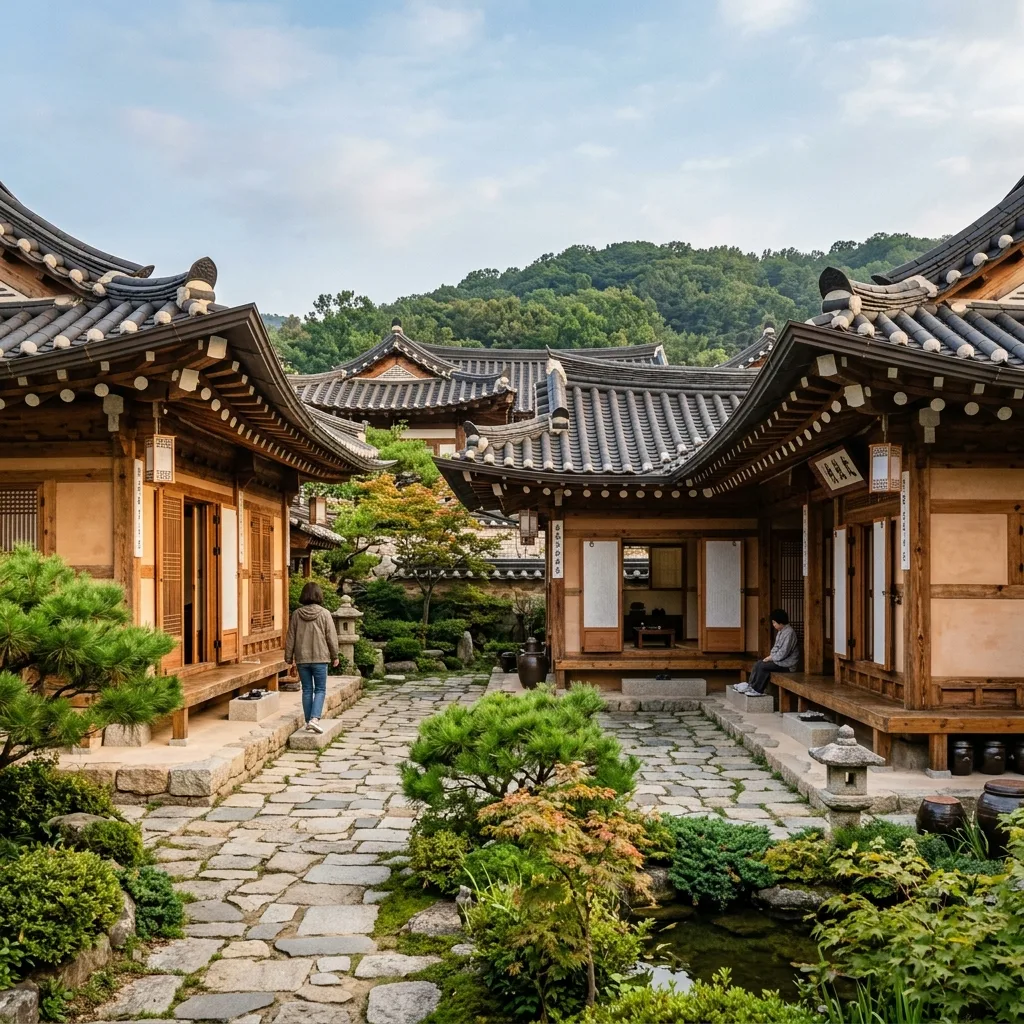
You've seen the sweeping curved rooflines in photos. Maybe you walked through Bukchon or Jeonju and peered through a wooden gate into a courtyard you wished you could wake up inside. Staying in a Korean hanok (한옥) — a traditional Korean house built with clay walls, natural timber frames, and a ondol underfloor heating system — is one of the most distinctive overnight experiences in all of East Asia. But most first-time visitors have no idea how to book one, what the etiquette is, or what the sleeping arrangements actually look like. This guide answers all of that.
What Is a Hanok?
A hanok is a traditional Korean house designed around a central courtyard (마당, madang), with rooms arranged along the perimeter under sweeping ceramic tile roofs. The architecture follows ancient Confucian principles: the layout channels natural airflow in summer, and the ondol system — a network of heated channels beneath stone floors — keeps rooms warm in winter. Building a hanok requires sourcing pine timber, clay, stone, and ceramic tiles in precise combination, which is why the best-preserved examples are protected as cultural heritage.
For travelers, "staying in a hanok" usually means booking a room in a privately operated hanok guesthouse (한옥 게스트하우스). These are traditional homes that have been adapted for paying guests — sometimes with private en-suite bathrooms, sometimes with shared facilities, but always with the structural character of the original architecture intact. You sleep on a yo (요), a thick quilted floor mattress, directly on the ondol-heated floor. Beds with frames are rare unless the property specifically markets Western-style sleeping.
The Big Three Hanok Destinations
Seoul — Bukchon and Ikseon-dong
Seoul has two main hanok neighborhoods. Bukchon Hanok Village (북촌 한옥마을) sits on a hillside between Gyeongbokgung Palace and Changdeokgung Palace in central Seoul. The lanes here are steep and narrow; the hanoks are dense. Properties in Bukchon tend to run on the higher end — expect ₩100,000–₩250,000 per night ($75–$190 USD) for a private room, with some boutique properties charging ₩300,000+ for entire courtyards.
Ikseon-dong (익선동), just east of Changdeokgung, is a compact neighborhood of low-rise hanoks that has been partly converted into cafés, cocktail bars, and boutique accommodation. It feels more lived-in than Bukchon and tends to attract younger travelers. Prices are slightly lower, and the nightlife nearby makes it a better fit if you want evening activities within walking distance.
If you are trying to decide between Seoul's two major hanok clusters and want a deeper breakdown, Bukchon vs Jeonju: Which Hanok Village Should You Visit? compares both neighborhoods across atmosphere, accessibility, and value.
Jeonju — The Hanok Capital
Jeonju Hanok Village (전주 한옥마을) in North Jeolla Province contains roughly 700 traditional hanoks clustered in a single neighborhood — the largest intact hanok district in Korea. Unlike Bukchon, which is primarily residential, Jeonju's hanok village is built around tourism and food culture. Bibimbap, kongnamul gukbap, and makgeolli bars line every lane.
Hanok guesthouses in Jeonju are typically more affordable than Seoul: private rooms start around ₩50,000–₩80,000 per night ($38–$60 USD), and entire hanok rentals can be found for ₩100,000–₩200,000. The experience here is more intimate than a hotel; many properties are operated by the family that lives on-site, and you share the courtyard with the owners.
Jeonju is also a food destination in its own right. For a deeper look at what to eat and where to eat it while you are there, Eat, Pray, Sleep: A Foodie's Guide to Jeonju Hanok Village covers the neighborhood's best dishes in detail.
Gyeongju — History Layered Over History
Gyeongju (경주), the ancient Silla capital in North Gyeongsang Province, offers a third category of hanok stay: properties surrounded by burial mounds, stone pagodas, and palace ruins. The density of UNESCO-listed sites in Gyeongju means that even an average hanok guesthouse has a royal tomb or ancient wall within a five-minute walk. Prices are similar to Jeonju, and the atmosphere is notably quieter — Gyeongju draws serious history travelers more than the Instagram-photo tourist crowd.
What It Actually Feels Like to Sleep in a Hanok
The Ondol Floor
The ondol system is the defining sensory experience of a hanok stay. Underfloor heating channels, historically fired by wood, now mostly run on hot water pipes or electric elements beneath stone or wooden floors. When you lie down on your yo at night, the warmth radiates up from below rather than blowing down from above. It is genuinely different from any hotel heating system — dry and enveloping rather than forced-air dry.
In summer, ondol is turned off, and the same thick walls and courtyard-facing openings that trap warmth in winter promote cross-ventilation. Traditional hanoks were designed to be cool in summer and warm in winter by managing airflow, not by running appliances.
Sleeping on the Floor
The yo is a thick quilted mattress — roughly 5–8 cm of padding — rolled out directly on the floor. A lightweight duvet goes over it. You fold everything back up in the morning and stack it in the wardrobe. This is not camping-uncomfortable; the floors are warm, the padding is adequate, and your back adapts faster than you expect. That said, if you have serious mobility issues or back problems that make getting up from floor level painful, look for a property that offers a platform bed option — some do advertise this for accessibility.
Shared vs. Private Bathrooms
Many traditional hanoks have a bathroom in a separate structure across the courtyard, which means a short walk in slippers at 3am. Budget guesthouses in Jeonju commonly have this setup. Mid-range and boutique properties in Seoul increasingly offer en-suite bathrooms added to individual rooms without altering the building's exterior. Check the listing carefully: Korean booking platforms will specify 개인 욕실 (private bathroom) vs. 공용 욕실 (shared bathroom).
The Courtyard
Even small hanoks have a courtyard (madang). This is the social heart of the property. In the morning it catches the early light; in the evening you may find the owner tending a potted garden or other guests eating takeout on the wooden deck (대청마루, daecheong maru). The courtyard makes a hanok fundamentally different from a capsule hotel or even a pension — it is a shared space that encourages slow mornings.
How to Book a Hanok Guesthouse
Best Booking Platforms
Booking.com has the widest English-language selection of verified hanok properties across Seoul, Jeonju, and Gyeongju. Listings include real user reviews and show whether bathrooms are shared or private. Search for "hanok" in the property type filter or add it to your city search.
Agoda carries strong inventory in Jeonju in particular, often with lower rates than Booking.com for the same properties.
Airbnb is worth checking for entire-hanok rentals — full courtyard properties rented exclusively to one group. These are common in Jeonju and Gyeongju and well-suited for couples or small groups who want full privacy. Prices typically run ₩150,000–₩350,000 for an entire property.
MyRealTrip (마이리얼트립) is a Korean-language platform used by domestic travelers; some properties list exclusively here and are not findable on international OTAs. If you read Korean or are booking with a Korean-speaking friend, it is worth checking.
Directly with the guesthouse — many smaller Jeonju and Gyeongju properties list their contact details on Naver Blog or Instagram. Direct booking sometimes comes with a small discount or a free breakfast add-on.
What to Look For in a Listing
- Room type: "온돌방" (ondol room) means floor sleeping; "침대방" (chimdae room) means a bed. Confirm which you are booking.
- Bathroom: 개인 욕실 = private; 공용 욕실 = shared.
- Check-in time: Many family-run hanoks have narrow check-in windows (often 3pm–8pm) and no 24-hour front desk. Message in advance if you are arriving late.
- Cancellation policy: Small guesthouses commonly have stricter cancellation terms than chain hotels. Read before you book.
- Breakfast: Most hanok guesthouses do not serve meals; a minority offer a simple Korean breakfast for an additional ₩5,000–₩15,000. Confirm in the listing.
Price Ranges (2026)
| Location | Budget (shared bath) | Mid-range (private bath) | Boutique / Full Hanok |
|---|---|---|---|
| Seoul (Bukchon/Ikseon) | ₩60,000–₩100,000 | ₩120,000–₩200,000 | ₩250,000–₩500,000+ |
| Jeonju | ₩40,000–₩70,000 | ₩80,000–₩150,000 | ₩150,000–₩300,000 |
| Gyeongju | ₩40,000–₩70,000 | ₩80,000–₩140,000 | ₩140,000–₩280,000 |
Prices fluctuate by season. Peak season (spring cherry blossom: late March–April; autumn foliage: October–November) runs 20–40% higher.
Hanok Etiquette — What to Know Before You Check In
Remove Your Shoes
You remove shoes the moment you step up from the entrance threshold (댓돌, daetdol) into the interior. Most hanoks provide guest slippers. Leave outdoor footwear neatly on the stone step.
Keep Noise Low
Hanok walls are clay over a wooden frame. Sound carries. Keep voices moderate after 10pm, avoid phone calls on speaker in shared courtyards, and skip loudspeakers entirely. Other guests in the same courtyard will hear you.
No Smoking Inside
Standard rule in all Korean accommodation, but in a hanok — which is built of timber and paper — it is non-negotiable. Designated outdoor smoking spots are common; ask staff.
Treat the Space With Care
The wooden floors, paper screens (창호지, changhoji), and clay walls are irreplaceable. Do not lean furniture against paper screens. Do not drag luggage across polished wood floors without a mat underneath. Damage deposits are uncommon, but causing damage to cultural heritage-grade structures is genuinely costly.
Breakfast Expectations
Unless the listing explicitly mentions breakfast, do not expect it. Most hanok guesthouses are small family operations without restaurant permits. The Jeonju and Gyeongju neighborhoods surrounding the guesthouses have dozens of breakfast spots within a two-minute walk.
Hanok vs. Other Cultural Accommodation Options
Staying in a hanok is one of several immersive cultural overnight options in Korea. Temple Stay Programs in Korea: A Guide to Finding Inner Peace offers a different kind of cultural immersion — monastic schedule, meditation practice, and the silence of a Buddhist mountain monastery — if you want something more structured than a guesthouse experience.
For travelers building a broader Korea itinerary, the two experiences complement each other well: a night or two in a Jeonju hanok village on the way south, then a weekend temple stay at Haeinsa or Ssanggyesa on the return north.
Tips and Common Mistakes
Book early for peak season. The best hanok guesthouses in Jeonju and Bukchon — the ones with proper courtyards, excellent ondol, and helpful owners — fill up 4–6 weeks ahead during spring and autumn. Budget properties in shoulder season can still be found a week out, but do not count on it.
Read the room type twice. The most common complaint in reviews is guests who expected a bed and got a floor mat, or vice versa. Korean listing titles often omit this; it is buried in the room detail. Check "온돌" vs "침대" before finalizing.
Pack light or use luggage storage. Hanok alleys — especially in Bukchon — are steep and narrow. Rolling a large suitcase up cobblestones is a physical challenge, and most guesthouses do not have elevators or luggage storage. If you are arriving with large bags, consider sending them via luggage delivery service (짐보관) from your previous accommodation.
Visit the neighborhood at night. Both Bukchon and Jeonju look dramatically different after dark, when most day-trippers have left. The lanterns, the stone lanes, and the quiet are the actual experience — not the busy afternoon Instagram crowds.
Communicate arrival time. Unlike a chain hotel, a family-run hanok may not have anyone at the front when you arrive if you have not warned them. Send a message via the booking platform or KakaoTalk with your expected arrival time.
Winters are genuinely cold. Korean winters (December–February) bring below-freezing nights, and while ondol heating is effective, uninsulated hanok walls can make rooms feel chilly before the heating gets going. Ask about heating capability and whether the bathroom is heated if you are visiting in winter.
Frequently Asked Questions
What to Check Before Booking
Before you reserve a hanok guesthouse, confirm three things: room type, bathroom setup, and arrival instructions. Those are the details that matter most, and they are the details most likely to surprise first-time guests if they skim the listing.
If the property is clear about those basics, the stay usually goes smoothly. If the listing is vague, keep looking.
Is staying in a hanok guesthouse comfortable for Western travelers? Generally yes, with two caveats: floor sleeping on a yo takes one or two nights to get used to, and if you are staying in a budget property with a shared outdoor bathroom, winter nights require a short trip across the courtyard. Mid-range and above properties in Seoul have modern en-suite bathrooms and typically offer a more polished experience.
Do I need to speak Korean to book or check in? Not necessarily. Most properties listed on Booking.com, Agoda, and Airbnb can communicate in basic English via the platform's messaging system. Urban Seoul properties often have English-speaking staff. Rural guesthouses in Jeonju and Gyeongju may be Korean-only; a translation app handles check-in without trouble.
What is the best hanok village for first-timers? Jeonju is the most common recommendation: larger selection of affordable properties, the whole village is designed for cultural tourism, and the food scene is extraordinary. Bukchon is more atmospheric and more central to Seoul's sights, but rooms are pricier and the neighborhood is very busy during daylight hours.
Can I visit a hanok neighborhood without staying overnight? Yes — both Bukchon and Jeonju Hanok Village are free to walk through. Entry is always open. Staying overnight simply gives you access to the experience before and after the day-tripper crowds arrive.
Are hanok guesthouses suitable for families with young children? They can be — the open courtyard, novelty of the architecture, and floor sleeping are often delightful for kids. However, shared bathroom properties are less practical with small children, and the fragile paper screens and wooden interiors require supervision. Entire-hanok rentals on Airbnb give families more space and privacy.
What should I pack for a hanok stay? Pack slippers you are happy wearing throughout the day (most guesthouses provide them, but having your own is more hygienic). A compact duffel or soft-sided bag is easier than a hard rolling case in narrow alleys. For winter visits, bring wool socks — ondol floors are warm but it takes time to heat up after arrival.
Conclusion
A hanok guesthouse stay is not just a place to sleep — it is a window into the spatial logic and material culture that shaped Korean domestic life for centuries. Sleeping on an ondol floor, washing up in a tiled bathroom carved into a clay wall, and drinking tea in a courtyard while the neighborhood wakes up around you is genuinely unlike any other travel experience in the region. The basics are straightforward: choose your city (Jeonju for value and atmosphere, Seoul for centrality, Gyeongju for history), confirm your room type, and check in before the family goes to bed.
Start with one night if you are uncertain. Most travelers end up wishing they had booked two.