Korean Beauty Standards and the Idol Look: Understanding the Culture Behind the Trend

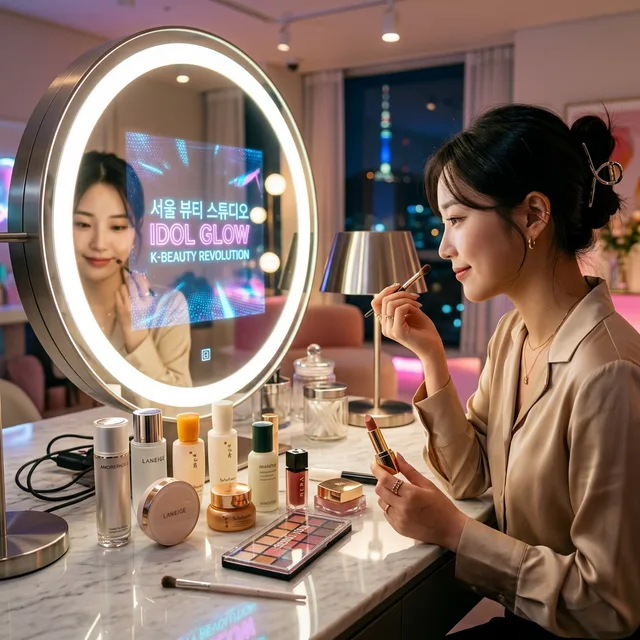
Walk through any major airport in Asia and you'll notice something: the beauty counter staff, the billboard models, even the travelers coming through — there's a luminous, youthful glow that seems to belong to a different category of human. It's not random. It's the result of a deeply embedded beauty culture that Korea has been refining for decades, and K-pop idols have broadcast it to the entire world. Here's what's really going on, and why it matters.
What Are Korean Beauty Standards? The Big Picture
Korean beauty standards didn't emerge from nowhere. They evolved through decades of intersecting cultural forces: Confucian ideals of measured elegance, postcolonial reinvention, and the explosive global reach of Hallyu beginning in the early 2000s. What emerged is a distinctly modern aesthetic philosophy — one that prizes youth, clarity, balance, and a quality best described as luminosity.
The core values can be distilled into four principles:
- Youth — an appearance that reads as fresh, unlined, and vital
- Clarity — flawless, even-toned skin without blemishes or hyperpigmentation
- Balance — harmonious facial proportions, nothing too sharp or extreme
- Luminosity — a complexion that looks alive and hydrated, not matte or heavy
These aren't just aesthetics — they're a philosophy that permeates everything from billion-dollar skincare empires to the training regimens of K-pop idol groups.
The Idol Look: Key Features Broken Down
If you want to understand what the "idol look" actually means in concrete terms, it helps to break it down feature by feature. Korean beauty standards — for both women and men — cluster around a specific and well-documented set of traits.
Skin: The Foundation of Everything
Skin is where Korean beauty culture places its most intense focus. The ideal is encapsulated by two viral terms that have now entered global beauty vocabulary:
Glass skin describes a complexion that is so smooth, clear, and reflective that it resembles polished glass. No visible pores. No texture. A natural inner glow that doesn't come from highlighter but from the skin itself. In 2025, this has evolved into Glass Skin 2.0 — the same luminosity, but with a more natural, refined finish versus the overtly "wet look" of its first wave.
Dewy skin is the sister concept — deeply hydrated, soft, and resilient, catching light softly rather than reflecting it sharply. Think "morning skin" all day long.
One uniquely Korean beauty feature is aegyo-sal (애교살) — small, pillow-like fat deposits directly under the eyes, distinct from under-eye bags. Where Western beauty culture has traditionally viewed puffiness under the eyes as a flaw to conceal, Korean beauty has long recognized that aegyo-sal creates a youthful, soft, warm expression. It's now deliberately created with makeup techniques and even cosmetic fillers.
Eyes, Brows & the Art of Softness
Double eyelids (a visible crease in the upper eyelid) have long been a central feature in Korean beauty ideals. For those without natural double eyelids, tape, glue, and eyelid surgery (blepharoplasty) are all common interventions. Soft, straight eyebrows with a gentle, understated arch complete the eye look — the goal is approachability and warmth, not drama or intensity.
Face Shape: The V-Line
The V-line jaw is perhaps the single most discussed feature in Korean cosmetic surgery circles. A small, narrow face with a jawline that tapers to a delicate point at the chin is considered the ideal. High, defined cheekbones balanced against this narrow lower face create the proportions most associated with idol beauty. Procedures like jaw reduction surgery and chin implants are among the most common cosmetic surgeries in Korea for exactly this reason.
Nose & Lips
The ideal nose features a high, straight bridge with moderate width and a slightly upturned tip — giving the face a refined vertical elevation without being sharp or angular. For lips, heart-shaped lips with slightly fuller centers and a warm, bright smile are the standard. The 2025 makeup trend for lips leans into watercolor and glossy finishes, blurry overlip techniques, and lip plumpers that enhance volume naturally.
Male Idol Beauty Standards: Soft Masculinity
Perhaps the most distinctive and globally influential aspect of Korean beauty culture is how it has redefined male beauty. The K-pop industry gave the world the 꽃미남 (kkotminam) — the "flower boy" — a male aesthetic that blends smooth, well-maintained skin with defined features, lean physiques, and intentionally soft, sometimes androgynous styling.
Male idols routinely wear foundation, concealer, tinted lip balm, and eye makeup in public appearances, photoshoots, and even casual social media content. This isn't considered feminine — it's considered groomed, professional, and attractive. The result is what researchers and beauty journalists now call soft masculinity: a presentation that rejects the traditionally rugged, weathered male ideal in favor of someone who looks cared-for, youthful, and emotionally accessible.
The global impact has been enormous. From BTS mainstreaming BB cream for men to ATEEZ and SEVENTEEN making pastel hair colors a global trend, male K-pop idols have fundamentally altered what "attractive man" means to an entire generation of fans worldwide.
In 2026, this has shifted from being an "idol thing" to a "lifestyle thing." Visit any business district in Seoul, like Yeouido or Teheran-ro, and you will see businessmen with perfectly groomed brows and subtle, skin-evening base makeup. It is no longer about "looking like an idol"; it is about "looking professional." This normalization of male self-care is one of Korea’s most successful cultural exports, leading to the rise of specialized male beauty brands like Be Ready and Dashu, which are now multi-million dollar global empires.
The 2026 "Clean Boy" Aesthetic for Men
- Skin: Focus on a blurred, poreless texture using "invisible" primer.
- Hair: The "Down Perm" is the most requested service—flattening the sides of the hair to create a sharper, more masculine silhouette.
- Scent: Moving away from heavy colognes to "Clean Linen" or "Waterfall" laundry-style scents that suggest a fresh, vital lifestyle.
How K-Pop Idols Drive Global Beauty Trends
The mechanism is elegantly simple, and it moves at extraordinary speed.
An idol appears in a music video or at an awards show with a distinctive makeup look, skincare result, or hair style → fans screenshot, dissect, and analyze the look in real time on Twitter, TikTok, and Weverse → beauty creators post tutorials replicating the look → K-beauty brands identify and launch products that deliver or approximate the effect → global consumers buy.
The idol-to-consumer pipeline is faster and more direct than any traditional fashion or beauty editorial cycle. When BLACKPINK appeared in How You Like That with glossy, high-pigment lips and crystal-clear skin, the sales of the specific products connected to their looks — even if never officially endorsed — spiked within days.
BTS has perhaps the most documented impact on the global male skincare market. The group's members openly discuss their skincare routines, endorse brands like VT Cosmetics and Dr. Jart+, and have made skincare a normalized male practice for their fanbase of hundreds of millions — including large demographics of young men in regions where male grooming was historically stigmatized.
K-Beauty Trends in 2026: The "Physio-Digital" Era
The K-beauty industry remains a global leader by constantly reinventing itself. In 2026, the focus has shifted from simple topical applications to a "Physio-Digital" approach—combining biological ingredients with smart technology.
1. Glass Skin 3.0: The "Silk Skin" Era The original "Glass Skin" was reflective; the 2025 version was refined. In 2026, the trend is "Silk Skin." This emphasizes a smooth, blurred texture that looks healthy and moisturized but with a velvety, matte-glow finish. It is achieving the look of a digital filter in real life.
2. The Rise of "Hanbang" Biotech Hanbang (traditional Korean medicine) has gone high-tech. Ingredients like fermented ginseng, licorice root, and reishi mushroom are now being extracted using ultrasonic technology to ensure maximum potency. Brands like Sulwhasoo and The History of Whoo are leading this 2026 resurgence.
3. Home-Use Aesthetic Devices In 2026, every Korean household seems to have an LED mask or a galvanic ion device. The brand Medicube has revolutionized the market with at-home devices that replicate professional clinic treatments (like EMS and Pore Suction) at a fraction of the cost.
4. Microbiome Skincare Instead of just fighting bacteria, K-beauty in 2026 focuses on nurturing the skin's "good" bacteria. Probiotic and prebiotic serums are now standard, helping to repair the skin barrier damaged by pollution and stress.
5. AI Color & Texture Matching At flagship stores like LANEIGE in Myeongdong, a robotic arm now mixes a custom foundation or lip tint for you in under 10 minutes, after an AI scanner analyzes your precise skin tone and oil levels. This "Bespoke Beauty" is the gold standard of 2026.
Comparison: Korean vs. Western Beauty Ideals (2026)
| Feature | Korean (K-Beauty) Ideal | Western (Euro-Centric) Ideal |
|---|---|---|
| Skin Finish | Dewy, Luminous, "Silk" | Matte, Sunkissed, Bronzed |
| Eyebrows | Straight, Soft, Youthful | Arched, Defined, Powerful |
| Face Shape | V-Line (Slim Jaw) | Strong Jawline, High Contrast |
| Eyes | Large, Round, "Puppy" | Almond-shaped, "Foxy", Lifted |
| Philosophy | Prevention & Hydration | Correction & Coverage |
The Cultural Pushback: "Escape the Corset" and Beyond
No honest account of Korean beauty standards can avoid the shadow side of this culture. For the past few years, a movement known as 탈코르셋 (Tal-corset / Escape the Corset) has gained significant cultural weight.
Young Korean women are increasingly rejecting the rigid expectations of "the ideal look." This movement involves cutting hair short, choosing comfort over heels, and boycotting the multi-step makeup routines that were once seen as mandatory for professional success. While the "Idol Look" remains the commercial standard, the "Escape the Corset" movement has forced a national conversation about the psychological labor of beauty.
In 2026, this has evolved into "Beauty Neutrality." Rather than strictly boycotting, many are choosing a "middle ground"—focusing on skin health for personal comfort rather than performing aesthetics for social validation.
For the Fans: Visiting the "Idol Makers"
If you're a traveler in Seoul wanting to experience the actual idol transformation, you don't go to the tourist shops. You go where the idols go.
1. The Cheongdam-dong Salon Circuit Salons like Soonsoo, ALUU, and Jennie House are where the top groups (IVE, LE SSERAFIM, aespa) get ready for their performances.
- The Experience: You can book an "Idol Makeup Experience." It takes 2–3 hours and costs between ₩250,000 and ₩500,000.
- Pro Tip: Bring photos of the specific idol look you want to replicate.
2. Personal Color & Style Mapping In 2026, shops like Color Society or Meimei offer full-day packages that include personal color analysis, face-shape mapping, and custom jewelry selection. This "Personal Branding" approach is exactly how trainees are styled before their debut.
3. Gentle Monster & Concept Stores For the fashion side of the idol look, visit Gentle Monster's Haus Dosan. These stores aren't just for sunglasses; they are immersive art installations that help you understand the vibe and mood that idols are project today.
What Travelers Can Learn from K-Beauty Culture
You don't have to adopt Korean beauty standards to benefit from the philosophy that underpins K-beauty. The most transferable insight is this: invest in your skin rather than using products to mask it. The idol glow isn't primarily makeup — it's the result of skin that has been deeply hydrated, protected from UV damage, and cleansed with care.
The Simplified K-Beauty Routine for Travelers
- Oil cleanser — dissolves sunscreen and makeup
- Gentle foam cleanser — water-based cleanse to follow
- Toner or toner pad — hydration layering
- Serum (vitamin C in the AM; retinol or PDRN in the PM)
- Moisturizer — seal in hydration
- SPF 50+ sunscreen (AM only) — mandatory in Korean beauty culture; skip this and you undermine everything else
Where to Shop in Seoul
- Olive Young — Korea's largest health and beauty chain; excellent for sampling indie K-beauty brands not available abroad
- Innisfree flagship (Myeongdong) — Nature-derived skincare with cult products
- Amorepacific flagship (Itaewon) — The premium experience: house of Sulwhasoo, LANEIGE, Hera
- Stylenanda / 3CE (Hongdae, Myeongdong) — Trendy, idol-adjacent makeup and skincare
- COSRX, Some By Mi, Dr. Jart+ — Available at Olive Young; buy direct to save vs. international retail
❓ K-Beauty FAQ for International Travelers (2026)
Q: Do I need to buy the expensive 10-step sets? A: No. In 2026, the trend is "Skinimalism." Focus on a high-quality oil cleanser, a serum with an active ingredient your skin needs (like Vitamin C or PDRN), and a solid sunscreen. Everything else is secondary.
Q: Can I get personal color analysis done in English? A: Yes. Many clinics in Hannam-dong and Apgujeong now have English-speaking consultants. It’s highly recommended to book 2–3 weeks in advance as these sessions are incredibly popular with tourists.
Q: Are K-beauty products safe for sensitive skin? A: Generally, yes. Korean regulations are strict, and there is a huge emphasis on "calming" ingredients like Cica (Centella Asiatica) and Mugwort. However, always patch test when trying new actives like high-concentration Vitamin C.
2026 Shift: Virtual Idols vs. Human Authenticity
One of the most fascinating developments in the 2026 beauty landscape is the competition between Virtual Idols (like MAVE: or PLAVE members) and human idols.
Virtual idols in 2026 display "impossible" perfection—skin that has zero texture, features that are mathematically perfect, and hair that defies physics. For a brief moment in 2024-2025, this drove a surge in high-intensity cosmetic procedures. However, in 2026, the cultural pendulum has swung back toward "Human Authenticity."
Fans are increasingly drawn to real idols who show their "imperfections"—a stray baby hair, a slight skin texture under stage lights, or a natural, non-corrected smile. This has led to the 2026 "No-Filter" beauty movement, where transparency is the new premium. While virtual idols dominate the digital charts, real-life idols are becoming the "human anchors" of beauty, proving that authenticity is a feature that AI cannot yet fully replicate.
Final Thoughts: Culture over Commerce
Korean beauty standards are a complex artifact of social history, commercial power, and genuine cultural creativity. While the 2026 landscape is dominated by high-tech gadgets and AI-driven personalization, the fundamental human desire for self-expression remains at its heart.
The glass skin, the V-line, and the idol glow can be seen as either a "beauty prison" or an "aesthetic toolkit." The most useful way to engage with them—especially as a traveler—is with curiosity and critical awareness. Take the parts that make you feel confident—the focus on hydration, the preventive care, the experimental makeup—and leave the more prescriptive standards behind.
✨ 2026: The Transition to "Health-First" Beauty
As we move through 2026, the rigid "Idol Look" is evolving into a more "Health-First" aesthetic. The trend of "Skin-imalism" has taken over Seoul's elite districts. Rather than layering heavy foundations to achieve a porcelain look, the focus has shifted to the "Skin-Vestment"—spending more time on advanced dermatological treatments to achieve "Glass Skin" naturally.
The 2026 standard is "Vitality over Perfection." This means slightly more natural eyebrows, a focus on "Inner Beauty" (supplements like edible collagen), and celebrating unique facial features that were previously "corrected" by plastic surgery. While the influence of K-pop remains massive, the new generation of idols is increasingly seen in "No Makeup" shoots, promoting a more attainable and holistic version of Korean beauty.
For those looking to dive deeper into the technical side of this aesthetic, check out our guide to Innovative Korean Beauty Tech Gadgets or learn about the Ultimate 10-Step Korean Skincare Routine. If you're planning a visit to the beauty capital, our Myeongdong Shopping Guide is an essential read for finding the best flagship stores.