Korean Bar Etiquette: Pouring, Toasting & Drinking Customs You Must Know

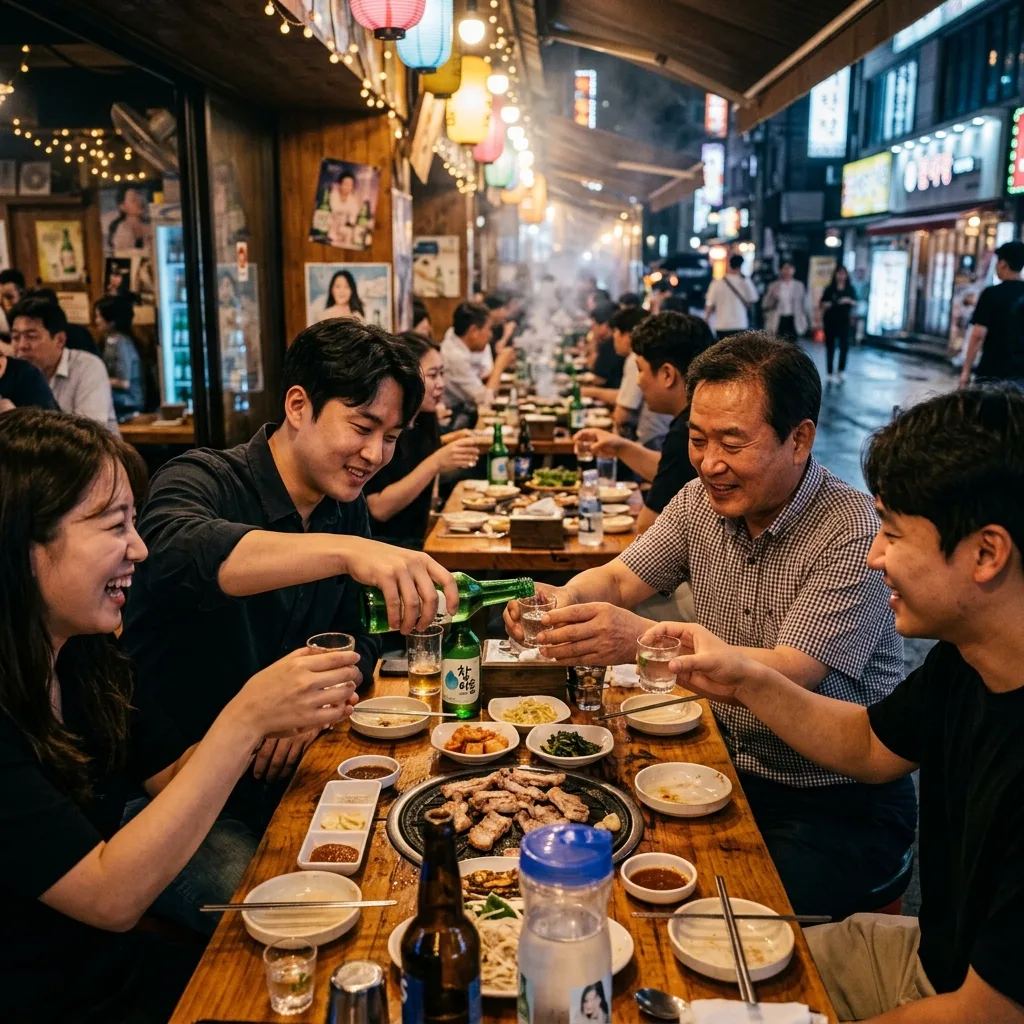
Navigating social situations in a new country can be daunting, especially when it involves traditions as rich and nuanced as Korean drinking culture. Understanding the proper way to pour a drink, offer a toast, and interact at a Korean bar is not just about politeness—it's about showing respect and truly immersing yourself in the local experience. This guide will equip you with all the essential customs, ensuring you avoid awkward moments and make a great impression among your Korean hosts and friends.
Introduction
South Korea's vibrant nightlife is rich with social customs. Understanding bar etiquette, from pouring drinks for elders to participating in energetic toasts, is key for travelers. This guide details essential Korean drinking traditions, ensuring a respectful and enjoyable experience in any Korean bar setting.
The Golden Rules of Pouring and Receiving Drinks
One of the most fundamental aspects of Korean bar etiquette revolves around the act of pouring and receiving drinks, particularly when alcohol is involved (which it often is!). These customs are deeply rooted in Confucian principles of respect for elders and social hierarchy.
Pouring for Others:
- Always use two hands: When pouring for an elder or a superior, hold the bottle or pitcher with both hands – one hand on the bottle and the other lightly supporting your pouring arm or elbow. This gesture signifies respect. For peers or those younger than you, one hand is generally acceptable, but two hands are always a safe bet and show good manners.
- Never pour your own drink: This is considered highly impolite in Korea. Always wait for someone else to pour for you. If your glass is empty, you can subtly indicate it by gently pushing your glass forward or simply waiting for someone to notice.
- Keep an eye on others' glasses: It is customary to constantly check the glasses of those around you, especially your elders or superiors, and promptly refill them when they are low or empty. This shows attentiveness and consideration.
- Fill glasses to about 80%: Don't fill a glass to the brim. A good rule of thumb is to fill it to about 80% capacity, leaving a little room.
Receiving a Drink:
- Use two hands, especially from elders: When an elder or superior pours you a drink, always receive the glass with both hands. Your right hand holds the glass, and your left hand supports the bottom of the glass or your right wrist. For peers, one hand is acceptable, but again, two hands are a sign of greater respect.
- Turn your head away when drinking: Especially if you are drinking in front of an elder or superior, it is polite to turn your head slightly away from them as you take your sip. This is a sign of humility and respect. For peers, this custom is often relaxed, but it's good practice to observe what others are doing.
- Don't drink until the eldest has: In a formal setting, or with elders present, wait for the eldest person at the table to take their first sip before you drink.
- Finish your drink before refilling: It's generally considered good etiquette to finish your current drink before accepting a refill.
These pouring and receiving customs are not mere formalities; they are an integral part of the social bonding process in Korea, reflecting a deep-seated respect for hierarchy and community. Mastering them will significantly enhance your social interactions at any Korean bar or dining experience.
The Art of the Korean Toast (Geonbae!)
Toasting is another vital component of Korean drinking culture, often accompanied by enthusiastic exclamations and collective bonding.
"Geonbae!" (건배!): This is the most common and universally understood Korean toast, equivalent to "Cheers!" or "Bottoms up!" in English. It literally means "empty your glass."
- Eye contact and smiles: When toasting, make eye contact with everyone around the table.
- Clinking glasses: Lightly clink your glass with others, especially those nearby. If you're toasting with an elder, make sure your glass is slightly lower than theirs as you clink, again, as a sign of respect.
- Collective drinking: After a toast, it's customary to take a drink, often finishing the glass, especially after a hearty "Geonbae!"
Other Toasts and Phrases:
- "Jjan!" (짠!): A more casual and playful "Cheers!" often used among friends.
- "Wihayeo!" (위하여!):: Meaning "For [something]!" or "To [something]!" This is often used with a specific purpose, such as "Uri ujeong-eul wihayeo!" (우리 우정을 위하여! - "To our friendship!").
- Responding to a Toast: If someone proposes a toast, it's polite to acknowledge it with a "Geonbae!" or by repeating the toast they proposed.
Toasting in Korea is not just about drinking; it's a moment of shared joy, camaraderie, and often, an opportunity to express appreciation and build stronger relationships. Participate enthusiastically, and you'll quickly become part of the group's infectious energy.
Understanding the "One Shot" Culture and Refusals
Korean drinking culture often features a lively "one shot" (원샷) dynamic, where participants are encouraged to finish their drinks in one gulp. While often done with good spirits, understanding when and how to participate, or politely decline, is crucial.
The "One Shot":
- When it happens: "One shot" calls usually happen during enthusiastic moments, after a toast, or when someone is particularly excited.
- Participation: While not mandatory, participating in "one shots" can be a great way to bond and show your enthusiasm. If you're comfortable, go for it!
- Pace yourself: Don't feel pressured to keep up if it's too much. Korean drinking sessions can be marathon events, not sprints.
Politically Refusing Drinks:
- It's okay to say no: Despite the enthusiastic atmosphere, it is perfectly acceptable to politely decline a drink or a "one shot." You are not obligated to drink more than you are comfortable with.
- Common excuses:
- "Jega oneul sogi jom an jowayo." (제가 오늘 속이 좀 안 좋아요. - "My stomach isn't feeling good today.")
- "Jega yageul meokgo isseoyo." (제가 약을 먹고 있어요. - "I'm taking medicine.")
- "Jeoneun sul-eul jal mot masyeoyo." (저는 술을 잘 못 마셔요. - "I'm not good at drinking alcohol.")
- Simply holding your hand over your glass when someone attempts to pour, accompanied by a polite smile and a "Gwaenchanayo" (괜찮아요 - "I'm okay" or "It's alright"), is also understood.
- Don't over-explain: A simple, polite refusal is usually sufficient. Koreans generally understand and respect personal choices regarding alcohol.
- Offer to pour for others: Even if you're not drinking, you can still participate in the social ritual by offering to pour drinks for others, especially elders. This shows you're still engaged and respectful of the customs.
Understanding how to navigate the "one shot" culture and politely refuse drinks allows you to enjoy the social aspects of Korean bars without compromising your comfort or health.
Practical Guide to Korean Bar Types and Finding Your Spot
Beyond the etiquette, knowing where to go and what to expect from different types of Korean bars will enhance your experience.
Popular Bar Types
- Hof (호프): Similar to a casual pub, hofs are common for chicken and beer (chimaek) or other fried snacks. They are relaxed, lively, and perfect for group gatherings. Many hofs have private rooms or noraebang (karaoke) facilities.
- Pochas (포차): Short for pojangmacha (포장마차), these are tented street stalls or casual indoor establishments offering a wide array of comfort food and drinks like soju and makgeolli. Pochas offer an authentic, often boisterous, Korean drinking experience.
- Izakaya (이자카야):: Japanese-style pubs that have become very popular in Korea, offering a selection of small dishes (안주, anju) and a variety of alcoholic beverages. They often have a cozy and stylish ambiance.
- Makgeolli Jip (막걸리집):: Specializing in makgeolli, a traditional Korean rice wine, these establishments offer a rustic and traditional drinking experience, often paired with savory pancakes (pajeon).
- Modern Bars & Pubs: In areas like Hongdae, Itaewon, and Gangnam, you'll find a plethora of trendy Western-style bars, craft beer pubs, and cocktail lounges catering to diverse tastes. These places often have a more international vibe and may have less strict adherence to traditional etiquette, though basic respect is always appreciated.
How to Find Bars
- Neighborhoods:
- Hongdae (홍대): Known for its youthful energy, live music, and diverse range of bars, clubs, and artistic venues.
- Itaewon (이태원): The most international district, offering a wide selection of global cuisines and bars, popular with expats and tourists.
- Gangnam (강남): Upscale and trendy, with high-end clubs, stylish bars, and a more sophisticated nightlife scene.
- Jongno/Insadong (종로/인사동): Offers a more traditional Korean experience, with many makgeolli jips and traditional teahouses.
- Navigation Apps: Use local navigation apps like Naver Maps or Kakao Maps to search for "bars," "pubs," or specific types like "Hof" in your desired neighborhood. Google Maps can also be helpful, but may not be as comprehensive for local establishments.
Hours, Admission, and Prices
- Hours: Most Korean bars open in the late afternoon/early evening (around 5-7 PM) and stay open late, often until the early morning hours (2-5 AM), especially on weekends. Some pochas and hofs might even be open 24 hours.
- Admission: Generally, there is no admission fee for most bars, pubs, or pochas. Clubs, especially in areas like Gangnam or Hongdae, will have cover charges, which can range from ₩10,000 to ₩30,000, often including one free drink.
- Prices:
- Soju/Beer: A bottle of soju typically costs ₩4,000-₩6,000 at a bar. A bottle of domestic beer (Cass, Hite) is usually in the same range.
- Craft Beer/Cocktails: Expect to pay ₩8,000-₩15,000 or more for craft beers or cocktails, depending on the establishment and location.
- Anju (안주 - snacks/food with drinks): Prices vary widely depending on the dish, from ₩10,000 for simple snacks to ₩30,000-₩50,000 for larger, more elaborate dishes.
- Booking Links:
- For typical bars and pochas, reservations are generally not required. You can usually walk in.
- For popular or high-end establishments, especially in Gangnam, or for private rooms in hofs/noraebangs, it might be advisable to make a reservation, which can often be done by calling directly or through their social media channels. Third-party booking sites like MyRealTrip or Klook are not typically used for booking general bar tables but might feature special packages or pub crawls.
Deeper Dive: Nuances in Korean Drinking Etiquette
While the fundamental rules provide a strong foundation, true mastery of Korean bar etiquette lies in understanding its subtle nuances and adapting to various social contexts. These unspoken rules often dictate the flow of conversation, the dynamics of a group, and the overall atmosphere.
The Hierarchy of Seating and Service
In traditional Korean settings, seating arrangements often reflect hierarchy. The most senior person (eldest or highest in status) typically sits at the most comfortable or prominent spot, often facing the entrance or with their back to a wall. When serving food or drinks, always attend to this individual first, followed by others in descending order of seniority. This applies to refilling glasses as well.
Shot Glasses and Soju Culture
Soju, the ubiquitous Korean distilled spirit, is almost always served in small shot glasses. While the "one shot" tradition exists, it's also common to sip soju, especially when enjoying it with food or engaging in longer conversations. The key is to match the pace of your companions, particularly your elders or hosts. If a shot glass is offered to you, it’s polite to accept it, even if you only take a small sip.
Makgeolli Bowls and Shared Experience
Makgeolli, a milky rice wine, is often served in a large bowl and poured into smaller individual bowls. This shared experience emphasizes communal bonding. When pouring makgeolli, the two-handed rule still applies when serving elders. It's also common to gently tap your bowl on the table before drinking, especially if others are doing so.
Beer and Soju Mix (Somaek)
A popular drink is somaek (소맥), a mixture of soju and beer. The ratio can vary, but typically a shot of soju is dropped into a glass of beer. There are various playful ways to mix somaek, often involving spoons or chopsticks to create a frothy head. If someone offers to make you a somaek, it’s generally polite to accept, as it’s often seen as a gesture of hospitality and fun.
Conversation Flow and Topic Sensitivity
Korean drinking sessions are often lively and can become quite personal as the evening progresses. However, it’s important to gauge the atmosphere.
- Respectful Address: Continue to use honorifics or polite language when addressing elders or superiors, even as the atmosphere loosens.
- Avoid Dominating Conversation: Allow everyone, especially seniors, opportunities to speak. Active listening is highly valued.
- Group Harmony: The emphasis is often on group harmony. Avoid overly contentious or confrontational topics, particularly early in the evening. As trust and comfort grow, deeper conversations may emerge, but always be mindful of cultural sensitivities.
Paying the Bill: The Ritual of Generosity
As mentioned earlier, fighting over the bill is a common and often theatrical display of generosity in Korean culture.
- The Initial Offer: Always offer to pay, or at least reach for your wallet, when the bill arrives. This demonstrates good manners.
- The "Secret" Payment: Often, a more senior or generous member of the group might discreetly pay the bill beforehand or step away to pay it without drawing attention. If this happens, a sincere "Jal meogeosseumnida" (잘 먹었습니다 - "Thank you for the meal/drink") or "Gomapseumnida" is appropriate.
- Taking Turns (N-Bang): Among friends, especially younger groups, it's increasingly common to split the bill evenly, known as N-bang (엔빵). However, if there's a significant age or status difference, the senior person often pays, or the bill is picked up by a different person each round.
Understanding these deeper nuances will elevate your Korean bar experience from merely following rules to genuinely participating in and appreciating the rich social tapestry of Korean drinking culture. It shows a level of respect and engagement that will undoubtedly leave a positive and lasting impression.
Tips & Common Mistakes to Avoid at Korean Bars
Even with a grasp of the etiquette, subtle nuances can make a difference. Here are some insider tips and common pitfalls to steer clear of.
- Don't refuse a drink directly from an elder too many times: While polite refusal is accepted, repeatedly turning down an elder's offer to pour a drink might be seen as impolite or even a rejection of their goodwill. If you truly cannot drink, accept it, thank them, and then quietly let it sit or discreetly hand it to a friend, or use one of the polite refusal phrases mentioned earlier.
- Always start with "Geonbae!": Even if you're not a big drinker, participating in the initial "Geonbae!" toast is a sign of good sportsmanship and inclusion. You can always sip slowly afterward.
- Don't overdo the "one shot": While fun, getting excessively drunk can lead to loss of face and uncomfortable situations. Know your limits and pace yourself.
- Be mindful of noise levels: Korean bars can be lively, but be aware of your surroundings. Keep your voice at a reasonable level, especially in smaller, more intimate settings.
- Don't interrupt elders: If an elder is speaking, listen attentively and avoid interrupting. Wait for a natural break in the conversation to contribute.
- Offer to pay (or at least pretend to): It's common in Korean drinking culture for individuals to fight over who pays the bill, especially if there's an age difference or a host. Even if you know someone else will cover it, making an effort to reach for your wallet is a polite gesture. This is part of the concept of nunchi (눈치), or subtle social awareness.
- Don't talk about politics or sensitive topics with strangers: While social bonding is key, it's best to steer clear of potentially controversial subjects with new acquaintances, especially if there's a language barrier. Stick to lighter topics.
- Learn a few basic Korean phrases: Even a simple "Gomapseumnida" (고맙습니다 - Thank you) or "Jal masyeosseumnida" (잘 마셨습니다 - I drank well/I enjoyed the drink) can go a long way in showing respect and appreciation.
- Be prepared for multiple rounds: Korean drinking culture often involves moving from one establishment to another for different "rounds" (차, cha). Be mentally prepared for this progression, which can include dinner, a bar, a noraebang, and even a final soup or noodle spot.
Avoiding these common mistakes will ensure your Korean bar experience is seamless, enjoyable, and respectful.
FAQ: Your Burning Questions About Korean Bar Etiquette
Here are answers to some frequently asked questions about navigating the social landscape of Korean bars.
Q1: Is it rude to refuse a drink entirely? A1: While enthusiastic participation is common, it is absolutely not rude to refuse a drink politely. Koreans understand and respect personal limits. Use phrases like "Jega oneul sogi jom an jowayo." (My stomach isn't feeling good today) or simply cover your glass with your hand and offer a polite "Gwaenchanayo."
Q2: How do I know who to pour for first? A2: Always pour for the eldest person at your table first, followed by others in descending order of age or seniority. If you're unsure of ages, observe local behavior or ask a trusted Korean friend for guidance. It's always safest to prioritize those who appear older.
Q3: Can I pour my own drink if I'm alone or with close friends? A3: While the custom is to never pour your own drink, this rule is often relaxed significantly when you are alone or with very close friends in a casual setting. However, in any group dynamic or with elders, it's best to stick to the tradition of having someone else pour for you.
Q4: What if I accidentally commit a faux pas? A4: Don't worry too much! Koreans are generally very understanding of foreigners who are trying their best to learn and respect their culture. A sincere apology (" 죄송합니다, joesonghamnida ") and a smile will usually suffice. The effort to learn and participate is often appreciated more than perfect execution.
Q5: Is tipping customary in Korean bars? A5: Tipping is generally not customary in Korea, including at bars and restaurants. Service charges are sometimes included in the bill, but otherwise, there's no expectation to leave an additional tip. Attempting to tip might even cause confusion.
Conclusion: Embrace the Korean Drinking Culture with Confidence
Navigating Korean bar etiquette might seem complex at first, but with a little understanding and respect, you'll find yourself seamlessly integrated into one of Korea's most cherished social rituals. From the respectful two-handed pour to the enthusiastic "Geonbae!" toast, each custom offers a unique window into Korean culture and an opportunity for deeper connection. Remember to observe, participate, and most importantly, enjoy the vibrant and welcoming atmosphere. By embracing these traditions, you're not just having a drink; you're creating lasting memories and forging genuine bonds. So go forth, raise a glass, and immerse yourself responsibly in the unforgettable experience of Korean nightlife. Cheers, or rather, Geonbae!