Hot Springs and Onsen in Korea: Best Mineral Bath Destinations
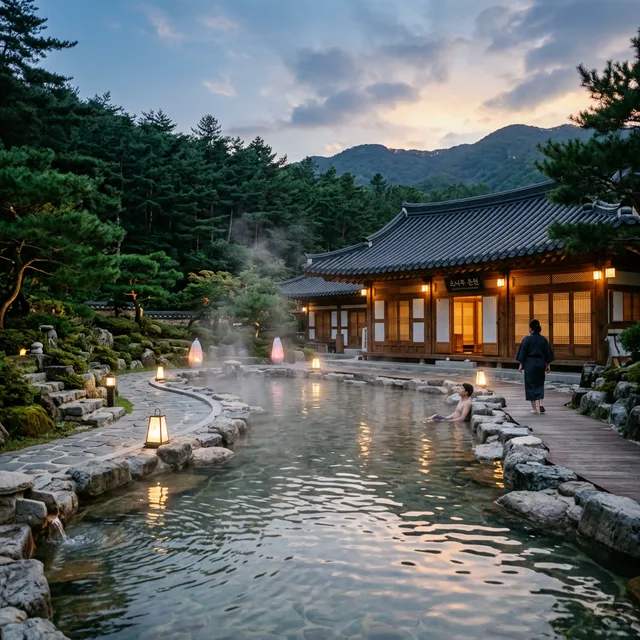
While South Korea is often celebrated for its neon-lit cities, high-speed internet, and vibrant K-pop scene, there is a quieter, more ancient rhythm to life here that revolves around the earth’s own warmth. Hot springs, or oncheon (온천), have been a cornerstone of Korean wellness culture for over a millennium. Whether you are seeking relief from the biting chill of a Seoul winter or looking to soothe muscles weary from hiking the granite peaks of Seoraksan, Korea’s mineral baths offer a sanctuary that is as culturally rich as it is physically restorative.
Quick Navigation
- Part of the Korean Wellness & Spa Culture series.
Introduction: The Ancient Art of Korean Bathing
The history of Korean hot springs is a narrative of healing and royalty. For centuries, the kings of the Joseon Dynasty would travel for days in elaborate palanquins to reach the steaming waters of Onyang or Suanbo, seeking a cure for skin ailments, arthritis, or the simple exhaustion of ruling a kingdom. Today, that royal luxury has been democratized. From the sprawling "water-pia" theme parks of the east coast to the hidden carbonate springs of Jeju Island, the oncheon experience is an essential part of the local lifestyle.
Unlike the volcanic hot springs of Japan, which are often found near the surface in active tectonic zones, many of Korea's most famous springs draw their water from deep within the granite bedrock. This process naturally filters the water and infuses it with a high concentration of minerals, including radium, sulfur, and carbon dioxide. Each region boasts a unique "flavor" of water, and connoisseurs of Korean spas will often travel across the country specifically to experience the therapeutic effects of a particular spring.
In this guide, we will explore the best mineral bath destinations in South Korea, categorized by their historical significance, natural beauty, and modern luxury.
1. The Royal Legacy: Korea’s Ancient Hot Springs
To understand Korean hot spring culture, one must look to the past. The country’s oldest springs are steeped in legend and have served as the private retreats of monarchs for generations.
Onyang Hot Springs (Asan)
Located in Asan, about 90 minutes south of Seoul, Onyang is widely considered the oldest hot spring in Korea. Its history spans over 1,300 years, with records dating back to the Baekje Kingdom. During the Joseon Dynasty, King Sejong the Great and King Seonjo were frequent visitors, even building a palace on-site to handle state affairs while they convalesced.
The water here is highly alkaline, with temperatures hovering around 57°C (135°F). It is particularly famous for its high concentration of radium, which is believed to be exceptionally effective for treating neuralgia, arthritis, and skin diseases. The Onyang Hot Springs Hotel still stands as a testament to this history, offering visitors the chance to bathe in the same waters that once refreshed kings.
Nearby Attraction: While in Asan, don't miss the Oeam Folk Village, a living museum where descendants of the original settlers still live in traditional straw-roofed houses. It provides a perfect cultural pairing to the historic hot springs.
Yuseong Hot Springs (Daejeon)
Legend has it that a mother crane once used the waters of Yuseong to heal her offspring’s broken wing. Located in the heart of Daejeon, Yuseong Hot Springs is unique because of its urban accessibility. The water here is sourced from 200 to 450 meters underground and is rich in over 60 different minerals, including calcium, potassium, and silicic acid.
One of the highlights of Yuseong is the Foot Spa Street, where locals and tourists alike can soak their feet for free in long, outdoor channels of steaming mineral water. It is a social hub where elderly residents share stories and office workers unwind after a long day, perfectly encapsulating the community spirit of Korean bathing culture.
Suanbo Hot Springs (Chungju)
Suanbo is often called the "First Natural Hot Spring" of Korea because it is the first recorded site where hot water erupted spontaneously from the ground without the need for man-made pumps. The water here is famously pure—so pure, in fact, that it is said you could drink it (though we recommend sticking to the baths). It is rich in lithium, magnesium, and calcium.
The Suanbo area is particularly beautiful in the winter, as the town is surrounded by mountains that catch the snow, creating a stunning backdrop for the many outdoor baths (noto-buro) attached to the local hotels.
Nearby Attraction: Explore Chungjuho Lake, the largest lake in Korea, where you can take a scenic boat cruise to see the spectacular Eight Views of Danyang (Danyang Palgyeong) from the water.
2. Nature’s Best: Scenic and Natural Hot Springs
For those who want their soak with a side of breathtaking scenery, Korea offers several destinations where the hot springs are integrated into the natural landscape.
Deokgu Spa World (Uljin)
Deokgu is a purist’s dream. It is the only hot spring in Korea that is 100% natural and "pipeline-less," meaning the water is piped directly from the source in the nearby valley to the spa without being reheated or diluted.
The "Deokgu Valley Trek" is a popular pre-bath activity. A well-maintained path leads hikers through a stunning gorge, passing miniature replicas of famous world bridges, eventually reaching the bubbling source of the spring. After the hike, soaking in the sodium-bicarbonate-rich water of Deokgu Spa World feels like a divine reward. The water is exceptionally soft and leaves the skin feeling silky and rejuvenated.
Seorak Waterpia (Sokcho)
Located at the foot of the majestic Seoraksan National Park, Seorak Waterpia is a pioneer in the "Hot Spring Water Park" concept. While it features water slides and wave pools that appeal to families, the core of the facility is its high-quality mineral water, which is sourced from 680 meters underground at a temperature of 49°C.
The Spa Valley section of Waterpia is particularly impressive, featuring numerous outdoor themed baths inspired by world destinations (like the Blue Lagoon or the Roman Baths), all while offering panoramic views of the granite peaks of Seoraksan. It is arguably the best place in Korea to experience a "snow bath"—soaking in hot water while snowflakes fall on your shoulders.
Ganghwa Seokmo Mineral Hot Spring
Situated on Seokmo Island off the coast of Incheon, this outdoor mineral spring offers a unique maritime experience. The water here is rich in salt and minerals from the sea, and the facility is designed with large, open-air pools that face the West Sea.
The primary draw here is the sunset. As the sun dips below the horizon of the Yellow Sea, the sky turns into a canvas of orange and purple, reflecting off the steam rising from the baths. Because the water is so rich in salt, it is recommended not to rinse off immediately after the bath, allowing the minerals to absorb into the skin.
3. Specialty Springs: Unique Mineral Profiles
Not all hot spring water is created equal. Some destinations in Korea are famous for their specific mineral compositions that provide targeted health benefits.
Sanbangsan Mountain Carbonate Hot Springs (Jeju)
Jeju Island is a volcanic wonderland, but it surprisingly has few hot springs. Sanbangsan Carbonate Hot Springs is the notable exception. The water here is rich in carbon dioxide and bicarbonate, giving it a unique "fizzy" quality.
When you first enter the carbonate pool, the water feels slightly cool (around 30°C). However, within minutes, thousands of tiny bubbles attach to your skin, and you begin to feel an intense warmth spreading through your body. This "soda water" bath is said to expand blood vessels and improve heart health and blood circulation. The facility also offers an outdoor pool with a direct view of the iconic Sanbangsan Mountain.
Bugok Hot Springs (Changnyeong)
If you like it hot, Bugok is the place for you. It boasts the highest water temperature in Korea, reaching a scorching 78°C (172°F) at the source. The water has to be cooled before it can be used in the baths.
Bugok is a sulfur spring, which you will notice immediately by the distinct "boiled egg" aroma. Sulfur is a powerful anti-inflammatory and is highly sought after by those suffering from chronic skin conditions like eczema or psoriasis. The Bugok Hawaii resort (now updated and renamed) remains a landmark of this region, providing a massive complex of indoor and outdoor sulfur baths.
4. Luxury & Modern Wellness: Urban Escapes
In recent years, Korea has seen a rise in "Premium Wellness" centers that combine traditional mineral baths with high-end architecture and luxury amenities.
SPA LAND Centum City (Busan)
Located within the Shinsegae Centum City department store (the world's largest), Spa Land is widely considered the best jjimjilbang in the world. It draws two different types of mineral water from 1,000 meters underground: a sodium bicarbonate spring and a salt spring.
The facility is a masterpiece of modern design, featuring 22 different tubs and 13 themed saunas, including a Roman-style sauna and a Finnish-style sauna. The "Outdoor Foot Spa" is particularly beautiful at night when it is illuminated by soft LED lights. Because it is located in the heart of Busan’s most modern district, it is the perfect place for a "staycation" or a luxury break after a day of shopping.
Cimer (Paradise City, Incheon)
Cimer, located within the Paradise City resort near Incheon Airport, is the pinnacle of the modern Korean spa experience. It feels more like a high-end European beach club than a traditional bathhouse.
The facility is divided into the Aqua Zone, which features massive LED screens and "Virtual Reality" pools, and the Cimer Jjimjil Spa, which offers high-end traditional saunas. The "Infinity Pool" on the rooftop provides views of planes taking off and landing at Incheon Airport, making it a favorite for Instagram-savvy travelers and those looking for a luxurious start or end to their Korean adventure.
Hurshimchung Grand Spa (Busan)
While Spa Land is modern and sleek, Hurshimchung is grand and traditional. Located in the Dongnae district of Busan, this is one of the largest hot spring facilities in Asia. It can accommodate up to 3,000 people at once.
The spa is housed under a massive glass dome that allows natural light to flood the bathing area. It features over 40 different themed baths, including a "Longevity Bath," a "Pine Bath," and even a "Strawberry Bath" during certain seasons. The water here is alkaline and rich in magnesium, sourced from the historic Dongnae Hot Springs area which has been famous since the Silla Kingdom.
5. The Korean Oncheon Experience: Etiquette and Tips
For first-time visitors, the Korean hot spring experience can be a bit daunting. However, the rules are simple and designed to ensure hygiene and respect for all bathers.
The Shower is Non-Negotiable
Before you even think about touching the water in a communal tub, you must shower thoroughly. This isn't just a quick rinse; it means a full scrub with soap. Most facilities provide communal soap, but many people bring their own kits. You will see rows of people sitting on small plastic stools, meticulously scrubbing every inch of their skin. This is a fundamental part of the ritual.
The Naked Truth
In traditional Korean oncheon and jjimjilbangs, bathing is done entirely in the nude. Men and women are strictly separated. While this can be intimidating for those from more modest cultures, you will quickly realize that no one is looking at you. It is a space of complete body neutrality where people of all ages and sizes relax together. If the thought of being naked is a dealbreaker, look for "Water Parks" like Seorak Waterpia or Paradise Spa Dogo, where swimsuits are required in the mixed-gender outdoor zones.
The Art of the Seshin (Body Scrub)
If you want the full Korean experience, hire a seshin (professional scrubber). For a small fee (usually around $20-$30), a specialist will use a rough "Italy towel" to remove every dead skin cell from your body. You will emerge feeling like a newborn baby, with skin so soft it feels unreal. It is a rite of passage for any serious spa enthusiast.
Practical Packing List for Your Hot Spring Trip
While most facilities provide basic amenities, having your own kit will make the experience smoother:
- Towel: Most places provide small towels, but if you prefer a large bath towel, bring your own.
- Shower Kit: Shampoo, conditioner, body wash, and a face cleanser.
- Scrub Mitt: If you want to DIY your exfoliation.
- Skincare: A heavy moisturizer is essential after the mineral-rich waters.
- Cash: For the snack bar (don't miss the smoked eggs and sikhye!) or the seshin service.
6. Seasonal Tips: When to Visit
While hot springs are open year-round, the experience changes significantly with the seasons.
- Winter (December - February): This is the peak season for oncheon. There is nothing quite like the contrast of a 40°C bath and sub-zero air. Outdoor baths (noto-buro) are the highlight here.
- Spring (March - May): A great time to visit regional springs like Suanbo or Asan, as you can combine your soak with cherry blossom viewing.
- Summer (June - August): Most people head to water parks during this time. While it’s hot outside, many find that a hot soak actually helps the body regulate its temperature and feel cooler afterward (a concept known as i-yeol-chi-yeol, or "fighting heat with heat").
- Autumn (September - November): The perfect season for "Hiking and Soaking." Destinations like Deokgu or Seoraksan are at their peak beauty with the changing fall foliage.
Conclusion: Finding Your Inner Peace
South Korea’s hot springs are more than just tubs of warm water; they are a bridge between the country’s ancient past and its high-speed present. They are places where the stresses of modern life dissolve into clouds of steam, and where the simple act of bathing becomes a profound ritual of self-care.
Whether you find yourself in a historic bathhouse in the mountains of Uljin or a neon-lit luxury spa in the heart of Busan, the message is the same: slow down, breathe in the mineral-rich air, and let the earth’s warmth heal you. In the world of Korean wellness, there is no greater luxury than a long, quiet soak.
Plan Your Visit:
- Best for History: Onyang Hot Springs Hotel, Asan.
- Best for Scenery: Deokgu Spa World, Uljin.
- Best for Luxury: SPA LAND Centum City, Busan.
- Best for Families: Seorak Waterpia, Sokcho.
- Best for Couples: Cimer, Paradise City, Incheon.
After melting your stress away in the hot springs, you might want a more active form of rejuvenation; learn exactly what goes into Korean Skin Care at the Spa: Italy Towel and Seshin Explained. To plunge deeper into Korea's holistic healing landscape, read Herbal Medicine and Korean Traditional Healing: What Travelers Should Know. If you'd rather reconnect with nature above ground, explore Healing Stays: Best Wellness Retreats and Forest Therapy in Korea.