Healing Stays: Best Wellness Retreats and Forest Therapy in Korea
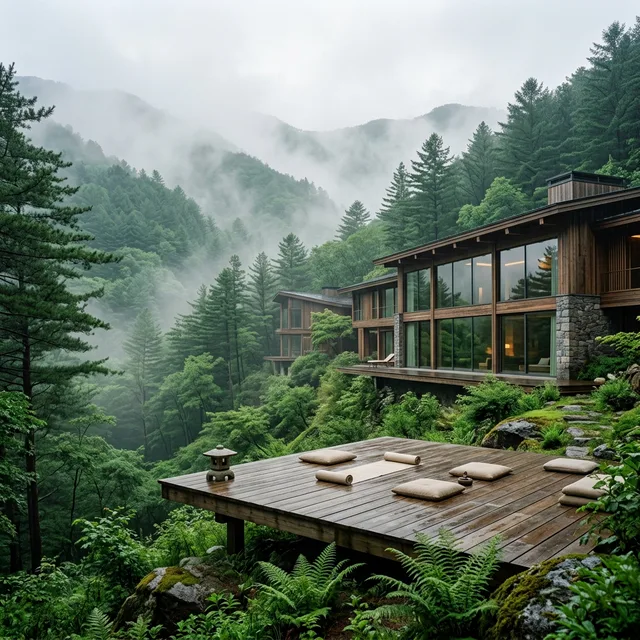
While the high-speed pulse of Seoul’s subway and the neon glow of Gangnam are intoxicating, there comes a point in every traveler’s journey where the neon fades and the soul craves silence. In South Korea, this silence is found in the deep, pine-scented valleys of Gangwon-do and the misty volcanic peaks of Jeju. Here, the concept of a "Healing Stay" (Staycation + Wellness) has evolved into a sophisticated art form, blending ancient forest traditions with world-class architectural serenity.
In recent years, "Healing" (힐링) has become a buzzword across South Korea, representing a cultural shift toward mindful rest and psychological recovery. Central to this movement is Forest Therapy (Sullim-chi-yu), a practice supported by the national government through a network of "Healing Forests" designed to combat the stresses of modern life.
Whether you are looking for a digital detox in a luxury mountain resort or a scientific approach to nature therapy, Korea’s retreats offer a path back to yourself.
1. The Philosophy of Forest Therapy (Sullyim-chi-yu)
In Korea, a forest is not just a collection of trees; it is a clinical environment for wellness. The key is Phytoncide—natural antimicrobial organic compounds emitted by plants (most notably pine and cedar) to protect themselves. When humans inhale these compounds, they have been scientifically shown to lower cortisol (stress) levels, boost the immune system, and improve sleep quality.
The Korea Forest Service has designated numerous "Healing Forests" across the country, staffed by certified Forest Therapy Instructors who lead visitors through breathing exercises, barefoot walking on volcanic red clay, and guided meditation.
2. Top Luxury Wellness Resorts
For those who want their nature therapy with five-star amenities, these resorts are the pinnacle of the Korean wellness experience.
Park Roche Resort & Wellness (Gangwon)
Located in the mountainous heart of Jeongseon, Park Roche was originally designed to accommodate athletes and staff for the 2018 Winter Olympics, but it has since transformed into Korea's premier wellness destination. The resort’s architecture is inspired by the textures of the forest, and its programs focus on four pillars: Body Full, Mind Full, Spirit Full, and Sleep Full.
The "Sleep Therapy" program is particularly famous, utilizing customized mattresses and pillows based on a body scan. After a day of yoga on the outdoor deck overlooking Gariwangsan Mountain, you’ll find a level of rest you didn't know was possible.
Resom Forest & Have9 Spa (Jecheon)
Resom Forest is a sanctuary where only eco-friendly electric carts are allowed to traverse the paths. Set within a thousand-year-old forest, the resort is built so that no tree was cut down if it could be avoided, creating a seamless blend between building and nature.
The Have9 Healing Spa on-site offers a unique "Sasang Constitutional Spa" experience. Based on traditional Korean medicine, you receive a consultation to determine your body type (Tae-yang-in, So-yang-in, etc.) and are then guided to specific pools and essential oils tailored to balance your unique energy.
Healience Seonmaeul (Hongcheon)
If you truly need a break from your smartphone, Healience Seonmaeul is the place. Known as Korea’s first intentional "Digital Detox" village, the area is located in a geographic "dead zone" for cellular signals. The resort focuses on rhythmic living—eating, sleeping, and moving in harmony with the natural cycle of the sun. It is a profound reset for those suffering from burnout.
3. National Centers for Forest Therapy
For a more authentic and state-supported approach, the National Center for Forest Therapy (Dasuph) in Yecheon/Yeongju is the largest forest welfare complex in the world.
Managed by the Korea Forest Welfare Institute (FOWI), this massive facility offers programs that include:
- Hammock Meditation: Swaying gently under a canopy of oak trees.
- Barefoot Therapy: Walking on trails specifically designed to stimulate pressure points in the feet.
- Aqua Therapy: Using high-pressure mineral water jets in a forest-enclosed indoor facility to relieve muscle tension.
These centers are highly affordable and offer foreigner-friendly programs, although we recommend booking through their English-language portal in advance.
4. Island Healing: Wellness on Jeju Island
Jeju, with its volcanic soil and high-oxygen air, is a natural playground for healing.
WE Hotel Jeju
As Korea's first medical-themed resort, WE Hotel integrates health check-ups and hydrotherapy with the surrounding 170-acre forest. Their "Natural Forest Therapy" program involves walking through the Seogwipo hills with a professional instructor who teaches you how to sync your breathing with the rhythm of the woods. The water used in the hotel—including the showers and pools—is direct volcanic bedrock water, rich in vanadium.
5. How to Book and Prepare for a Healing Stay
Transport
Most of these retreats are located in the mountains of Gangwon-do or the southern provinces.
- Gangwon-do: Take the KTX to Gangneung or Jinbu Station. Many resorts, like Park Roche, offer shuttle services from the station.
- Jeju: Fly into Jeju International Airport and take a taxi or pre-arranged resort transfer.
Language Support
While luxury resorts like Park Roche and WE Hotel have fluent English-speaking staff, the National Centers might have limited English. We suggest downloading translation apps like Papago or booking through specialized wellness travel agencies.
What to Bring
- Comfortable Clothing: While many resorts provide "wellness wear," you’ll want your own hiking shoes for the forest trails.
- Open Mind: Leave your digital devices in the locker and lean into the silence.
Conclusion
A Healing Stay is not just a vacation; it’s an investment in your mental health. South Korea’s unique blend of "Digital High-Tech" and "Forest Silence" allows for a contrast that makes the recovery even more effective. Next time you plan a trip to Korea, dedicate at least two days to the silence of the woods.
To complete your wellness journey, compare this slower recovery style with the active trail days in 10 Best Coastal Trails in South Korea for Breathtaking Sea Views and Seoraksan National Park. If you are new to Korean trail culture, add the practical rules from Hiking Etiquette in Korea: What to Wear and How to Behave. And if you want a more treatment-oriented healing angle, continue with Herbal Medicine and Korean Traditional Healing: What Travelers Should Know.
2026 Resort Pricing and Booking Guide
Korea's healing resort sector has grown significantly, and prices vary widely by tier. Here is a realistic 2026 budget guide.
Luxury Wellness Resort Nightly Rates
| Resort | Location | Room Type | 2026 Price/Night | Programs Included? |
|---|---|---|---|---|
| Park Roche Resort | Jeongseon, Gangwon | Deluxe Mountain View | ₩380,000–₩520,000 | Some programs extra |
| Park Roche Resort | Jeongseon, Gangwon | Wellness Suite | ₩650,000–₩900,000 | Sleep Therapy included |
| Resom Forest | Jecheon, Chungbuk | Standard Forest Room | ₩280,000–₩420,000 | Forest Walk program included |
| Resom Forest | Jecheon, Chungbuk | Deluxe Spa Access | ₩450,000–₩600,000 | Have9 Spa access included |
| WE Hotel Jeju | Seogwipo, Jeju | Standard Volcanic View | ₩320,000–₩480,000 | Forest therapy walk included |
| Healience Seonmaeul | Hongcheon, Gangwon | Standard Room | ₩180,000–₩260,000 | All programs included |
National Forest Therapy Center Rates (Government-Managed)
| Program | Location | Duration | Price |
|---|---|---|---|
| Forest Healing Experience | Dasuph National Center | Half-day (4 hrs) | ₩15,000 |
| Forest Healing Program | Regional Healing Forests | Full-day | ₩25,000 |
| Overnight Forest Program | Dasuph National Center | 2 days/1 night | ₩85,000 |
| Sleep Therapy Program | Selected forests | 3 days/2 nights | ₩140,000 |
The National Centers are extraordinary value — the prices above include certified Forest Therapy Instructor guidance, meals at the Dasuph center, and accommodation in simple Korean-style ondol (heated floor) rooms.
The Science of Forest Therapy: Why It Works
The effectiveness of Korea's forest healing programs is not just philosophy — it is supported by over two decades of peer-reviewed research conducted largely by the Korea Forest Service's National Institute of Forest Science (Narin).
Key Research Findings
Phytoncide Effects: Pine, cedar, and fir trees emit volatile organic compounds called phytoncides. Humans inhaling these compounds in a forest environment have been shown to:
- Decrease cortisol (stress hormone) levels by 12–23% after just 2 hours
- Increase Natural Killer (NK) cell activity by 50% after a 3-day forest stay
- Lower blood pressure and heart rate measurably within 20 minutes of forest entry
Visual Complexity: The fractal patterns of trees and leaves match the "1/f noise" (mid-complexity visual patterns) that the human nervous system responds to with measurable relaxation — measurably different from both the monotony of a blank wall and the over-complexity of a city streetscape.
Negative Ions: Waterfalls and running streams in forest environments generate negative ions at concentrations 3–5 times higher than urban environments. Negative ions have been associated with improved serotonin metabolism and reduced fatigue.
Korea's Healing Forest System: As of 2026, the Korea Forest Service manages 37 designated "Healing Forests" (치유의 숲) across the country, staffed by certified Forest Therapy Instructors who undergo 200+ hours of training. Programs are available in Korean; some forests have English-speaking guides or offer translation services — confirm when booking.
Seasonal Guide: The Best Time to Visit Each Region
Spring (April–May): New Leaves and Peak Demand
The forest canopy opens in early April, and the combination of fresh growth with lingering mountain coolness is the most beautiful time in Korea's forests.
- Best for: Gangwon-do (Jeongseon, Hongcheon) — cherry blossoms at the base, snow occasionally still visible at the peaks
- Booking alert: Park Roche and Resom Forest sell out in March for May weekends. Book 8–10 weeks ahead.
- Forest atmosphere: The forest floor is carpeted with wild ferns and spring wildflowers. Phytoncide levels are highest when tree growth is most active.
Summer (July–August): Forest as Heat Refuge
Korea's summer is humid and hot in cities. Forest environments are 4–6°C cooler and significantly less humid due to tree transpiration. The forests become refuges for urban Koreans.
- Best for: Jeju (volcanic soil stays cool; sea breezes); Jirisan Healing Forest (south coast, altitude cooling)
- Crowd level: Peak season — higher prices, more visitors at major resorts. National Forest Centers are quieter as families prefer resort amenities.
Autumn (October–November): Foliage and Maximum Phytoncide
Korean forest therapy practitioners consider October the ideal month for a healing stay — the cooling temperatures reduce insect activity, the foliage peak creates extraordinary visual beauty, and deciduous trees emit their final burst of phytoncides as leaves change.
- Best for: Gangwon forests (Jeongseon, Hongcheon) — the most dramatic autumn foliage in Korea
- Booking alert: October weekends sell out 3–4 months in advance at Park Roche.
Winter (December–March): Snow and Near-Empty Trails
Winter is the secret season for healing stays. Snow-covered pine forests are silent and starkly beautiful. The forest's winter atmosphere — the crunch of snow, the blue-grey light, the absence of other people — is an experience that genuinely resets urban exhaustion.
- Best for: Healience Seonmaeul (Gangwon, full digital detox in winter); Dasuph National Center (heated ondol rooms, snow bathing)
- Cost: 20–30% lower rates than peak season at most resorts.
What to Pack: The Healing Stay Kit
Packing for a forest retreat is different from packing for a city trip.
| Item | Why You Need It |
|---|---|
| Moisture-wicking base layers | Forest trails require movement; sweat-management matters |
| Waterproof hiking shoes | Forest floors are uneven and wet from morning dew/rain |
| Light jacket or fleece | Forested valleys trap cold air even in summer |
| No strong perfume or cologne | Fragrances interfere with phytoncide inhalation — Forest Therapy Instructors often specifically request this |
| Journal or sketchbook | Many programs incorporate reflective writing sessions |
| Earplugs | For shared ondol dormitory rooms at National Centers |
| Cash (₩50,000–₩100,000) | Many forest facilities and local restaurants near retreat centers are cash-preferred |
| Korean translation app (Papago) | Most National Center staff speak limited English |
| Reusable water bottle | Forest mineral spring water is available at many centers; bring your own bottle |
Leave Behind:
- Laptop (most healing stays explicitly ask you to minimize screen time)
- Work email notifications (if you use a Korean SIM, put it on DND or airplane mode during programs)
- Heavy makeup (forest walks, clay therapy, and water programs make makeup impractical)
Healing Stay vs. Temple Stay: How to Choose
Korea offers two distinct "unplugging" experiences. Both are remarkable; they serve different needs.
| Factor | Healing Stay (Resort) | Temple Stay (Buddhist) |
|---|---|---|
| Environment | Forest resort or nature retreat | Active Buddhist temple |
| Structure | Flexible — choose your programs | Rigid schedule (4 AM wake-up, prayer sessions) |
| Cost | ₩180,000–₩900,000/night | ₩70,000–₩120,000/night (most include meals) |
| Language | Some English support | Most temples have English-speaking guides |
| Physical demand | Light to moderate (forest walks) | Moderate (108 prostrations, formal meditation) |
| Social atmosphere | Private or small group | Communal — you eat and practice with others |
| Best for | Physical exhaustion, burnout recovery | Spiritual seeking, cultural curiosity |
Combining Both: A popular itinerary is 2 nights at a Temple Stay (inland, often Gyeonggi or North Chungcheong Province) followed by 2 nights at a Forest Resort — the spiritual reset of the temple followed by the physical restoration of the forest.
Practical Booking Guide: Step-by-Step for International Visitors
Booking a Korean wellness retreat as a foreign visitor is more straightforward than most people expect.
Step 1 — Identify Your Type Decide between a luxury resort (Park Roche, Resom, WE Hotel), a mid-range healing resort (Healience), or a government National Forest Center. The experience and logistics differ significantly.
Step 2 — Book Directly For luxury resorts, direct booking via the resort's website is always recommended — they frequently have packages not listed on OTA sites. For National Forest Centers, use the Korea Forest Welfare Institute booking portal at forest.go.kr (partial English available; use Chrome's auto-translate for the full site).
Step 3 — Arrange Transport Most Gangwon-do wellness resorts offer shuttle services from major train stations (Gangneung, Jinbu, or Wonju KTX stations). Confirm shuttle times when booking. For Jeju properties, resort transfers from Jeju International Airport are almost universally available for a nominal fee (₩10,000–₩20,000 per person one-way).
Step 4 — Communicate Dietary Needs Korean wellness resorts typically serve traditional Korean temple-influenced cuisine — balanced, seasonal, and light. Vegetarian and vegan meals are almost always available with advance notice. Gluten-free requests can usually be accommodated at luxury resorts; the National Centers have more limited flexibility.
Step 5 — Arrive Without a Strict Schedule The philosophy of a Korean healing stay is active unscheduling. Most resorts provide a program menu each morning and ask guests to register for afternoon activities. Nothing is mandatory. The most transformative experiences often happen outside the structured programs — a spontaneous walk into the forest at dawn, or sitting with tea by the window as rain moves through the valley.
Which Healing Stay Should You Choose?
If you want to decide fast, use the environment first and the budget second.
Pick a Luxury Resort If
- You want privacy, quiet, and polished rooms
- You plan to stay more than one night
- You care about comfort as much as the forest itself
Pick a National Forest Center If
- You want the strongest value
- You are okay with simpler accommodation
- You care more about the program than the room
Pick Jeju If
- You want mild weather and coastal scenery
- You are already renting a car
- You want a healing stay that still feels like a trip, not a retreat bubble