E-Sports and PC Bang Culture: Gaming as a Travel Experience in Korea

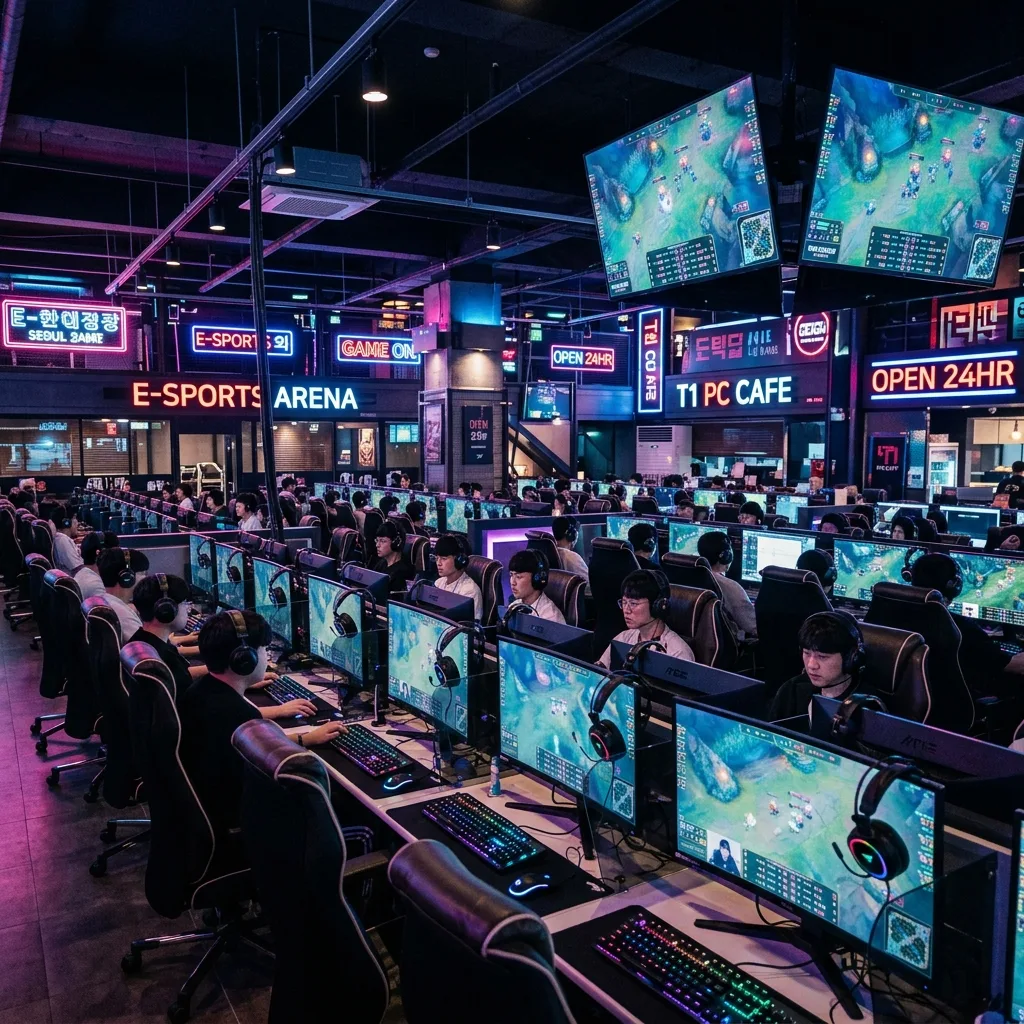
If you think gaming in Korea is only for locals or hard-core fans, you will miss one of the most interesting travel experiences in the country. A PC bang can feel like a neighborhood hangout, an arcade, a late-night study room, and a miniature esports temple all at once. Add live match venues, gaming cafes, and nearby food streets, and you get a trip that is very easy to build into a Seoul day or an entire themed weekend.
The good version of this experience is not about chasing stereotypes. It is about understanding why Korean gaming culture is so visible, how to use a PC bang without awkwardness, and how to connect it to the rest of your itinerary. If you already like street culture, nightlife, or food runs after dark, gaming fits naturally alongside them.
Fast Answer
Korea's gaming scene is worth planning into a trip because it is easy to experience, affordable, and distinctly local. You do not need to be a serious gamer to enjoy a PC bang or an esports neighborhood. The simplest version is: walk into a PC bang near a subway station, buy time at the counter or kiosk, choose a seat, and spend an hour or two playing, watching streams, or just soaking up the atmosphere.
For travelers, the real value is the combination of convenience and context. PC bangs are one of the clearest everyday expressions of modern Korean social life, while esports venues show how competitive gaming moved from niche hobby to mainstream entertainment. If you want a travel activity that is more immersive than a typical cafe stop and easier to fit into an evening than a full museum visit, this is a strong choice.
Context You Need
In Korea, a PC bang is a gaming-focused internet cafe. The term literally means "PC room," but the experience is much more specific than a generic internet cafe. These places usually have rows of powerful desktop computers, fast internet, gaming chairs, headset stations, snack counters, and a steady soundtrack of keyboard clicks, game audio, and people ordering drinks or fries. Some locations are simple neighborhood spots. Others feel polished, branded, and designed for long sessions.
What makes PC bangs interesting to travelers is that they are both practical and cultural. Locals use them for matchmaking, team play, social time, and quick sessions between classes or after work. Visitors can use them as a low-cost way to experience a part of Korean life that is highly visible but not always explained well in travel guides. It is not just about gaming. It is about the social rhythm around gaming.
The esports layer matters for the same reason. Korea helped turn competitive gaming into a visible public culture, so you will see references to teams, tournaments, streaming, and game brands in places that feel almost like everyday urban furniture. That can show up in a dedicated arena, a themed cafe, a merch shop, a PC bang district, or a nightlife area where younger crowds gather after school or work. For a broader look at how that fits into a trip, Unique Things to Do in Korea Beyond the Tourist Trail is a useful companion piece because it frames gaming as part of a larger set of local-only experiences.
The best way to think about this topic is as a travel layer rather than a single attraction. You can spend 30 minutes at a PC bang, an hour watching a live match broadcast, or an entire night building a route around game cafes, street food, and late-night neighborhoods. That flexibility is why gaming fits so well into Korea travel: it scales from casual curiosity to full-on itinerary theme.
Step-by-Step Guide
The easiest way to enjoy gaming culture in Korea is to treat it like a short self-guided experience rather than a special production. You do not need a reservation for most PC bangs, but you do need a plan for where you want to go, how long you want to stay, and what kind of experience you want.
1. Decide what kind of gaming stop you want
Start by choosing between three versions of the experience:
- A quick PC bang visit for 1 to 2 hours
- A longer gaming session that includes food and streaming
- An esports-focused outing that centers on a venue, viewing event, or gaming district
If your trip already includes nightlife, you can pair a PC bang with dinner or drinks. If your trip is more daytime focused, a short gaming session can work as a mid-afternoon break. If you like neighborhoods with buskers, cafes, and a younger crowd, the cultural overlap is strong. In that case, Hongdae Street Performances: The Ultimate 2026 Guide to Seoul's Living Stage is a good match because Hongdae is one of the easiest places to combine gaming, street energy, and casual wandering.
2. Pick a location that matches your route
For most travelers, the best PC bang is not the most famous one. It is the one close to your other plans. Look for a spot near:
- A major subway interchange
- A food street or night market
- A nightlife district
- Your hotel or guesthouse
That keeps the experience low-friction. You do not want to cross half the city for a one-hour visit unless you are specifically chasing a flagship venue or a tournament day. If you are staying in Seoul, places around Hongdae, Sinchon, Gangnam, and major station areas often make the most sense because you can combine gaming with food and transit very easily.
3. Enter, pay, and choose a seat
Most PC bangs are straightforward. You walk in, greet the staff or use a self-service kiosk, and choose how long you want to stay. Some places assign seats directly. Others let you choose between standard chairs, premium gaming chairs, private booths, or couple-style seating arrangements. If the place is busy, staff may direct you to what is available rather than let you roam freely.
If you are uncertain, keep your interaction simple:
- Say you want a seat for one person or two people.
- Ask how long the rate is per hour.
- Confirm whether food and drinks are ordered separately.
- Ask for help if the system requires an account or login.
You do not need perfect Korean. Short phrases, gestures, and a phone translator are enough. Staff at larger locations are usually used to visitors.
4. Set up your game session
Once you sit down, take a minute to orient yourself. The computer may already be logged into a launcher or kiosk system. Headsets are usually available at the desk or hanging at the station. If you are not there to play a specific game, you can use the machine to watch streams, browse esports clips, or sample a game that is popular locally.
Good first-timer choices include:
- A short multiplayer session with friends
- Watching a live broadcast or highlight reel
- Trying a familiar game on stronger hardware than you have at home
- Just observing the room and the workflow if you are not a gamer yourself
The goal is to feel the atmosphere, not to prove any skill level. That is what makes the experience travel-friendly.
5. Order snacks the local way
Many PC bangs have snacks, instant noodles, drinks, coffee, or packaged convenience foods available either on-site or through a counter. In some places, food gets brought to your seat. In others, you buy at the register and return to your station. If you plan to stay more than an hour, ordering food is part of the experience rather than an add-on.
This is where gaming stops feeling like a novelty and starts feeling like a hangout. You will often see people eating noodles, sipping canned coffee, or sharing fries while they queue for a match. If your evening plan leans toward food after dark, Late-Night Eats in Seoul: Best 24-Hour Restaurants and Markets pairs naturally with a PC bang stop because the best gaming sessions usually end with a snack run.
6. Add the esports layer if you want a fuller story
If you want more than casual play, build your route around the larger esports ecosystem. That could mean visiting a viewing venue, checking whether a live match is on, stopping by a themed cafe, or simply walking through a district where gaming culture is visible in screens, signs, and branded interiors. You do not need a deep knowledge of every team or league to enjoy this part. The point is to see how strongly gaming is woven into urban life.
Mini checklist for a first visit
| Before you go | Why it matters |
|---|---|
| Pick a PC bang near your planned route | Keeps the visit short and easy |
| Bring a payment method that works in Korea | Avoids friction at the counter |
| Decide whether you want to play or just observe | Helps you choose the right type of venue |
| Plan a food stop after or during the session | Makes the visit feel complete |
| Keep a translation app ready | Useful for rates and seat questions |
7. Leave enough time to enjoy the neighborhood
Do not treat the PC bang as the only stop. The best itinerary uses it as a hinge between other experiences. A gaming stop works particularly well before dinner, after a shopping run, or after you have finished another neighborhood activity. That is why it can fit into a broader route like nightlife, performance viewing, or street food exploration.
Costs, Hours, and Logistics
The good news is that PC bangs are one of the most budget-friendly travel activities in Korea. Pricing varies by neighborhood, seat quality, and machine tier, but many places are still relatively cheap compared with what a traveler might spend on an arcade, a themed cafe, or a ticketed attraction.
Typical pricing and what changes it
Prices are usually charged by the hour, though some places sell blocks of time. Many neighborhood PC bangs sit in a low hourly range, while premium gaming chairs, private booths, or high-spec stations cost more. A simple way to think about it is:
| Item | Typical traveler expectation |
|---|---|
| Standard PC bang seat | Low hourly cost, often around the price of a convenience-store drink or a modest snack |
| Premium or private seat | Higher hourly cost for better hardware or more space |
| Snacks and drinks | Extra, often purchased separately |
| Tournament or venue event | Free to watch in some cases, ticketed in others |
Current traveler reports and long-running references suggest that standard seats often remain around a very affordable hourly rate, but do not assume every room is priced the same. Big-city spots, flagship locations, and highly themed cafes can be noticeably more expensive than neighborhood stores. The safest approach is to ask for the hourly rate before you sit down.
Hours and timing
Many PC bangs are open late, and some operate around the clock. That said, you should not assume every location is 24 hours. A neighborhood store can change its hours, and special rules may apply to minors or late-night access. If you are planning a night route, verify the place before you go, especially if you want to combine it with food, bars, or late transit.
For travelers, the best timing is usually one of these:
- Early afternoon when you want a break from walking
- Evening after dinner
- Late night if you are already exploring a nightlife district
If you are trying to catch an esports viewing event, check the venue schedule in advance rather than relying on walk-in assumptions. Competition calendars, league breaks, and special broadcasts can all affect whether the room feels lively or quiet.
Payment and practical setup
Most places are straightforward about payment, but the experience is smoother if you prepare for these details:
- Bring a card that works in Korea
- Carry some cash as a backup
- Keep your phone translation app ready
- Expect to order food separately in many locations
- Ask before taking photos, especially if the room is crowded
Some PC bangs are partly self-service, while others still involve staff for account setup or seat changes. If you are traveling with a non-gamer, it can help to choose a cleaner, newer venue with clearer signage. That reduces friction and makes the stop feel more like a curated cultural experience.
Transit and location logic
The best gaming stops are usually near transit, because that is where visitors can layer them into a route. In Seoul especially, the easiest rule is to choose the place closest to the rest of your evening rather than the one with the fanciest online photos. If you can exit a subway station, walk a few minutes, game for an hour, and move on to dinner, the experience feels seamless.
If you are making a bigger city plan, pairing a PC bang with walkable nightlife is ideal. That lets you move from gaming to drinks, dessert, or street food without turning the outing into a logistics project.
Variations and Edge Cases
Gaming culture in Korea changes a lot depending on where you are, who you are traveling with, and what time of year you visit. The basic format stays recognizable, but the vibe can shift more than first-time visitors expect.
Solo travelers
Solo travelers should think of a PC bang as a low-pressure stop. It is easy to enter alone, easy to leave when you want, and easy to combine with nearby food or shopping. If you do not actually want to play, you can still spend time observing the environment, checking out hardware quality, or using it as a novelty break between more traditional sightseeing.
Friends and couples
If you are traveling with a partner or friends, a PC bang can become a shared reset point in the middle of a long day. You can split off for a short game, then regroup for food. That is especially useful in districts that already support a casual evening route. You are not locked into a single activity for the whole night.
Families and mixed-age groups
Families should look for cleaner, more spacious locations and be aware that not every venue feels equally welcoming to children. Some rooms are loud, some are very focused on competitive play, and some have late-night behavior that is better suited to adults or older teens. If your group includes non-gamers, keep the session short and pair it with another nearby activity.
Seasonal timing
The experience also changes by season. Winter makes gaming culture feel especially attractive because a warm indoor stop pairs well with cold weather and dark evenings. Summer can make a PC bang a practical refuge from heat and humidity. During tournament periods, the atmosphere may feel more charged, with more people following matches or watching clips.
Neighborhood differences
Not every district offers the same energy. Youth-heavy neighborhoods tend to feel more casual, social, and noisy. Business districts may lean more toward efficient, clean, and polished. Entertainment streets often give you the easiest combination of gaming, food, and late-night wandering. If you want a route built around an especially lively Seoul district, A Guide to Seoul's Nightlife: Hongdae vs. Itaewon vs. Gangnam can help you decide where a gaming stop fits best.
Travelers who do not game
You do not have to be a gamer to appreciate the cultural side of the experience. Some people go for the room design, the crowds, the snack workflow, or the way the space reflects modern Korean city life. If you are more interested in atmosphere than gameplay, keep your visit short and attach it to a food or neighborhood walk. That way the stop adds texture without eating the whole evening.
Mistakes to Avoid
The most common mistake is treating every PC bang like the same thing. Some are neighborhood utility spaces, some are premium gaming lounges, and some are basically cultural landmarks for people who follow esports closely. If you want the right experience, match the venue to your goal.
Another mistake is overplanning. You do not need a big production or a complicated reservation process for most visits. If you spend too much time trying to engineer the perfect "gamer" outing, you may miss the actual benefit: the place is easy, cheap, and fun to fold into a normal trip.
The last common mistake is ignoring the surrounding neighborhood. A gaming stop is strongest when it anchors a route, not when it replaces one. Pair it with food, a walk, or another local activity, and the experience becomes much more memorable.
FAQ
Do I need to be good at games to enjoy a PC bang?
No. You can go just to observe, watch streams, or try a game you already know. The travel value comes from the atmosphere and the social format, not from skill.
Will staff speak English?
Sometimes, but you should not count on it. A translation app and a few simple phrases are enough for the basics: how much per hour, where to sit, and how food works.
Are PC bangs expensive for travelers?
Usually no. A standard seat is one of the cheaper paid experiences you can do in a city like Seoul. Premium rooms, private booths, and snacks can increase the total, but the base activity is still budget-friendly.
How long should I stay?
Most first-time visitors should aim for one to two hours. That is long enough to understand the room, try a game, and notice the atmosphere without turning the stop into a whole evening commitment.
Can I combine this with nightlife or dinner?
Yes, and that is often the best approach. Gaming pairs naturally with late-night food, casual drinks, and walkable entertainment districts. If you want to turn the stop into a broader evening, plan the food first or keep a snack stop after your session.
Is esports viewing worth it if I am not a fan?
It can be, especially if you enjoy crowds, live energy, or seeing how a city organizes entertainment. You do not need to know every player or team to appreciate the scale and passion around the scene.
What if I want a more general night-out plan instead?
Use gaming as one part of the route, not the whole route. Korean travel becomes easier when you layer activities together, so a PC bang, a food stop, and a neighborhood walk often work better than a single fixed attraction.
Next Steps
If you want to turn this into an actual trip plan, choose one neighborhood and build a short evening route around it. Start with a PC bang or esports stop, add dinner or late-night snacks, then finish with a walk through the surrounding streets. That is the simplest way to make gaming feel like a travel experience instead of a novelty detour.
For a richer itinerary, combine this guide with the local-food and neighborhood posts above, then pick the district that best matches your style. If you want a route that leans more social, street-level, and easy to improvise, start in Hongdae and work outward from there.