Temple Stay in South Korea: What to Expect and How to Book

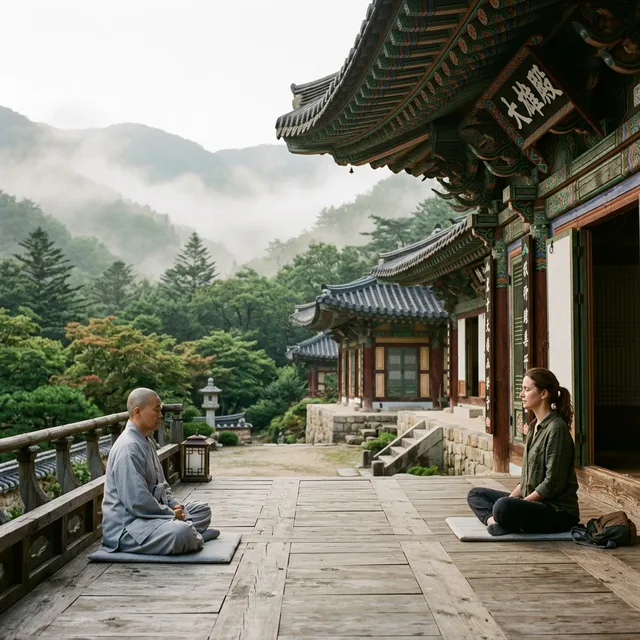
At 4 AM, a wooden mallet strikes a mokguk (wooden fish drum). The sound carries through the temple courtyard, through the predawn dark, into the small room where you're sleeping on a thin mat on a heated stone floor. This is the wake-up call. This is what you signed up for. And by the time you've gathered yourself, shuffled across the courtyard stones in soft cotton slippers behind a monk who speaks no English, and settled into your meditation posture as the morning chanting fills the hall — you will understand, more viscerally than any reading could convey, what Korean Buddhist monastic life actually feels like.
What Is Temple Stay (템플스테이)?
Temple Stay (Templestay) is an official cultural program of the Korean Buddhist Jogye Order that allows visitors — Korean and international — to participate in monastic life at traditional Buddhist temples across the country. The program was formalized for international visitors partly during the 2002 FIFA World Cup, when Korea needed cultural tourism infrastructure, and has grown into one of the country's most distinctive travel offerings.
There are currently over 130 temples participating in the official Templestay program, ranging from temples in central Seoul to remote mountain monasteries deep inside national parks.
Types of Temple Stay Programs
1. Experience-Oriented Programs (체험형)
The most immersive — typically 1 night and 2 days, usually running Friday or Saturday evenings. This is what most international visitors choose.
Typical schedule (1 night/2 days):
- Afternoon arrival: Orientation, change into temple uniform (provided)
- Evening: Temple tour, dinner (traditional Buddhist vegetarian meal, eaten in silence)
- Evening practice: 108 prostrations, seated meditation (seon), walking meditation (kinhin)
- 4:00–5:00 AM: Morning chanting (yebul) ceremony
- Post-chanting: Walking meditation in the predawn dark; watching the monks' morning practice
- 6:00–7:00 AM: Breakfast (formal bowls meal, barugongyang)
- Morning: Activities vary by temple — lotus lantern making, prayer bead stringing, tea ceremony (dado), monastery work (ulyeok)
- Late morning: Departure
2. Rest-Oriented Programs (휴식형)
Less structured. You come for the tranquil environment, use the temple grounds for meditation at your own pace, follow meals but have more flexibility. Suited for those who want silence and reflection rather than guided activities.
3. One-Day Programs (당일형)
2–4 hours; no overnight stay. Typically includes a temple tour, meditation session, and tea ceremony. Good for visitors with limited time or who want to experience the atmosphere without the full overnight commitment.
What You'll Do: The Key Practices
108 Prostrations (108배)
108 full bows — rising from standing to a full forehead-to-floor position and back — representing the 108 human desires in Buddhist cosmology. Completed in about 40–60 minutes, it is physically demanding (you will be sore in the knees and thighs the next morning) and meditative. Practitioners consider it the fastest way to still the mind — by the 50th prostration, you're too tired to think about anything else.
Seated Meditation (선/坐禪)
20–40 minutes of silent sitting meditation, legs crossed, eyes half-closed, focusing on breathing. Monks may walk the hall with thin meditation sticks; if you request it (by placing your hands together), they lightly strike the shoulders to release tension and refocus attention. Do not be alarmed — it is considered a mark of seriousness.
Walking Meditation (경행)
Slow, deliberate walking in a circle, usually outdoors in the temple courtyard, breath synchronizing with each step. A bridge between sitting sessions.
Tea Ceremony (다도)
The monk or program guide prepares traditional Korean tea (nokcha, green tea, or omija, five-flavor berry tea) in silence. The ceremony emphasizes presence, precision, and gratitude. Time moves differently in a Korean tea ceremony.
Barugongyang — The Formal Monastic Meal
The formal Buddhist meal practice involves four nested bowls placed in a specific arrangement, serving oneself carefully, eating in complete silence, washing the bowls with hot water and drinking the wash water (nothing wasted), and then drying and re-packing the bowls in their wrapping cloth. It is a complete practice in itself. Many visitors describe it as one of the most memorable parts of temple stay.
Food is entirely vegetarian/vegan — no meat, no fish, no garlic, green onions, or other heavy vegetables. Temple food (sachal eumsik) is its own distinct culinary tradition and is often surprisingly subtle and delicious.
Temple Etiquette
- Silence: Maintain quiet in practice areas, sleeping quarters, and during meals. Loud conversation disrupts other participants.
- Modest dress: Sleeveless tops and shorts are not appropriate. The temple provides a uniform (loose gray or beige pants and jacket); you'll wear this for most of the stay.
- No alcohol or smoking: Prohibited throughout the temple grounds.
- No photography during ceremonies: Photography is restricted during morning chanting, meditation sessions, and formal meals. Ask before photographing anywhere.
- Bow at the entrance to the main hall: A brief bow when entering any hall with a Buddha statue is the conventional gesture.
- Shoes off: Remove shoes before entering any building. Temple-provided slippers are standard.
Best Temples for International Visitors
Jogyesa Temple (조계사), Seoul
Location: Jongno-gu, central Seoul English programs: Yes — among the strongest in the country Booking: templestay.com (advance reservation required)
The chief temple of the Jogye Order, in the heart of Seoul. The most accessible option — no travel outside the city required, strong English-language support, and well-organized international programs.
Jogyesa offers:
- Experience-oriented (1 night/2 days): typically offered monthly; check templestay.com for exact dates
- One-day "Always Templestay" program: daily availability
- Special tea ceremony programs
Ideal for: First-time visitors; those staying in Seoul; travelers with limited time.
Haeinsa Temple (해인사), Gayasan National Park
Location: Gayasan National Park, South Gyeongsang Province (~3 hours from Seoul) UNESCO status: Yes (Janggyeong Panjeon woodblock depository) Programs: Experience-oriented; typically runs Friday nights Booking: Must be booked 1–4 weeks in advance; limited capacity
One of Korea's three "Jewel Temples" (sambo sach'al), Haeinsa houses the Tripitaka Koreana woodblocks — the most complete collection of Buddhist scriptures on carved wooden blocks, 81,258 blocks preserved for 700+ years in UNESCO-listed buildings. The spiritual weight of the location is palpable.
A stay at Haeinsa continues into the forested mountain environment of Gayasan — morning walks through autumn-turning or snow-dusted forest, the sound of the distant waterfall, the smell of pine and old wood.
Ideal for: Those willing to travel for the most atmospherically powerful temple stay experience.
Bongeunsa Temple (봉은사), Gangnam, Seoul
Location: Gangnam-gu, Seoul (adjacent to COEX Mall) English programs: Yes Notable feature: Urban temple stay within Seoul's commercial district
The juxtaposition is arresting — a 1,200-year-old Seon Buddhist temple physically adjacent to Seoul's largest urban mall. But Bongeunsa's temple stay program is well-organized, English-supported, and offers the full experience within Seoul. The contrast between the temple interior and the surrounding glass towers at dawn is a specific kind of Seoul experience.
Beopjusa Temple (법주사), Songnisan National Park
Location: Songnisan National Park, North Chungcheong Province Notable feature: UNESCO-listed Sansa mountain monastery; forested mountain setting
One of Korea's UNESCO-listed Sansa (mountain Buddhist monasteries). The approach through old-growth forest along a mountain stream path is an experience before the temple stay begins. Housing in traditional ondol (floor-heated) rooms.
How to Book: Step by Step
- Visit templestay.com — the official English-language Templestay portal
- Search by temple, region, or program type using the filters
- Check available dates — capacity is limited (10–30 participants per session at most temples)
- Complete registration — you'll need to create an account; basic personal information required
- Pay the reservation fee — varies by temple and program type:
- One-day programs: approximately 30,000–50,000 KRW
- 1 night/2 days experience: approximately 50,000–100,000 KRW
- Some temples offer discounted rates for foreigners through Cultural Corps of Korean Buddhism promotions
Book early: Popular temples (especially Jogyesa in Seoul and Haeinsa) fill up weeks in advance for weekend programs and holiday periods.
What to Bring
Essentials:
- Comfortable, modest loose clothing (the temple provides a uniform but you'll want appropriate clothes for arrival/departure)
- Personal toiletries (provided minimally; bring your own)
- Warm layers — temples are cool at night year-round, cold in winter
- Earplugs (optional — some find early morning bells easier with them)
- An open mind
Leave at home:
- Alcohol
- Perfume or strong-scented products (respect the shared meditation environment)
- Loud electronics
Temple Stay Price Comparison (2026)
| Temple | Location | Program Type | Duration | Price (KRW) | English Support |
|---|---|---|---|---|---|
| Jogyesa | Central Seoul | Experience / One-day | 1N2D / 2-4hr | 50,000–90,000 / 30,000 | Excellent |
| Bongeunsa | Gangnam, Seoul | Experience | 1N2D | 50,000–80,000 | Good |
| Haeinsa | Gayasan NP | Experience | 1N2D | 60,000–100,000 | Moderate |
| Beopjusa | Songnisan NP | Experience / Rest | 1N2D | 50,000–90,000 | Basic |
| Tongdosa | South Gyeongsang | Rest | 1N2D | 40,000–70,000 | Limited |
Prices include accommodation, all meals, and program activities. They do not include transportation to the temple.
Seasonal Recommendations
Spring (April–May): Temples at cherry blossom time — particularly Haeinsa and Beopjusa — have extraordinary forest approaches with blooming wild flowers. Spring is also when yeon-deung-hoe (lotus lantern festival) preparations happen; some temple stay programs incorporate lantern-making at this time.
Summer (July–August): Cooler mountain temples (Haeinsa, Beopjusa) are popular escapes from Seoul heat. Morning meditation in a mountain temple when mist fills the valley below is one of Korea's underrated experiences. Book 4–6 weeks ahead for summer weekends.
Autumn (September–November): Peak season. Forested mountain temples turn brilliant orange and red — the approach to Haeinsa through Gayasan's ancient woodland is particularly dramatic. Book 6–8 weeks in advance.
Winter (December–February): The deepest quiet. Snow-covered temple roofs and the sound of the morning bell through cold air. Fewer visitors, more intimate access to monks and practice. Seoul temples like Jogyesa and Bongeunsa are most practical for winter stays.
2026 availability note: Spring and autumn programs at mountain temples (Haeinsa, Beopjusa) routinely sell out 6–8 weeks in advance. Jogyesa's "Always Templestay" one-day program remains available on a rolling basis — ideal for travelers who decide late or want a low-commitment introduction.
Frequently Asked Questions
Do I need to speak Korean? For programs at Jogyesa, Bongeunsa, and designated "international" programs: no. The monks or guides assigned to your group will communicate basic instructions in English. For more remote temples, basic Korean phrases (annyeonghaseyo, gamsahamnida) go a long way.
I'm not Buddhist. Can I still attend? Yes. The Templestay program is explicitly designed for non-Buddhists and cultural visitors. You are not required to believe, pray, or adopt any religious practice. You participate at the level you're comfortable with.
Is 108 prostrations mandatory? At experience-oriented programs, it's a scheduled activity — but program leaders accommodate participants with physical limitations. If you have knee or mobility issues, inform the coordinator at the orientation session. Modified participation is possible.
What if I can't wake up for 4 AM chanting? You are a guest, not a monk. Failing to wake up for morning chanting is not a serious offense. However, the pre-dawn chanting is often described as the most transformative part of the experience — make the effort.
Can I leave early? Communicate this with the program coordinator during orientation. Early departure before morning activities is generally discouraged but accommodated for genuine schedule conflicts.
Will I sleep well? The sleeping mat is thin. The ondol floor heating is usually adequate in cold weather. The 4 AM wake-up is real. Manage expectations accordingly — this is not a hotel stay, and the brief discomfort is part of the point.
Is there Wi-Fi? Most temples do not offer Wi-Fi, and phone use during practice sessions and meals is expected to be minimal. Consider this part of the experience — a genuine digital detox, even if only for 24 hours.
Final Thoughts
Temple Food: What You'll Actually Eat
Sachal eumsik (temple food) is one of Korea's most refined culinary traditions — and for most visitors, one of the most surprising parts of the stay.
Temple cuisine excludes the "five pungent vegetables" (osinchae): garlic, onions, green onions, wild chives, and leeks — all considered stimulants that disturb meditation. What remains is a cuisine of remarkable subtlety and balance: fermented vegetables, carefully seasoned greens, mountain roots, mushrooms dried and reconstituted, tofu in various preparations, and grains.
Typical temple breakfast (formal barugongyang bowl meal):
- Brown or mixed grain rice
- Clear broth soup (often doenjang — fermented soybean paste — without garlic)
- 5–8 side dishes (banchan): pickled lotus root, seasoned spinach, braised tofu, dried seaweed, kimchi (made without garlic at some temples)
- Seasonal wild vegetables
The eating practice: Each person receives four nested lacquerware bowls. You serve yourself carefully, eat in complete silence, then rinse your bowls in sequence with hot water and drink the wash water (so that nothing is wasted). The bowls are then dried and rewrapped in their cloth. Most visitors describe this meal practice as an unexpectedly moving experience — eating as a complete act of attention.
Allergies and dietary restrictions: Notify the temple at booking. Temple food is already vegan by default (no meat, no fish). Nut allergies and gluten sensitivities can usually be accommodated with advance notice.
Temple stay is unlike any other tourism experience in Korea and unlike almost anything available as a cultural program in the world. It asks something of you — early waking, physical practice, sustained silence — and returns something proportional: a morning of clarity, a day of unusual noticing, a meal eaten with full attention. For many visitors it becomes the most memorable part of a Korean trip.
What happens if I have to cancel? Cancellation policies vary by temple. Most programs allow cancellation with full refund up to 7 days before the program date. Cancellations within 72 hours typically result in a partial refund (50%) or no refund. Contact the temple directly via the templestay.com messaging system for program-specific policies.
Can couples attend together? Yes. Sleeping arrangements at most temples separate men and women into different rooms (dormitory-style with individual mats). Some temples have limited "couple room" options — this varies by temple and must be specifically requested at booking. Most couples find the brief separation fine given the overall nature of the experience.
What is the most accessible temple stay for a complete beginner? Jogyesa Temple in central Seoul — it has the most structured English-language support, the shortest travel distance for anyone staying in Seoul, and an "Always Templestay" daily one-day program that allows you to experience the core elements (tea ceremony, meditation, temple tour) without the overnight commitment.
For the updated general overview, continue with Temple Stay in Korea: How to Book, What to Expect & Best Programs. If you are ready to book, the Templestay.com guide walks through the platform itself. Before arrival, review Temple Stay etiquette, and if you want a distinctive temple-stay variation, see Golgulsa Temple Sunmudo Stay.
How to Choose the Right Temple Stay
Not every temple stay has the same purpose. Choose by the kind of reset you actually need.
Pick a City Temple If
- You want the lowest friction for a first visit
- You are short on time
- You want English support and easy transit access
Pick a Mountain Temple If
- You want the strongest sense of quiet
- You can tolerate a longer transfer
- You want the setting to feel fully detached from the city
Pick a Specialty Program If
- You already know you like meditation or martial arts
- You want the stay to center on one practice
- You want the trip to feel memorable rather than generic