A Traveler's Guide to Korean Traditional Performing Arts and Music
Korea's most thrilling entertainment isn't always playing on a screen. Long before K-pop rewired the world's playlists, Korea developed performing arts traditions of staggering sophistication — ancient court music, the gut-punch emotional power of Pansori, the thunderous joy of Samulnori drumming. As a traveler in Seoul, you have access to all of it. Here's how to find it.
The Landscape: What Are Korea's Traditional Performing Arts?
Korean traditional performing arts fall into several broad categories, each with its own distinct character and energy:
- Gugak (국악) — the umbrella term for all traditional Korean music; encompasses everything from delicate court music to spirited folk songs
- Pansori (판소리) — a singular Korean vocal storytelling tradition; one singer, one drummer, epic narratives delivered with extraordinary vocal technique
- Samulnori (사물놀이) — four-instrument percussion ensemble using kkwaenggwari (small gong), jing (large gong), janggu (hourglass drum), and buk (barrel drum)
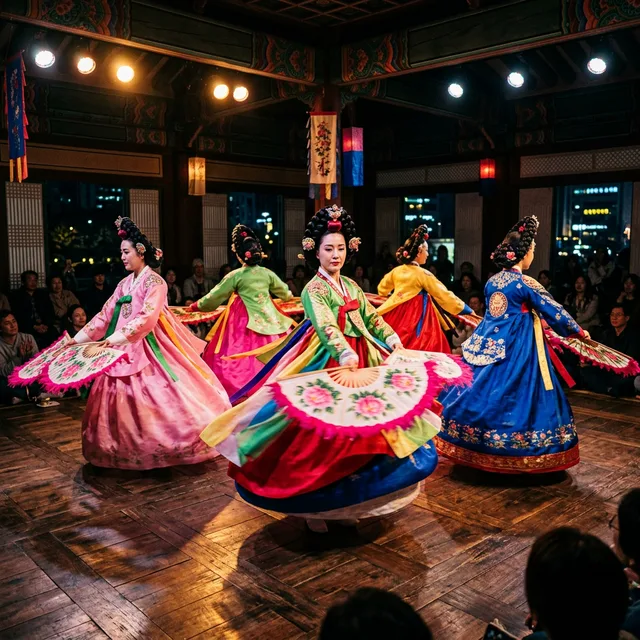
- Buchaechum (부채춤) — traditional Korean fan dance; one of the most visually spectacular forms in the repertoire
- Talchum (탈춤) — mask dance; satirical, often comedic performances rooted in folk tradition
- Jeongak (정악) — formal court music; stately, refined, unlike anything in the Western classical tradition
These aren't museum pieces. They're living traditions performed by conservatory-trained artists, staged regularly throughout Seoul, and increasingly accessible to international visitors.
National Gugak Center: The Best Single Venue for Traditional Music
The National Gugak Center (국립국악원), located in Seochogu south of the Han River, is the foremost institution for traditional Korean music performance and research in the country. For travelers, it's the most reliable place to experience a high-quality traditional performance at any time of year.
Saturday Gugak Concert The center's flagship tourist-accessible program runs every Saturday (check the official website for specific programming as it varies weekly). Each program is approximately 70 minutes and features a rotating selection of Gugak sub-genres — court music, instrumental solos, ensemble pieces, dance. Many programs include brief English explanations.
How to get there: Nambu Bus Terminal Station (Line 3), Exit 5; follow signs to the Gugak Center (about 10-minute walk).
Admission: Low-cost or free for many concerts; check gugak.go.kr for the current schedule.
Pro Tip: The Museum of Gugak Don't just attend the concert; arrive an hour early to visit the Museum of Gugak located within the same complex. In 2026, the museum features immersive VR experiences that allow you to "stand" in the middle of a Joseon-era court orchestra. It provides essential context that makes the subsequent live performance much more meaningful.
2025 Seoul Gugak Festival: October 8–9, 2025 at Namsangol Hanok Village and Seoul Namsan Gugakdang. A major outdoor celebration of traditional Korean music including Pansori performances and hands-on workshops — many events free to the public.
Pansori: The Korean Vocal Art That Will Stop You in Your Tracks
Pansori (판소리) is one of Korea's most distinctive cultural creations — a narrative singing tradition in which a solo singer (sorikkun) and a single drummer (gosu) perform epic stories that can last hours. The five classic Pansori works center on iconic Korean literary tales: Chunhyangga (a love story), Simcheongga (filial piety and sacrifice), Heungbuga (the good-hearted brother), Sugungga (the underwater kingdom), and Jeokbyeokga (a famous battle scene from Chinese literature).
What makes Pansori extraordinary is the performer's vocal technique — sogori (delicate passages) contrasted with jeongganbo (raw, powerful belting) — and the interactive dialogue between singer and drummer, where the drummer calls out chuimsae (encouragement calls) at emotional climaxes.
Where to experience Pansori in Seoul:
National Theater of Korea (국립극장) — The Complete Performance of Pansori runs at the National Theater through 2025. This is the definitive venue for formal Pansori — a full classical setting, professional singers of the highest level, and English subtitles for most performances. Location: Jangchungdan-ro, Jung-gu (near Dongdaemun).
Pansori Azit Nohlae Box — A more intimate, casual setting at Seoul Namsan Traditional Theater (Crown Haitai Hall). Shorter-format performances, sometimes themed around a single classic work.
Namsangol Hanok Village — Free and paid traditional performances, including Pansori, take place regularly in this open-air traditional village setting near Namsan Mountain. Check the village schedule online.
What to expect as a first-timer: Do not expect melody in the Western sense. Pansori is rhythmic, emotionally raw, and structurally unlike European opera or musical theatre. The vocal breaks — eui calls from the drummer and the singer's deliberate tonal roughness (nugeum) — are intentional features, not imperfections. Go in open, let the emotion land, and you may be surprised how deeply it connects.
The Nanta Show: Traditional Percussion Meets Comedy Spectacle
If traditional Gugak feels too austere a gateway, the Nanta Show (난타) is the most beginner-friendly entry point to Korean traditional performance culture.
Nanta blends the rhythms of Samulnori (traditional four-instrument percussion) with high-energy physical comedy, stagecraft, audience participation, and a kitchen theme — the performers are nominally "cooks" who must prepare a wedding banquet while the audience cheers them on. Because it's entirely non-verbal, Nanta is immediately accessible to international visitors of any language background.
Venues:
- Myeongdong NANTA Theatre — multiple shows daily (Tuesday–Sunday); most convenient for tourists staying in central Seoul
- Hongdae NANTA Theatre — afternoon and evening shows; good for combining with Hongdae's wider entertainment district
Booking: KKday, GetYourGuide, Klook, or direct at the theatre box office.
Tickets: Approximately 40,000–65,000 KRW depending on seat tier and advance purchase.
Duration: About 100 minutes.
Jeongdong Theater: Traditional Stories Reimagined
The Jeongdong Theater (정동극장), housed in a beautifully restored historic building near Deoksugung Palace, presents a rotating series of productions that reimagine traditional Korean literary and performing arts for contemporary audiences.
Current programming (2025) includes a theatrical reimagining of Simcheong — one of Korea's great classic stories of a daughter's sacrifice to restore her blind father's sight. Performances include English and Korean subtitles and are presented in the intimate, atmospheric setting of the historic theater.
Location: Jeongdong-gil, Jung-gu; a short walk from City Hall Station.
Booking: Direct at the theater, or through Klook.
Namsangol Hanok Village: Free Performances in a Traditional Setting
Namsangol Hanok Village (남산골한옥마을), a preserved cluster of traditional Korean houses at the foot of Namsan Mountain, hosts free and ticketed traditional performing arts throughout the year.
Regular offerings include:
- Buchaechum (fan dance) — one of the most visually extraordinary traditional Korean art forms; dozens of dancers moving in perfect synchronization with elaborate hand-painted fans
- Mask dance (Talchum) demonstrations
- Samulnori percussion performances
- Pansori short performances
Check the Namsangol Hanok Village official schedule (namsangol.or.kr) for current programming. Many performances are free with park admission.
The Korea Traditional Culture Center: Learn by Doing
For travelers who want more than observation, the Korea Traditional Culture Center offers daily hands-on cultural programs where you can:
- Learn the basics of Samulnori drumming
- Participate in a Korean tea ceremony
- Try on hanbok (traditional Korean attire) and learn its history
- Observe or participate in traditional crafts workshops
- Learn about traditional etiquette (jeorye)
This center is ideal for families with children or travelers who want an active, participatory cultural day rather than a spectator experience.
The Saturday Gugak Concert System: How to Plan Around Performances
The National Gugak Center's weekly concerts are organized by theme and change each week. Here's how to get the most from the system:
- Visit gugak.go.kr (the official site, available in English) at least 2 weeks before your Seoul trip.
- Check the Saturday concert schedule and note which weeks align with your visit.
- Programs often have English descriptions — look for keywords like "court music," "folk music," "dance," or specific performer names if you've done prior research.
- Book online or arrive early for same-day tickets; major productions can sell out for premium Saturday slots.
Practical Visitor Guide Summary
| Venue | Best For | Ticket Range | Booking |
|---|---|---|---|
| National Gugak Center | Pure Gugak; Saturday concerts | Free – 20,000 KRW | gugak.go.kr |
| National Theater of Korea | Full Pansori classics | 20,000–60,000 KRW | ntok.go.kr |
| Nanta Show (Myeongdong/Hongdae) | Beginner-friendly; families | 40,000–65,000 KRW | Klook, KKday |
| Jeongdong Theater | Traditional stories + modern staging | 30,000–50,000 KRW | Klook or direct |
| Namsangol Hanok Village | Free performances; open-air atmosphere | Free – small fee | Walk-in or namsangol.or.kr |
| Korea Traditional Culture Center | Hands-on workshops | Varies by program | visitseoul.net |
Which Traditional Arts Experience Fits Your Trip?
Most travelers do better when they choose one main format instead of trying to see everything in one evening.
| If you want... | Best pick |
|---|---|
| Easiest first traditional performance | Nanta in Myeongdong or Hongdae |
| Most serious music experience | National Gugak Center |
| Strongest storytelling and subtitles | National Theater Pansori or Jeongdong Theater |
| Free low-risk introduction | Namsangol Hanok Village |
| Something active, not just seated | Traditional culture workshop |
If you only have one night, pick one paid show and keep the rest of the day nearby. If you want to pair culture with palaces and hanok neighborhoods, this works well with the UNESCO sites guide and a walk through Seoul's five grand palaces.
What to Know Before Your First Traditional Performance
On arriving: Traditional Korean performance venues expect quiet attentiveness, though the atmosphere at folk and popular venues like Nanta is boisterous and participatory. Follow the audience's lead.
On understanding what you're hearing: Don't expect immediate comprehension. Gugak and Pansori operate on different scales, rhythms, and emotional registers than Western music. The unfamiliarity is part of the experience — let it wash over you rather than trying to decode it intellectually.
On the English language barrier: The National Gugak Center, National Theater, Nanta, and Jeongdong Theater all provide English information, programs, or subtitles. Namsangol is more variable — free performances may have minimal English signage.
On photography: Generally allowed from the audience in most venues (no flash); check for specific restrictions at each venue.
Seasonal Traditional Arts Events (Annual Calendar)
Korean traditional performing arts follow a seasonal rhythm tied to the lunar calendar and major cultural festivals.
| Season | Event | Location | Notes |
|---|---|---|---|
| Spring (April–May) | Lotus Lantern Festival (Yeon-deung-hoe) | Seoul (Jogyesa → Dongdaemun parade) | UNESCO-listed; traditional music and dance at the parade; free |
| May | Seoul Drum Festival | World Cup Park, Mapo | Samulnori and global percussion; outdoor and free |
| Summer (August) | National Folk Art Festival | Rotating regions | Mask dance, Pansori, regional folk music; tickets required |
| Autumn (October) | Seoul Gugak Festival | Namsangol Hanok Village + multiple venues | Major outdoor traditional music event; many free performances |
| October | Korea Traditional Arts Week | National Gugak Center | High-profile Gugak concerts; advance booking recommended |
| Year-round | Saturday Gugak Concert | National Gugak Center | Weekly program; check gugak.go.kr for schedule |
Budget Breakdown: Experiencing Traditional Arts in Seoul
Traditional arts in Korea span an enormous price range — from completely free to high-tier concert ticket prices.
| Experience | Cost | Where to Book |
|---|---|---|
| Namsangol Hanok Village performances | Free | Walk-in |
| National Gugak Center Saturday concert | 0–20,000 KRW | gugak.go.kr |
| Jeongdong Theater production | 30,000–50,000 KRW | Klook or direct |
| Nanta Show (standard seat) | 40,000–55,000 KRW | Klook, KKday |
| Nanta Show (premium seat) | 55,000–65,000 KRW | Klook, KKday |
| National Theater of Korea (Pansori) | 20,000–60,000 KRW | ntok.go.kr |
| Traditional culture workshop (half-day) | 30,000–80,000 KRW | Korea Tourism Organization |
Budget strategy: Combine free Namsangol performances (1 hour) with one paid show (Nanta or Jeongdong) to cover both the accessible and the more formal ends of the spectrum in a single day without exceeding 70,000 KRW total.
Hands-On Workshops: Participate, Don't Just Watch
For travelers who want more than spectatorship, Seoul has excellent hands-on traditional arts programs:
Samulnori Drumming Class
Several cultural centers in Insadong and Jongno offer 90-minute group drumming workshops where you learn the basic 4-instrument Samulnori rhythm patterns. No prior music experience required. Cost: approximately 30,000–50,000 KRW per person. The janggu (hourglass drum) is the usual beginner instrument — its two-sided design gives beginners an immediate sense of the call-and-response structure of ensemble drumming.
Pansori Introduction Seminar
The National Gugak Center periodically offers English-language introductory seminars (check the website for current programming) where a musician demonstrates the basic techniques and storytelling structure of Pansori. Often paired with a short live performance.
Traditional Korean Fan Dance (Buchaechum) Class
Shorter versions of Buchaechum fan dance are taught in group settings at several Insadong and Nagwon cultural centers. Learning 5–10 minutes of choreography with the iconic hand-painted fans gives enormous respect for the precision of professional dancers.
Frequently Asked Questions
Do I need to book Nanta in advance? Nanta runs multiple daily shows and rarely sells out completely, but booking at least 3–7 days ahead via Klook or KKday guarantees your preferred showtime and usually offers a small discount over box office price. During peak autumn and spring tourist seasons, a week's advance booking is safer.
Is there an age minimum for traditional performances? Nanta is suitable for ages 5+. National Gugak Center Saturday concerts have no age restriction. Full Pansori performances at the National Theater are recommended for ages 10+ due to duration (some shows run 90–120 minutes). Check individual venue guidelines.
Can I see more than one traditional art form in a single day? Yes — a practical one-day traditional arts itinerary: morning at Namsangol Hanok Village (free mask dance or fan dance performance at 11 AM), lunch in Insadong, afternoon hands-on Samulnori workshop, evening Nanta Show in Myeongdong. This covers four distinct traditional arts forms across one day for under 90,000 KRW total.
Are traditional performances subtitled in English? Nanta: no subtitles needed (non-verbal). National Theater of Korea Pansori: English subtitles for most productions. Jeongdong Theater: English and Korean subtitles. National Gugak Center: brief English program notes, no live subtitles (instrumental music needs no translation). Namsangol: minimal English signage.
Final Thoughts: Korea Before K-Pop
What should I wear to a traditional performance? No specific dress code applies to most traditional performance venues. Smart casual is appropriate for the National Gugak Center and National Theater. Nanta is entirely casual. If you visit a temple-based performance at Namsangol Hanok Village, modest attire (covered shoulders, no shorts) is respectful. Wearing a hanbok (traditional Korean dress) to a traditional arts performance is welcomed and adds to the experience — hanbok rental shops in Insadong and Jongno are nearby.
Is Pansori suitable for children? Children 8 and older generally find Pansori at the National Theater engaging — the emotional intensity, vocal acrobatics, and dramatic storytelling connect viscerally even without language comprehension. Nanta is excellent for children 5+. The National Gugak Center Saturday concerts are family-friendly.
How far in advance should I book the Nanta Show? 3–7 days in advance for off-peak periods. During peak tourist seasons (April–May cherry blossom, September–October foliage), 2 weeks ahead is safer. Nanta runs up to 4 shows daily on weekend, so sellouts are rare, but popular showtimes (7–8 PM) fill fastest.
K-pop is the dazzling surface of Korean musical culture. Beneath it lies a 1,000-year tradition of extraordinary sophistication. If you want the easiest entry, book Nanta. If you want the deepest musical experience, build one evening around Gugak or Pansori. Either route gives your Seoul trip a layer most visitors skip.
For the next step, connect this with the National Museum of Korea guide, the broader UNESCO heritage guide, or a palace-focused day through Seoul's five grand palaces.