Korean Sheet Masks 101: Which Ones Actually Work?

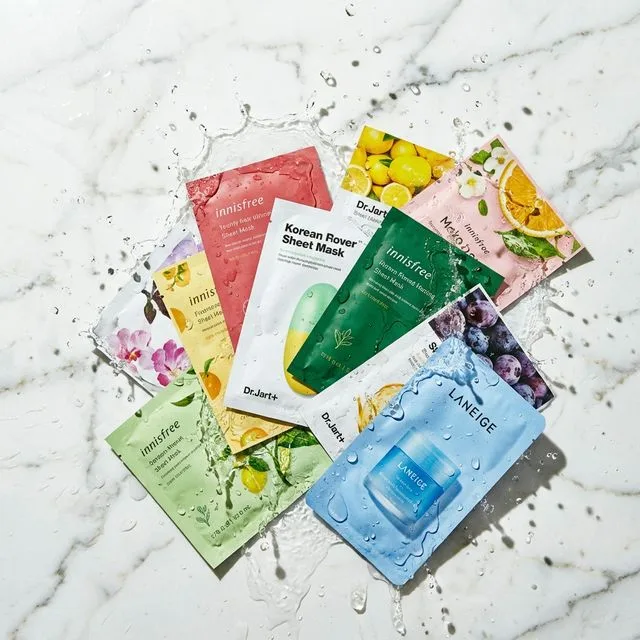
The "1 Day 1 Mask" challenge. It's a phrase common among Korean celebrities who credit their porcelain skin to using a sheet mask every single night. While you don't necessarily need to mask daily, the sheet mask remains the crown jewel of K-beauty: an affordable, instant facial that delivers a concentrated ampoule of nutrients in 20 minutes.
But walking into an Olive Young can be overwhelming. There are literally thousands of colorful packets promising everything from "snail repair" to "placenta power." Which ones are gimmicks, and which ones are holy grails? Here is your no-nonsense guide.
A Brief History of the Korean Sheet Mask
The sheet mask did not emerge from a lab overnight. It evolved from a very practical problem: how do you give everyone the benefits of a professional salon ampoule treatment without the salon price tag?
In the late 1990s and early 2000s, Korean dermatology clinics (피부과, pibugwa) were already using fiber sheets soaked in concentrated serums as part of post-procedure care — after laser treatments or chemical peels, a cooling, nutrient-soaked sheet was applied to help the skin recover. The concept was clinical, not cosmetic. Skincare entrepreneurs saw an opportunity. If this recovery technology worked so well in a clinic, why not package it for home use?
Mediheal launched in 2009 and essentially invented the modern mass-market sheet mask category as we know it. Their innovation was two-fold: bring the ingredient concentration close to clinical-grade, and price each mask low enough to be an impulse buy. At roughly 1,000 KRW per mask (less than a dollar), the math made sense. Within a few years, the Mediheal Teatree mask was selling millions of units annually, stacked in floor-to-ceiling displays at every Olive Young and Watsons in Korea.
Then came Hallyu — the Korean Wave. K-dramas and K-pop spread globally in the 2010s, and international fans noticed that Korean actresses had an almost surreal quality to their skin: clear, plump, luminous. The term "glass skin" (유리피부, yuri pibu) entered the global beauty lexicon. Journalists and beauty editors began investigating what Koreans were actually doing differently, and the answer kept coming back to the same things: layered hydration, rigorous sun protection, and yes, frequent sheet masking.
The cultural backdrop matters here. In Korea, visiting a 피부과 (dermatologist) is not considered a vanity exercise — it is a routine health appointment, comparable to seeing a dentist. Skin health is treated as a medical discipline, not just a cosmetics concern. This cultural seriousness around skincare drives both the demand for effective products and the level of ingredient literacy among Korean consumers. They read labels. They know what Adenosine and Beta-Glucan do. The market is not easily fooled, which is why the bestsellers in Korean drugstores tend to be the products that genuinely work.
Korea's humid, hot summers also play a role. When you live in Seoul in August — where humidity regularly sits above 80 percent — the hydration-first philosophy is not just aesthetic, it is practical. A dehydrated skin barrier physically feels uncomfortable in that climate. Sheet masking became part of the rhythm of managing skin health through the seasons, not just a beauty ritual for special occasions.
Decoding Ingredients: What Does Your Skin Need?
Don't buy a mask just because the packaging is cute. Look for these key ingredients based on your concern.
1. Hydration (Dry/Dehydrated Skin)
You need humectants that bind water to the skin.
- Look for: Hyaluronic Acid, Ceramides, Beta-Glucan.
- Best Brand: Torriden (Dive-In Mask) or Mediheal (N.M.F Aquaring).
2. Soothing (Acne/Redness/Sensitive)
You need anti-inflammatory ingredients to calm heat and rotation.
- Look for: Centella Asiatica (Cica), Tea Tree, Mugwort (Artemisia), Houttuynia Cordata.
- Best Brand: Abib (Gummy Sheet Mask Heartleaf) or Dr. Jart+ (Cicapair).
3. Brightening (Dull/Dark Spots)
You need items that inhibit melanin or promote cell turnover.
- Look for: Niacinamide, Vitamin C, Rice Extract, Pearl.
- Best Brand: Goodal (Green Tangerine Vita C) or I'm From (Rice Mask).
4. Anti-Aging / Firming
As skin matures, it loses collagen and elastin — two structural proteins responsible for that firm, bouncy texture. Sheet masks in this category work by delivering signal peptides (short amino acid chains that tell your skin cells to produce more collagen) and plant-derived actives that mimic retinol's cell-turnover benefits without the irritation.
- Look for: Adenosine (a clinically validated anti-wrinkle ingredient approved by Korean food and drug regulators), Peptides (look for Palmitoyl Tripeptide-1 or Hexapeptide-11 on the label), Bakuchiol (a natural retinol alternative derived from the babchi plant — same cell-turnover benefits, none of the peeling), and Ginseng Extract (a staple of traditional Korean medicine, now well-studied for its ability to stimulate collagen synthesis).
- Best Brand: Sulwhasoo (Concentrated Ginseng Renewing Facial Sheet Mask) for a luxury option with decades of ginseng research behind it, or Some By Mi for a more accessible entry point.
- Who it's for: Anyone past their late twenties noticing fine lines around the eyes or mouth, or a general loss of definition in the jawline. Use two to three times per week rather than daily.
5. Oil Control / Pore Minimizing
Oily skin is dehydrated skin trying to compensate — a fact that surprises many people who assume they should avoid moisture. The goal with this category is to regulate sebum production while simultaneously providing the hydration that keeps your skin from overproducing oil in the first place.
- Look for: Kaolin Clay (absorbs excess oil without stripping the barrier), Salicylic Acid (a BHA that dissolves inside the pore to clear congestion), Witch Hazel (a natural astringent that temporarily tightens pores), and Niacinamide (proven to reduce sebum production with consistent use).
- Best Brand: Innisfree (Jeju Volcanic Pore Mask) uses actual volcanic ash from Jeju Island as its clay base, making it one of the most effective drugstore options. For a more targeted approach, apply COSRX BHA Blackhead Power Liquid as a pre-mask prep step on congested areas before placing a hydrating sheet mask over the top — the combination works far better than any single "pore mask" product on the market.
- Who it's for: Combination-to-oily skin types, anyone with visible pore congestion, or anyone who finds that by midday their T-zone is shiny enough to reflect sunlight.
Material Matters: It's Not Just About the Serum
The fabric of the mask determines how well the serum penetrates.
- Cotton / Tencel: The standard. Breathable and cheap. Good for daily use.
- Hydrogel: A jelly-like material made of serum. It melts slightly with body heat, forcing moisture deep into the skin. Great for intense hydration.
- Bio-Cellulose: Made from fermented coconut juice. It clings to the face like a second skin (no air bubbles) and is cooling. Used in premium anti-aging masks.
- Microfiber: You will encounter microfiber masks frequently at airport convenience stores and tourist-facing pharmacies. They are typically the cheapest option on the shelf, and there is a reason for that. Microfiber has a looser weave than Tencel or bio-cellulose, which means it sits further from the skin surface and leaves air gaps between the mask and your face. Serum that cannot contact the skin cannot penetrate it. Microfiber masks are not harmful — they just deliver a fraction of the efficacy that the ingredient list might suggest. If it's all that's available at your gate, it's better than nothing. But do not prioritize them when shopping at a proper drugstore.
- Dry Sheet / Ampoule Pad Format: A newer innovation gaining serious traction in the Korean market. Instead of a wet mask soaking in a liquid serum inside a foil packet, a dry sheet mask is a compressed fiber pad that you soak yourself in a concentrated ampoule serum immediately before use. Brands like Klairs and Beauty of Joseon have pioneered this format. The advantages are meaningful: no preservatives are needed to stabilize an already-mixed serum (the dry pad and the ampoule are stored separately), you control the saturation level, and the delivery is more targeted. They are also significantly less messy — no dripping serum running down your neck while you try to watch television.
Practical buying guide by scenario: Choose hydrogel when it is a hot, humid day and you want the cooling effect on top of the hydration. Choose bio-cellulose the night before a big event or a job interview — the airtight fit and premium serum delivery will give you the most noticeable glow of any format. Choose regular cotton or Tencel for daily maintenance use, especially when traveling, since they pack flat and are the most cost-effective. Skip microfiber unless there is genuinely no better option.
Top 5 Sheet Masks actually bought by Koreans
These are the bestsellers you will see piled high in every drugstore in Seoul.
1. Mediheal Teatree Care Solution Essential Mask EX
The undisputed king. It has sold millions of units.
- Why: It calms breakouts overnight without drying the skin.
- Verdict: A staple for acne-prone skin.
2. Abib Gummy Sheet Mask (Heartleaf Sticker)
"Gummy" refers to the fit—it sticks to your face so well you can walk around.
- Why: Heartleaf is the trendy ingredient for calming sensitive skin.
- Verdict: The best fit on the market.
3. Round Lab 1025 Dokdo Mask
From the makers of Korea's #1 toner.
- Why: Uses deep sea water from Ulleungdo island. It is gentle, unscented hydration.
- Verdict: Perfect for sensitive skin that hates fragrance.
4. Dr. Jart+ Vital Hydra Solution
The blue pill mask.
- Why: It contains Aquaxyl, a patented moisturizing ingredient.
- Verdict: The SOS mask for when you are extremely dry or hungover.
5. Ilso Natural Mild Clear Nose Pack
Technically a nose strip, but a revolution. Unlike peel-off strips that damage pores, this melts fresh sebum so you can wipe it away.
- Verdict: A blackhead game changer.
The Best Sheet Masks for Travelers (Specific Use Cases)
A sheet mask is not just a skincare product — when you are traveling, it is a recovery tool. Planes, climate changes, long days on your feet, and unfamiliar food all show up on your face. Here is how to deploy your masks strategically, not just habitually.
The night before a long-haul flight: Use a hydrogel mask the evening before you board. Cabin air on international flights is pressurized at the equivalent of 6,000–8,000 feet of altitude with humidity as low as 10 to 20 percent — drier than most deserts. Your skin will lose transepidermal water during the flight no matter what you apply mid-air. Maxing out your skin's hydration reserves the night before gives you a head start. A Torriden Dive-In mask or any high-Hyaluronic Acid hydrogel format is ideal for this purpose.
After landing from a long flight: The Mediheal N.M.F. Aquaring mask is the specific product designed for this scenario — it was practically built for it. N.M.F. stands for Natural Moisturizing Factor, a blend of amino acids and humectants that replenish what the skin's surface naturally loses. Apply it within an hour of arriving at your accommodation, before your skin has time to start flaking or feeling tight. Lie down for 20 minutes. You will emerge looking measurably more human.
After a full day of sightseeing or sun exposure: Any Cica mask — the Abib Heartleaf, the Dr. Jart+ Cicapair, or a basic Centella Asiatica mask from any Korean drugstore — will calm the low-grade inflammation that accumulates from hours of UV exposure, wind, and environmental particulates. You do not need to have a sunburn to benefit from this. Even a normal day of walking around a city creates enough oxidative stress on the skin that a cooling, anti-inflammatory mask speeds your overnight recovery significantly.
Before a special event or night out: This is where bio-cellulose format earns its higher price point. The Jayjun Real Water Brightening mask (bio-cellulose) held firmly against the face for 20 minutes delivers a glass-skin effect that is genuinely visible in photographs. Apply it 30 to 45 minutes before you need to leave — long enough to let the residual serum fully absorb and for your skin to settle before you apply any makeup. Do not use this format after a long flight when your skin barrier is compromised; the strong adhesion can be uncomfortable on sensitized skin.
Hangover recovery: The Dr. Jart+ Vital Hydra Solution remains the consensus answer here, and for good reason. Alcohol is a diuretic that depletes cellular hydration, and the Aquaxyl complex in this mask works at a cellular level — not just on the surface. The blue packaging is not just branding; the cooling effect is real and provides some relief if your face feels puffy or inflamed. Pair it with oral rehydration (electrolytes, not just water) for best results.
Budget all-rounder when you just want to stock up: The Mediheal Teatree mask at approximately 1,000 KRW per mask at Olive Young is the benchmark for value. Buy a box of ten, use them throughout your trip, and pack the rest. At that price, there is no reason to ever run out.
Sheet Masks to Avoid (The Gimmicks)
The Korean sheet mask market is largely excellent, but it is not immune to marketing mythology. Here is what to walk past.
Gold masks: Gold flake masks have been popular for years in both Korean and Western markets, and they are almost entirely theater. There is no credible evidence that gold particles at the concentration used in cosmetics penetrate the skin barrier, and even if they did, the mechanism by which gold would improve skin function remains speculative at best. What you are paying for is the visual spectacle of a gold-colored mask and the premium packaging. The actual serum underneath is usually a standard hydrating formula that would cost a fraction of the price without the gold branding.
Cheap "snail" masks: Snail mucin is a legitimate ingredient. The Mucin-72 extract used by COSRX (their Advanced Snail 96 Mucin Power Essence is the category benchmark) is a well-studied compound that supports wound healing, maintains hydration, and has measurable evidence behind its use. However, the word "snail" on cheap sheet mask packaging — often found at tourist souvenir shops or convenience stores — frequently indicates a product with less than one percent actual mucin content. At that concentration, you are getting the marketing story, not the active. If snail mucin is what you want, verify it appears high on the ingredient list (within the first five to eight ingredients), not buried near the preservatives at the bottom.
"Detox" charcoal masks: The skin does not detox. That is not how human biology works — your liver and kidneys handle detoxification; your skin's job is to be a barrier, not a filter. Charcoal can be genuinely useful as an oil-absorbing ingredient for oily skin types, but the "detox" language attached to charcoal masks is pure marketing. If your skin is oily and you want an oil-control mask, a kaolin clay or BHA-based product will outperform charcoal for that specific function.
Any mask priced above 5,000 KRW at a convenience store: Convenience stores (CU, GS25, 7-Eleven) in Korea sell sheet masks, and the pricing at these outlets reflects location convenience, not ingredient quality. The same active compounds — often at equivalent or higher concentrations — are available in Olive Young house brand masks or Mediheal basics for 1,000 to 1,500 KRW. You are paying for 24-hour availability, not skincare efficacy.
The general rule: read the ingredient list, not the front of the packet. Korean cosmetics law requires full ingredient disclosure in descending order of concentration. If the hero ingredient you are paying for appears in the bottom third of a 30-ingredient list, it is a marketing ingredient, not a functional one.
Expert Tips for Maximum Results
- Prep with Toner: Never put a mask on dry skin. Use toner first to balance your pH and prep the skin to absorb the mask's serum like a sponge.
- The 20-Minute Rule: Do not sleep in your sheet mask. If the mask dries on your face, the process of osmosis reverses, and the dry paper will suck moisture out of your skin. Remove it while it's still slightly damp (usually 15-20 mins).
- Don't Wash It Off: When you take it off, your face will be sticky. That's good. Pat it in.
- Seal It In: You must apply a moisturizer (cream or lotion) afterwards to seal in the hydration. If you don't, the serum will just evaporate.
- Use the Excess: There is always extra serum in the bag. Squeeze it out and apply it to your neck, chest, and arms.
Conclusion
Sheet masks are the gateway to routine K-beauty. They are an affordable luxury that forces you to take twenty minutes for yourself, delivering immediate hydration and glow. Start with a reliable Mediheal or Abib mask, and your skin will noticeably improve. If you are looking to share this experience, curating a box of masks makes an excellent present, as noted in our K-beauty gift sets guide. To ensure you are buying these masks at the best prices during your trip, our Olive Young shopping hacks can help you navigate sales and promotions. Furthermore, if you want a complete aesthetic overhaul to match your newly glowing skin, you might consider booking a session for a K-pop inspired hair style to finish the look.