Hair Salons in Seoul: The Best Places for a K-Pop Inspired Look

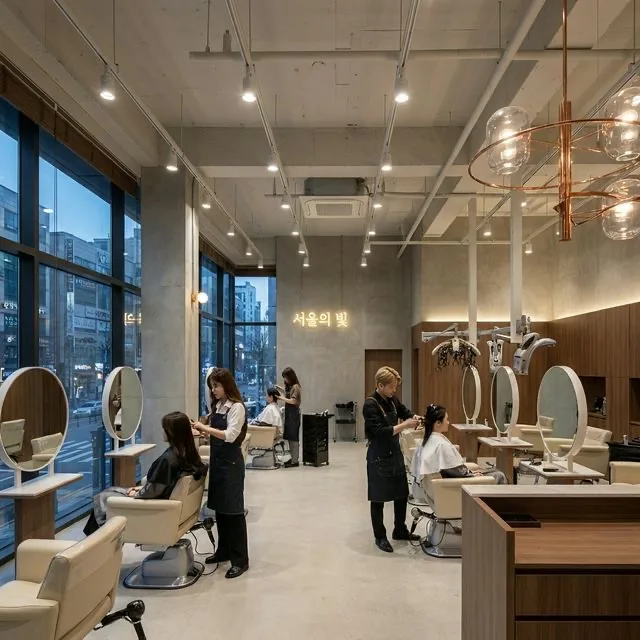
Getting a makeover in Seoul is a bucket-list item for many travelers. Why? because Korean hair technology and technique are lightyears ahead. Whether it's the "Root Perm" that defies gravity, the "C-Curl" that gives you immediate K-drama heroine vibes, or the meticulous "Head Spa" treatments, a trip to a salon here is a transformative experience.
However, the language barrier can be terrifying when scissors are involved. Fear not: we have curated the best salons where English is spoken, foreigners are welcome, and the K-pop aesthetic is mastered.
Why Get a Haircut in Seoul?
The Technique: Korean stylists are masters of texture. They use techniques like "thinning" and "layering" to give heavy Asian hair movement and lightness. The Perms: Unlike the frizzy 80s perms of the West, Korean perms ("Digital Perms") are designed to look like a blowout—soft, big, voluminous waves. The Service: Almost every cut includes a shampoo, a scalp massage, and a drink menu. It is luxury at an affordable price point.
The Price: This is where things get almost unfairly good. A cut, shampoo, and scalp massage at a mid-range Seoul salon runs 30,000–50,000 KRW — that is roughly $22–37 USD. The same service at a comparable salon in New York, London, or Sydney would set you back $80–150, and that is before you factor in the expected tip. The value proposition is, frankly, extraordinary. Even at the upper end of the foreigner-friendly salon market — think senior director level at a reputable Hongdae salon — you are rarely paying more than 80,000–100,000 KRW (around $60–75). For that price in most Western cities you would get a basic wash and trim with nothing else included.
The Technology: Korea's beauty industry invests heavily in R&D, and nowhere is that more visible than in chemical hair treatments. The perms, color formulations, and straightening solutions used in Seoul salons are typically newer and gentler than their Western counterparts. Korean salons adopted bond-protecting technology — a chemistry similar to what Olaplex commercialized in the West — as a standard part of color and perm services years before it became mainstream elsewhere. Many salons include a bond-repair step automatically, without charging extra for it. This means you can bleach or perm in Seoul with meaningfully less structural damage than you would expect from the same service back home. For travelers who have been nervous about chemical treatments, this matters enormously.
The Scalp-First Philosophy: Perhaps the most distinctive aspect of Korean hair culture is the underlying philosophy: the scalp is skin, and it must be treated like skin. The Korean concept of 두피 관리 (scalp care) means that most salon visits begin with a scalp analysis — using a microscope camera to assess sebum levels, follicle health, and hydration — before a single styling decision is made. Treatments end with a scalp-strengthening serum applied directly to the roots. This is not an upsell. It is the standard of care. After years of travel and dozens of haircuts in different countries, a Seoul salon appointment is the only one that has ever made me feel like my scalp was being genuinely looked after. The result is hair that does not just look good the day of the cut, but genuinely feels healthier for weeks afterward.
Top English-Speaking Salons for Foreigners
These salons are "foreigner-friendly" certified, meaning they are used to working with non-Asian hair textures and have staff fluent in English.
1. SUINstyle (Gangnam/Nonhyeon)
A long-standing favorite in the expat community.
- Specialty: They are incredibly versatile with hair textures, from curly to fine blonde hair, which can sometimes stump local stylists.
- Vibe: Professional, welcoming, and very used to international requests.
- Best for: Color correction and major style changes.
2. Juno Hair (Myeongdong & Hongdae Branches)
Juno Hair is the "Starbucks" of Korean salons—premium, ubiquitous, and consistent. Not every branch speaks English, but the ones in tourist hubs (Myeongdong, Hongdae) always have designated English speakers.
- Specialty: Current trends. Because it's a huge chain, their stylists are constantly trained on the latest season's looks.
- Best for: A reliable, high-quality cut or perm without the fear of a bad surprise.
3. The Day's Hair (Hongdae)
Located in the trendy youth district, this salon is famous on Instagram. The owner, Dean, and his team speak great English.
- Specialty: Trendy dye jobs (ash gray, pink, balayage) and modern cuts.
- Best for: The "Hongdae Hipster" look.
4. Soonsiki Hair
If you want to look like a K-pop star, go here. Their flagship in Hongdae is a spectacle—neon lights, DJs, and stylists who look like models.
- Specialty: Bold colors and "Wolf Cuts" or "Hush Cuts."
- Clientele: They work with many influencers and models.
- Best for: Someone who wants a complete, trendy transformation.
The Budget Option: Franchise Salons and Barbershop Chains
Not every Seoul salon experience needs to involve a consultation, a drink menu, and a waiting list. For travelers who want a clean, competent haircut without the fanfare, the franchise salon ecosystem has you covered — and the prices will make your jaw drop.
For men, barbershop-style chains like Salon de Gar (가르) offer excellent cuts for 8,000–12,000 KRW. That is under $10 for a proper cut with a skilled hand. These shops operate on a streamlined model — you check in at a tablet, select your style from a photo menu, and sit down. No appointment needed, no language gymnastics required. Point at the photo, nod, and pay. The stylists in these chains are trained specifically on modern men's cuts: the textured crop, the two-block (the signature Korean men's style with closely cropped sides and full length on top), and the classic down perm silhouette.
For women, local franchise salons — brands like Redroom and Hairre — offer Cut + Shampoo packages starting from 20,000 KRW. The key to a successful visit is finding a branch with a photo menu displayed at the reception desk, which most do. The stylists may not speak English, but they are competent, fast, and accustomed to executing the season's trending cuts. If you are simply after a trim or a light style refresh between your more ambitious salon appointments, these chains are an outstanding value.
Navigating a Korean Salon App: KakaoHairshop
Booking a top Seoul salon from abroad, or even from your hotel room, used to require navigating the Korean-language Naver reservation system — a genuine puzzle even for longtime Seoul residents. KakaoHairshop has changed this significantly. Here is the practical step-by-step:
- Download KakaoHairshop from the App Store or Google Play. The app interface has English support, though some menus remain in Korean.
- Search your neighborhood. Type in "Hongdae," "Gangnam," or "Itaewon" in the search bar to surface nearby salons.
- Filter by "English available." Look for the English-language filter or the 외국인 환영 (foreigners welcome) tag on salon profiles.
- Browse stylist portfolios. Most stylists link their Instagram accounts directly to their KakaoHairshop profile. This is your most important due-diligence step — scroll through their recent work, note their aesthetic, and make sure their style aligns with what you want.
- Book a slot. Select your stylist, choose your service, and pick a time. The app shows real-time availability.
- Receive KakaoTalk confirmation. Your appointment confirmation arrives as a KakaoTalk message. Screenshot it — some salons use this as your check-in.
Alternatively, direct Instagram DM booking is widely accepted and often preferred by the more boutique or celebrity-adjacent salons. Send a DM in English with your desired service, date, and a reference photo. Response times are generally quick, and most salon accounts have enough international clients that English DMs are routine.
The Celebrity "Idol" Experience
If you want the exact hands that touch BTS or TWICE, you have to go to Cheongdam-dong. Be warned: it's expensive ($100+ for a cut, $400+ for color).
Bit & Boot
The holy grail. This is the salon for BTS, EXO, TWICE, and NCT.
- The Experience: You might actually sit next to an idol (though privacy screens are used). The service is impeccable.
- Booking: Must be done weeks/months in advance, usually via Instagram DM.
Jenny House
Famous for styling actresses like Son Ye-jin (Crash Landing on You).
- Specialty: Elegant, feminine, "rich heiress" waves.
- Best for: Bridal hair or a very sophisticated makeover.
Popular Treatments Explained
Before you sit in the chair, know what to ask for:
- Head Spa (Scalp Treatment): A 10-15 step facial for your scalp. It exfoliates dead skin, unblocks follicles, and feels like heaven. Highly recommended for travelers.
- Down Perm: Essential for men. It chemically flattens the spiky side hairs that stick out, creating a slim, clean silhouette.
- Root Perm (Ppuri Perm): A perm applied only to the roots to create permanent volume at the crown.
- C-Curl / S-Curl:
- C-Curl: Ends curve inward (bob style).
- S-Curl: Loose, flowing waves.
- Magic Straight: A rebonding treatment that makes frizzy hair perfectly straight and shiny without damage.
Digital Perm vs. Cold Perm: This distinction trips up nearly every first-time visitor, and choosing the wrong one for your lifestyle is a genuine regret waiting to happen. A Digital Perm (also called a Hot Perm) uses heated ceramic rods. The result is defined, bouncy waves that look polished and styled even when completely dry — the look you see on K-drama leads stepping off a ferry. A Cold Perm, by contrast, uses no heat. The waves it creates are softer and more relaxed, looking their absolute best when the hair is damp or freshly diffused. Think effortless beach texture rather than styled glamour. The practical question is: how much daily effort are you willing to put in? If you have a blow-dryer and ten minutes every morning, the Digital Perm rewards that investment. If you are a wash-and-go person, the Cold Perm will look more natural within your routine.
Korean Balayage ("Hand Painting"): The Korean approach to balayage is noticeably different from the high-contrast, sun-bleached French version that dominated Western salons for the past decade. Korean colorists favor softer, more blended transitions with an emphasis on face-framing highlights and overall luminosity — the "glass hair" effect. The goal is dimensional shine rather than visible contrast. The result photographs beautifully and reads as expensive even when the color has grown out significantly. If you have been on the fence about balayage because you find the Western version too dramatic for your everyday life, the Korean interpretation is worth experiencing.
Scalp Botox (두피 보톡스): This is one of the more intriguing treatments unique to Korean medical aesthetics and one that has no real Western equivalent at the salon level. Peptide and growth-factor solutions are injected superficially into the scalp to stimulate follicle activity, strengthen existing hair from the root, and improve overall scalp circulation. It is not painful — the needles are extremely fine — and the downtime is zero. A single session runs 80,000–150,000 KRW depending on the clinic or salon offering it. For travelers experiencing stress-related hair thinning or simply curious about cutting-edge scalp science, it is a genuinely interesting appointment to add.
Keratin Treatments (케라틴 트리트먼트): The Korean keratin treatment fills damaged hair cuticles with high-protein solutions, sealing the surface of the hair shaft to dramatically reduce frizz and amplify shine. Crucially, it does this without permanently altering the curl pattern or hair structure — unlike Magic Straight, which chemically restructures the hair. This makes it ideal for travelers with naturally wavy or curly hair who want manageability and gloss without committing to permanently straight hair. The treatment typically lasts six to eight weeks, which means you will still be enjoying the results long after you have left Seoul.
How to Communicate Your Vision
The language barrier in a Korean salon is real, but it is entirely navigable with the right preparation. Here is how to walk in with confidence.
Build a Pinterest Board First. Before your appointment, save 5–10 reference images to a dedicated Pinterest board or phone album. Not just one image — multiple. Include shots that show the front, the side profile, and the texture detail you want. Korean stylists are visually fluent and will immediately understand what you are asking for from photos in a way that no translated vocabulary can replicate.
Know the Key Korean Phrases. You do not need to speak Korean to communicate effectively, but a few phrases signal that you are engaged and respectful of the process:
- 조금만 자르주세요 — Jogeum-man jaleu-juseyo — "Please cut just a little."
- 레이어드 컷 — Leiyeodeu keot — "Layered cut."
- 볼륨감 있게 — Bollyumgam itge — "With volume."
- 자연스럽게 — Jayeonseureobge — "Natural looking."
Use the Consultation Tablet. Many foreigner-friendly salons now open appointments with a digital tablet questionnaire in English. You will be asked about your hair history (recent chemical treatments, the last time you colored), your daily styling routine, and your style goals. Fill this out thoroughly — it is the stylist's roadmap and your best tool for setting expectations before anyone picks up a comb.
Be Realistic About K-Pop Reference Photos. This deserves its own honest conversation. The hair you see on BLACKPINK or aespa in their music videos involves extensions, professional salon blowouts, heavy post-production editing, and staging specifically designed to make the hair look extraordinary. Bringing those photos as your exact reference is a recipe for disappointment — not because the stylist lacks skill, but because those looks are not real-world achievable in a single appointment. A much more productive approach is to use idol reference photos to communicate the feel and direction you want — the softness, the length, the wave pattern — while being explicit that you understand the result will be adapted to your natural hair texture and face shape. The stylist will respect you for it, and you will be far happier with the outcome.
Tips for a Successful Appointment
- Bring Photos: Ideally of Korean models. "Short layers" means different things in New York vs Seoul. A picture is the universal language.
- Make a Reservation: Walk-ins are rare at good salons. Use Naver Map (if you can naviagte it), Instagram DM (most responsive), or apps like KakaoHairshop.
- Pricing Structure: Salons have tiered pricing.
- Stylist: Junior level (Cheapest).
- Senior Stylist/Director: Mid-range.
- Master/Head Director: Most expensive.
- Time: Korean appointments are fast. A cut might take 45 mins including wash. A perm takes 3 hours. Plan accordingly.
- Budget for Aftercare: Your stylist will almost certainly walk you to the retail shelf at the end of your appointment and recommend a follow-up product. This is not aggressive upselling — it is a genuine extension of the service philosophy. Korean salon retail carries professional-grade treatments: scalp serums, bond-repair masks, heat protectants formulated specifically for post-perm or post-color hair. Budget an extra 30,000–50,000 KRW for a hair mask or scalp serum to take home. They are genuinely good products, and having the stylist who just treated your hair select the right one for your specific condition is worth more than any shelf-browsing you could do at a beauty store.
- The "Dry Cut" vs. "Wet Cut" Consideration: Korean stylists typically cut hair dry or slightly damp, which allows them to see the natural fall, weight distribution, and movement of the hair before making any decisions. This is especially important for travelers with curly or wavy hair. If your hair behaves very differently wet versus dry, specifically request a dry cut at the beginning of your consultation. The phrase "건조한 상태로 잘라주세요" (please cut when dry) will be understood immediately. Avoiding the "it looked perfect in the chair but sprang up two inches when it dried" outcome is worth the extra thirty seconds of communication.
- Tipping is Not Done. This one surprises almost every Western visitor: do not tip. Tipping is not customary in Korea, and offering cash at the end of a service can create an awkward moment for a stylist who does not know how to receive it gracefully. The culturally appropriate response to an excellent service is sincere verbal appreciation. "예뻐요! 감사합니다!" — Yeppeoyo! Gamsahamnida! — "It's beautiful! Thank you!" will genuinely delight your stylist and is the correct closing note to a great appointment.
Conclusion
A Korean hairstyle is the ultimate wearable souvenir that changes how you carry yourself. Whether you book a simple trim at Juno Hair or a full transformation at Soonsiki, you will leave with remarkably healthier and stylish hair. To complement your new cut, exploring highly-rated Korean lip tints ensures your makeup matches the fresh aesthetic. If you want to dive deeper into personalized beauty, getting a custom foundation matched by a robot creates a flawless base for your new style. Finally, knowing your exact seasonal color palette through a personal color analysis session can help you choose the most flattering hair dye and makeup shades going forward.