How to Order Drinks at a Korean Pojangmacha (Street Tent Bar)

Introduction
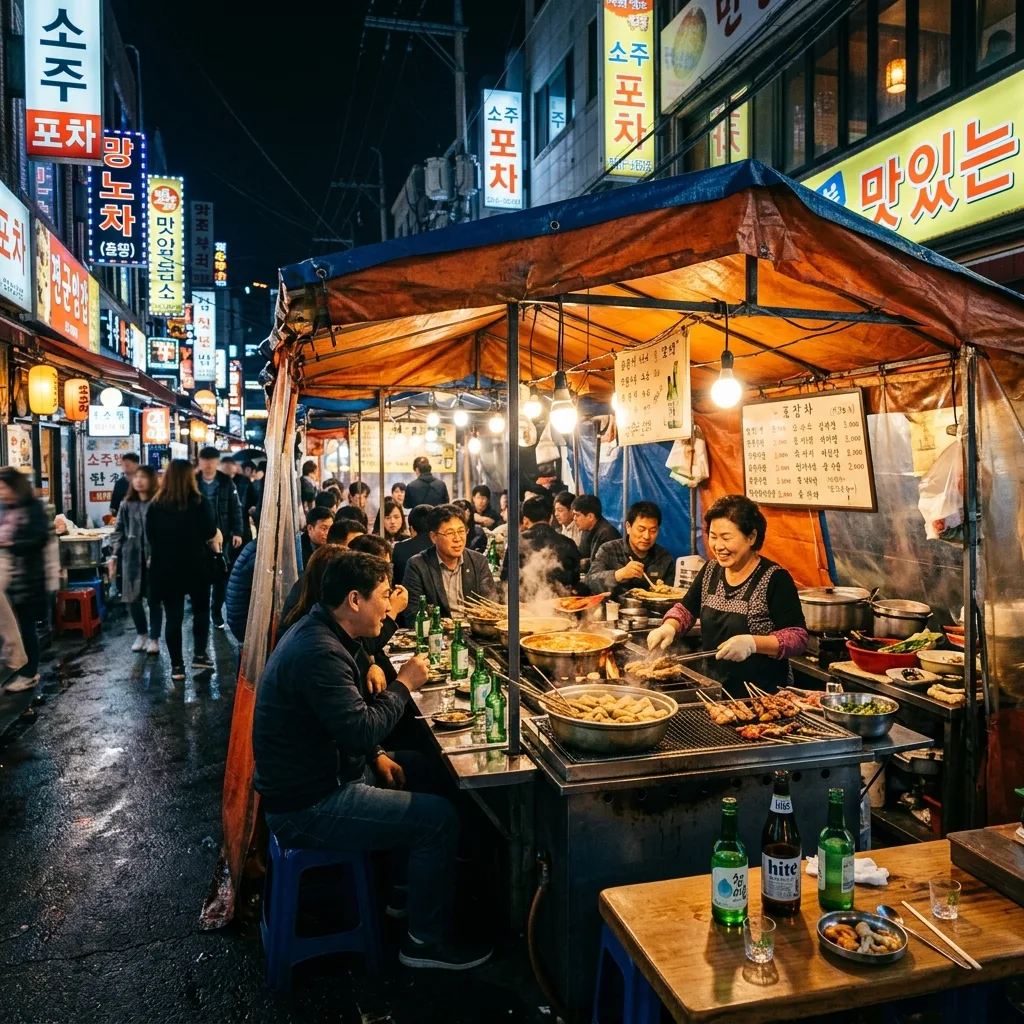
Ever found yourself wandering the vibrant streets of Seoul, captivated by the glowing red or orange tents, the clatter of dishes, and the lively chatter emanating from within? These are pojangmacha – iconic Korean street tent bars that offer an authentic glimpse into local culture, food, and drink. But for first-time visitors, stepping inside and knowing how to navigate the ordering process can feel a bit daunting. This guide will demystify the pojangmacha experience, focusing specifically on how to confidently order drinks and enjoy the unique atmosphere like a seasoned local.
You'll learn about the popular drink choices, essential Korean phrases for ordering, and the etiquette that makes a pojangmacha visit truly special. Get ready to pull up a plastic stool, raise a glass, and immerse yourself in one of Korea's most beloved social traditions.
The Pojangmacha Experience: Drinks and Atmosphere
Pojangmacha are more than just bars; they are cultural institutions, offering a cozy, informal, and often boisterous environment. The atmosphere is casual, with plastic tables and chairs, and the air filled with the aroma of sizzling street food and the clinking of soju bottles. While food is a major draw, drinks are integral to the pojangmacha experience.
Popular Drink Choices
The drink menu at a pojangmacha is typically straightforward, focusing on classic Korean alcoholic beverages:
- Soju (소주): The undisputed king of Korean alcohol. This clear, potent distilled spirit is served chilled and is meant to be shared. Various brands (Chamisul, 처음처럼, Jinro) are usually available.
- Makgeolli (막걸리): A milky, sweet, and slightly fizzy rice wine with a lower alcohol content than soju. It's often served in a bowl (사발, sabal) and poured from a kettle (주전자, jujeonja). It pairs wonderfully with savory pancakes (전, jeon).
- Beer (맥주, maekju): Korean lagers like Cass (카스) and Hite (하이트) are standard. Many locals enjoy somaek (소맥), a popular cocktail combining soju and beer.
- Soft Drinks (음료수, eumnyosu): While less common, sodas like Coke, Sprite, and sometimes local fruit juices are available for those who prefer non-alcoholic options.
Ordering Etiquette and Customs
Ordering at a pojangmacha is less formal than a traditional restaurant. There usually isn't a detailed menu, and pointing is often acceptable. However, knowing a few key phrases and customs can enhance your experience.
How to Order
- Get the attention of the owner/server: A simple "여기요!" (yeogiyo!, meaning "over here!") or making eye contact and raising your hand is usually enough.
- Order by name and quantity:
- "소주 한 병 주세요." (Soju han byeong juseyo.) - "Please give me one bottle of soju."
- "맥주 두 병 주세요." (Maekju du byeong juseyo.) - "Please give me two bottles of beer."
- "막걸리 하나 주세요." (Makgeolli hana juseyo.) - "Please give me one makgeolli." (Often sold in larger bottles or kettles).
- For somaek: You can order the components separately ("소주 한 병, 맥주 한 병 주세요." - "Soju one bottle, beer one bottle, please.") and mix it yourself, or sometimes ask for it to be mixed if the vendor is amenable ("소맥 한 잔 주세요." - "Please give me one glass of somaek," though this is less common at pojangmacha).
Korean Drinking Customs
- Pouring for others: It's customary to pour drinks for others at the table, especially for elders or those you are with. Never pour your own drink first.
- Receiving a drink: When someone pours for you, hold your glass with both hands as a sign of respect, especially if they are older or your superior.
- Toasting: The most common toast is "건배!" (Geonbae!), meaning "cheers!"
- Turning away: When drinking soju, especially in a formal setting or with elders, it's polite to turn your head slightly away from the table and cover your mouth with your hand when taking a shot. At a pojangmacha, this is often relaxed but still a respectful gesture.
- Empty bottles: Empty soju or beer bottles are often left on the table for the owner to count when you pay.
Practical Guide
Pojangmacha are typically open in the evenings, often running late into the night.
- Hours: Most pojangmacha open in the late afternoon/early evening (around 5-6 PM) and stay open until late night or early morning (2-4 AM), especially on weekends.
- Admission/Prices: There's no admission fee. Prices are generally affordable, though slightly higher than buying alcohol from a convenience store. Expect to pay around ₩4,000-₩6,000 for a bottle of soju or beer. Makgeolli might be slightly more.
- Location: Pojangmacha are found throughout Korean cities, often clustered in popular nightlife districts like Jongno, Euljiro, or around major markets. Simply walk around in the evening, and you're bound to stumble upon them.
- Booking: No bookings are required; it's a first-come, first-served street food and drink experience.
Tips & Common Mistakes
- Cash is king: While some pojangmacha accept cards, many prefer or only accept cash. It's always a good idea to have some Korean Won on hand.
- Don't expect fine dining: Pojangmacha are rustic and informal. Embrace the humble plastic stools and simple setup.
- Order food too: Drinks are almost always accompanied by anju (안주), Korean drinking snacks. Ordering some food like tteokbokki, odeng, or gopchang completes the experience and helps soak up the alcohol.
- Be adventurous: Don't be afraid to try different types of soju or makgeolli, or even a local specialty.
- Mind your volume: Pojangmacha are lively, but be mindful of your noise level, especially late at night.
How-To: Reading the Room and Navigating the Tent
Stepping into a pojangmacha for the first time can feel like walking onto a busy movie set where everyone knows their lines except you. Understanding the unwritten rules and physical body language of the space is crucial to transitioning from a bewildered tourist to a confident patron.
Step 1: Claiming Your Territory
Unlike restaurants with a hostess stand, pojangmacha operate strictly on a "seat yourself" basis. When you walk in, quickly scan the tent. If you see empty plastic stools around a stainless-steel table, head straight for it. Do not hover at the entrance waiting for permission. If the tent is packed and people look like they are finishing up (putting on coats, finishing the last drops of their soju), you can stand nearby to signal you are waiting, but aggressive hovering is frowned upon.
Step 2: The Art of the Visual Menu
While some modernized tents in tourist-heavy areas might have a laminated menu, the true, old-school pojangmacha relies on a visual display. Look at the glass case or the icebed near the cooking station. You will see an array of fresh seafood (squid, sea squirts, eel), marinated meats, and vegetables. To order food, simply walk up to the owner (often an older woman affectionately referred to as Imo or "Auntie"), point to the ingredient you want, and hold up your fingers for the quantity. They will know exactly how to prepare it—usually stir-fried with spicy gochujang or grilled with salt and sesame oil.
Step 3: Pacing Your Drinks and Anju
In Korean drinking culture, alcohol is rarely consumed without food. Your drinks and your anju (drinking snacks) should arrive around the same time. The golden rule of the pojangmacha is pacing. Do not chug your soju. Sip it, eat a piece of spicy stir-fried pork or a spoonful of warm odeng (fish cake) broth, chat with your friends, and repeat. The environment is designed for slow, steady social connection, not rapid intoxication. If you run out of food but still want to drink, it is completely normal to order a secondary, lighter snack like a rolled omelet (gyeran-mari) or simple grilled chicken gizzards (dak-ddongjip).
Step 4: The "Service" Culture
If you order a substantial amount of food and alcohol, or if you simply build a good rapport with the owner, you might suddenly find a small, unprompted dish placed on your table. This might be a simple bowl of mussel soup, some sliced cucumbers with ssamjang, or a fried egg. This is called service (pronounced "seo-bi-seu"), and it is complimentary. Always express gratitude with a loud and cheerful "Gamsahamnida!" (Thank you!). Attempting to pay for service will only confuse the owner.
2026 Price Breakdown: What to Expect in the Inflation Era
If you are reading guidebooks or blogs written before 2024, you need to recalibrate your budget expectations. As of 2026, South Korea has experienced significant inflation, driven by high USD/KRW exchange rates, surging global logistics costs, and spikes in raw agricultural imports. The days of treating a pojangmacha as a "dirt cheap" alternative to a bar are largely over. While still affordable, prices have crept up, reflecting the harsh reality of the 2026 supply chain where even the cost of cooking gas and wholesale ingredients has skyrocketed.
Alcohol Pricing
- Soju (소주): The days of 3,000 KRW soju are a distant memory. In 2026, expect to pay between 5,000 to 6,000 KRW per bottle at a street tent. In highly trafficked areas like Jongno or Gangnam, some premium or heavily capitalized tents might even charge 7,000 KRW.
- Beer (맥주): A standard bottle of Cass or Terra will run you 6,000 to 7,000 KRW. If you are planning on drinking somaek (the soju and beer combo), the cost can add up faster than you realize.
- Makgeolli (막걸리): A bottle or kettle of rice wine typically costs around 5,000 to 7,000 KRW, depending on the brand and size.
Food (Anju) Pricing
The cost of food at a pojangmacha is where the 2026 inflation hits the hardest, as vendors struggle with the rising costs of fresh seafood and imported cooking oils.
- Basic Snacks (Odeng, Udon): A bowl of simple udon noodles or a few skewers of fish cake in broth remains relatively accessible, usually costing around 4,000 to 6,000 KRW. This is the ultimate budget-friendly stomach-liner.
- Stir-fried Dishes (Jeyuk Bokkeum, Nakji Bokkeum): Spicy stir-fried pork or octopus are pojangmacha staples. Expect these plates to cost between 15,000 and 20,000 KRW.
- Seafood and Specialty Items: Fresh seafood, such as grilled eel or raw sea squirts, are the most expensive items on the menu. These can range from 20,000 to 35,000 KRW per plate.
Budgeting Tip: For a party of two, ordering one main dish, one side dish (like a soup or noodles), and three to four bottles of alcohol will easily cost between 45,000 and 60,000 KRW. Always carry enough cash to cover this amount, as relying on card readers in street tents can still be risky.
Hidden Gems: Where to Find the Best Pojangmacha Streets in Seoul
While you can find isolated pojangmacha scattered across the city, the best experiences are found in designated "pojangmacha streets" where multiple tents cluster together, creating an electric atmosphere of neon lights and steam. Here are the top locations to seek out in 2026:
1. Jongno 3-ga (종로3가)
The Vibe: Old-school, gritty, and fiercely authentic. Located near Exit 3, 4, and 6 of the Jongno 3-ga subway station, this area transforms into a sprawling labyrinth of orange and red tents as the sun goes down. This is arguably the most famous pojangmacha district in Seoul. It attracts a beautifully diverse crowd—from elderly men arguing over politics to young office workers loosening their ties after a long day. The tents here are known for their robust seafood selections and no-nonsense service. It gets incredibly crowded on Friday and Saturday nights, so arrive before 7:30 PM if you want to secure a table without waiting.
2. Euljiro 3-ga / Nogari Alley (을지로3가 / 노가리 골목)
The Vibe: Hip, retro, and heavily localized. While technically a mix of indoor pubs spilling out into the streets rather than traditional tents, Euljiro (often dubbed "Hip-jiro" by the younger generation) offers the exact same communal, open-air drinking experience. The specialty here is cheap draft beer and nogari (dried young pollack), which you rip apart with your hands and dip into a spicy mayonnaise sauce. The entire street becomes a massive, makeshift patio bar where tables are jammed so close together that you will likely end up cheering with the strangers sitting next to you.
3. Yeouido / Mapo Station Area (여의도 / 마포)
The Vibe: The Salaryman Sanctuary. Located near the financial district, the pojangmacha here cater primarily to the corporate crowd. The vibe is slightly more polished, and the prices can be marginally higher, but the food quality is excellent. These tents often specialize in heavier, comforting dishes meant to soak up the stress of a 12-hour workday. Look for tents serving excellent spicy chicken feet (dakbal) and hearty pork belly (samgyeopsal).
4. Sindang-dong (신당동)
The Vibe: Late-night comfort. While Sindang is globally famous for its Tteokbokki Town, the surrounding streets host excellent, low-key pojangmacha. These tents are less touristy than Jongno and offer a more relaxed pace. It is the perfect spot for a quiet, intimate conversation over a kettle of makgeolli and a massive seafood pancake (haemul pajeon).
Traveler Hacks: Essential Tips for a Smooth Night Out
Navigating a street bar in a foreign country requires a bit of logistical finesse. Keep these traveler hacks in mind to ensure your night goes off without a hitch.
The Bathroom Situation
This is the number one challenge for tourists visiting a pojangmacha. Because they are street stalls, they do not have private restrooms.
- The Hack: Before you sit down, identify the nearest subway station or a large, 24-hour fast-food restaurant (like McDonald's or Lotteria). Subway stations in Seoul have incredibly clean, free public restrooms and are usually open until midnight. Alternatively, look for a nearby PC Bang (internet cafe) or a large commercial building where you can sneak in. Do not wait until it is an emergency; plan your bathroom breaks strategically.
Payment Logistics in a Cashless Society
South Korea in 2026 is overwhelmingly a cashless society, with locals paying for almost everything via Samsung Pay, Apple Pay, or Kakao Pay. However, pojangmacha are the notable exception to the rule.
- The Hack: Always bring physical Korean Won (KRW). While some vendors have installed card readers or accept bank transfers (if you have a local Korean bank account), many older vendors vastly prefer cash and might flat-out refuse a foreign credit card. Bringing two 50,000 KRW bills per couple will cover almost any night out and save you the embarrassment of having to run to a convenience store ATM mid-meal.
Weather Preparedness
Pojangmacha are subject to the whims of the Korean climate. In the dead of winter (January/February), the temperatures can drop to -10°C (14°F). In the summer (July/August), the humidity is suffocating.
- The Hack: In winter, the tents are wrapped in heavy plastic and heated with small kerosene stoves. Dress in layers, as the inside of the tent will be surprisingly warm, but your back might be pressed against the freezing plastic wall. In summer, the plastic walls are rolled up, but there is rarely air conditioning. Wear breathable clothing and rely on ice-cold beer to regulate your body temperature.
The Ultimate Translation Tool
While pointing works for ingredients you can see, ordering specific dishes requires communication.
- The Hack: Download the Papago app (Naver's translation app, which is vastly superior to Google Translate for Korean). Use the image translation feature if there is a written menu on the wall, or type in the food you want (e.g., "Spicy stir-fried pork") and show the large Korean text to the vendor. It bridges the communication gap instantly and ensures you get exactly what you are craving.
FAQ
Q: Do pojangmacha have English menus? A: Rarely. Most pojangmacha cater to a local crowd, so English menus are uncommon. However, many vendors are used to tourists and can communicate basic orders through pointing or simple English words.
Q: Can I go to a pojangmacha alone? A: Absolutely! While often enjoyed in groups, many Koreans visit pojangmacha alone for a quiet drink and a snack, especially after work. It's a great way to people-watch.
Q: Are pojangmacha safe? A: Yes, generally very safe. Like any public place, exercise common sense. The atmosphere is usually friendly and communal.
Q: What's the best time to visit a pojangmacha? A: Late evening (around 7 PM onwards) is when they come alive and offer the most vibrant atmosphere.
Q: How do I pay at a pojangmacha? A: At the end of your meal, you can say "계산해주세요." (Gyesanhaejuseyo. - "Please give me the bill."). The owner will usually count your empty bottles and plates to tally the cost.
Conclusion
Visiting a Korean pojangmacha is an unforgettable experience that offers a true taste of local culture and hospitality. By understanding the common drink options, practicing a few simple ordering phrases, and respecting local drinking customs, you can confidently immerse yourself in the lively atmosphere. So next time you're in Korea, don't just walk past those glowing tents—step inside, grab a stool, and say "건배!" You're now equipped to enjoy one of Korea's most authentic social rituals.
If you want to go deeper, compare this street-tent experience with Korean drinking culture explained, best makgeolli bars in Seoul, and Korean bar etiquette.