Hanami Etiquette: How to Join a Cherry Blossom Picnic Like a Local

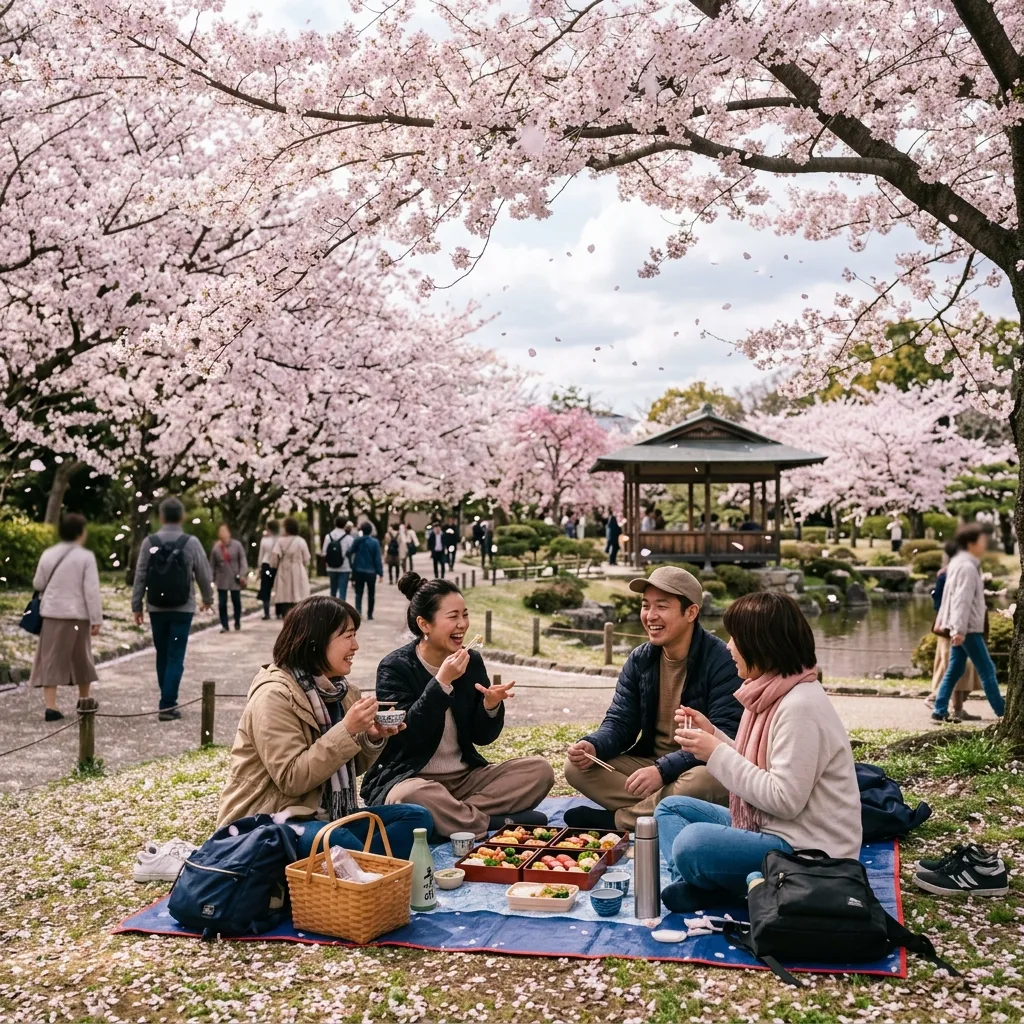
Hanami looks effortless from a distance: blue tarps under pink trees, friends laughing over convenience-store snacks, and rows of people enjoying spring as if they were born knowing exactly what to do. In reality, the calm scene is the result of a lot of quiet coordination. If you understand the rhythm, you can join a cherry blossom picnic without feeling like an intruder or slowing anyone down.
Introduction
Hanami is one of the most appealing parts of spring in Japan because it mixes public space, seasonal food, and a social ritual that feels relaxed but still has clear boundaries. The traveler challenge is not finding a cherry blossom tree. It is figuring out how to join the moment in a way that feels natural, especially when local groups have already claimed the best spots, brought their own supplies, and settled into a routine that works for them.
This guide explains the unwritten rules that shape a successful cherry blossom picnic, from how to arrive and where to sit to what to bring, how loud to be, and how to leave the space in better shape than you found it. If you want a broader context for the etiquette side of the trip, it also helps to read our Japanese Culture Guide: Customs, Etiquette, Do’s and Don’ts for Travelers, because hanami follows the same quiet logic that shapes everyday social life in Japan.
The short version is simple: be prepared, do not assume public space means no rules, and treat the picnic like a shared seasonal event rather than a private photo opportunity. If you do that, you will fit in quickly.
Primary Topic Section
Hanami etiquette is mostly about participation without disruption. The custom is built around spending time outdoors with sakura, but the social expectation is that you keep your footprint small, your noise controlled, and your cleanup complete. The best hanami guest is not the person who acts the most enthusiastic. It is the person who understands the rhythm of the park, respects the group sitting next to them, and leaves the space ready for the next wave of visitors.
At a local level, hanami is less like a formal picnic invitation and more like a seasonal agreement. If you see people arriving early with mats, food, drinks, and a plan for the day, that is because the popular spots fill quickly and the best viewing zones are often claimed in a practical, orderly way. If you are joining a group, you are stepping into that shared agreement. If you are arriving solo or with a partner, you are still part of it.
The first thing most visitors notice is that people sit close together without acting awkward about it. The second thing is that there is usually very little wasted motion. Bags are tucked away. Food is packed in an efficient way. Drinks are shared. People know where the trash will go before they open the first container. That attention to logistics is not accidental. It is what makes the experience feel calm instead of chaotic.
If you want to understand hanami as a traveler, think of it as a spring version of Japanese dining etiquette combined with public-space courtesy. The same principles that matter at a restaurant table matter under the trees: do not impose on the people around you, do not make cleanup somebody else’s job, and do not assume that your version of relaxed behavior is universal. That is also why readers who are already thinking about food etiquette may find our Sushi Etiquette in Japan: Omakase, Kaitenzushi & How to Order Right useful. The setting is different, but the underlying discipline is similar.
What hanami is actually for
Hanami is not just about looking at blossoms. It is about slowing down at the right moment in the season and sharing that moment with other people who are doing the same thing. In practice, that usually means a picnic, snacks, drinks, a few photos, and time spent under the trees before the petals fall. Some groups keep the tone quiet and reflective. Others make it more social and festive. Both are normal.
The traveler mistake is to think there is one correct form. There is not. There are, however, expected behaviors. You can celebrate, but you should not dominate. You can take photos, but you should not block paths. You can bring food and drinks, but you should not spread out so aggressively that others cannot use the public area around you.
How locals think about the space
Locals usually see hanami space in practical terms first. Is the ground dry enough? Is the grass protected? Is there enough room for a group to sit without interrupting foot traffic? Are there signs asking people not to bring certain items or not to step into closed areas? The blossom view matters, of course, but the layout matters just as much.
That means the picnic mat, the bag placement, the route to the restroom, and the shared trash plan are all part of the experience. If you arrive and immediately start rearranging your area while standing in the middle of a crowded viewing lane, you are already creating friction. If you arrive with a simple setup and settle in quickly, you look like someone who understands how the event works.
The role of food and drink
Food is part of hanami because spring in Japan is as much about seasonality as it is about scenery. Convenience-store bentos, onigiri, fried chicken, sweets, and canned drinks all fit the setting because they are easy to carry, easy to share, and easy to clean up. More elaborate home-packed meals are also common, especially among families and friend groups. The point is not luxury. The point is to keep the picnic easy to manage.
Alcohol is where visitors need the most judgment. In some parks and at some gatherings, drinks are normal and expected. In others, especially family-oriented spaces or places with explicit restrictions, alcohol is discouraged or not allowed. The safest traveler rule is to follow the mood of the group and the posted signs, not your assumptions. If the local tables are filled with soft drinks, tea, and snacks, copying that pattern is usually better than bringing a bottle of beer just because it is technically allowed.
Noise, music, and social tone
Hanami can be lively, but it is rarely chaotic in the way a Western festival can be. Even larger groups often keep their voices at a level that feels controlled rather than loud. Music is not automatically wrong, but portable speakers can easily become a problem because the setting is shared. A small private celebration becomes rude the moment it starts replacing the sound of the park with your playlist.
The safest approach is to match the group size and the density of the area. A quiet weekday picnic near a residential park should sound different from a company outing at a big public blossom spot. If you are unsure which atmosphere you are in, lower your volume first and observe for a few minutes. That is usually enough to tell you whether the area is relaxed, social, or built for sightseeing traffic.
What to do if you are invited to join a group
When a local friend or colleague invites you to join hanami, the etiquette changes slightly because you are entering an existing social circle. In that case, ask what you should bring instead of assuming the answer. Some groups want one shared snack tray, others want drinks, and some prefer that each person just contribute cash or buy convenience-store items on the way.
If someone is hosting, do not force them to manage your uncertainty. Bring a simple contribution, arrive on time, and ask where you should sit or place your bag. If there is a reserved mat, a patch of saved space, or a designated cooler, respect that arrangement. Hanami groups work because the roles are clear. The easiest way to fit in is to become one of the people who makes the setup easier rather than more complicated.
How public rules and social rules overlap
Public parks in Japan often have posted rules, but hanami also relies on social discipline that is not always written down. A sign might tell you where smoking is prohibited or whether alcohol is allowed, but it will not explain the full etiquette of not stepping through someone else’s setup, not leaving trash at the edge of the tree line, or not shaking branches for a dramatic photo.
This is where many travelers misread the situation. They see a relaxed outdoor event and assume the usual standards disappear. In Japan, that is rarely true. The event may feel relaxed because people have already built a stable shared pattern around it. If you want to participate smoothly, you need to work inside that pattern rather than treating it as a free-for-all.
Secondary Topic Section
The secondary question is where to join hanami and how to choose the right style of picnic for your travel day. Not every blossom experience needs to be a long afternoon under the trees. Some visitors want a short stop at a neighborhood park. Others want a full meal near a famous viewing spot. A few want a quieter garden visit where blossoms are part of a larger landscape rather than the only attraction. The right choice depends on your schedule, your appetite for crowds, and how much setup you want to carry.
Public parks versus ticketed gardens
Public parks are the easiest entry point because they are usually free, open to a wide range of visitors, and built for casual picnicking. The tradeoff is that the most popular parks can be crowded, especially when the blooms peak. If you want a more structured experience, a ticketed garden or a seasonal event area may give you cleaner grounds, more controlled traffic, and clearer rules. Those settings often feel calmer, but they may also be less spontaneous.
The decision is not about better or worse. It is about what kind of spring afternoon you want. If your goal is to sit on a tarp with convenience-store food and join the crowd, public park hanami is ideal. If your goal is to walk slowly, take photos, and avoid the densest picnic traffic, a garden can be the better choice. If you are traveling with family or older relatives, a more controlled venue may also be easier because there is less pressure to arrive at dawn or fight for seating.
Peak bloom timing and why it matters
Hanami is strongly shaped by bloom timing. When the flowers are at peak, everyone else knows it too. That means transport is busier, popular lawns fill earlier, and the most photogenic spots become the most crowded spots almost immediately. If you arrive late on a peak day, you may still enjoy the trees, but you are more likely to get a less ideal place to sit or to share space with larger groups.
Travelers often ask whether they should chase the peak bloom or settle for a quieter day. The answer depends on what matters more to you. Peak bloom gives you the classic postcard experience, but the crowd level can be intense. A day just before or just after the peak may offer a more comfortable picnic, even if the trees are slightly less full. That tradeoff is worth considering if you care more about the atmosphere than the perfect photo.
What to expect from local groups
Local groups often arrive with more planning than casual travelers expect. Someone may be designated to reserve the area early. Someone else may bring the mat, the snacks, or the drinks. There may be an unspoken distribution of responsibilities that keeps the whole gathering moving. If you are joining that kind of group, do not treat it like a Western-style improvisational picnic where everyone wanders in with a random bag and figures it out later.
Instead, ask a direct question: what should I bring, when should I arrive, and where should I meet you? The directness is helpful because it reduces the chance of forcing the host to translate a whole plan in real time. This is the same reason our JR Pass Guide 2026: Is It Worth It and Which Type to Buy is useful for trip planning: the less you guess about logistics, the easier the experience becomes.
Weather, ground conditions, and comfort
Spring weather can look gentle on paper and still feel cold in the shade or windy after sunset. Hanami etiquette includes being prepared for that reality because uncomfortable guests tend to spread out more, move around more, and make the picnic harder to manage. A compact layer, a light blanket, and a seat cushion can make a big difference.
Ground conditions matter too. Wet grass, muddy paths, and damp mats can turn a pleasant picnic into a nuisance. If you arrive early enough to choose a spot, pick one that is not in the drainage path, not directly on fragile planting areas, and not in the middle of a traffic line that people use to pass through the viewing zone. A good hanami spot is not just the prettiest one. It is the one that works for sitting, eating, and leaving cleanly.
Food style: store-bought, homemade, or shared
There is no etiquette penalty for buying almost everything. In fact, a convenience-store hanami can be the most practical option for travelers because it is fast, affordable, and low-risk. If you do make food yourself, keep it simple and portable. Fried items, sandwiches, rice balls, fruit, sweets, and snacks travel well. Soup, fragile plated dishes, and anything that requires heavy prep usually create more problems than they solve.
Shared food should also be easy to divide. A giant cake may look festive, but if you do not have plates, knives, and a cleanup plan, it becomes awkward. Smaller packaged items are easier. The same is true for drinks. Choose containers that close cleanly and that will not leak if you need to carry them across a station or park entrance.
Photography without becoming the problem
Cherry blossoms are incredibly photogenic, which is why hanami areas can become dominated by people trying to capture the perfect frame. The etiquette issue is not photography itself. It is whether your photo-taking behavior starts interfering with the people around you. Standing in a narrow path for several minutes, stepping into someone else’s picnic space, or shaking a tree branch for petals are all examples of turning your camera into a social nuisance.
The best approach is to shoot quickly, step aside, and keep your setup compact. If you want wide shots, do them before you settle into the picnic or after you pack up. If you are with a group, let one or two people handle the photos instead of making everyone else wait while you conduct a full portrait session. That keeps the picnic feeling like an outing and not a production.
If you want a quieter version of hanami
Not every traveler wants a crowded park full of music, food, and families. A quieter version of hanami is still valid. You can visit a tree-lined street, a neighborhood park, or a less famous garden and spend a shorter amount of time there. In some cases, the best experience is simply walking under the blossoms, buying a drink, and taking a few minutes to appreciate the season before moving on.
That version of hanami may not look dramatic on social media, but it often gives you more room to notice the atmosphere. You hear more birds, see more details in the branches, and spend less time worrying about where to put your bag. If your travel schedule is already full, a quieter hanami can be a better fit than a long all-day picnic.
Practical Guide
The practical side of hanami is mostly about time, access, and readiness. The blossoms are the main event, but the logistics determine whether you enjoy them or spend the afternoon managing preventable frustrations.
Hours / Admission / Prices
There is no single hanami schedule because cherry blossom viewing happens in parks, riverside areas, temple grounds, gardens, and neighborhood streets. In general, public parks are free, while some gardens, special festival zones, or historic sites may charge admission. Opening hours also vary widely. Some locations are effectively open all day, while others follow seasonal gates, dawn-to-dusk rules, or timed-entry reservations during peak bloom periods.
The safest traveler assumption is this: if the location is a public park, check for posted access rules and expect free entry; if it is a managed garden or a special blossom event, expect a possible fee and a more structured arrival window. If you are joining a picnic in a famous place, do not build your plan around a hidden bargain. Build it around the possibility that the best-view area may be crowded, while the best-managed area may come with a modest cost.
If you are trying to budget a sakura day, remember that food, transport, and convenience purchases usually matter more than the entrance fee. A simple picnic can be inexpensive if you keep the food practical and buy drinks on the way. A more elaborate blossom day, especially in a famous city center, can become expensive quickly because of transport, café stops, and the temptation to turn the outing into a full seasonal meal.
How to get there
The easiest transport strategy is to get as close as possible by rail or subway, then walk the last segment. This keeps the trip predictable and avoids the stress of parking or navigating roads near a crowded event. Famous blossom spots can create heavy pedestrian traffic, so the final walk can take longer than you expect even after you arrive at the correct station.
If you are traveling in Tokyo, Kyoto, Osaka, or another major city, plan for station congestion around peak bloom. Leave a margin for crowds, lineups, and the possibility that the most direct exit is not the fastest exit. If you are unfamiliar with Japan’s rail network, it helps to read practical trip-planning material such as the JR Pass Guide 2026: Is It Worth It and Which Type to Buy, because blossom season often overlaps with city-hopping and regional day trips.
For local movements inside cities, a simple transit card, a walking map, and a willingness to use a slightly less famous station can save time. Do not assume that the station nearest the blossom trees is the best one to use. Sometimes the next station over has fewer bottlenecks and a calmer exit route.
Booking links if applicable
Many hanami picnics do not require a booking at all. That is part of the appeal. You bring your blanket, find a spot, and participate. But some blossom experiences do involve reservations or timed access, especially if the location is a formal garden, an event venue, a river cruise, a rooftop view, or a guided walking tour.
If you need a booking, the best source is usually the official venue page or the official tourism page for the city or prefecture. When a reservation system exists, it usually matters more than a third-party summary because blossom season rules can change by date, capacity, or weather. For travelers who want an organized experience, a guided tour can also be useful, but the key is to verify exactly what is included: entrance, transport, meeting point, timing, and whether food is part of the package.
The simplest rule is to avoid overplanning the booking side unless the specific site requires it. Hanami is often best when it stays flexible. If a spot needs a ticket, book it. If it does not, do not invent complexity where none exists.
What to pack
A good hanami kit is small but deliberate. Bring a picnic mat or tarp, tissues, hand sanitizer, trash bags, a small towel, something to drink, and enough food for the duration of the visit. If the ground may be damp, add a cushion or foldable seat pad. If the weather is changeable, add a light layer or compact umbrella.
If you are joining a group, ask whether they already have shared items. Many groups will not need everyone to bring a mat or cooler, and duplicating gear is inefficient. If you are the one organizing, keep the packing list lean. Hanami is more comfortable when people can settle in quickly and pack out just as quickly.
How to reserve a spot without acting entitled
In some crowded areas, people arrive early and set down a mat to hold their place. That is normal only when it is clearly allowed and culturally accepted in that specific setting. Do not assume you can reserve a large area indefinitely by leaving one person behind or by spreading gear too aggressively. The idea is to claim a reasonable space for your group, not to convert public ground into private property.
If local visitors are using a reservation pattern, follow the same standard without exaggerating it. Keep your setup tidy, avoid reserving more area than you need, and be ready to adjust if staff or signage indicate that the space is limited. Courtesy in a crowded park is not about being passive. It is about being accurate.
Food and drink strategy for travelers
The easiest traveler strategy is to buy food the same day, not overcomplicate the menu, and choose items that are easy to eat while seated on the ground. Onigiri, sandwiches, fried chicken, fruit, snacks, and sweets are all practical. If you want to level up the meal without making the picnic heavy, add one or two special items and keep the rest simple.
For drink choices, match the tone of the group and the park. Water, tea, canned coffee, soft drinks, and beer are all common, but common is not the same as universally appropriate. If you are unsure, default to a non-alcoholic drink first. If alcohol is part of the group, it will usually become obvious quickly.
If you want more ideas for food-centered travel in Japan, our Street Food in Japan: Takoyaki, Crepes & Convenience Store Gems pairs well with this topic because the same convenience-first mindset works for both blossom picnics and casual meals on the move.
Tips & Common Mistakes
The easiest mistakes at hanami come from treating it like a casual Western picnic and forgetting that the space is shared, seasonal, and often crowded. The goal is not perfection. The goal is to avoid the things that create friction.
Mistake: arriving unprepared
Showing up without a mat, without trash bags, or without a plan for what to do with wrappers is the fastest way to make hanami harder than it needs to be. At a minimum, you need something to sit on and something to carry your waste out with. In many parks, that is not optional. Even where public bins exist, they are often limited or crowded during blossom season.
Mistake: taking too much space
It is tempting to spread out when the blossoms are beautiful and the park feels open. But if you are blocking a walkway, reserving an oversized area, or placing bags where people are trying to pass, you are turning a public experience into a private one. Keep the setup compact. Leave the edges clear. Respect foot traffic.
Mistake: treating trash as someone else’s problem
Hanami cleanup matters. Carrying out your own trash is part of the experience. If you bought food from multiple places, separate what you can, close bags properly, and do not leave loose containers behind. A beautiful flower picnic loses its appeal quickly if the ground becomes littered with cans, napkins, and food packaging.
Mistake: confusing loud fun with local comfort
The fact that people are laughing does not mean every level of noise is acceptable. Be mindful of how your group sounds from a few meters away. If you are using music, keep it minimal and make sure it does not overwhelm the surrounding area. The best picnic atmosphere is lively enough to feel celebratory and quiet enough that everyone else can enjoy the park too.
Tip: arrive earlier than you think you need to
Arriving early is one of the simplest ways to improve the day. It gives you time to find a seat, assess the crowd, and choose a spot that is comfortable instead of just available. Early arrival also reduces the pressure to rush through the setup. If your plan is to take photos, eat, and relax, that extra margin matters.
Tip: keep your bag organized
A tidy bag makes hanami smoother. Put tissues, wipes, trash bags, and drinks where you can reach them quickly. If you have to unpack the entire bag every time someone wants a napkin or a bottle of water, the picnic becomes clumsy. Organization is a small thing that changes the feel of the whole day.
Tip: watch what locals do before copying the vibe
Not every hanami area has the same social code. Some spots are clearly for families. Others are almost entirely for groups of friends or coworkers. Still others are more like scenic walking routes with a few people sitting quietly nearby. Before you decide how expressive to be, spend a minute observing. That one minute can save you from misreading the setting.
Tip: know when to leave
Leaving cleanly is part of good etiquette. Do not wait until the area is packed and then try to repack your gear in the middle of the traffic stream. Finish food, collect trash, fold the mat, and step out promptly. If you are leaving with a group, make sure nobody is still sorting bags while everyone else is blocking the path.
What most guides miss
Many blossom guides focus on where to see sakura, but not enough on how to behave once you are there. The truth is that the experience is shaped just as much by your setup and cleanup as by the tree itself. A visitor who is well prepared can enjoy an ordinary park almost as much as someone standing under a famous grove, because the difference often comes down to stress, not scenery.
That is also why travelers benefit from reading related etiquette guides before the trip. If you understand the structure of Japanese social rules from broader life and dining examples, you are far less likely to misread hanami. The lesson is consistent across contexts: be observant, be compact, and do not make the shared space harder to use.
FAQ
Can I join hanami if I am traveling alone?
Yes. Solo hanami is completely normal. You can sit quietly, eat a simple lunch, and enjoy the blossoms without joining a large group. If you are at a busy park, keep your setup small and be mindful of space around you.
Do I need to bring alcohol?
No. Alcohol is optional and depends on the setting. In many places, soft drinks, tea, coffee, and water are just as normal. If you are not sure whether alcohol fits the event, start with a non-alcoholic drink and follow the tone of the people around you.
Is it rude to take lots of photos?
It depends on how you do it. Taking photos is expected at cherry blossom time, but do not stand in walkways, enter another group’s setup, or make everyone wait while you shoot the same angle for ten minutes. Be efficient and step aside.
What should I do with trash?
Take it with you unless the park clearly provides disposal points and expects visitors to use them. Bring your own trash bag and be ready to separate items if needed. Leaving a clean area is one of the simplest signs that you understand the etiquette.
Are cherry blossom picnics only for locals?
No. Visitors are welcome as long as they follow the same rules everyone else follows. You do not need to act like a local to enjoy hanami. You just need to be prepared, respectful, and willing to fit your behavior to the setting.
What is the biggest mistake travelers make?
Usually it is assuming that a relaxed outdoor setting means the rules are loose. Hanami may feel informal, but the social expectations are real. The best approach is to keep your setup small, your noise controlled, and your cleanup complete.
Conclusion
Hanami etiquette is not complicated once you understand the logic behind it. Cherry blossom picnics work because people cooperate without making a show of it: they arrive with what they need, they take the space they need, and they leave the space ready for the next person. If you want to join like a local, do the same. Bring a simple setup, keep your group compact, match the tone of the park, and clean up thoroughly.
The practical takeaway is that good hanami behavior is mostly about reducing friction. Know where you are sitting, what you are carrying, how loud you are being, and where your trash will go. If you are joining a local group, ask what to bring. If you are going alone, keep your plan small and flexible. If you are visiting a famous blossom spot, arrive earlier than you think you need to and be ready for crowds.
That is enough to make the day feel easy instead of awkward. And once you are comfortable with that rhythm, cherry blossom season stops being something you just observe from the outside. It becomes one of the most enjoyable ways to participate in Japanese spring.