Beppu Hot Springs: Japan's Onsen Capital and the Eight Hells

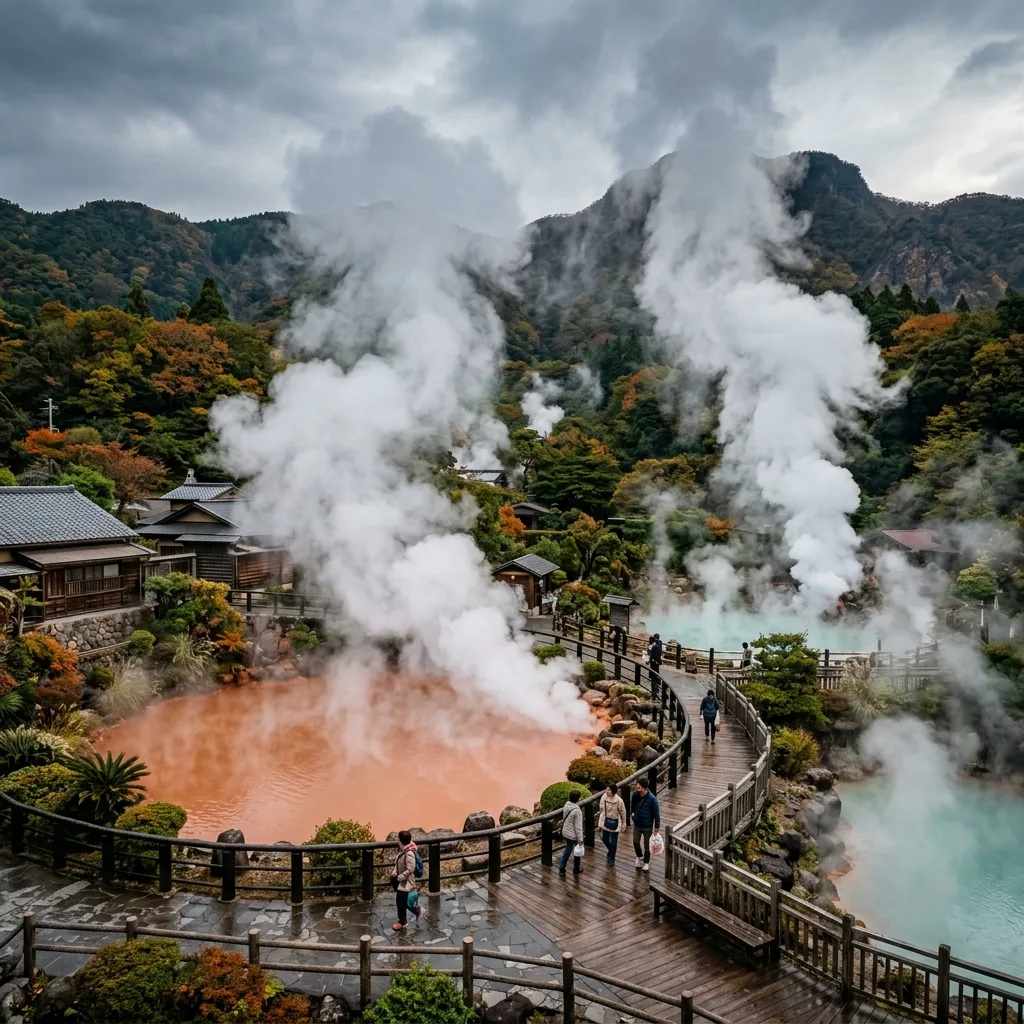
Beppu is the easiest place in Japan to understand why onsen culture matters. You get a dense hot-spring city, a famous sightseeing circuit of steaming "hells," and enough bathhouses, ryokan, and neighborhood character to turn a simple day trip into a full travel experience. If you want one base in Kyushu that mixes sightseeing with actual bathing, Beppu belongs near the top of the list.
Fast Answer
Beppu works best as a one-night stay, but you can still get a lot out of it in a long day if you focus on the Kannawa hot-spring area and the Hells of Beppu sightseeing course. The key idea is simple: the "hells" are for viewing, not soaking, while the surrounding town is full of places where you can actually bathe. That makes Beppu unusually useful for first-time onsen travelers because it combines spectacle, education, and recovery in one compact trip.
The smartest way to visit is to treat the hells as your daytime sightseeing plan and the onsen as your evening plan. Start with the most walkable hells, add the two farther ones only if you have enough time or transport, then finish with a public bath or a ryokan day-use soak. If you are building a broader Japan itinerary, use Beppu as your onsen anchor rather than trying to squeeze it into a rushed photo stop.
At a glance, Beppu rewards travelers who want practical comfort more than flashy luxury. You do not need specialist knowledge, you do not need expensive gear, and you do not need a complicated reservation strategy for the basic sightseeing circuit. What you do need is a little planning around transit, enough time to linger, and the willingness to let steam, sulfur, and hot water set the pace.
Context You Need
Beppu sits on Kyushu in Oita Prefecture and is one of Japan's most famous hot-spring cities. It is often called an onsen capital because hot water appears everywhere in daily life: in bathhouses, ryokan, neighborhood steam streets, sand baths, footbaths, and the geothermal vents that make the city look and feel alive. The result is not a single attraction but a whole thermal landscape.
The part most travelers know is the Hells of Beppu, or Jigoku Meguri. These are dramatic hot-spring sites created for viewing rather than bathing. The standard route includes seven hells, and they are spread across the Kannawa and Shibaseki areas. The famous "hell" label comes from the vivid water colors, violent boiling mud, and erupting steam that make the scenery feel otherworldly. It is a sightseeing route built around geology, not a spa day.
That distinction matters because first-time visitors often assume they can bathe in the hells. You cannot. Instead, think of the hells as the showpiece and the surrounding town as the place where the real soaking happens. Once you see it that way, Beppu becomes a very efficient destination: one circuit for the eyes, another for the body, and a long list of ways to tailor the experience to your budget and energy level.
Beppu also sits inside the larger culture of Japanese onsen etiquette. That means you will get more out of the city if you already understand a few basics: wash before entering the bath, keep towels out of the water, speak quietly, and respect the bathhouse rules even when they differ from one place to another. A broader onsen primer is helpful before you go.
For route planning beyond Beppu, the other useful frame is how it fits into a wider Japan itinerary. Beppu is much easier to enjoy when you already know your rail pass, IC card, and luggage strategy, especially if you are combining Kyushu with Tokyo or another major hub. Getting the boring but essential parts right first saves time later.
Step-by-Step Guide
The easiest way to approach Beppu is to sequence it like a small travel project instead of a loose collection of sights. The city becomes much easier once you decide what kind of day you want: half-day hell tour, full-day sightseeing plus bathing, or an overnight onsen stay.
Here is the cleanest first-timer flow:
| Step | What to do | Why it helps |
|---|---|---|
| 1 | Arrive in Beppu and head toward Kannawa | This is the densest area for the hells and steam scenery |
| 2 | Visit the walkable hells first | You get the most famous sights without transport friction |
| 3 | Add the farther hells only if time allows | The outliers are better by bus, taxi, or car |
| 4 | Eat a light lunch or snack | The route is more enjoyable if you do not rush it |
| 5 | Choose one bathing stop afterward | The hot-water part is what turns the day into a true Beppu experience |
| 6 | Finish with a ryokan, public bath, or footbath | This gives the trip a slow ending instead of a tired exit |
If you have only a few hours, start with the most iconic hells and stop trying to "complete" the whole city. The strong temptation in Beppu is to over-plan because the destination has so many onsen options. Resist that impulse. The best first visit is usually one that balances walking, steam, and one good soak rather than a marathon checklist.
If you have a full day, the best route is to spend the morning on the Jigoku Meguri, the afternoon in a bath or a steam-related attraction, and the evening in a ryokan or neighborhood restaurant. That gives you enough time to appreciate the differences among the hells instead of treating them as a series of photo stops.
For the hell circuit itself, the logic is straightforward:
- Begin with the closest and most visually striking sites so you are not rushing later.
- Keep your expectations clear: these are observation sites, not bathing facilities.
- Build in buffer time for walking, bus transfers, or snack breaks.
- Leave the most distant hells for last if you are using public transport.
- Decide in advance whether your goal is to see everything or to enjoy a smaller part well.
This matters because the two areas of the route feel different. Kannawa has the strongest onsen-town atmosphere, with steam rising from the streets and a more walkable cluster of stops. The Shibaseki-side hells are worth the extra movement because they deepen the story of Beppu, but they are not as convenient if you are short on time. If you only have one afternoon, it is better to see fewer things properly than to sprint through the entire circuit.
For bathing, decide what kind of hot-spring finish you want before you arrive. A public bath gives you the most direct local experience. A day-use ryokan gives you a more polished version with towels, changing rooms, and a calmer setting. A sand bath or steam bath adds variety if you want something that feels especially Beppu-specific. The city is useful because it lets you choose the level of formality that fits your comfort.
If you are staying overnight, reserve your main ryokan first and let everything else orbit around it. Beppu is one of those places where the lodging can shape the whole trip. A good ryokan stay gives you dinner, breakfast, baths, and a slow pace that a day trip cannot replicate. Thinking clearly about ryokan categories helps avoid booking the wrong kind of stay.
For travelers who want to connect the trip to urban sightseeing, Beppu also works as a useful contrast with Japan's biggest cities. The calm, steam-heavy rhythm of an onsen town is very different from the density and neighborhood hopping you get in a place like Tokyo. That contrast is exactly why an onsen stop feels so restorative.
Costs, Hours, and Logistics
Beppu is not expensive in the way luxury resort towns can be expensive, but the total cost depends on how you structure the day. A pure sightseeing visit can stay fairly modest, while a ryokan stay with meals can turn the trip into a premium experience. The most important cost decision is whether you are doing the hells as a stand-alone attraction or bundling them with bathing and overnight lodging.
The Hells of Beppu are typically sold as an admission-based sightseeing circuit, and prices or ticket combinations can change over time. For that reason, it is safer to plan around a paid entry rather than a fixed number. If you are visiting all or most of the hells, a combined ticket is usually the better value than paying piecemeal. If you only care about one or two of the most famous sites, compare the individual entry cost before buying a full circuit ticket.
Typical spending patterns look like this:
- Low budget: one or two hells, local bus, simple lunch, one public bath
- Mid budget: most of the hells, a taxi segment or two, a nicer meal, day-use bathing
- Higher budget: full hell circuit, private transport, ryokan stay, kaiseki dinner, and multiple baths
Time is the other major variable. The hell circuit is not a rushed one-hour attraction if you want to enjoy it properly. Most travelers should allow at least half a day for the core route and more if they want to add bathing, meals, or the farther sites. If you are the kind of traveler who likes to photograph, compare, and linger, a full day is the better assumption.
Hours are the one thing you should not treat casually. Onsen facilities and sightseeing attractions in Japan often have fixed opening windows, and the last admission can be earlier than the official closing time. Seasonal changes, maintenance work, and holiday schedules can also affect what is open and when. Before you go, confirm the day-of hours on the official site or on the facility page rather than relying on a cached search result.
For transit, Beppu is easy to reach, but local movement deserves more thought than many visitors expect. The central areas are manageable by bus, and IC cards make the broader Japan trip smoother, but some of the hells are still easier by taxi or private car if you want to keep the pace relaxed. The two more distant sites are where people most often lose time, especially when they assume the whole course behaves like a compact walking loop.
Bring cash even if you usually rely on cards. Japan is much more card-friendly than it used to be, but smaller bathhouses, vending machines, lockers, snacks, and some local admissions still run better with cash in hand. A small towel, a spare bag for wet items, and easy-to-remove shoes also make the day much smoother. If you plan to bathe, do not pack your schedule so tightly that you have to choose between a proper soak and making your next train.
The practical rule is simple: schedule the route around the experience, not the other way around. Beppu is not a place where you win by moving fastest. It is a place where a little slack in the schedule creates a much better day.
Variations and Edge Cases
Beppu changes noticeably depending on when and how you visit. That is part of the appeal. A winter trip feels different from a summer one, a solo trip feels different from a family trip, and a budget run feels different from a ryokan weekend. The city is flexible enough to support all of them, but each version rewards a different strategy.
In cold weather, Beppu is at its best for many travelers. Steam looks more dramatic, outdoor hot springs feel more satisfying, and the contrast between cool air and hot water makes the whole destination feel vivid. Winter is also the season when many visitors most appreciate a ryokan stay because the bath, dinner, and room-to-bath rhythm all feel especially coherent.
In warmer months, you should think more carefully about pacing. Heat and humidity can make a dense sightseeing circuit tiring, especially if you are walking between hells and then trying to enjoy a bath afterward. In summer, it often makes sense to compress the outdoor walking and leave more time for cool-down breaks, shaved ice, cold drinks, and indoor rest.
Traveling with family can work very well in Beppu if you keep the route realistic. Children usually enjoy the strange colors, bubbling mud, and crocodile-related novelty, but they can also get tired quickly if you try to do too much in one day. For families, a short hell circuit plus one good meal and one bathing stop is usually better than a "see everything" plan.
Solo travelers and couples can go deeper. Solo visitors often benefit from the fact that Beppu does not require constant negotiation over what to do next. Couples can split the day into sightseeing, bathing, and a long dinner, which is exactly the kind of pace that makes an onsen town feel restorative rather than rushed.
Budget travelers should lean into the public side of Beppu. A local bathhouse, a simple meal, and a thoughtful route through the hells can make the city surprisingly affordable. The biggest cost mistake is assuming that Beppu only makes sense if you book a luxury ryokan. It does not. A modest trip still gives you the core cultural experience.
If you are a traveler who wants the nicest possible night, then the answer is different. Beppu is one of the better places in Japan to spend on a ryokan because the whole city is built around hot water and hospitality. That means your lodging is not just a place to sleep. It is part of the attraction, and often the part that stays in memory longest.
There are also special case travelers to think about:
- First-time onsen users: choose an easy public bath or day-use ryokan with clear rules
- Tattooed travelers: check policies in advance because rules vary by bathhouse
- Rail-only travelers: keep the outlying hells in mind when planning bus or taxi segments
- Photographers: leave extra time because steam, weather, and light change the scene quickly
- Food-focused travelers: build a meal stop around your bath rather than squeezing it in randomly
Beppu is at its most interesting when you let the destination's rhythm shape your own. The city is not trying to be efficient in the same way Tokyo is efficient. It is trying to be atmospheric, restorative, and a little strange. That is exactly why it works.
Mistakes to Avoid
The most common mistake is assuming the Hells of Beppu are a bathing attraction. They are not. If you show up expecting a spa circuit, you will miss the point and likely underplan the rest of the day. Treat the hells as a sightseeing route and the baths as the place where you relax afterward.
The second mistake is trying to do the whole area on foot without checking which sites are actually close together. Some of the hells cluster nicely, but the two outliers change the logistics. If you ignore that, the day can become more tiring than it needs to be.
Another frequent error is underestimating how much better Beppu feels when you slow down. People often arrive thinking they need to tick off every attraction, then leave feeling they saw a lot but experienced little. A better approach is to choose one clear route, one good meal, and one good bath.
Finally, do not forget the basics: cash, a towel, flexible timing, and a little respect for bathhouse etiquette. Those small details make more difference in an onsen town than they would on a typical sightseeing stop.
FAQ
How many hells are there in Beppu?
The standard Beppu sightseeing circuit includes seven hells. The city is also famous for many separate hot-spring areas and bathhouses, which is part of why people sometimes speak loosely about Beppu having "more than one" onsen world inside it.
Can you bathe in the Hells of Beppu?
No. The hells are for viewing, not bathing. To actually soak, use a nearby public bath, day-use ryokan, sand bath, or another onsen facility in Beppu.
How long do I need for Beppu?
Half a day is enough for a quick hell-focused visit, but a full day is better if you want to add bathing and meals. One night is the sweet spot if you want the city to feel relaxed rather than rushed.
Is Beppu worth it if I am already visiting Tokyo or Kyoto?
Yes, if you want a real onsen experience and not just another city stop. Beppu is especially worth it when you want to understand hot-spring culture, not merely see a famous landmark.
Do I need to book everything in advance?
Not always, but it helps for ryokan stays and busy travel periods. For the hell circuit itself, advance booking is usually less important than checking the opening hours and deciding how you will move between sites.
What should I bring?
Bring cash, a small towel, easy shoes, and enough time to slow down. If you plan to bathe, check tattoo policies, locker availability, and whether your chosen bathhouse provides towels or expects you to bring your own.
Next Steps
If you are turning Beppu into part of a larger Japan plan, use it as your onsen anchor and then build the rest of the trip around your transportation and lodging style. For broader bathing etiquette and choosing the right kind of soak, read Japan Onsen Guide: Best Hot Springs, Ryokan Stays & Etiquette Rules. For trip logistics, keep Japan Travel Planning: Visa, IC Card, Rail Pass & Essential Logistics Guide open while you book.
If you want to mix Beppu with a city stay, compare how you spend time in Tokyo Neighborhoods Guide: From Shinjuku to Shimokitazawa and then decide whether your next night should be a bathhouse town or a neighborhood hotel. If you want a model for how ryokan stays can shape a trip, use Best Ryokan Stays Near Tokyo for a Traditional Japanese Night as a planning reference.