Ulleungdo Island: The Remote Volcanic Island Few Tourists Reach

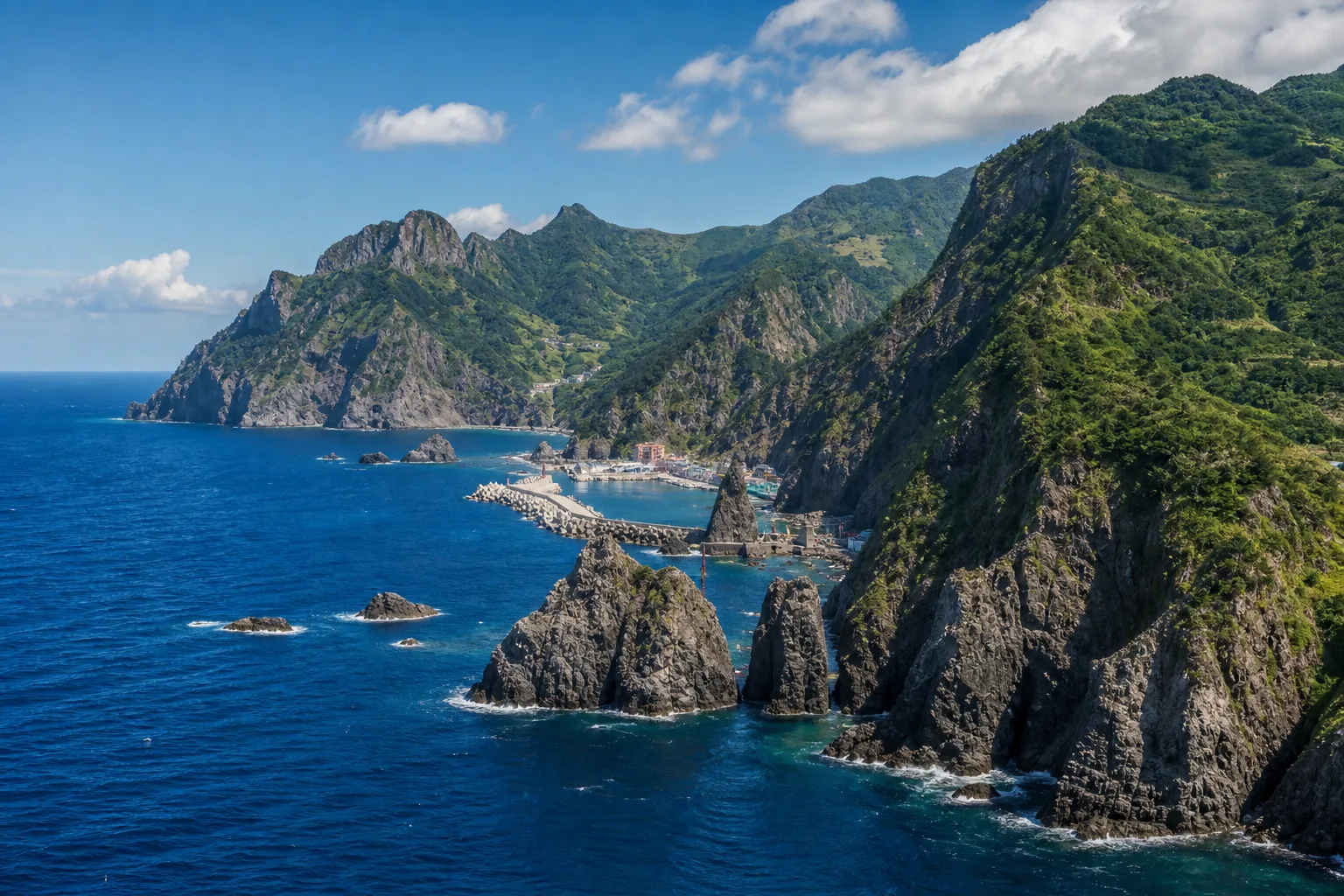
Ulleungdo is the kind of place that makes Seoul feel very far away, even though it is still part of South Korea. The island sits out in the East Sea with steep volcanic walls, a small harbor town, weather that changes fast, and a pace that is still shaped more by fishing and ferry schedules than by package tours. If you want a destination that feels genuinely remote without becoming difficult for a careful traveler, Ulleungdo belongs high on the list.
This guide is for readers who are trying to decide whether the island is worth the extra effort, how to get there without wasting a day, and what to do once they arrive. It also helps if you are building a larger Korea route and need to decide whether Ulleungdo should sit before, after, or instead of a classic mainland itinerary. For that broader planning context, the The Ultimate 10-Day South Korea Itinerary for First-Timers is the easiest place to start.
Introduction
Ulleungdo rewards travelers who want landscape, quiet, seafood, and a slower rhythm. It is not a place you visit for a checklist of famous city attractions. You come here for sea cliffs, road curves, volcanic terrain, hillside trails, and the feeling that the island is slightly beyond the usual tourist map.
What makes Ulleungdo distinctive is not just that it is remote. It is also compact enough that you can understand its geography in a single trip, but varied enough that a two-night stay still feels full. The main harbor area gives you access to food, boat tours, and accommodations. The interior adds forests, a high volcanic peak, and views that shift with fog and rain. The coastline adds the drama: basalt walls, narrow coves, caves, and sea stacks that look more like an eruption scar than a beach destination.
If you are the kind of traveler who likes hidden places that still have real infrastructure, Ulleungdo is a strong match. It is less polished than Jeju, less crowded than most mainland coastal escapes, and more memorable than many people expect. That is also why it fits neatly beside other quieter Korean destinations such as Hidden Korea: Off-the-Beaten-Path Destinations Worth Visiting.
The main challenge is logistics. Ulleungdo is not hard to reach in the absolute sense, but it does demand more planning than a train ride or domestic flight. Weather can disrupt ferries, lodging sells out faster than newcomers expect, and the island’s best experience depends on giving yourself enough time to absorb the place rather than rushing through it.
What Ulleungdo is really for
Ulleungdo is best for travelers who want at least one of the following:
- a remote island experience within Korea
- volcanic scenery and sea-cliff viewpoints
- hiking without the density of a major national park city
- fresh seafood, especially squid and fish dishes
- a trip that feels distinctly local, not generic
It is less ideal if you want a packed urban sightseeing schedule, easy transportation between sights, or a place where you can improvise every step of the trip. The island is manageable, but it still asks for a bit of discipline.
Why Ulleungdo Feels Different
Ulleungdo is a volcanic island with a landscape that immediately explains why people remember it. The terrain rises sharply from the sea, roads twist around the coastline, and the higher interior feels more rugged than domestic beach towns usually do. The island’s highest peak, Seonginbong, rises 984 meters above sea level, which is a big part of why the scenery feels so vertical and enclosed.
The result is a travel experience built around contrast. In the harbor area you get ferries, shops, restaurants, guesthouses, and the practical side of island life. Drive or ride farther and the island starts to feel far more elemental: forested slopes, cliff overlooks, and sections of road where the sea seems to appear and disappear around every bend.
For first-time visitors, the appeal is not that there are endless attractions. The appeal is that the island itself is the attraction. You do not have to stitch together five unrelated sights to feel satisfied. A good viewpoint, a coastal drive, a seafood meal, and a walk in the hills can already feel like a complete day.
The geography that shapes the trip
Ulleungdo is roughly 72.86 square kilometers, which means it is small enough to navigate but large enough to support several different day plans. Dodong Port functions as the island’s main arrival point and the practical center for many first-time visitors. Most accommodation, tour pickup, and food choices cluster either in or near that area.
The island’s volcanic origin matters in practical ways. Slopes are steep, roads can be narrow, and a “short” distance on the map may still take longer than expected. Hiking feels more dramatic because the island is not flat. Coastal scenery is often better from elevated viewpoints than from the roadside alone. Even the weather and visibility feel more intense because the landscape opens directly to the sea.
That shape is part of the reason Ulleungdo feels more remote than its actual size suggests. You are never quite far from the coast, but the island still feels layered and self-contained.
What kind of traveler enjoys it most
Ulleungdo is strongest for travelers who:
- enjoy scenic movement rather than static sightseeing
- do not mind a ferry-first itinerary
- want a destination with a local, lived-in feel
- value atmosphere and landscape over shopping and nightlife
- like planning around weather rather than fighting it
If your favorite part of travel is seeing how a place works, Ulleungdo is rewarding. If your favorite part is getting through an efficient list of famous sites, it may feel too slow.
What to See and Do
Ulleungdo works best when you divide it into three experiences: the coast, the interior, and the food. That is the simplest way to avoid overplanning and still leave with a full impression of the island.
Coastal viewpoints and road scenery
The coastline is Ulleungdo’s headline feature. Even when you are not stopping at a formal attraction, the drive itself delivers enough scenery to justify the trip. The road constantly negotiates cliffs, inlets, and sea-facing bends. On clear days, the island looks clean and sharp. On misty days, it feels moody and cinematic.
One of the best habits on Ulleungdo is to build in time for unplanned pauses. A viewpoint that looks ordinary on a map can become one of your favorite memories because the sea opens up differently from that angle. This is a place where the journey between stops matters as much as the stop.
If you enjoy photographing coastlines, the island gives you a lot to work with:
- layered rock faces
- small harbors
- fishing infrastructure
- lookout points above the water
- sea mist, cloud cover, and dramatic light
The key is not to overcompress the island into a single “must-see” strip. Some of the strongest impressions come from simply moving around the perimeter at a relaxed pace.
Seonginbong and the island interior
The interior is where Ulleungdo becomes more than a scenic drive. Seonginbong, the island’s highest point, is a reminder that this is not a flat destination built around beaches. Even if you do not plan a serious hike to the summit, the mountain presence influences the whole island. You feel it in the weather, the vegetation, and the way the roads climb and bend.
For active travelers, a hiking day can be one of the most satisfying things to do on the island. Trails around the interior and higher slopes give you a different perspective from the coast. Instead of looking outward at the sea, you start to understand the island’s volcanic body from above.
The interior is especially appealing if you want a slower, more reflective experience. Where the harbor feels practical and busy, the high ground feels quiet and expansive. That contrast is one of the island’s strengths.
Harbor life, local seafood, and island rhythm
You do not need to be a food obsessive to appreciate Ulleungdo’s seafood culture. The island’s restaurants tend to reflect what the sea makes available, and that alone gives meals a sense of place. Squid is especially associated with Ulleungdo, and many visitors leave remembering a meal as much as a view.
The harbor area is where the island’s practical rhythm is easiest to read. Ferries arrive. Supplies move. Locals work around weather and tides. Restaurants and guesthouses cluster nearby because that is where the movement is. For travelers, that is useful because it keeps the trip efficient. For the atmosphere, it is useful because you get to see a real island town instead of a tourism-only district.
If you prefer a trip that feels grounded in daily life, this is one of the best reasons to visit. It is also why some travelers build Ulleungdo into a wider Korea route rather than treating it as a standalone island vacation. If that is your style, the island complements a broader mainland loop well, especially when paired with Beyond Seoul: The Top 10 Must-Visit Cities in South Korea.
Boat trips and coastal perspective
On a place like Ulleungdo, seeing the island from the water can be as important as seeing it from land. Boat trips help you understand why the coastline feels so jagged and dramatic from the roads above. They also give you access to views that are impossible to recreate from a car window or hiking trail.
Boat options and conditions vary by season and sea state, so this is one of the parts of the trip where flexibility matters. If the weather is good, a coastal excursion can add a great deal to the overall experience. If the weather is bad, a land-based day may be the smarter use of time.
The important thing is not to force every activity into the itinerary. Ulleungdo is at its best when you choose the day’s pace according to conditions.
Practical Guide
This is the part of the trip where most first-time visitors need the most help. Ulleungdo is straightforward once you understand the basics, but the basics matter a lot.
Hours, admission, and prices
There is no single island admission ticket for Ulleungdo itself. The island is a destination, not a theme park, so the costs you should plan for are transportation, accommodation, food, local mobility, and optional activities.
In practical terms, your biggest variable costs are:
- ferry tickets
- hotel or guesthouse nights
- local taxis or rented transport if you do not want to rely on buses
- boat tours or sightseeing cruises
- meals, especially seafood
Ferry prices and schedules change by operator, departure port, cabin class, weather, and season. Treat any price you saw in an old blog post as stale unless you verify it before booking. For 2026 travel, the safest approach is to check the operator or booking platform close to your departure date and then build your mainland schedule around the confirmed sailing.
That matters because Ulleungdo trips are usually less flexible than city trips. If your ferry is moved, delayed, or canceled, you may need to shift the whole plan by a day.
How to get there
The standard way to reach Ulleungdo is by ferry from the mainland. That is the defining logistical fact of the island. You are not making a casual day trip from Seoul; you are committing to a sea crossing and a schedule that depends on conditions.
The best way to think about the trip is:
- choose your departure port based on your broader Korea route
- lock lodging around the ferry timing
- keep one buffer on either side if your schedule is tight
- travel light enough that a ferry disruption does not become a packing headache
For many travelers, the route choice matters more than the exact island itinerary. If you are already moving through eastern Korea, Ulleungdo can be an excellent add-on. If you are starting and ending in Seoul, the island usually works better as a dedicated side trip rather than an impulsive detour.
Because ferry operations can change with weather, the island is one of those places where it helps to think like a local: do not overcommit your first and last day. Give yourself breathing room.
Booking strategy
Booking Ulleungdo well is mostly about reducing risk. Here is the practical order that works best:
- confirm your mainland route and dates
- check ferry availability before booking nonrefundable hotel nights
- reserve accommodation near the port or along your main transport path
- keep your first full island day open for weather-dependent activities
- avoid stacking your return ferry too tightly against a flight or train departure
If you use travel platforms for tours, transport, or multi-day planning, compare them against the official ferry or local operator pages before paying. This is especially true for the shoulder seasons, when availability may look fine at first glance but then tighten as weather or holiday demand changes.
For travelers who like bundling activities through a single platform, Klook or similar booking services can be useful for mainland add-ons, but Ulleungdo itself is the kind of destination where the ferry and weather remain the primary variables. That means you should prioritize reliability over discounts.
Where to stay
Most first-time visitors should stay near the main port area or another convenient transport hub. That keeps your arrival simple and reduces the amount of time you spend hauling luggage on narrow roads or trying to coordinate taxis after a late ferry.
Staying near the port is especially smart if:
- you arrive late in the day
- you only have one night on the island
- you want easy access to restaurants
- you are planning a boat tour or early departure the next morning
If you are staying longer, you can consider a more scenic or quieter location, but only if you are comfortable with the extra logistics. Ulleungdo is not the right place to treat lodging location casually, because the island is compact but not frictionless.
Getting around the island
The island is small enough to explore, but it is still large enough that you should not assume you can walk everywhere. Transport choice affects how much you actually get to see.
Most travelers use some combination of:
- local buses
- taxis
- rental cars, when available and appropriate
- tours for specific scenic routes
If you are visiting in a group, a private car or taxi-based plan can make sense, especially if you want to cover multiple viewpoints in one day. Solo travelers and couples can often manage with a mix of bus and occasional taxi rides, especially if they are staying in a central area.
The main lesson is simple: build your day around clusters of sights, not isolated single stops. That reduces transit friction and leaves more time for the landscape itself.
Best season to visit
There is no single perfect season for Ulleungdo, but there are tradeoffs:
- spring brings fresh greenery and a lighter feel
- summer offers fuller access and long daylight, but also more heat and weather risk
- autumn usually gives the most comfortable hiking conditions and sharp visibility
- winter can be striking, but sea conditions become a bigger concern
If this is your first trip and you care most about scenic reliability, autumn is often the safest bet. If you care most about a quiet atmosphere and do not mind variability, shoulder seasons can be rewarding.
The important thing is to match season to purpose. A hiking-heavy trip has different needs from a food-and-view trip.
Tips & Common Mistakes
Most Ulleungdo mistakes come from underestimating the island’s pace. It is not a difficult destination, but it is a place where small errors create unnecessary stress.
Mistake 1: Treating the ferry like a flexible commuter ride
The ferry is not just a transfer. It is the foundation of the whole trip. If you treat it casually, everything else becomes brittle. Always check weather, boarding time, and return plans before you commit to the rest of the day.
If you only remember one practical rule, make it this: your ferry schedule should shape your hotel and activity plan, not the other way around.
Mistake 2: Trying to see the whole island in one rushed loop
Ulleungdo can be driven around, but that does not mean you should try to do everything in one breathless circuit. The island rewards pauses. If you rush, you will spend most of your energy moving between places instead of actually absorbing them.
A better approach is to separate the island into half-day clusters:
- harbor and nearby food
- coastal viewpoints and scenic roads
- interior hiking or forest time
- a boat trip or a relaxed afternoon
That structure feels calmer and usually produces better memories.
Mistake 3: Ignoring weather variability
Weather is not background noise on Ulleungdo. It is one of the central variables in the trip. Fog can hide views. Wind can affect sea plans. Rain can make roads and trails less pleasant. Sometimes the right move is to swap your itinerary rather than push through it.
The travelers who enjoy Ulleungdo most are usually the ones who remain flexible. They do not panic when one activity falls away; they simply re-order the day around what is still feasible.
Mistake 4: Packing for a generic coastal vacation
Ulleungdo is not a beach resort in the conventional sense. You should pack for movement, changing weather, and some degree of uneven terrain. Comfortable shoes matter more than fashionable ones. A light rain layer matters more than a bulky outfit you will not wear. If you plan to hike, pack accordingly even if your hotel is close to the harbor.
Also, do not assume that every convenience you are used to in a city will be easy to grab at the last minute. Bring what you need for your first night, especially if you are arriving after a long ferry ride.
Mistake 5: Underestimating how good the “ordinary” parts are
Some visitors chase only the most dramatic viewpoint and then leave disappointed because they assumed the island would be more obviously spectacular at every turn. In reality, Ulleungdo’s charm is cumulative.
It is in the drive between views. It is in the meal after the ferry. It is in the quiet that appears once the harbor noise drops away. It is in the way the cliffs keep reappearing when you think you have already seen the best angle.
If you slow down enough, the island starts to feel richer.
Mistake 6: Building the trip without a mainland context
Ulleungdo works best when it sits inside a larger trip strategy. Because the ferry makes it more logistically sensitive than most Korean destinations, you should think carefully about what comes before and after it.
If you are building a first Korea route, pair Ulleungdo with easier mainland destinations rather than with a day-by-day sprint. If you are already in a coast or east-side travel rhythm, the island can be a very strong extension. That is one reason it pairs naturally with broader planning resources and with route ideas that go beyond the obvious capitals.
FAQ
Is Ulleungdo worth the extra travel time?
Yes, if you care about landscape, quiet, and a sense of remoteness. If your priority is convenience, Ulleungdo may feel like too much planning for too short a stay. But if you want a destination that feels distinct from the usual Korea circuit, it is absolutely worth considering.
How many days should I spend on Ulleungdo?
Two full days is the minimum that usually feels satisfying. Three days is better if you want to account for weather changes, a hike, a boat trip, and a more relaxed food-and-view rhythm. A one-night stay can work, but it tends to feel compressed unless your ferry timing is ideal.
Can I visit Ulleungdo as a day trip?
In practice, that is not the right way to experience it. The ferry logistics alone make day-trip logic awkward, and the island’s atmosphere comes from staying long enough to let the scenery and weather shift. Ulleungdo is much better as an overnight or multi-night trip.
What is the best thing to eat on Ulleungdo?
Seafood is the obvious answer, especially squid and other dishes that reflect the island’s fishing culture. The best meal is usually the one that feels local rather than generic. Ask what is freshest, and do not be afraid to choose a simple restaurant if the menu is built around the day’s catch.
Do I need a car on the island?
Not strictly, but having a car or taxi-based plan can make sightseeing easier if you want to cover multiple viewpoints in a short time. Many travelers can still manage with buses and occasional taxis, especially if they stay near the port and keep the itinerary focused.
Is Ulleungdo good in bad weather?
It can still be good, but the experience changes. Bad weather may reduce visibility and affect ferry or boat plans, yet it can also make the island feel more dramatic and atmospheric. The key is to avoid expecting a perfect blue-sky trip and instead build a flexible plan.
Conclusion
Ulleungdo is one of Korea’s most compelling remote destinations because it offers something that many places promise but few deliver: a real sense of isolation without requiring a complicated international journey. It has a volcanic landscape, a practical harbor town, excellent seafood, and enough hiking and scenery to fill more than a quick stop.
The best way to approach it is not as a “see everything fast” destination. Treat it as a place to slow down, follow the ferry schedule, and let the island shape the rhythm of your stay. If you do that, the trip becomes much more rewarding. The coast stops being just a backdrop, the harbor becomes part of the story, and even the weather starts to feel like part of the experience rather than an obstacle.
If you are planning a larger Korea route, use Ulleungdo as the trip’s contrast piece: the remote, volcanic, sea-facing chapter that gives the rest of the journey more texture. For readers who want to keep discovering destinations that still feel personal and less crowded, it is a natural next stop after checking a broader route guide or exploring more hidden places across the country.