How to Avoid Tourist Traps in China: Scams, Overcharging & What to Watch

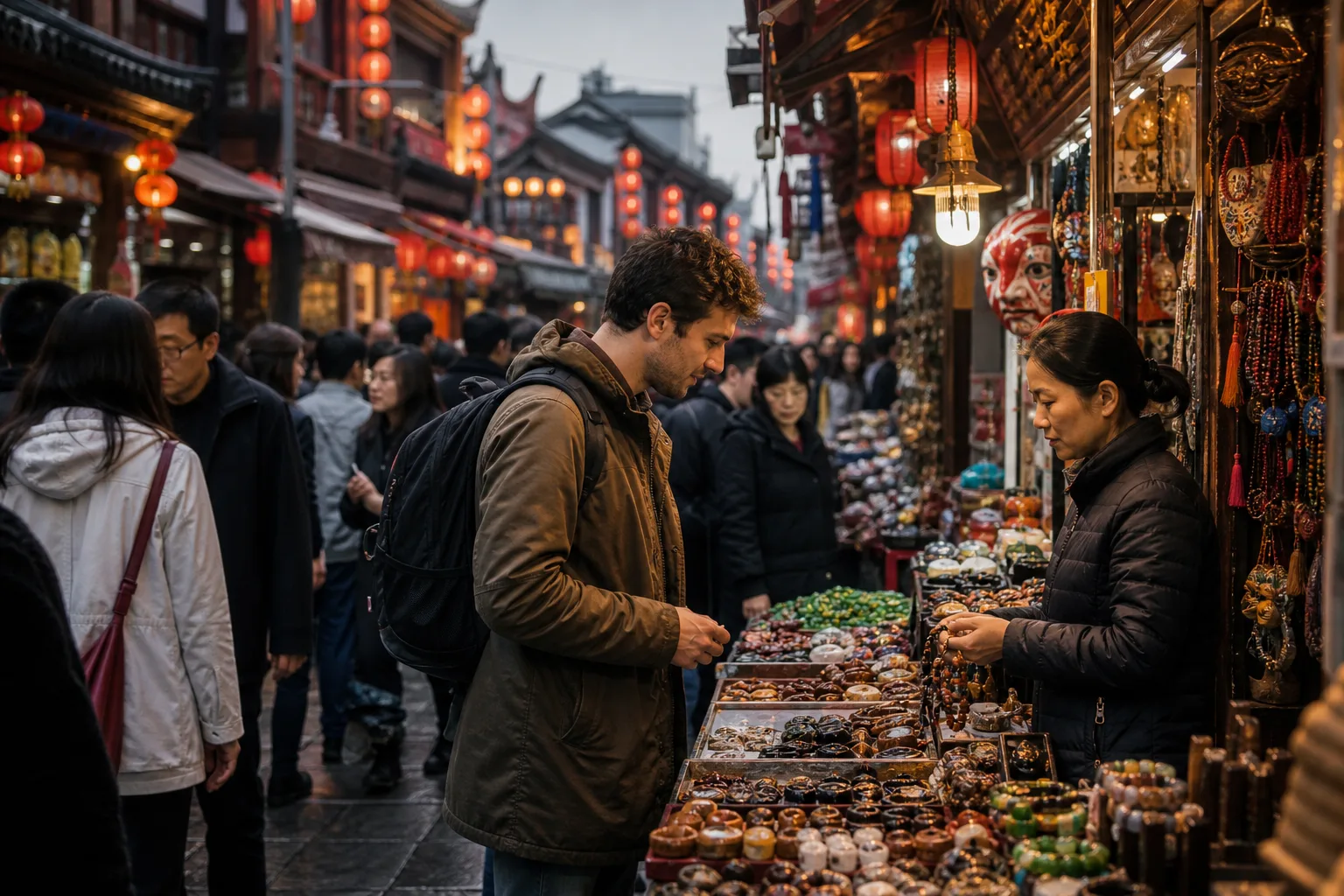
Travel in China is usually straightforward, efficient, and safe, but the easiest way to turn a smooth trip into a frustrating one is to assume every offer is legitimate, every price is fixed, and every shortcut is a bargain. Most problems are not dramatic scams. They are small pressure tactics, inflated prices, unofficial services, and vague promises that become expensive once you commit.
What tourist traps in China actually look like
The best defense is knowing what the trap is trying to do. In China, the most common problems for visitors are usually not criminal in the cinematic sense. They are friction points designed to make you spend more, move faster, or accept a service you did not intend to buy. That includes fake bargains near attractions, unlicensed taxis, menu tricks, “special discount” invitations, and shop staff who are extremely helpful until the bill appears.
The pattern is consistent: the offer sounds convenient, the price seems negotiable, and the final cost depends on your willingness to walk away. If you arrive with a few habits, the odds of being overcharged drop sharply.
Why tourists are targeted
Tourists are often easy to identify. You may be carrying luggage, navigating without local language fluency, checking a map, or looking uncertain in a transport hub. That signals two things to opportunists: you are likely in a hurry, and you may not know the normal price.
That does not mean you need to be paranoid. It means you should treat unsolicited help as a cue to pause. If someone approaches you at a train station, an airport, a scenic area, or a market with an offer that is not clearly posted or formally branded, assume you need to verify before paying.
The good news is that the same habits that protect you from traps also make your trip easier overall. Know where you are going, compare a price once, and keep your purchases inside systems with visible rules. If you are building the rest of the trip around budget discipline, pair this guide with How to Travel China on a Budget: Cheap Transport, Food & Stays.
The most common traps
The first trap is transportation confusion. Unlicensed drivers, hotel touts, and airport helpers may steer you away from the official queue and toward a ride that costs several times more than it should. This is especially common after long flights, late arrivals, or station exits where many people are competing for attention.
The second trap is menu and service ambiguity. A restaurant may not be trying to cheat you, but if prices are not clearly listed, if the staff pushes a “special set,” or if seafood and tea are priced by weight or portion in a way you do not understand, the bill can balloon quickly.
The third trap is attraction-adjacent sales. Around big sights, you may encounter “private guides,” souvenir sellers, photographers, themed tea houses, fake discount ticket offers, or package deals that mix entrance, transport, and shopping. A low entry price is often a lead-in to a larger purchase.
The fourth trap is hotel and booking pressure. Some places advertise rates that do not include what you assume is included, or they add deposits, late fees, breakfast exclusions, or room-category changes at check-in. Booking through a platform with clear cancellation terms reduces that risk.
The fifth trap is shopping drift. In markets, tourist streets, and gift shops, prices can be highly elastic. A vendor may start with a number meant for negotiation, but that does not mean every price is fair to haggle down. The challenge is knowing whether you are in a normal bargaining situation or a place where prices are simply inflated for visitors.
How scams usually escalate
Most tourist traps escalate through convenience. The first ask is small: a quick look, a short ride, a “special” sample, a better table, a helpful escort, or a recommended tea. Once you have accepted the first step, it becomes harder to say no to the second.
That is why the best response is not anger. It is friction. Slow the conversation down. Ask for a written price. Ask to see the menu before ordering. Ask whether the meter is used. Ask whether the fee is per person, per item, per kilogram, or per route. If the answer is unclear, leave.
How to protect yourself before you go
Preparation matters more than streetwise improvisation. The traveler who has already downloaded maps, saved hotel addresses, and understands the transport workflow is much harder to overcharge than the traveler who is figuring everything out at the curb.
First, save key addresses in both English and Chinese. Your hotel, the nearest station, and your next destination should be in a format you can show a driver or ask a local to read. Screenshots work when data is unreliable, and printed backups help if your phone dies.
Second, know your payment and navigation setup. China is increasingly cashless in daily life, but visitors still run into moments where a local payment flow, a ride-hailing app, or an ID verification step makes a simple transaction awkward. For that reason, a little advance planning saves you from paying a premium for last-minute help. The broader setup is covered well in China Travel Planning: Visa, WeChat Pay, High-Speed Rail & Practical Guide.
Third, learn a few price anchors. You do not need exact national rates for every item. You just need rough ranges for common purchases: airport transfer, city taxi, bottled water, simple street food, a midrange meal, a short local ride, and a basic souvenir. If a quote is wildly above the norm, your alarm should go off.
Fourth, decide in advance what you will not buy on impulse. A lot of scams work because the traveler is tired, curious, or socially pressured. If you already know you will not buy tea, medicine, jade, calligraphy, or “special local silk” from a stranger, the decision is easy.
Fifth, keep your communication style calm and brief. Over-explaining gives pushy sellers room to counter. A simple “no thank you,” “not interested,” or “I need to check first” is usually enough. When language is a barrier, your posture matters more than your vocabulary.
The money rule that prevents most problems
Never pay the full amount before you understand what the charge covers. That sounds obvious, but many overcharges happen because the traveler pays a deposit, accepts a bundle, or agrees to a vague “all-in” price without itemization.
If you are buying food, ask whether service, tea, or side dishes cost extra. If you are booking transport, ask whether luggage, tolls, or waiting time is included. If you are booking a local experience, ask what is included and what is not. A short clarification before payment is much cheaper than a dispute after payment.
The strongest habit: use official channels
In practice, the safest option is often the boring one. Use official taxi lines, standard ride-hailing apps, hotel desks, station ticket counters, licensed ticketing platforms, and restaurant menus with clear pricing. The official channel is not always the cheapest, but it is usually the most predictable.
That does not mean every unofficial offer is bad. It means visitors rarely have the context to judge reliability quickly. Until you do, favor traceable systems over verbal promises.
Practical guide
This section is not about memorizing every possible scam. It is about building a simple anti-trap routine for each part of the trip.
Arrival at airports and train stations
The arrival zone is where many travelers are at their weakest. You are tired, you may not have local payment methods fully configured, and you are trying to get from point A to point B quickly. That is exactly when someone offering a shortcut feels tempting.
Use the official taxi queue if you want a taxi. Use the official airport shuttle, metro, or rail link if those are clearly signed and convenient. If somebody approaches you before you reach the designated pickup zone, treat that person as a sales lead, not a helper.
If you need a private transfer, book it ahead of time through a reputable platform or your hotel. The point is not to eliminate all flexibility. It is to make sure the price and pickup details are settled before you land, not after you are already standing in a crowded arrival hall.
Food and drink
Eating well in China is one of the best parts of the trip, but the restaurant environment can still create confusion. Menu photos are not a guarantee of price clarity. A dish can be listed by serving, by portion, by weight, or by seasonal availability. Seafood, tea, and shared dishes are the biggest areas where visitors can lose track of the bill.
If you are unsure, look for restaurants with clear menu boards, printed menus, or obvious local traffic. Busy places are not automatically honest, but they are usually easier to trust than near-empty restaurants that seem to exist mainly for tourists.
Ask before sitting if there is a cover charge or minimum spend. Clarify whether the tea is optional. Confirm whether the listed price is for the dish or the serving size. If the staff seems evasive, that is your signal to walk.
Street food is often great value, but use the same standard. If there is no visible price, ask first. If the seller is reluctant to answer, move on. Cheap food is only cheap if you know what you are paying for.
Transport inside cities
Transportation scams tend to fall into two categories: fake convenience and fake scarcity. Fake convenience is when someone insists their ride is the fastest, easiest, or only way to your destination. Fake scarcity is when they claim the regular option is unavailable, closed, or too far away.
If you are taking a taxi, insist on the meter or on a pre-agreed official rate that you understand. If you are using ride-hailing, confirm the pickup point and plate number before getting in. Never get into a vehicle because a stranger says it is yours.
For longer trips, high-speed rail is generally safer and more predictable than last-minute improvisation. It also reduces the chance that you will be stuck negotiating at a station with someone who claims to be a “helper.” If your itinerary includes multiple cities, organize tickets early and keep a backup screenshot of booking details.
Attractions, tickets, and “private guides”
Popular attractions attract two kinds of people: visitors and opportunists. The most common trap near attractions is not a forged ticket. It is an unofficial seller who offers a bundle, a shortcut line, a cheaper “special” ticket, or a personal escort.
The rule is simple: if the person is not clearly attached to the attraction, the hotel, or a licensed tour operator, verify before paying. Do not assume that being near the entrance makes the offer legitimate.
For flexible sightseeing, buy tickets through the official website, a respected booking platform, or a known travel app. If the site is obscure, the QR code looks improvised, or the seller refuses to give you written confirmation, stop there.
Shopping and souvenirs
Souvenir shopping is where overcharging often feels social rather than aggressive. That is part of the trap. You are not being pressured by a scammer who is obviously breaking the rules. You are being encouraged to “take a look,” “just taste,” or “see the quality,” and each step adds a new reason to buy.
Set a shopping budget before you enter. Decide what types of items are actually worth buying, and ignore the rest. If you want something authentic, shop in a place where the price is posted and the return policy is clear. If you want bargaining, bargain only where bargaining is normal.
Also remember that “gift” language is often just packaging. A tea seller, jade shop, or specialty store may present the item as a cultural experience. That does not change the financial math. You are still buying a product, so you still need a price you understand.
Hotels and guesthouses
Accommodation overcharges are usually administrative, not dramatic. The issue is often in the details: deposit requirements, extra guest fees, breakfast exclusions, late checkout penalties, or a room that looks different from the photos.
To reduce problems, book properties with clear cancellation terms and recent reviews from international travelers if possible. Save screenshots of the rate, the room type, and any promised extras. If the host changes terms at check-in, you want something concrete to point to.
If a property feels unsafe, unclean, or clearly misrepresented, leave if you can. The cheapest night is not always the cheapest stay if it creates a transport or safety problem the next morning.
Tips & common mistakes
The biggest mistake travelers make is assuming that a friendly approach means a trustworthy offer. In tourist areas, friendliness is often just the first stage of a sales process.
The second mistake is being embarrassed to verify. A lot of people accept inflated prices because they do not want to look rude. In practice, the rude move is on the seller who withholds key information. Checking the price is normal.
The third mistake is relying on a single travel app or a single payment method without a backup. If your phone battery dies, your account verification fails, or your connection drops, you need a fallback. Carry a backup card, some cash, and offline copies of critical information.
The fourth mistake is overtrusting “tourist district logic.” Just because a place is busy with visitors does not mean the price is fair. In some neighborhoods, a dense concentration of tourists simply means better margins for the business.
The fifth mistake is buying emotional urgency. If someone says the deal is “only for today,” “last chance,” or “special for foreign guests,” that is usually a sales nudge, not a reason to decide immediately.
The sixth mistake is not asking locals or hotel staff what a normal price looks like. You do not need to interrogate everyone you meet. You just need one or two grounded comparisons so you can recognize when a quote is off.
What most guides miss
Most advice says “be careful,” but that is too vague to be useful. The more practical guidance is to protect the decision points where money changes hands.
Those decision points are: before you get in the car, before you order the meal, before you accept the tour, before you tap the booking button, and before you pay the deposit. Once you focus on those moments, the rest of the trip becomes much easier.
Another thing many guides miss is that etiquette matters. A pushy refusal is not always necessary, but a soft, clear boundary is. If you want a more complete sense of how tone and behavior shape interactions, the Chinese Culture Guide: Customs, Etiquette & Dos and Don'ts for Travelers is the right companion read.
A simple anti-scam script
If you are put on the spot, use a three-step script:
- Ask for the exact price.
- Ask what is included.
- Say you need to check first.
That script works because it interrupts pressure without creating confrontation. It also buys you time to compare the offer with a known alternative. Most bad deals fall apart when they have to be explained twice.
When to walk away
Walk away when the price changes mid-conversation, when the explanation becomes vague, when the person refuses to write anything down, or when you feel pushed to decide immediately. Those are not small warning signs. They are the core signals that the transaction is not worth your time.
If walking away feels awkward, remember that awkward is cheaper than overpaying. Travelers usually regret the deal they accepted, not the deal they refused.
FAQ
Is China dangerous for tourists?
Most travelers do not face serious danger, but they can still run into overcharging, misleading sales tactics, and convenience-based scams. The solution is not fear. It is preparation and a few disciplined habits.
Are scams more common in big cities or smaller tourist towns?
They can happen in both, but tourist-heavy places create more opportunities because visitors are easier to identify. Big cities usually offer more official alternatives, while smaller towns may have fewer transparent options. In both cases, use official channels first.
Do I need to bargain everywhere?
No. Bargaining is normal in some markets and not normal in many other places. If the price is posted clearly, or if you are in a restaurant, taxi, hotel, or ticketing environment, assume the posted or metered price is the correct baseline.
What should I do if I think I was overcharged?
Stay calm, ask for the itemized breakdown, and request clarification in writing if possible. If the situation is minor, it may not be worth the time to dispute. If it is major, involve your hotel, booking platform, or the official service provider as soon as possible.
What is the best overall strategy?
Use official transport, clear pricing, and prebooked logistics whenever possible. That single habit removes most of the opportunities for overcharging and reduces the need to negotiate on the spot.
Conclusion
Avoiding tourist traps in China is less about spotting a dramatic scam and more about refusing ambiguous deals. If you keep prices visible, use official channels, and slow down before paying, you will avoid most of the situations that cause travelers stress.
The pattern is simple: verify before you commit, ask what is included, and walk away from anything that depends on pressure rather than clarity. Do that consistently, and you can focus on the actual reason for the trip: better food, better cities, and a smoother experience from arrival to departure.