How to Travel China on a Budget: Cheap Transport, Food & Stays

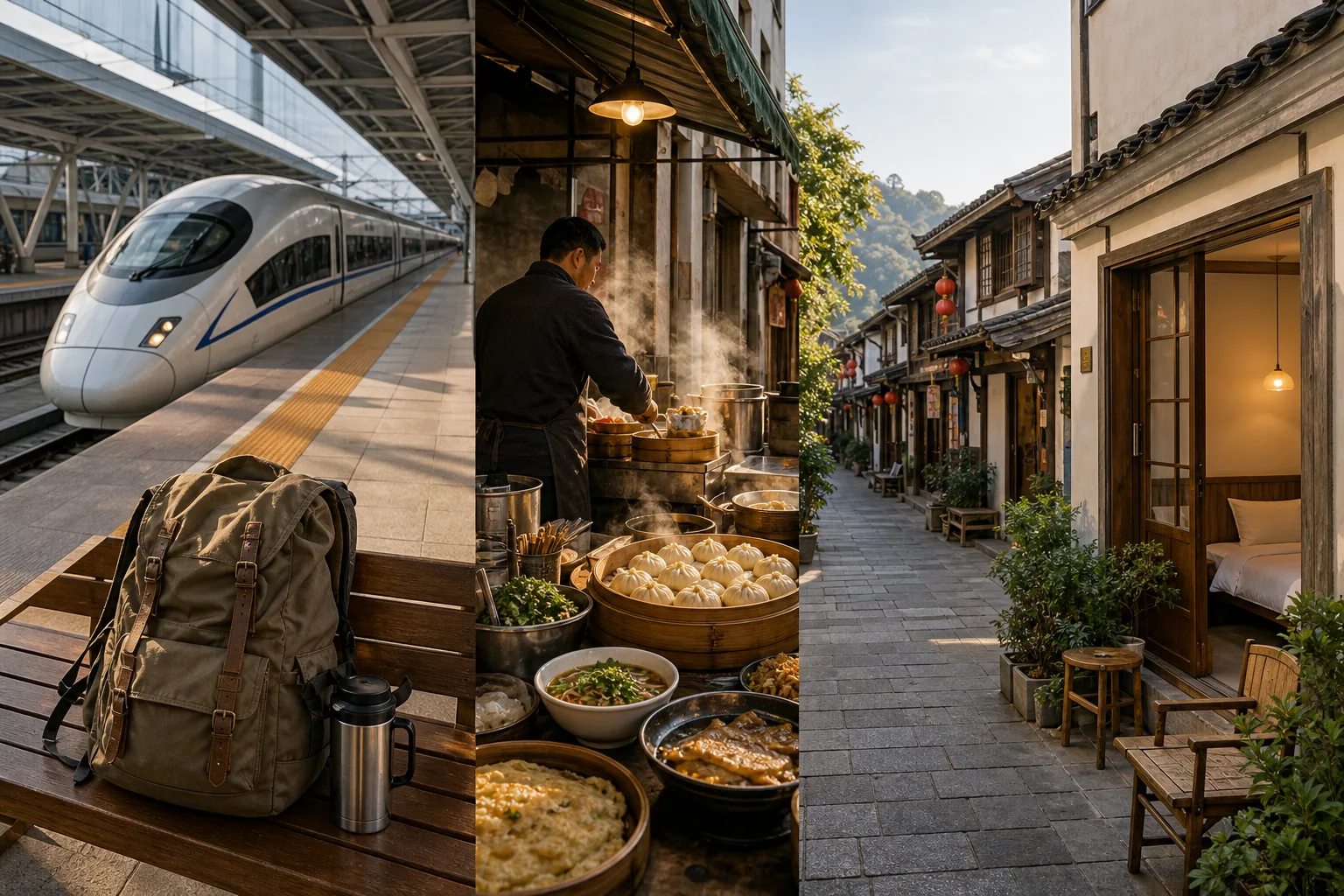
China can be one of the best-value major travel destinations in Asia if you know where the money leaks are. The biggest savings usually come from choosing the right rail or metro route, eating where locals actually eat, and booking accommodation a little outside the most obvious tourist blocks. You do not need to travel badly to travel cheaply. You need a system.
Cheap Transport in China
The cheapest way to move around China depends on distance. For city travel, use metro, bus, and shared bikes. For intercity travel, compare high-speed rail, slower trains, and overnight buses. For long trips, the best value is often a rail ticket booked early, especially when you can stay flexible on departure times and stations.
If you are planning a multi-city trip, start with the transport map before you lock hotels. A cheap-looking hotel that forces an expensive taxi or a long backtrack can erase the savings. This is why budget travelers usually win by clustering cities by rail corridor rather than chasing every destination that looks good on a map.
For planning and entry logistics, this companion guide is useful: China Travel Planning: Visa, WeChat Pay, High-Speed Rail & Practical Guide. It covers the payments and rail basics that make budget travel in China much easier.
High-speed rail is usually the best value for medium distances
China’s high-speed rail network is the default answer for many routes because it is fast, frequent, and often still cheaper than a flight once you add airport transfers, checked baggage, and the time cost of flying. For trips like Beijing to Tianjin, Shanghai to Hangzhou, or Guangzhou to Shenzhen, rail is usually the sweet spot between price and convenience.
The official China Railway platform currently shows ticket sales and endorsement services from 5:00 to 1:00 the next day, and its ticket pre-sale period is 15 days including the travel day. That matters for budget travelers because the cheapest flexible strategy is not always “book last minute.” On busy routes, you often save money and stress by booking as soon as your dates open.
Two practical habits help here:
- Search with station names, not just city names. Big cities often have multiple stations, and the difference in price or travel time can be meaningful.
- If you can leave early in the morning, late at night, or on a weekday, you often get better availability and a calmer ride.
Budget travelers should also pay attention to seat class. Second class is usually the best trade-off. It is more comfortable than economy bus travel and typically enough for journeys under four or five hours. First class is pleasant but often not worth the extra cost unless the route is long or the price gap is small.
Slower trains can still save money
Not every trip needs high-speed rail. On some corridors, slower conventional trains are cheaper, and overnight trains can also save a hotel night. The trade-off is time, comfort, and sometimes a more complicated booking process. If you are moving between far-apart inland cities and the schedule lines up, an overnight train can be a smart budget move because it combines transportation and lodging in one expense.
That said, the cheapest ticket is not automatically the best ticket. Overnight travel only makes sense if you can actually sleep and arrive functional. If the train is packed, noisy, or lands you at an awkward hour, the hotel savings may disappear into the cost of a bad first day.
Metro, bus, and walking cover most city budgets
Inside cities, the public transport system is what keeps China cheap. Metro fares in many cities stay low enough that you can ride across major districts for less than what a short taxi ride would cost in many other countries. Buses are even cheaper, though they can be harder to use if you do not read Chinese and are not already comfortable with local route apps.
The cheapest urban pattern is simple:
- Walk when the destination is within 15 to 20 minutes.
- Use the metro for anything farther or in bad weather.
- Use taxis or ride-hailing only when time really matters, when public transit is weak, or when you are carrying bags.
Shared bikes are another strong budget tool. They are especially useful for the last mile between a metro stop and a hostel, restaurant, or riverside area. Just make sure you understand where bikes are allowed to be parked. In some neighborhoods, cluttered sidewalks are enforced more strictly than visitors expect.
Flights only make sense when they are clearly cheaper or much faster
Domestic flights in China can be good value, but they are not automatically the budget choice. A flight that looks cheap at checkout can become expensive after airport transfer costs, longer security lines, and the need to travel across the city to the airport. For short-to-medium distances, rail often wins on total trip cost, not just ticket price.
The useful way to compare is to add up:
- Ticket price.
- Transfer cost to and from the station or airport.
- Extra hotel night if an overnight option avoids one.
- The value of your time if the route is long enough for it to matter.
If the flight is only slightly cheaper than rail, rail usually wins for budget travel because it is simpler, more central, and easier to absorb into a multi-city route.
A smart transport budget is route-based, not ticket-based
The biggest mistake budget travelers make is buying isolated transport legs and then hoping the rest of the trip works itself out. Better travelers design a route around clusters. North China routes, Yangtze Delta routes, and South China routes can each be stitched together cheaply if you stay within a rail-friendly corridor.
For example, a traveler who strings together Beijing, Tianjin, and Shanghai in one direction can usually keep costs lower than a traveler who bounces randomly between those cities and then adds long detours. Cheap travel in China is often about reducing backtracking, not just finding the lowest single fare.
Cheap Food in China
The cheapest meals in China are usually the ones built around local staples: noodles, dumplings, rice bowls, congee, steamed buns, and simple stir-fries. Look for places where office workers, students, or families line up at lunch time. If the menu is dense, the seating is simple, and the kitchen is visible, the food is often both fast and fairly priced.
Food is one of the easiest parts of the trip to overspend on if you default to tourist cafes or imported-brand coffee stops. China rewards travelers who are willing to eat a local breakfast, a simple lunch, and a no-fuss dinner. You can still have excellent food; you just need to stop paying premium prices for international comfort food every time you get hungry.
For a deeper breakdown of regional dishes and what to order without wasting money, see Chinese Regional Food Guide: Dim Sum, Sichuan Spice & Beijing Duck.
Eat where local workers eat
The easiest budget rule is to follow the lunch crowd. Neighborhood canteens, noodle shops, dumpling counters, and fast-casual rice bowl places usually post prices that are much lower than tourist-facing restaurants. Set meals and daily lunch specials can be especially good value because they are built for speed and repeat local demand.
If you are not sure where to eat, use this filter:
- Check whether the restaurant is close to offices, universities, or residential blocks rather than only a major landmark.
- Look for Chinese-language menus with visible prices.
- Choose places that move quickly and look busy at the right time of day.
The goal is not to chase the absolute cheapest bite in town. The goal is to pay local prices for decent food. That usually means skipping the “international brunch” zone and eating the city’s normal food rhythm instead.
Breakfast can be extremely cheap if you keep it local
Breakfast in China is often one of the easiest meals to do cheaply. Soy milk, fried dough sticks, steamed buns, dumplings, rice porridge, pancakes, and noodle soups can all be inexpensive and filling. Even in larger cities, a simple breakfast from a neighborhood shop can cost far less than a Western-style cafe meal.
For travelers who want to save aggressively, breakfast is the best meal to simplify. A light local breakfast gives you two advantages. First, it lowers your daily spending without making the day feel deprived. Second, it leaves your appetite open for a better lunch in the middle of the day when local places are busiest and usually at their best.
Supermarkets and convenience stores help smooth the budget
It is tempting to think budget travel means only restaurants, but that is not necessary. Supermarkets, convenience stores, bakeries, and fruit shops are useful for snacks, breakfast backup, and late-night top-ups. A bag of fruit, yogurt, bottled tea, nuts, or a few buns can keep you from making expensive “I’m starving and lost” food decisions after a long transit day.
This is especially helpful if you arrive late, check into a hotel after the kitchen closes, or plan to leave early in the morning. A cheap stock of snacks also makes transport days easier because you do not need to buy random station food at peak prices.
Street food is good value, but choose the right stalls
Street food can be a great budget choice, but it is not all the same. Busy, repeat-traffic stalls are usually safer bets than random vendors on the edge of a tourist zone. Go for items that are cooked fresh, served hot, and easy to inspect. If the queue is made up of locals grabbing a quick snack or takeaway, that is usually a good sign.
The best street-food strategy is simple:
- Buy items that are made in front of you.
- Prefer hot food over room-temperature food when you are unsure.
- Avoid over-ordering just because everything is inexpensive.
Budget travelers sometimes spend too much by trying lots of small bites at once and then still needing a full meal afterward. A better approach is to treat street food as either a snack or a light meal, not both.
Regional food can be cheap if you order the right dishes
People often think regional food in China must be expensive because famous dishes get marketed as “must-try” experiences. In practice, many regional cuisines have humble staples that are inexpensive and deeply satisfying. A bowl of noodles in the west, dumplings in the north, rice dishes in the south, or spicy hot-pot-style small plates can all fit into a budget if you avoid premium specialty restaurants.
The key is to order the daily food, not only the famous food. Famous food is often portioned for visitors and priced accordingly. Daily food is what locals actually eat when they want something filling and normal.
Drinks can quietly add a lot to your bill
One of the most overlooked travel costs is beverages. Tea, bottled water, coffee, juice, and sweet drinks can add up faster than you expect, especially if you buy one every time you stop walking. A traveler who spends on drinks at breakfast, lunch, midafternoon, and dinner can easily add a non-trivial amount to the daily budget.
To keep drink spending low:
- Carry a reusable bottle when possible.
- Refill where safe and practical.
- Treat specialty coffee or milk tea as an occasional purchase, not a default habit.
This does not mean you should avoid the local drink culture. It means you should choose intentionally rather than automatically buying the most convenient cup at every stop.
A good food budget still leaves room for fun
Budget travel should not feel like punishment. If you save money on breakfast and lunch, you can spend a little more on one special dinner, a dessert, or a regional signature dish. That approach often works better than trying to be miserly at every meal and then splurging impulsively because you feel deprived.
The best China trip budgets usually have a rhythm:
- Cheap, efficient breakfasts.
- Low-cost, filling lunches.
- Flexible dinners, with one or two standout meals per city.
That balance keeps morale high while still protecting the overall budget.
Cheap Stays in China
Accommodation in China can be very affordable if you choose location and style carefully. The best value is often a clean business hotel, a good hostel, or a simple guesthouse near public transport rather than a “cheap” room that is cheap only because it is far from everything. The right stay saves both cash and energy.
The temptation is to book the lowest nightly rate and worry about the rest later. In China, that sometimes backfires because a poorly located hotel can create extra taxi rides, a longer commute to the station, or wasted time when you are exhausted and simply need to get back quickly.
Hostels are ideal for solo travelers and flexible travelers
Hostels are often the easiest option for solo travelers on a tight budget. They can be cheaper than private rooms, and they are useful for meeting other travelers, getting route tips, and learning which local area actually works well. A hostel with a decent common area and a central location can beat a cheaper room far away.
What to look for in a hostel:
- Walking distance to a metro station.
- Clear check-in instructions and staff who respond quickly.
- Private curtain or bunk privacy if you need sleep.
- Lockers or secure storage for bags.
If your trip is heavy on movement and light on downtime, hostels are a strong fit. If you need quiet, work space, or a more predictable schedule, a budget business hotel may be better.
Budget business hotels often beat the cheapest guesthouse
In many Chinese cities, the best value is not the absolute lowest nightly rate. It is a modest business hotel that is clean, standardized, and close to transit. These properties can sometimes cost only a little more than the most basic guesthouse but save you from noise, weird check-in issues, or inconvenient locations.
For budget travelers, this matters because sleep quality affects the rest of the trip. A room that lets you recover properly after a long day is worth more than a tiny discount that leaves you tired, late, and annoyed the next morning.
When comparing stays, weigh:
- How long it takes to reach the nearest metro or rail station.
- Whether the neighborhood has simple food options nearby.
- Whether the room is quiet enough for real rest.
Stay near transport, not just attractions
A lot of visitors overpay to stay next to a famous square, scenic street, or nightlife strip. If you are traveling on a budget, that is often unnecessary. Staying one or two metro stops away from the most obvious tourist zone can cut prices while keeping the city easy to use.
The ideal budget stay is usually near a transport node with basic food and grocery access. That way, you can get to the sights quickly, return easily at night, and avoid expensive taxi rides when you are tired.
Longer stays get cheaper when you negotiate with time
If you will stay in one city for several nights, compare weekly or multi-night options rather than only nightly rates. Some places price long stays more favorably, and even when they do not advertise a major discount, the value can improve if the stay includes laundry access, better Wi-Fi, or a larger room that makes the trip feel easier.
Budget travel is not only about paying less per night. It is also about reducing friction. A slightly larger room with good laundry access can cut incidental spending because you are not constantly buying replacements or paying for convenience you could have built into the stay.
Location is the hidden cost that most travelers miss
The cheapest room can become the most expensive once you add:
- Extra taxis.
- Longer commutes.
- Meal fatigue from having no cheap food nearby.
- Lost time when you have to come back and rest midday.
This is why the “best cheap stay” is usually one that sits on a simple transport line and near cheap, everyday food. It does not have to be beautiful. It has to be efficient.
Practical Guide
This section turns the ideas above into an actual budgeting workflow. If you are visiting China for the first time, the biggest win is to make the transport system, the payment setup, and the accommodation choices work together instead of separately.
Booking transport: when to buy and where to look
For rail travel, the official China Railway system is the safest place to anchor your planning. The official 12306 website and app are the core booking tools, and the current official guidance shows ticket sales and endorsement services from 5:00 to 1:00 the next day. It also states that the ticket pre-sale period is 15 days including the travel day.
That means budget travelers should not assume they can always “wait and see.” On popular routes, especially during weekends or holiday periods, waiting can leave you with worse times or fewer seats. If a route matters to your itinerary, check the release date, book when the window opens, and be ready to adjust later if your plans shift.
Useful rule of thumb:
- Book popular rail legs early.
- Keep one backup route in mind.
- Avoid packing too many same-day transfers into one itinerary.
If a route is sold out or awkward, a cheaper trip can become expensive in a hurry because you may need an emergency taxi, a less convenient hotel, or an extra night in transit.
Typical budget ranges: keep your expectations flexible
It is safer to think in ranges rather than fixed prices, because city, season, neighborhood, and booking lead time all matter. In general, budget travelers can often keep daily costs reasonable by combining low-cost local food, public transport, and basic accommodation. The real question is not whether China is cheap everywhere. It is where and how you choose to spend.
Use these planning buckets:
- Transport bucket.
- Food bucket.
- Stay bucket.
- Attraction or activity bucket.
If one bucket grows, cut the others. For example, if you choose a more comfortable hotel, you can offset it with simpler meals or more metro rides instead of taxis.
How to get there from airports and stations
Airports are often where first-time travelers accidentally burn money. The cheapest flight is not useful if you land far outside the city, arrive too late for public transit, and then pay for a pricey transfer. When possible, choose arrival times that let you use the metro or airport rail link instead of a private car.
Train stations can create the opposite problem: they may look central, but some large cities have multiple stations and not all are equally convenient. Before booking, check whether your hotel is better connected to the north, south, east, or west station in that city. That small decision can save a lot of friction.
What to avoid when trying to save money
Budget mistakes in China are usually not dramatic. They are small, repeated choices that pile up.
Common examples:
- Booking a “cheap” hotel that is really a taxi-dependent hotel.
- Eating every meal in tourist-heavy blocks.
- Buying coffee, bottled drinks, and snacks as if they were free.
- Switching transport modes too often.
- Chasing too many cities in too little time.
The central discipline is to reduce movement inside each city. If the route is calm, your spending usually stays calm too.
A sample low-cost travel pattern
Imagine a trip with three cities. The budget-friendly version is usually:
- One rail corridor instead of a zigzag.
- One central but not premium stay in each city.
- One low-cost lunch and one simple breakfast every day.
- A mix of metro rides and walking.
- One special meal or paid attraction only when it feels worth it.
That kind of trip does not feel stripped down. It feels intentional. And intentionality is what keeps a trip cheap without making it miserable.
Tips & Common Mistakes
The biggest budget wins in China come from habits, not hacks. Once the basic system is in place, the trip gets much easier if you avoid a few predictable mistakes.
Tip 1: Travel by corridor, not by wish list
If you try to visit too many far-apart places, your rail and hotel costs rise together. A better budget route keeps cities clustered. This also lowers the mental load because you spend less time re-planning and more time actually traveling.
Tip 2: Keep one payment fallback
Even when a payment method works most of the time, keep a backup. Budget travelers lose money when a failed payment forces them into a more expensive last-minute option. This is especially relevant for transport booking, where timing matters.
Tip 3: Don’t confuse convenience with value
A corner cafe near a scenic street is convenient. It is not automatically good value. The same applies to taxis, airport transfers, and tourist-area restaurants. Ask whether you are paying for real utility or just avoiding a little friction.
Tip 4: Look at the whole day, not just the meal
A cheap lunch does not rescue a day where you spent too much on transport, entry fees, and drinks. Good budget travel looks at the full day’s pattern. If the day is mostly metro, local food, and one major paid item, the budget stays stable.
Tip 5: Save on the boring parts so the highlights feel better
If you spend carefully on transit, breakfast, and lodging, you create room for the experiences you actually care about. That may mean a better museum ticket, a nicer regional dinner, or a more comfortable train seat on a longer leg.
Common mistakes first-time visitors make
- Booking a hotel by price alone.
- Assuming every city works the same way.
- Ignoring station location.
- Buying too many drinks and snacks on the move.
- Over-relying on taxis because they feel easy.
The fix is to keep the trip simple. China is large, but budget travel works when your decisions are consistent.
FAQ
Is China cheap to travel in?
It can be very cheap, but only if you make a few smart choices. Public transport, local food, and mid-range budget accommodation can keep costs down. The trip gets more expensive when you rely on taxis, tourist restaurants, and poorly located hotels.
Is high-speed rail worth it if I’m on a budget?
Usually yes for medium distances. It is often faster, easier, and better value than flying once you count airport transfers and time. For very long journeys, compare rail, conventional trains, and flights before you decide.
What is the cheapest way to eat in China?
Eat where locals eat. Noodle shops, dumpling places, canteens, rice bowls, breakfast stalls, and local set meals are the core budget options. Supermarkets and convenience stores also help keep spending under control between meals.
Are hostels common in China?
Yes, especially in larger cities and popular traveler areas. They can be a strong option for solo travelers and flexible itineraries. If you need more quiet or a more predictable experience, a basic business hotel may be a better value.
How far ahead should I book trains?
For important routes, book as soon as your dates open if possible. Official China Railway guidance currently shows a 15-day pre-sale period, including the travel day. On busy routes, that timing can matter a lot.
Conclusion
Traveling China on a budget is mostly about being deliberate. Use rail and metro instead of defaulting to taxis. Eat the daily local food instead of paying tourist-area markups. Choose a simple stay near transport instead of chasing the lowest headline rate. When those three pieces line up, China becomes much easier to travel cheaply.
If you are building an itinerary, start with the route, then the neighborhoods, then the meals. That order keeps the trip efficient and helps you spend money where it matters most.