Korean Alcohol Brewing Workshops: Make Your Own Makgeolli in Seoul

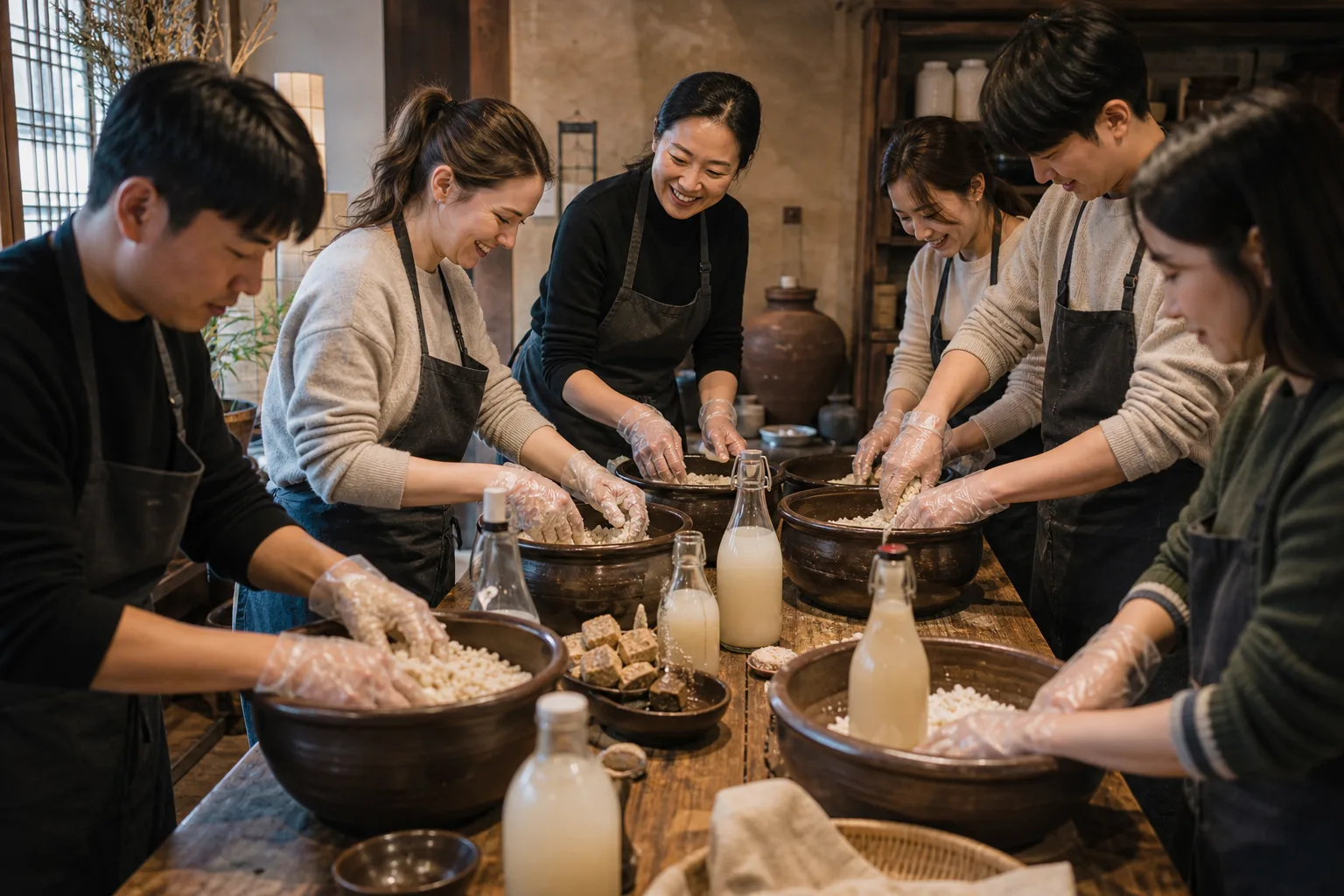
If you want a Seoul activity that is more memorable than another cafe stop and more hands-on than a tasting menu, a makgeolli brewing workshop is one of the best choices. You do not just drink Korea’s cloudy rice wine. You learn why it tastes the way it does, how nuruk works, and how a basic fermentation turns steamed rice into something alive, fragrant, and surprisingly easy to understand.
Why Makgeolli Workshops Belong on a Seoul Itinerary
Makgeolli workshops solve a very specific travel problem: most visitors want a cultural activity that feels local, but they do not want a passive museum visit or a generic food tour. Brewing makgeolli gives you a rare combination of story, process, and tasting. You leave with a better understanding of Korean drinking culture, not just a souvenir photo.
Makgeolli is a traditional Korean rice wine made with rice, water, and nuruk, a fermentation starter that carries mold, yeast, and enzymes. The drink is cloudy because it is not fully filtered, and that cloudiness is part of the point. It is meant to feel rustic, social, and food-friendly. In other words, the workshop is not only about alcohol. It is about a drink that sits at the intersection of agriculture, home brewing, and everyday Korean life.
For travelers, that matters because Seoul is full of experiences that are technically “cultural” but feel disconnected from real life. A brewing class is different. You are usually working with a small group, handling ingredients yourself, and hearing how modern workshops fit into a much older tradition. If you already know you want to see how Korea turns food into identity, this is a stronger use of time than another drive-by tasting.
The experience also works for mixed-interest groups. One person may care about fermentation and another may just want a fun afternoon with a drink at the end. A good class accommodates both. The best ones explain enough history to satisfy a curious traveler, but keep the pace practical so you are not sitting through a lecture.
For readers planning a broader food-focused trip, it also pairs naturally with Korean Cooking Classes: Where to Learn to Cook Like a Local. If your itinerary already includes temple food, market snacks, or a hands-on cooking lesson, makgeolli fits neatly into that same category of “learn by doing.”
What You Actually Learn
Most first-time visitors expect a simple “mix and wait” activity, but a proper workshop should teach a few core ideas:
- Why nuruk matters more than the rice alone
- How a two-step fermentation creates flavor
- Why fresh makgeolli tastes different from bottled supermarket versions
- How temperature, time, and hygiene affect the final result
- What makes makgeolli different from soju, cheongju, or other Korean alcohols
That knowledge is useful because it turns the class from a novelty into context. After the workshop, you will understand why some makgeolli tastes creamy and gently sweet while others are more tart, dry, or funky. You will also be better prepared to choose a bottle later, whether you are buying from a supermarket or ordering at a traditional pub.
If you are building a food-and-drink themed trip, it also helps to read Korean Drinking Culture Guide: Soju, Makgeolli & Craft Beer Explained. That guide gives the bigger picture; this one focuses on the hands-on brewing side.
What Makgeolli Is and Why It Matters
Makgeolli is one of Korea’s oldest and most recognizable traditional drinks. It is usually light, low in alcohol compared with distilled spirits, and slightly fizzy. The flavor sits somewhere between milky rice, soft citrus, yogurt-like tang, and gentle sweetness, though the exact profile depends on the brew. Because it is less polished than clear rice wine, it keeps more of the grain character and fermentation texture.
For many travelers, the first surprise is that makgeolli is not one thing. There are home-style brews, premium craft versions, flavored bottles, and regional variations. Some are made to be fresh and perishable. Others are engineered for shelf life. Workshops often explain that split, which is important because many people first encounter makgeolli in a supermarket bottle and assume that defines the category.
Historically, makgeolli was associated with farming communities and everyday drinking rather than elite dining. That background still shapes how Koreans talk about it today. It is social, informal, and often paired with food that can stand up to acidity and richness. Pancakes, fried dishes, spicy side dishes, and shared plates all make sense here.
That is why a workshop can be more revealing than a simple tasting. You are not just learning how a drink is made. You are learning how Koreans think about balance at the table. Makgeolli is a drink that prefers company. It is usually better with food than on its own, and the class will often end with a tasting that makes that obvious.
The Flavor Profile Travelers Should Expect
A first-timer should expect makgeolli to be:
- Cloudy, pale, and slightly opaque
- Mildly sweet or tart rather than strongly boozy
- Lightly carbonated or prickly on the tongue
- More filling and grain-forward than beer or soju
- Best when served chilled
That matters because the drink’s texture can surprise people who only know it from packaged imports. Fresh makgeolli often tastes brighter and softer, while bottled versions can be flatter or more standardized. A workshop usually makes that difference much easier to understand.
How a Brewing Workshop Usually Works
The details vary by operator, but a good Seoul makgeolli workshop generally follows a similar rhythm. You arrive, get a short introduction, handle the ingredients, learn the sequence of fermentation, and then either start a batch or work on a guided version of the process. Some workshops focus on the history and tasting. Others are more production-oriented. The best ones blend both.
Expect the session to be small-group and reservation-based. This is not the kind of activity you should assume you can walk into at the last minute. Because the class depends on ingredients, timing, and instruction, the operator usually wants a head count in advance. That is especially true if the class includes English instruction.
The instructor will usually explain the role of steamed rice, water, and nuruk. In some classes, you will also compare different kinds of makgeolli or sample a finished batch before or after your own mixing step. If the session includes fermentation rather than only a demo, you may be able to take home a starter or sealed bottle to continue the process later.
Do not expect a brewery tour on the scale of a big beer factory. These are often studio-style spaces, heritage-inspired rooms, or compact traditional liquor workshops. That is part of their appeal. They feel personal, not industrial.
Current Seoul Context in 2026
As of 2026, one of the better-known Seoul options is Yunjudang’s traditional liquor studio near Jongno, which has been described as offering makgeolli classes in both Korean and English. That makes central Seoul a practical base if you are already spending time around Bukchon, Insadong, Jongno, or Gwanghwamun.
The important planning point is that workshops in this category are not standardized like a chain museum program. Hours can shift, classes may be seasonal, and English-language slots can be limited. If a session matters to your trip, reserve early and do not assume same-day availability.
For many visitors, the best choice is the class that is closest to their neighborhood plan. If you are already spending the afternoon in northern Seoul, a Jongno-area workshop reduces transit friction. If your schedule is centered in Hongdae, Itaewon, or Yongsan, choose the option that gives you the easiest return after the tasting.
Who Should Book One
Makgeolli workshops are a good fit for:
- Food travelers who like process-oriented experiences
- Visitors who prefer cultural activities with a tangible takeaway
- Couples or small groups looking for a memorable afternoon
- Travelers who want a sober cultural activity with limited alcohol consumption
- Anyone interested in Korean fermentation, tradition, or home brewing
They are less ideal for people who want a quick checklist attraction or a loud party experience. This is usually a slower, more conversational activity. If you want a hard-edged nightlife crawl, a brewing workshop is the wrong category. If you want something you can actually talk about later, it is the right one.
The class is also useful if you are trying to understand Korean alcohol before ordering confidently at restaurants. Many travelers know the names of soju and beer, but not the difference between clear rice wines, cloudy rice wines, and the wider world of traditional alcohol. Makgeolli workshops fill that gap quickly.
Practical Guide
Hours, Timing, and Reservations
There is no single universal schedule for Seoul makgeolli workshops, because each studio runs differently. In practice, many classes are offered by reservation rather than fixed all-day drop-in hours. Afternoon and early evening sessions are common, and weekend availability is often tighter than weekday availability.
The safest planning rule is simple: book ahead if you want the class to anchor a specific day of your trip. If you are traveling during cherry blossom season, summer holiday periods, Chuseok, or year-end vacation windows, assume the best slots will be taken first.
If you are building a broader Seoul route, try to place the workshop on a day with nearby sightseeing. A good pairing is a late morning of palace or hanok-village wandering followed by an afternoon class and dinner nearby. That reduces transit stress and keeps the day from feeling overpacked.
Prices and Value
Because workshop listings change frequently, the live price is the number that matters. As a planning benchmark, many Seoul experience classes land in a moderate per-person range rather than a budget-entry range. For a makgeolli workshop, expect pricing that reflects instruction, ingredients, and a tasting component, not just the raw cost of rice.
In practical terms, budget as if you are paying for a compact cultural experience, not a street snack. Premium classes with English instruction, specialty tastings, or a stronger take-home component can cost more. If a listing looks unusually cheap, check whether it is a demo only, whether alcohol is included, and whether the instruction language matches your needs.
The best value is usually the class that gives you:
- Clear English or multilingual instruction
- A real hands-on brewing step
- Tasting or comparison samples
- A central location that saves transit time
- A calm group size
That combination is worth more than shaving a small amount off the ticket price.
How to Get There
The easiest workshops to fit into a trip are usually in central Seoul, especially around Jongno or nearby historic neighborhoods. If you are staying near line-connected hubs, use the subway and plan a short walk from the station to the studio.
For travelers unfamiliar with Seoul geography, the simplest approach is to choose a class near one of the city’s sightseeing corridors rather than crossing the city just for the activity. That is especially true if the workshop ends with a tasting. Seoul transit is efficient, but a late return after alcohol is still easier when you are already close to your hotel or a familiar district.
If your schedule is tightly packed, use the workshop as an anchor activity rather than an add-on. It works especially well in the middle of a day, when you have enough energy to follow the brewing process and enough time afterward to sit down for a proper meal.
Booking Strategy
Booking platforms can be useful for comparison, especially if you want English support and easy cancellation policies. Compare the live listing carefully and look for:
- The exact class duration
- Whether it is a tasting, a demo, or a full brewing lesson
- Whether English instruction is guaranteed or only partially available
- Whether the class is suitable for beginners
- Whether you take anything home
If you prefer direct booking, check the studio’s own channels first. That is often the best route for small operators, especially when schedules change. If you want the least friction, use a platform that shows current dates clearly, then verify the class format before you pay.
Choosing the Right Workshop
Not every makgeolli experience is the same, and choosing badly can leave you with a pretty forgettable afternoon. The right workshop depends on what you want out of it.
If you care most about tradition, choose a class that explains nuruk, fermentation, and the cultural context of Korean liquor. If you care most about convenience, pick the one in the most accessible neighborhood. If you want a date-night experience, choose the more polished class with tasting and a calm seating setup. If you want a deep dive, look for a smaller studio with a teacher who actually brews professionally.
Here is the simplest way to think about it:
- If you want context, choose the class with the strongest explanation of history and ingredients.
- If you want fun, choose the class with the best tasting component and a manageable group size.
- If you want efficiency, choose the workshop closest to the rest of your itinerary.
That sounds obvious, but many travelers choose only by photo and end up in a class that does not match their expectation. A little attention to the listing prevents that.
Tips & Common Mistakes
What Most Travelers Miss
The biggest mistake is treating makgeolli like a novelty drink rather than a living fermentation tradition. If you only care about the final sip, you miss the point of the workshop. The process is where the value is. The ingredients, the timing, and the language around fermentation are what make the experience distinct.
Another common miss is assuming all makgeolli is sweet and easy. Some versions are richer, drier, more acidic, or more textured than people expect. A workshop is the best place to learn that difference before you start ordering blindly in restaurants.
Travelers also underestimate how well makgeolli works with food. If you only drink it without a snack or meal, you are not experiencing it the way locals often do. The pairing matters. The class may serve a small tasting, but plan on a proper meal afterward if you want the full effect.
Practical Advice That Saves Friction
- Book in advance if you need English instruction.
- Do not assume walk-ins will work.
- Check whether the class is hands-on or mostly demonstrative.
- Ask whether you will leave with a bottle or a starter.
- Do not schedule the class immediately before a long transit leg.
One more practical point: if you are sensitive to smell, fermentation workshops can be more aromatic than you expect. That is normal, not a sign that something has gone wrong. It is part of the environment.
Pairing the Workshop With the Rest of Your Trip
Makgeolli workshops fit especially well into a food-heavy itinerary. You can pair them with market walks, hanok neighborhoods, or a dinner reservation that features Korean pancakes, grilled dishes, or spicy stews. If you already planned a slow sightseeing day, the workshop gives that day a stronger narrative.
For a larger trip structure, it also helps to place the workshop in the middle of your Seoul stay, not at the very end. By that point, you have enough context to appreciate the drink, but you still have time to use what you learned at restaurants later in the trip. If you are still mapping the trip itself, The Ultimate 10-Day South Korea Itinerary for First-Timers is a good framework for deciding where a workshop should sit inside a bigger route.
FAQ
Is a makgeolli workshop worth it for first-time visitors?
Yes, if you want a hands-on cultural activity instead of just another attraction. It is especially worth it for travelers interested in Korean food, fermentation, or traditional drinking culture. If you only want a quick photo stop, it may feel slower than you need.
Do I need to speak Korean?
Usually no, but English availability depends on the studio. Some operators offer English-friendly classes, while others are Korean-first. If language support matters, check the listing carefully and book a slot that explicitly says it is suitable for international visitors.
How long does the experience take?
Most workshops are compact enough to fit comfortably into half a day, though the actual time varies by operator. Some are closer to a short class plus tasting, while others are more like a deeper workshop with explanation and hands-on steps.
Can I make makgeolli at home after the class?
In many cases, yes, at least in a simplified form. A good workshop should teach the basics clearly enough that you understand the process and can repeat a beginner-friendly version later. Always follow the instructor’s sanitation and storage guidance if you plan to brew at home.
Is this activity okay if I do not drink much alcohol?
Usually yes. Many visitors book makgeolli workshops for the cultural and culinary experience rather than heavy drinking. You can often taste small amounts, compare styles, and focus on the brewing process itself. If you are avoiding alcohol entirely, check the class format in advance.
Conclusion
A makgeolli workshop is one of the rare Seoul activities that teaches you something useful, gives you a strong story to remember, and ends with a drink that actually reflects the lesson. It is a good fit for travelers who want more than sightseeing and more substance than a standard tasting.
The best version of the experience is simple: choose a centrally located class, book ahead, confirm the language support, and treat it as part of a food-centered day rather than an isolated stop. That approach gives you better context, less transit friction, and a better chance of leaving with a real understanding of Korean alcohol.
If your trip already includes food markets, palace districts, or neighborhood wandering, a brewing workshop is an easy addition. It can also make the rest of your drinking and dining choices in Korea more interesting, because once you understand makgeolli, you start noticing how often Korean food and alcohol are built to work together.