Manga Cafes (Manga Kissa): How They Work & Best Chains in Tokyo

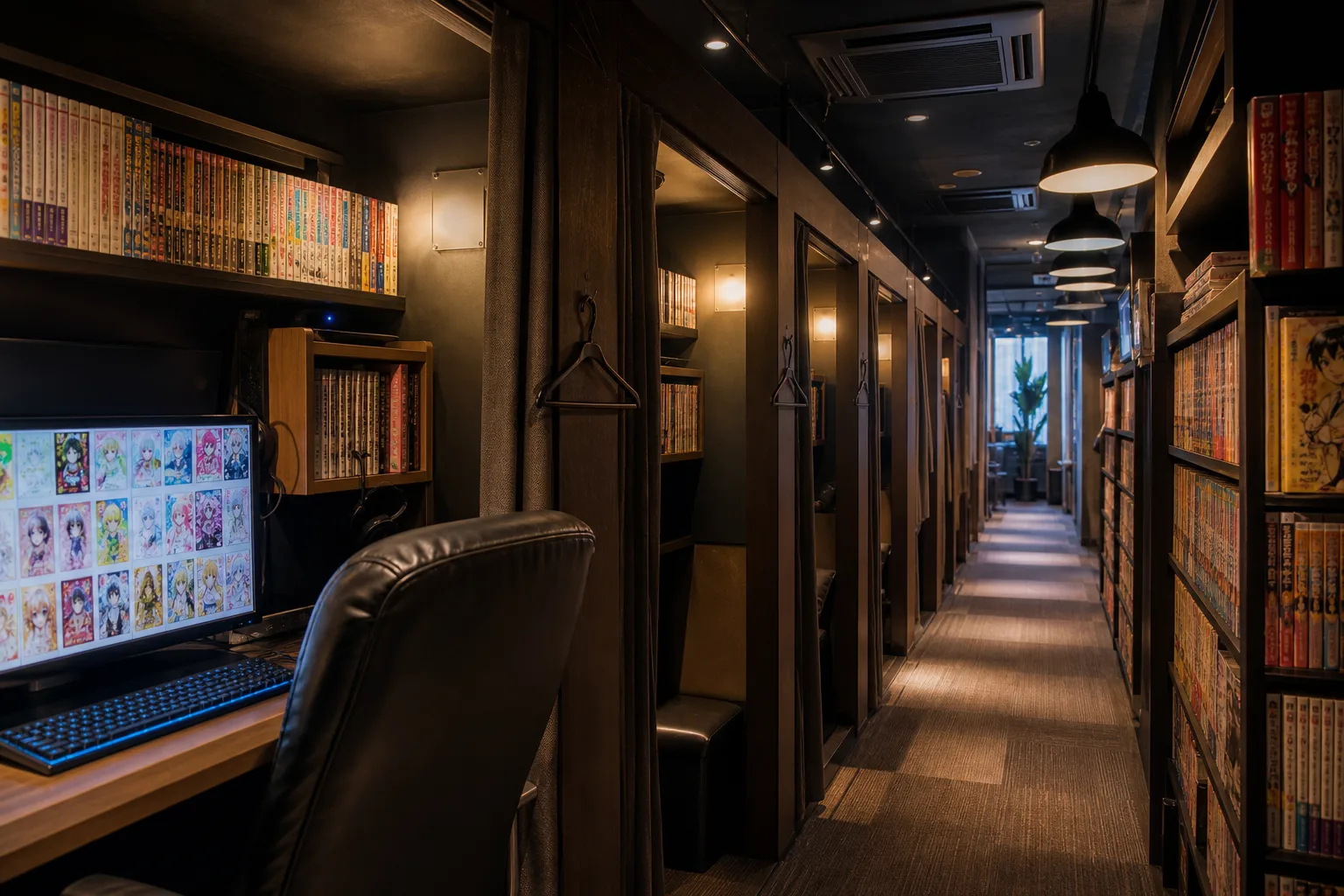
Manga cafes look simple from the street, but the first visit can feel oddly formal if you do not know the rules. This guide explains how manga kissa work, what the price model usually looks like, which Tokyo chains are easiest for travelers, and how to avoid the small mistakes that make a short stay more expensive than it needs to be.
What Manga Cafes Are Really For
Manga cafes in Tokyo are part reading lounge, part internet cafe, part low-cost private room. They are useful when you need a place to sit for an hour, charge your phone, read, work, shower, or crash for the night without paying hotel prices. The best ones are organized, clean, and surprisingly traveler-friendly.
At the most basic level, you pay for time, not for a coffee. You choose a seat or room, settle in, and then use the space for as long as your session lasts. Most branches provide manga, magazines, Wi-Fi, drinks, and a computer or TV setup. Larger chains add showers, soft serve, laundry, printer access, game systems, and private rooms with doors.
That mix is what makes manga cafes different from ordinary cafes and different from capsule hotels too. A cafe is usually about the drink and the table. A capsule hotel is usually about the bed. A manga cafe sits in the middle: it is a flexible space for a few hours of downtime, and in some branches it is a practical overnight base.
The traveler appeal is obvious in Tokyo, where station areas move fast and hotel rooms are expensive. If your day plan includes anime, gaming, shopping, late dinner, or a long transfer between neighborhoods, a manga cafe can function as a reset button. That is why they show up so often in itineraries that focus on Akihabara, Shibuya, Ikebukuro, Shinjuku, and Ueno. If your trip also includes pop-culture stops, this Anime Travel in Japan: Akihabara, Studio Ghibli & Pop Culture Guide helps you connect the dots.
What you will usually find inside
Tokyo manga cafes are not all built the same, but the layout usually follows a predictable pattern. The entrance area handles check-in and membership. Nearby, there is often a shoe area, lockers, a drinks station, and a corridor to the seats or private booths. Some branches are bright and modern. Others are older but still clean and efficient.
A typical branch may offer:
- Open computer seats for short stays.
- Reclining chairs for reading or working.
- Sofa seats for relaxed browsing.
- Pair seats for two people.
- Private booths for better privacy.
- Locked rooms at higher-end chains.
- Shower rooms, laundry machines, and printers at many major branches.
The number of manga volumes can be huge. Chains like Kaikatsu Club advertise large comic libraries and broad entertainment menus, while Manboo and Gera Gera focus on easy access near stations and practical time-based packs. In other words, the main value is not just the manga. It is the combination of location, comfort, and time pricing.
Why travelers use them instead of a cafe or hotel
There are three common reasons a traveler ends up in a manga cafe.
First, they want a cheap place to wait between plans. Tokyo has many neighborhoods where you can spend two to four hours without really needing a sit-down meal. A manga cafe gives you a seat, a drink, and power outlets while you wait for a train, a friend, or a check-in time.
Second, they want a late-night backup plan. If you miss a connection, miss the last train, or simply stay out too late, a manga cafe can be easier and cheaper than a last-minute hotel booking.
Third, they want a semi-private space for a stretch of time. This is especially useful for solo travelers who need to repack a bag, answer messages, edit photos, work remotely, or decompress after a crowded day.
The point is not that manga cafes replace hotels. They do not. The point is that they solve a very specific travel problem: you need a clean indoor space, but you do not need a full room.
How a Manga Cafe Visit Works
The visit is straightforward once you understand the sequence. Most branches follow the same basic flow: check in, choose a seat or room, pay by time, and leave when you are done. The details vary, but the logic stays the same.
1. Check in at the front desk
You start with reception. Some branches ask for an ID, especially if you are becoming a member or using a private room. Others keep the process lighter for short-term visitors, but a passport is still worth carrying because it removes friction. If the cafe uses a membership system, staff will explain the registration quickly.
At check-in, the staff usually explains:
- Whether you need a membership card or app.
- Which seat types are available.
- The rate for your chosen time block.
- Whether drinks, showers, or other extras are included.
- The extension policy if you stay longer than planned.
This is the moment to ask about any special rules. Do not assume that all Tokyo branches work exactly the same way. Some have quiet floors. Some are smoking or non-smoking only. Some have women-only areas or lockable private rooms.
2. Choose the right seat or room
The seat choice matters more than most first-time visitors expect. If you only need to read manga or browse the web, a standard seat is enough. If you plan to nap, spread out, or work for several hours, a reclining seat or private booth is worth the extra cost. For couples or friends, pair seating may be more comfortable.
Higher-end chains make this easier by clearly separating the product types. Kaikatsu Club, for example, advertises one-person and two-person seats, plus lockable private rooms. Manboo organizes its sites into distinct formats such as NetRoom, Manboo Plus, and standard manga cafe style. That variety is good for travelers because you can pay for the level of privacy you actually need instead of overbuying a hotel-sized room.
3. Time is the product
Pricing is usually based on blocks of time. The first block is often the most expensive, and later hours may be charged in smaller increments. Many branches also have pack rates for several hours or overnight use. Publicly visible examples across Japan show that short stays commonly start around a few hundred yen, while overnight packs can be much cheaper than a hotel bed.
For Tokyo travelers, the smart move is to think in time windows:
- Under one hour: quick stop, recharge, wait, read.
- Two to four hours: productive work block or rest break.
- Evening into night: meal, shower, manga, and sleep.
- Early morning exit: good for first train or airport transfer.
The cheapest option is not always the best option. A slightly more expensive private booth may be better if you need silence, sleep, or luggage space. A seat with bad ergonomics can ruin an otherwise cheap stay.
4. Drinks, food, and add-ons
One of the reasons manga cafes stay popular is that many of them include drinks in the price. Kaikatsu Club says drinks and soft serve are free during the stay, and it also highlights showers and coin laundry for long visits. That kind of all-in convenience matters more than it sounds, especially on a hot or rainy Tokyo day.
Food usually works in one of three ways. Some branches have vending or snack menus. Some let you order simple meals. Some sit near stations, so you can just bring something in or leave briefly and come back if the rules allow it. Always confirm the branch policy because outside food, trash handling, and re-entry can differ.
5. Leaving and paying the final bill
When your time is up, staff either closes the session automatically or charges the difference if you stayed longer. This is another reason to ask about the extension policy up front. If you are using a pack rate, a small overstay can trigger a more expensive rate band. The safest habit is to plan a 10 to 15 minute cushion before your next train or reservation.
Best Chains in Tokyo
Tokyo has independent manga cafes, but chains are easier for first-time visitors because the rules are more predictable. The best chain for you depends on what you need: a quick stop, a long work session, a shower, a private room, or a station-close overnight backup.
Kaikatsu Club
Kaikatsu Club is one of the most useful all-around choices for travelers who want comfort first. Its official site emphasizes comic reading, internet access, film and anime viewing, free drinks, soft serve, showers, coin laundry, and a variety of seat and room types. That makes it a strong pick when you want a cleaner, more polished environment than a basic neighborhood internet cafe.
Use Kaikatsu Club if:
- You want a comfortable daytime work or reading session.
- You want easy access to drinks and soft serve.
- You want shower and laundry options.
- You want a branch that feels structured and easy to understand.
It is not the cheapest possible option, and that is not the point. Kaikatsu Club is a good value when you care about comfort, cleanliness, and a wider service menu. For many travelers, that tradeoff is better than chasing the absolute lowest rate.
Manboo
Manboo is a strong choice when privacy and flexibility matter more than ambiance. The official site presents several formats, including NetRoom, Manboo Plus, standard manga cafe, and a karaoke or darts format. It also highlights that the NetRoom type offers lockable private rooms with showers and laundry, which makes it especially practical for overnight stays or longer work blocks.
Manboo also stands out because it offers advance reservation for some of its room products. That can make a real difference in Tokyo if you are arriving late, traveling with luggage, or trying to avoid the stress of hunting for a bed after a long day. If you like the idea of a manga cafe but want it to function more like a compact private room, Manboo is usually the chain to investigate first.
Use Manboo if:
- You want a more private, room-like setup.
- You may need a shower or laundry during the stay.
- You want to reserve ahead when possible.
- You are using the cafe as a late-night base rather than a pure reading stop.
Gera Gera
Gera Gera is the easy, station-close option. The official site positions it as a nearby network cafe with clear onboarding for first-time users and regular special notices such as holiday pricing and time-pack campaigns. That is a good sign for travelers because it means the chain is actively tuned to short visits and changing demand.
Use Gera Gera if:
- You want a convenient stop near a station.
- You are comparing local pricing and special packs.
- You need a simple entry point into manga cafe culture.
- You care more about location than premium amenities.
Gera Gera tends to fit short, practical visits well. If you are staying only a few hours, or if you want a low-friction place to reset between trains, it can be a smarter choice than a more feature-heavy chain.
Which one should you choose?
If you want the cleanest all-purpose experience, start with Kaikatsu Club.
If you want privacy or an overnight-friendly room product, start with Manboo.
If you want a simple, station-close stop and you are price-sensitive, start with Gera Gera.
That is the practical decision tree. The name on the storefront matters less than the seat type, the time block, and how close you are to your next stop.
Practical Guide
The logistics are easy once you know the patterns. Manga cafes are built for convenience, but Tokyo convenience still has rules. The main variables are location, time pricing, and whether the branch is designed for short visits or overnight use.
Hours, prices, and booking
Many Tokyo manga cafes operate long hours, and some are effectively open around the clock. That said, branch hours can change, holiday pricing can appear, and some special rooms or services need a reservation. Do not assume a given station area will have the same rules as the one you visited last year.
For pricing, the safe rule is this: expect a time-based base rate, then optional add-ons or higher-tier room rates. Publicly visible industry ranges still cluster around a few hundred yen for short use, with overnight packs often far cheaper than a hotel. The exact price depends on the branch, weekday versus weekend, and special campaigns.
If you need a reservation, check the chain first rather than the individual branch name on a map app. Manboo is the clearest example among the chains covered here because its official site includes a reservation path for its room products. For most other branches, walk-in use is still normal, especially for day seats.
How to get there
Most useful manga cafes cluster near major stations. That is the whole point: they are supposed to be easy to reach after a train ride, before check-in, or after a late dinner. In Tokyo, look first around the exits closest to the neighborhood you are actually using.
Good station-area targets include:
- Shinjuku for late-night flexibility.
- Ikebukuro for anime, games, and long-stay options.
- Akihabara for pop-culture days.
- Shibuya for evening plans and transfers.
- Ueno and Asakusa for budget stays and transit access.
If you are building a broader Tokyo plan around anime neighborhoods, this Japan Travel Planning: Visa, IC Card, Rail Pass & Essential Logistics Guide will help you line up trains, cards, and entry logistics before you add cafe stops.
What to pack
You do not need much, but a few things make the visit smoother:
- Passport or ID.
- IC card or payment method.
- Phone charger and cable.
- Small bottle of water if the branch does not allow outside drinks.
- Earbuds if you plan to work or watch video.
- A small lockable bag if you are carrying valuables.
If you plan to use a manga cafe overnight, pack more deliberately. A face towel, fresh socks, and a change of shirt can make a long stay much more comfortable. The best branches are clean, but they are still public spaces. Treat them like a compact travel base, not a full hotel room.
When a manga cafe makes more sense than a hotel
A manga cafe is usually the better option when:
- You only need three to six hours.
- You want to bridge a late arrival and an early train.
- You are traveling very light and do not need a full bed.
- You want to work or read in a semi-private space.
A hotel is still the better option when:
- You need guaranteed sleep quality.
- You have heavy luggage and want real storage.
- You are traveling with someone and need a proper room.
- You want a bathroom and shower that are fully yours.
That tradeoff is why manga cafes are best treated as a tactical tool. They are not the default answer to every Tokyo night, but they are excellent when your schedule is awkward and your budget is finite.
Tips and Common Mistakes
First-time visitors usually run into the same handful of problems. The good news is that all of them are avoidable once you understand how the system is designed.
Do not choose by name alone
Brand names sound similar, but the actual product can be very different. One branch might be a bright, open reading lounge. Another might be a private-room style setup with showers. Another might be optimized for short station-area stops. Always check the seat or room type before you commit.
Do not ignore the first hour
The first hour is often where the value equation is won or lost. A branch with a slightly lower headline rate can become expensive if its minimum block is awkward for your schedule. If you only need 45 minutes, a chain with a clean short-stay policy may be better than one that looks cheaper at first glance.
Do not assume every branch is equally quiet
Some cafes are calm and work-friendly. Others are lively, especially near entertainment districts. If sleep or concentration matters, choose a locked room, a higher-end branch, or a less nightlife-heavy location. The difference between a productive night and a miserable one can be a single floor plan.
Do not forget about baggage
Tokyo travelers often arrive with one carry-on and one backpack, which sounds manageable until you try to fit everything into a booth. Pick a branch with lockers or a real bag storage option if you expect to move around the city afterward. If you are on a long Japan trip and need to understand rail transfers, baggage timing, and transit cards, the How to Travel Japan on a Budget: Cheap Eats, Transport & Stays guide is a useful companion.
Do not overplan an overnight stay
An overnight manga cafe stay can work, but it works best as a backup or a deliberate budget choice, not as a romantic substitute for a hotel. You will sleep better if you arrive with realistic expectations, a power bank, and a clear exit time for the morning.
Do ask about smoking and quiet rules
This matters more than many guides admit. Some branches still allow smoking in designated zones or have older layouts that affect smell and sound. If you are sensitive to either, confirm the branch policy before you sit down. A few seconds of asking can save you several hours of regret.
Do use the cafe as a planning buffer
One underrated use for manga cafes is pre- and post-transit buffering. You can arrive early, sort your bag, confirm directions, charge everything, and then move on. That is especially useful if you are coming from a long-distance train or if you are trying to line up a flight, a museum slot, or a reservation in another neighborhood.
FAQ
Are manga cafes safe for first-time tourists?
Yes, in the practical sense that matters for travelers. Major Tokyo chains are designed for public use, staff is present, and the process is structured. As with any city venue, you should still watch your valuables, read the seat rules, and choose a branch that matches your comfort level.
Do I need to be a manga fan to use one?
No. Many visitors never touch the manga shelves. The real value is the seat, the time-based pricing, the drinks, the Wi-Fi, and the privacy. If you like manga, that is a bonus, not a requirement.
Can I sleep there overnight?
In many branches, yes, especially in private-room formats or overnight packs. That said, the quality of sleep depends heavily on the seat type and branch layout. A locked room or more private setup is usually much better than a standard chair if you plan to sleep for real.
Is it cheaper than a hotel?
Often, yes, especially for a short overnight window or a few hours between trains. But cheaper does not always mean better. If you need real rest, a hotel can still be the smarter purchase. Use the manga cafe when the trip logic fits it, not just because it looks inexpensive.
Can I work there?
Usually yes. Many branches are set up for Wi-Fi use, charging, printing, and quiet time. Kaikatsu Club, for example, explicitly promotes internet use and workstation-friendly services. Still, if you have a serious remote-work block, pick a quiet seat or private room and test the Wi-Fi before relying on it.
Conclusion
Manga cafes in Tokyo are easiest to understand when you stop thinking of them as novelty cafes and start thinking of them as flexible time rentals. You are buying a place to sit, read, work, recharge, and sometimes sleep. Once you know that, the rules become simple: choose the right seat, check the time block, confirm the branch policy, and do not overbuy the experience.
For many travelers, the best strategy is to use manga cafes as a bridge between bigger plans. They are ideal before hotel check-in, after a late dinner, between neighborhoods, or as a low-cost backup when the schedule gets messy. Kaikatsu Club is the most comfortable all-rounder, Manboo is the strongest privacy-first option, and Gera Gera is a good station-close shortcut when convenience matters more than amenities.
If you are shaping a Tokyo trip around anime districts, transport logistics, and budget control, the right cafe stop can save time and money without sacrificing comfort. And if you want to put that into a bigger trip plan, start with the three guides above, then build your cafe stop into the parts of the day where a hotel would simply be too much.