How to Travel Japan on a Budget: Cheap Eats, Transport & Stays

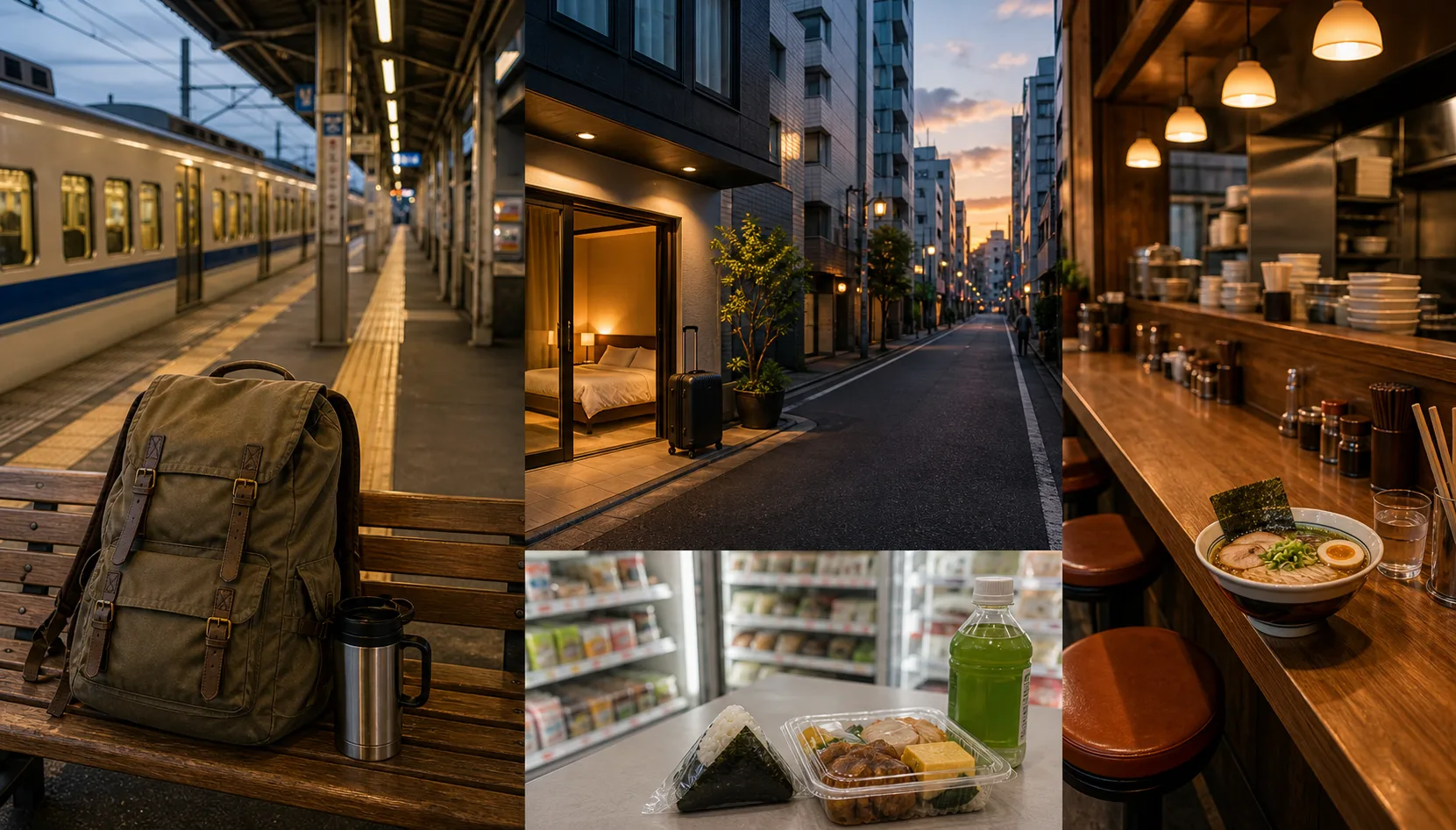
Japan does not have to be an expensive trip. The biggest savings usually come from three decisions: where you sleep, how you move between cities, and how often you pay for convenience instead of planning ahead. If you get those three things right, Japan becomes much more affordable without turning the trip into a compromise.
Budget Travel in Japan
The easiest way to travel Japan on a budget is to think in layers. First, choose a base city or region so you do not spend money constantly changing hotels. Second, use rail and local transit with purpose instead of defaulting to taxis or high-speed trains for every hop. Third, build your meals around inexpensive, filling options such as set meals, ramen, curry rice, conveyor-belt sushi, bakeries, and convenience stores. A smart budget trip is not about spending as little as possible everywhere. It is about spending on the things that actually improve the trip.
Budget travel in Japan works best when you balance three goals at once: keeping transport efficient, keeping accommodation simple, and keeping meals satisfying. If you only cut costs in one area, the savings disappear somewhere else. A cheap hotel far from transit can cost more in time and fares than a slightly better-located room. A flashy long-distance rail pass can be worse value than individual tickets. A meal plan built around random snacks can be both unhealthy and more expensive than a proper lunch set.
The good news is that Japan rewards organized travelers. Trains run on schedule, convenience stores are genuinely useful, and even modest neighborhoods often have excellent food. If you want a broader planning overview before you start booking, this pair of guides will help you connect the budget decisions to the rest of the trip: Japan Travel Planning: Visa, IC Card, Rail Pass & Essential Logistics Guide and Japanese Food Guide: Ramen, Sushi, Yakitori & What to Eat and Where.
What makes Japan affordable
The main reason Japan can feel expensive is not that every part of the trip is costly. It is that the wrong combination of choices gets expensive quickly. A traveler who changes hotels too often, rides fast trains without comparing fares, and eats every meal in tourist zones can spend far more than necessary. A traveler who stays near major stations, uses local trains and IC cards, and eats where office workers eat usually gets much better value.
Japan also makes it easy to buy quality at the lower end of the price spectrum. Many budget meals are still fresh and well prepared. Many low-cost hotels are compact rather than unpleasant. Local transport is generally reliable enough that you do not need to pay extra for redundancy. That means budget travel here is less about sacrificing comfort and more about learning the system.
Cheap Eats
If you want to keep daily spending under control, food is the easiest place to start. Cheap eats in Japan are not just emergency meals. They can be excellent, varied, and satisfying if you know where to look. The most reliable budget categories are ramen shops, soba and udon counters, curry shops, gyudon chains, teishoku restaurants, bakeries, depachika food halls near closing time, supermarket ready-to-eat meals, and convenience stores.
Where to eat cheaply
Ramen is one of the best budget meals because a single bowl can be filling enough for lunch or dinner. Many shops price a basic bowl reasonably, then charge extra for toppings or side dishes. If you want a simple, affordable meal without thinking too hard, ramen is a dependable option.
Udon and soba are another easy win. They are often cheaper than more elaborate sit-down meals, and they usually come out fast. In busy station areas, stand-up noodle counters can be one of the best-value meals in the city.
Gyudon chains and curry rice shops are built for speed and price. They are not exciting in a culinary sense, but they are practical. For budget travelers, practicality matters because it saves both time and money. A quick meal between train rides can prevent the temptation to overspend later on convenience snacks.
Teishoku restaurants are worth more attention than many first-time visitors give them. A set meal with rice, miso soup, a main dish, and pickles can be better value than assembling a lunch from small purchases. The portions are usually balanced, and the meal feels complete instead of improvised.
Convenience stores done right
Convenience stores in Japan are useful in a way that travelers often underestimate. They are not just places to buy coffee or a snack. They can function as a practical backup food system for early departures, late arrivals, and low-spend days. You can put together a simple meal from onigiri, sandwiches, salads, boiled eggs, hot snacks, yogurt, fruit, and drinks without spending much.
The trick is not to rely on convenience stores for every meal. If you do, the trip starts to feel repetitive and the cost can quietly rise. Use them strategically: breakfast before an early train, a light lunch on a travel day, or a late-night option after everything else is closed. Convenience stores are best when they support the day, not when they define it.
Supermarkets and closing-time discounts
Supermarkets are one of the best budget tools in Japan. In many areas, especially near residential neighborhoods and station suburbs, supermarkets sell bentos, prepared side dishes, salads, bread, fruit, and sweets at prices that beat tourist-area restaurants. If you are staying in an apartment, a hostel with a kitchen, or a hotel room that allows simple eating, a supermarket stop can cut food costs dramatically.
Closing-time discounts are especially useful. Many stores reduce prices on prepared foods later in the evening. You do not need to chase discounts as a strategy, but if your schedule naturally lines up, it can make dinner much cheaper. The key is to buy what you will actually eat that night, not to stockpile food you cannot finish.
What to avoid if you want to save
The easiest way to overspend on food is to treat every meal as a special event. That sounds fun at first, but it adds up fast. A budget trip does not need a big restaurant lunch and dinner every day. It needs a rhythm. One good sit-down meal, one cheap fast meal, and one simple convenience or supermarket meal often keeps the budget healthy without making the trip feel dull.
Another common mistake is spending too much in station buildings and famous sightseeing districts. Those neighborhoods are convenient, but convenience has a premium. Walk one or two blocks away from the main tourist flow and you often find the same style of food for less.
A budget food rule of thumb
If you want a simple rule, try this: choose one meal each day that is flexible and cheap, one meal that is satisfying but still ordinary, and only one meal that you treat as a splurge. That rhythm gives you variety without blowing up the budget. It also keeps the trip from turning into a constant search for the next expensive recommendation.
Transport
Transport can be the largest variable on a Japan trip. Within cities, it is usually manageable. Between cities, it can become the most expensive part of the itinerary if you book fast trains without a plan. The smartest budget approach is to use local transit for short hops, IC cards for convenience, and long-distance rail only when the route really justifies it.
Use an IC card first
For most travelers, an IC card is the best value for everyday movement. JNTO notes that IC cards can be used across many parts of Japan for trains, buses, boats, vending machines, convenience stores, some taxis, and other small purchases, and most cards require a 500 yen deposit when purchased. In practice, that means less time buying tickets and fewer mistakes at busy stations.
IC cards are not a discount miracle, but they reduce friction. That matters because budget travel is not only about the ticket price. It is also about avoiding wasted time, missed connections, and unnecessary complications. If you are moving around a city or doing a multi-stop day trip, an IC card usually makes the whole day cheaper in practice.
When local trains beat express trains
If your schedule is flexible, local and rapid services are often enough. Many first-time visitors default to the fastest option because it feels efficient. Sometimes it is. Often it is not. For short and medium distances, a local train with one easy transfer can cost much less than a premium service and may take only a little longer in real terms.
The best budget travelers compare the route before buying. If the trip is only a few stops, local transit is usually the smarter choice. If you are crossing regions, the train economics change and you need to look more carefully at seat reservations, special tickets, and whether a rail pass is actually worthwhile.
Is the Japan Rail Pass worth it?
The Japan Rail Pass is not automatically a budget choice. Current official pricing on the JAPAN RAIL PASS site lists ordinary 7-day, 14-day, and 21-day passes at 50,000 yen, 80,000 yen, and 100,000 yen respectively for adults when purchased online or through overseas JR-designated agencies. At those prices, the pass only makes sense for travelers who are covering enough long-distance rail to justify it.
That is the most important budget lesson about Japan transport: do not assume the rail pass is the cheap answer. It is a convenience tool first and a savings tool only for certain itineraries. If your trip is mostly one city plus a few regional day trips, an IC card and separate tickets are often the better value.
There is also a specific rule to keep in mind for the fastest trains. JR’s official guidance says the JR Pass does not cover Nozomi and Mizuho services unless you buy the separate supplement ticket. The official supplement prices currently listed include 4,180 yen for Tokyo to Kyoto or Tokyo to Shin-Osaka, and 6,500 yen for Tokyo to Hiroshima. That can change the math quickly, especially if you were counting on the fastest shinkansen to maximize pass value.
How to think about rail pass value
The rail pass makes sense when your itinerary is dense, long-distance, and rail-focused. If you are doing something like Tokyo to Kyoto to Hiroshima and back in a short window, it may be worth a spreadsheet check. If you are spending several days in one region, the value often drops. Budget travelers should compare the pass against individual fares before buying, not after.
If you want the simple version: use the pass only when your itinerary is built around movement. Use local tickets and IC cards when your itinerary is built around one base city or one region. The first pattern rewards the pass. The second usually does not.
Stay near the right station
Accommodation and transport are connected. A cheaper hotel that sits far from a useful station often costs more in the end because you will take extra trains, pay for more transfers, and waste time getting back at night. Sometimes the most budget-friendly stay is not the lowest nightly rate. It is the one that puts you close to the route you will actually use.
That is why station choice matters. If you are moving around Tokyo, Kyoto, Osaka, or another large city, staying near a central rail or subway hub often reduces hidden costs. The room may be smaller, but your daily transport bill usually improves.
Budget Stays
Affordable accommodation in Japan comes in several forms, and each has a different tradeoff. Hostels are best for social travelers and solo visitors who care about price. Business hotels are best for people who want privacy, predictability, and location. Capsule hotels can work for short stays and late arrivals. Guesthouses and apartments are useful when you want a slower pace or more control over meals.
Business hotels
Business hotels are often the sweet spot for budget travel in Japan. They are compact, not luxurious, but usually clean, reliable, and well located. For many travelers, they solve the real problem: a private room near transit without paying premium hotel prices.
The value comes from predictability. You know what you are getting, you do not need to manage a shared dorm, and you often get better sleep than in a cheaper but less practical option. If your trip involves multiple early departures or late arrivals, that reliability can be worth more than a few thousand yen saved elsewhere.
Hostels and guesthouses
Hostels are best when your main goal is stretching the budget. The downside is that you need to think more carefully about noise, baggage, and privacy. The upside is that you can get very low nightly rates in major cities if you book early and avoid peak dates.
Guesthouses can sit somewhere between a hostel and a hotel. They are often smaller and more personal. Some travelers love the atmosphere. Others prefer the consistency of a business hotel. For budget planning, the key question is not just price but the total cost of staying there. If the guesthouse has a kitchen, laundry, or better location, it may beat a cheaper room that lacks those things.
Capsule hotels
Capsule hotels are not for everyone, but they can be useful on a budget trip. They are especially handy for one-night stays, late-night arrivals, or transit-heavy itineraries. The main appeal is the low price relative to the central location and the convenience of being close to major stations.
The tradeoff is privacy and luggage space. If you are traveling light, a capsule hotel can be very efficient. If you have big bags, it becomes less practical. Budget travel works best when the accommodation fits the shape of the trip, not when you force the trip to fit the accommodation.
Apartments and weekly stays
If you are staying several nights in one city, an apartment or weekly stay can lower the real cost of the trip, especially if you cook some meals or use supermarket food. This works best for travelers who are comfortable with a little self-management. It is not necessarily the cheapest nightly rate, but it can be the best total-value choice if you will be in one place long enough.
The biggest mistake with apartments is forgetting that transit access still matters. A cheap apartment far from the station can erase the savings. Look for a place that is simple to reach after dark and convenient for the route you plan to use most.
How to save on stays without making the trip worse
The best savings come from booking early, staying near transit, and avoiding unnecessary switching between hotels. Every hotel change adds time, luggage handling, and risk. If you can reduce the number of overnight moves, you can often improve both the budget and the experience.
Another smart move is to match the room type to the trip length. For one night, simplicity matters more than amenities. For four or five nights, small comforts like a decent desk, laundry access, or a better bed may be worth paying for if they help you recover between busy days.
Practical Guide
The practical side of budget travel is less glamorous but more important than most guides admit. A cheap trip still needs a workable rhythm: when you arrive, how you move, where you sleep, and how you avoid unnecessary purchases. This section is where the budget strategy becomes an actual trip plan.
Hours, admissions, and prices
Japan is not a single-price destination, so you need a few reference points rather than one magic number. For transit, an IC card usually requires a 500 yen deposit, according to JNTO. For long-distance rail, the official Japan Rail Pass pricing currently lists 7-day, 14-day, and 21-day ordinary passes at 50,000 yen, 80,000 yen, and 100,000 yen for adults. JR also lists additional Nozomi and Mizuho supplement tickets for pass holders, with sample prices such as 4,180 yen for Tokyo to Kyoto or Tokyo to Shin-Osaka.
Those figures are enough to shape a budget plan. If your itinerary is mostly urban, expect the IC card to handle the day-to-day movement and treat rail passes as optional. If you are hopping across regions, calculate your long-distance fares before buying anything. That is the only reliable way to know whether a pass is actually saving money.
The other practical number that matters is your nightly accommodation target. In Japan, a budget room can still be clean and comfortable, but the lower end of the market books out quickly on weekends, holiday periods, and major event dates. Prices rise sharply when availability drops, so the cheapest option is often the one you book first, not the one you discover later.
How to get there and move around
Arrive with the first segment already solved. If you are landing in Tokyo, Osaka, or another major city, know your airport-to-city transfer before you arrive. That first ride sets the tone for the rest of the trip. The same is true when you switch cities. Know whether you need a local train, a rapid train, a reserved shinkansen seat, or a bus before you step onto the platform.
Budget travelers should also build a simple transport stack. The stack is: walk whenever possible, use an IC card for ordinary local movement, buy point-to-point tickets when needed, and reserve a rail pass only if the math supports it. That structure keeps you from overpaying for convenience.
Booking strategy
For stays, book the first and last nights early. Those are the nights where transit access matters most and where arrival fatigue can make a bad location expensive. If you are changing cities, it is often worth spending a little more for the room that reduces transfer stress. A slightly higher nightly rate may still save money overall if it avoids extra rides, taxis, or confusion.
For transport, do not wait to compare options until the day you travel. Long-distance routes can have different fare structures depending on train type, seat type, and whether you are using a pass or a normal ticket. Budget travel works best when the decision is made with a map and a calculator, not at the platform gate.
Booking links and tools
If you want to compare options for one part of the trip at a time, use official transport pages for train rules and fare details, then compare stays and transit-heavy activities against the actual dates of your itinerary. For many travelers, the best savings come from mixing sources rather than relying on one all-in package. If the itinerary includes a city transfer, a reserved train seat, or a special regional pass, compare the booking choice against the rest of the trip instead of isolating it as a single expense.
A sample low-budget rhythm
A realistic budget day in Japan might look like this: convenience-store breakfast, local transit on an IC card, a cheap noodle or set-meal lunch, a free or low-cost afternoon of walking and sightseeing, and a simple supermarket dinner or inexpensive chain meal near the station. That kind of structure keeps the daily spend controlled while still leaving room for one or two memorable meals later in the trip.
The point is not to remove enjoyment. It is to stop money leakage. Small leaks are what ruin budgets: unnecessary taxis, station-area impulse buys, overbuilt transport passes, and expensive dinners chosen out of convenience rather than appetite.
Tips & Common Mistakes
The most common budget mistake is planning the trip around a fantasy version of efficiency. Travelers imagine they will zip from place to place and always pick the perfect train, hotel, and restaurant. In reality, the trip works better when the budget is built for normal human behavior.
Do not overbook long-distance movement
One of the fastest ways to spend too much is to change cities too often. Every city hop creates a new accommodation check-in, a new station transfer, new luggage handling, and a new opportunity to overpay. If you want to keep the trip affordable, reduce the number of bases. Two or three well-chosen bases are often better than five rushed ones.
Do not assume the rail pass is the answer
The rail pass used to be the default budget answer in many conversations about Japan. That is no longer something you should assume. Current pricing means the pass only works well for certain routes and trip lengths. If your itinerary is not rail-heavy enough, you can easily spend more on the pass than on separate tickets.
Do not eat only where tourists eat
Tourist restaurants are not always bad, but they are rarely the best value. If you eat every meal in the most photographed part of town, the budget will suffer. Step one or two blocks away, look at what station workers and office employees are ordering, and you will often find a cheaper and better-value meal.
Do not stay far away just because the room rate looks lower
A room that is cheaper on paper can be more expensive in reality if it adds extra transit, late-night taxis, or a stressful commute with luggage. Station access matters. Safety and ease of return matter too. Budget travelers win by choosing locations that reduce friction.
Do not ignore laundry and luggage
Long trips become expensive when you are forced to replace clothes, pay for storage, or book larger rooms than you need. A compact packing list and access to laundry can keep the trip simple. That is especially true in Japan, where moving light often improves the whole experience.
Use a simple spending rule
If you want one rule to keep you honest, use this: when you choose one thing that is more expensive, make another thing cheaper. A better room can be balanced with a simpler dinner. A faster train can be balanced with a hostel or guesthouse. A splurge meal can be balanced with a convenience-store breakfast. That is how a budget stays intact without feeling restrictive.
FAQ
How much money do I need per day in Japan on a budget?
It depends on the city and travel style, but a budget trip usually becomes much easier when you control accommodation first, then transport, then food. If you stay near transit, use IC cards, and eat a mix of cheap meals and convenience-store or supermarket food, your daily spend can stay far below a comfort-focused trip.
Is Japan cheap for food?
It can be, especially if you eat at ramen shops, udon counters, gyudon chains, curry shops, bakeries, and supermarkets. You do not have to eat expensive food to eat well in Japan. The key is knowing where locals go for everyday meals rather than treating every meal like a tourist event.
Is the Japan Rail Pass worth it for budget travelers?
Only sometimes. The official pass is expensive enough that it needs a long-distance, rail-heavy itinerary to justify the cost. If you are mostly staying in one city or one region, an IC card and individual tickets will often be better value.
What is the cheapest way to get around Japanese cities?
Walk when the distance is short, then use an IC card for trains, subways, buses, and other local transit. That combination is usually the most practical and budget-friendly approach. It keeps the day simple without forcing you into unnecessary taxi rides or confusing paper tickets.
Are hostels or business hotels better for budget travel in Japan?
It depends on your priority. Hostels are usually cheaper and more social. Business hotels are often a better all-around value if you want privacy, a good location, and a predictable room. For many travelers, the best choice is the one that reduces stress and keeps the itinerary moving smoothly.
Conclusion
Traveling Japan on a budget is mostly about making the right tradeoffs early. Pick a base that keeps transport manageable. Use IC cards for local movement. Compare long-distance rail options before buying a pass. Eat at the kinds of places that locals use every day. Choose accommodation that saves time as well as money. If you do those things consistently, Japan becomes a very practical destination for budget travelers.
The best budget trips do not feel stingy. They feel organized. You still eat well, move efficiently, and sleep comfortably. You just stop paying for convenience when convenience is not actually helping. That is the difference between a trip that drains money and a trip that makes every yen work harder.