Gangneung's Lesser-Known Side: Coffee Street to Haeran Gallery

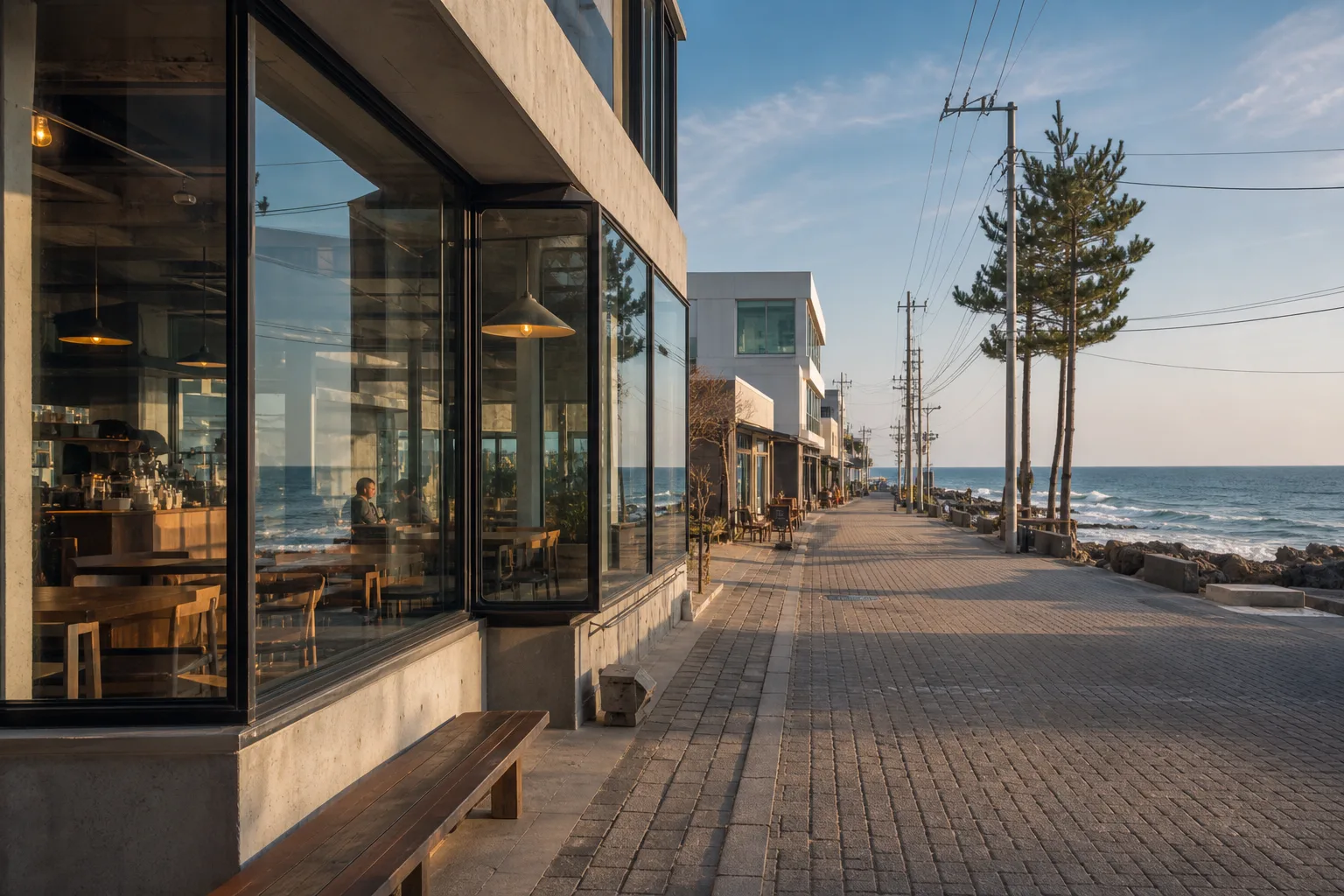
If you only know Gangneung as a coffee town, you are missing the better part of the experience. The stretch between Coffee Street and Haeran Gallery shows a calmer version of the city: seaside walks, independent cafes, small creative spaces, and enough flexibility to fit into a half-day or a slow overnight itinerary.
Why this route works
Gangneung is usually introduced through the obvious headline items: the beach, the cafe strip, and the KTX connection from Seoul. That is useful, but it hides the real reason many travelers end up liking the city. Gangneung is not just a place to drink coffee by the water. It is a place where the coast, food, and local culture sit close enough together that you can move through them at an easy pace.
This route from Coffee Street to Haeran Gallery is a good example. It gives first-time visitors a way to see Gangneung without trying to pack in too much. It also works well for travelers who have already done the “big Korea” itinerary and want a side trip that feels less scripted. If you are building a wider trip across Korea, start with The Ultimate 10-Day South Korea Itinerary for First-Timers for context, then use Gangneung as the quieter coastal break inside that larger plan.
The route is especially useful for Singapore-based travelers who want a destination that feels familiar in convenience but different in atmosphere. You can arrive by train, walk a scenic stretch, eat without much decision stress, and still leave with a sense that you saw a less obvious side of the city. That is what makes this area more than a photo stop.
Featured snippet
Gangneung’s Coffee Street to Haeran Gallery route is best treated as a slow coastal half-day rather than a checklist. Start with the beachside cafes, walk or taxi toward the cultural stop, and leave room for an unplanned meal, a coffee break, and a bit of time at the shoreline.
Coffee Street without the overload
Coffee Street is the easiest entry point into Gangneung’s coastal identity. It is popular for a reason: the sea is right there, the cafe culture is strong, and the district is easy to navigate even if you are in the city for the first time. But the same popularity that makes it easy to visit also makes it easy to misunderstand. If you expect a single “must-see” spot, you will miss the actual value of the area.
Think of Coffee Street less as one street and more as a compact zone where the coast and café culture overlap. The result is a place where you can choose how energetic you want the day to be. If you want a quick coffee and a photo by the water, that works. If you want to sit for an hour, watch the light shift, and then drift into a second cafe or a casual meal, that works too.
This is also where Gangneung’s reputation as a cafe city makes practical sense. The city is not just full of coffee shops. It is full of spaces that are designed around lingering, with views, desserts, larger tables, and a relaxed pace that encourages you to stay longer than planned. For a broader look at why the city has developed this identity, read The Rise of Korean Cafe Culture: Why It’s So Unique.
What to expect on the ground
The first thing to know is that Coffee Street is busier on good-weather weekends and during school holidays. That does not mean you should avoid it. It means you should plan around it. Early morning and late afternoon are usually the best windows if you want easier seating and softer coastal light. Midday is fine too, but it is the period most likely to feel crowded.
The second thing to know is that you do not need to over-engineer the visit. There is no benefit in trying to “cover” the whole area in a strict sequence. The experience improves when you let the district set the tempo. Pick one cafe that interests you, walk the shoreline, and then decide whether you want another coffee, a snack, or a move toward the next stop.
The third thing to know is that Coffee Street is more satisfying when paired with a second destination. On its own, it can become just another cafe cluster. Combined with Haeran Gallery, it turns into a route with rhythm: public seaside space first, then a calmer cultural endpoint.
Best time to visit Coffee Street
For most travelers, late morning to early afternoon is the least efficient time and the least memorable time. The cafes are open, but the light can be harsh and the crowd density is highest. If your schedule allows it, choose one of these two patterns instead:
- Early start, coffee first, then a slow walk before lunch.
- Late afternoon, gallery first or second, then a seaside coffee around sunset.
The second option is usually the better one for photos and mood. Gangneung’s coast can feel more polished when the light softens, and the transition from cafe to gallery becomes more natural when the day is already slowing down.
What makes the cafe scene different
Many Korean cities have cafe districts. Gangneung’s version feels distinct because the sea is not an accessory; it is part of the experience. The cafes are not just places to order a drink. They are places to watch weather, light, and ocean traffic. Even a simple iced coffee feels more intentional when the view is the coastline.
That is why travelers often remember Gangneung through small details rather than a single landmark. A table near a window. The sound of the wind. Dessert that was better than expected. A short walk to the water. These details matter because they make the city feel lived-in rather than staged.
If you are traveling with someone who does not care much about cafes, Coffee Street still works because the setting carries the visit. They can walk, sit, and take in the coast without needing to be a coffee obsessive. If you are traveling with someone who does care about cafes, the area gives enough variety to keep them interested for several stops.
Haeran Gallery as the quieter counterpoint
Haeran Gallery is the part of the route that changes the tone of the day. After the social energy of Coffee Street, the gallery gives you a calmer endpoint and a reason to move beyond the obvious tourist strip. That shift matters. It turns the outing into something more than a food-and-drink crawl.
Use the gallery as a reset. Even if you are not an art specialist, a smaller cultural stop can be the best part of a coastal day because it creates contrast. Beaches and cafes are easy to enjoy in a casual way. A gallery introduces a different kind of attention, which makes the whole route feel more balanced.
Why pair a gallery with a cafe street
Pairing a cafe district with a gallery is not just a nice itinerary trick. It solves a real travel problem: many half-day trips end up feeling too repetitive. You move from one photo stop to another, or from one meal to another, and nothing changes except the menu. A gallery adds a different pace and gives your memory a clearer shape.
That is especially useful for travelers who value destinations that feel local rather than overbuilt. A gallery stop can also help a more skeptical companion buy into the trip. If someone thinks “it is just another cafe area,” the gallery changes that story. It signals that the area is not only commercial; it also has room for culture and reflection.
The gallery also helps if you are trying to travel in a less weather-dependent way. On a windy day, a pure beach plan can feel thin. On a hot day, standing around outdoors can become tiring. An indoor cultural stop gives the route a fallback that does not feel like a compromise.
How long to spend
You do not need a full day at Haeran Gallery unless you are especially interested in the exhibition or the building itself. For most visitors, a focused stop is enough. Plan for:
- 30 to 45 minutes if you want a quick look and photos.
- About 1 hour if you want a slower visit and time to sit.
- Longer if the current exhibition, program, or café adjacent to the space is part of your plan.
The right amount of time depends on why you are there. If you are using it as a transition between Coffee Street and dinner, keep it short. If you are using it as the anchor for a quieter route through Gangneung, let it breathe.
Practical guide
The easiest way to think about this route is as a flexible half-day rather than a fixed sightseeing loop. You can compress it, stretch it, or reverse it depending on your arrival time and energy level. That flexibility is one of the main reasons the route works for independent travelers.
Hours, admission, and prices
Because operating hours and any admission policies can change, check the official listing or current on-site notices before you go. That matters more here than in a generic city visit because cafes, galleries, and adjacent businesses may all operate on different schedules.
For planning purposes, use these assumptions:
- Coffee Street itself is open as a public area, but individual cafes set their own hours.
- Gallery hours may differ by day of the week, holiday, or special event schedule.
- Food and drink costs can vary widely depending on the specific cafe or dessert shop you choose.
If you want a smooth visit, assume you will spend more on a sit-down drink than on an average convenience-store stop, and budget a little extra for a second order or dessert if the place is crowded and you are staying longer than expected. That is usually the real cost of a coastside cafe district, not the entry ticket.
The safest budgeting approach is to treat the route as low-to-moderate cost unless you intentionally turn it into a premium cafe day. For most travelers, the variable cost is not admission but consumption: coffee, dessert, and maybe a taxi between points.
How to get there
Most visitors will arrive in Gangneung by one of three ways:
- KTX or train from Seoul.
- Intercity bus from another Korean city.
- Car or private transfer if they are linking the coast with another region.
If you are coming from Seoul, the train is usually the least stressful option because it removes highway timing and parking concerns. Once you are in Gangneung, a taxi is often the simplest way to connect Coffee Street and Haeran Gallery if you are trying to save time or if the weather is not ideal for walking long stretches.
If you prefer a slower rhythm, you can also combine walking with a short taxi segment. That is often the best compromise. Walk the most attractive stretch, save energy, and use a taxi to avoid wasting time on dull connector roads.
For a first-time visitor, the safest movement pattern is:
- Arrive in Gangneung Station or at your accommodation.
- Take a taxi or local bus toward Coffee Street.
- Spend time by the coast.
- Move to Haeran Gallery when you are ready for the quieter segment.
- End the day with dinner nearby or return to your hotel.
If you are already building a coast-heavy plan, Gangneung fits naturally into a wider east-coast trip. It can also be a useful reset point if the rest of your Korea itinerary has been city-heavy.
Booking and planning links
You usually do not need advanced booking for the street itself, but you may want reservations for specific cafes, restaurants, or nearby stays if you are traveling on a weekend or holiday. For tickets, transfers, or packaged day trips, check the official operator or your preferred booking platform before leaving Seoul.
For visitors who like to pre-arrange the logistics, this route is most useful when combined with:
- Train or intercity transport booked ahead of time.
- A hotel near the coast or Gangneung Station.
- A loose dining plan so you are not deciding meals while already tired.
If you are the type who likes to compare transport and attraction options before committing, this is a good place to do that. It is less about a single “ticketed experience” and more about reducing friction so the day feels easy.
A simple way to structure the day
If you want the route to feel cohesive, give it a basic sequence and then leave room for improvisation. The key is not to stack too many fixed commitments.
Option 1: Coffee-first day
This is the best option if you arrive in Gangneung by late morning.
Start with Coffee Street, pick one cafe with a comfortable seat, and order something simple. Do not rush the first stop. Use it to adjust to the coastal pace. After that, walk the shoreline, browse a second cafe only if the first one was crowded or underwhelming, and then continue to Haeran Gallery once you are ready for a slower indoor break.
This version works well for travelers who like to arrive, settle, and then explore. It also suits anyone who wants their first impression of Gangneung to be relaxed rather than overly planned.
Option 2: Gallery-first day
This is the better choice if you want the route to feel more intentional.
Start with Haeran Gallery when your attention is fresh, then head toward Coffee Street after you have already established the cultural tone of the day. This order works especially well if the weather is unpredictable because it puts the indoor stop first and leaves the flexible outdoor time for later.
The benefit of gallery-first is that it prevents the route from becoming “just cafes.” By the time you reach the coast, you already have a reason to slow down, and the coffee stop becomes a reward rather than the whole event.
Option 3: Sunset route
If you only have one evening in Gangneung, make it a sunset route.
Arrive later, walk the coast as the light changes, use Coffee Street for a drink or dessert, and then head to Haeran Gallery if it is still open and practical. If not, reverse the order or treat the gallery as a daytime-only stop and keep the evening for food and shoreline time.
Sunset is not just prettier; it is also more forgiving. The coast feels less exposed, the photos are easier, and the whole area tends to feel more memorable after the day’s heat and noise have passed.
What most guides miss
Many Gangneung guides stop at the obvious headline: “go to Coffee Street.” That is not wrong, but it is incomplete. The missing piece is that the city becomes more interesting when you use Coffee Street as an anchor rather than as the destination itself.
One common mistake is arriving with the expectation that the cafe district will entertain you for hours on its own. That can happen if you really love coffee culture, but for many travelers the deeper memory comes from movement: coast, stop, gallery, meal. The sequence matters more than the individual venues.
Another mistake is treating this route like a Seoul neighborhood crawl. Gangneung is not a place where you need to maximize volume. The coast rewards patience. A small number of good stops is better than a long list of mediocre ones.
The third mistake is arriving too late in the day and then feeling pressured to “make it worth it.” That usually leads to fast ordering, little rest, and no real sense of the coast. If you only have a short window, narrow the plan instead of speeding it up.
Insider advice for a better visit
- Choose quality of seat over novelty of menu.
- Keep one flexible meal window open.
- Use taxis strategically instead of trying to force a long walk between every point.
- Bring a light layer, even in seasons that look warm on paper, because the coast can feel breezier than inland Gangwon-do.
- If you want photos, prioritize soft light rather than iconic angles.
This is also a good route for travelers who care about food and atmosphere but do not want a packed sightseeing day. You can slow down enough to enjoy dessert, but still move on before the day starts to feel repetitive.
For travelers who want more than a coffee stop
If you are designing a broader itinerary, Gangneung can sit inside a northern or east-coast Korea trip rather than being treated as a standalone day trip. For travelers who like lesser-known destinations, Hidden Korea: Off-the-Beaten-Path Destinations Worth Visiting is useful for building a longer route that feels different from the standard Seoul-Busan pattern.
That matters because Gangneung is at its best when it is not over-interpreted. It is not trying to be a theme park or a headline city. It is trying to be a pleasant coast city with enough character to justify the stop. Once you understand that, the route starts to feel more honest and more enjoyable.
FAQ
Is this route worth it if I only have half a day?
Yes. In fact, half a day is often the ideal amount of time. You can do Coffee Street, take a slower break, and include Haeran Gallery without making the day feel rushed. If you only have a few hours, do not try to force extra stops. Keep the route simple and leave space for one good meal.
Do I need to like coffee to enjoy Coffee Street?
No. The setting matters as much as the drinks. If you are not a coffee person, you can still enjoy the coast, the walking, the desserts, and the atmosphere. The area works because it is a scenic social space, not because every visitor is expected to be a coffee expert.
Should I go in the morning or the afternoon?
Morning is better if you want calmer conditions and easier seating. Afternoon is better if you want the route to feel more atmospheric, especially near sunset. If you can only choose one, late afternoon is usually the more memorable option.
Is Haeran Gallery a must-see?
It depends on your travel style. If you want a checklist of major landmarks, you may not think of it as essential. If you want a route that feels balanced and less repetitive, it is a strong add-on. The gallery is valuable because it gives the day a different rhythm.
Can I fit this into a larger Korea trip?
Yes, and it often works best that way. Gangneung is easy to combine with a Seoul-based itinerary, a coast-focused trip, or a wider east-coast route. If you are already planning multiple cities, let Gangneung be your slower day rather than a rush stop between trains.
Conclusion
The best thing about Gangneung’s lesser-known side is that it does not ask you to do much. You do not need to chase a long list of attractions or lock yourself into a rigid schedule. If you move from Coffee Street to Haeran Gallery at an unhurried pace, the city gives you a cleaner, calmer experience than most travelers expect.
That is the value of this route: it turns Gangneung into a place you can actually feel, not just photograph. The coast gives you the mood, the cafes give you the pause, and the gallery gives the day a second layer. Put together, they create a half-day that is easy to organize and hard to forget.
If you are building a broader Korea plan, use Gangneung as your reminder that the best trips are not always the busiest ones. Sometimes the smartest itinerary is the one that leaves room to sit down, look out at the sea, and then keep going.