Korea Seasonal Travel Guide: Best Time to Visit by Month

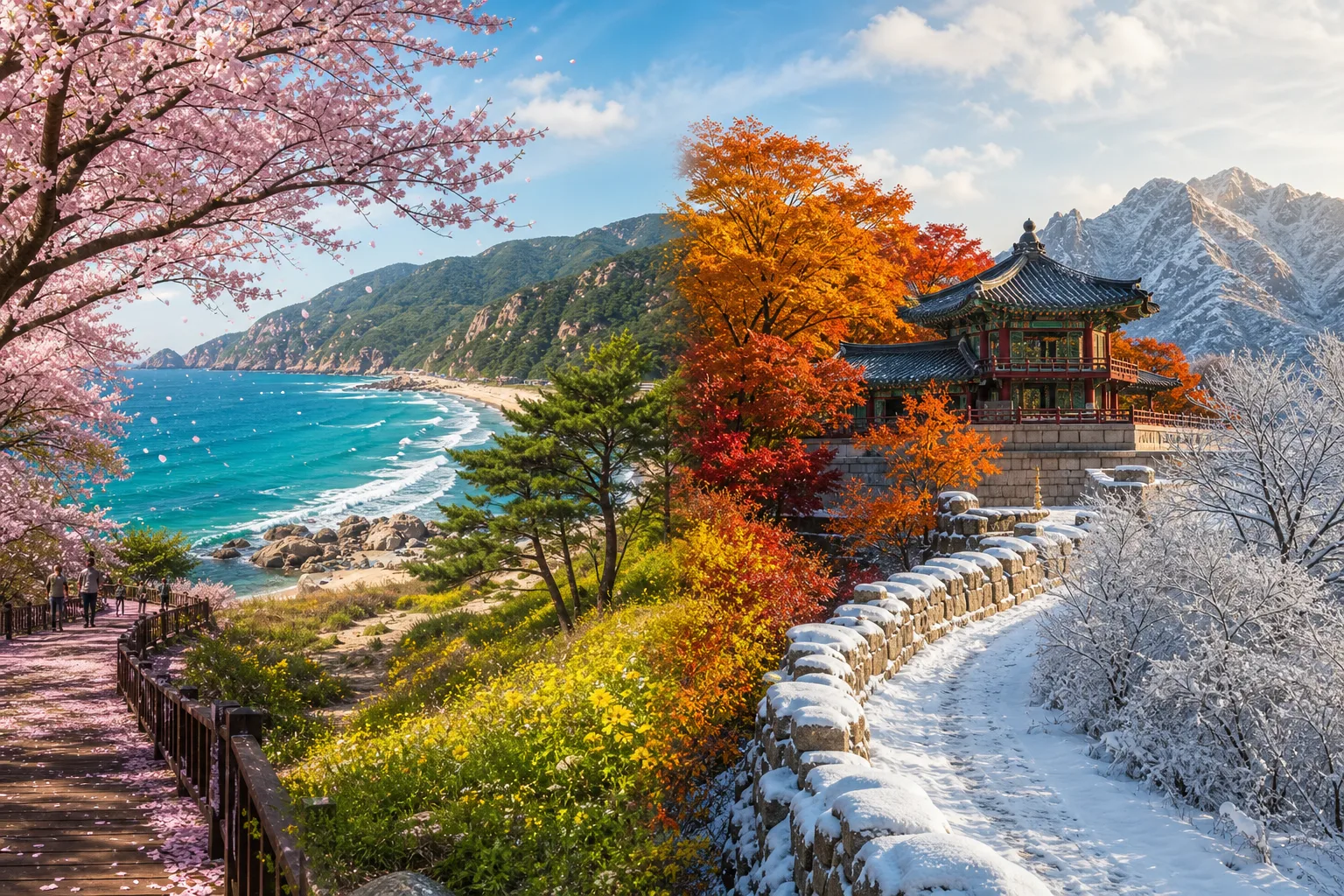
South Korea is one of those destinations where timing changes the trip more than many first-time visitors expect. A spring itinerary can feel relaxed and scenic, while the same route in midsummer can mean heat, humidity, rain, and crowded platforms. Winter brings a very different rhythm, and autumn can sell out fast because everyone wants the same comfortable weather window. If you want the easiest answer up front, the best months are usually April to May and October to November, but the right choice depends on whether you care most about blossoms, beach weather, hiking, festivals, shopping, or lower prices.
Introduction
When Is the Best Time to Visit Korea?
The short answer is that Korea is a year-round destination, but not a year-round match for the same kind of trip. Spring and autumn give you the most balanced weather, the most photogenic scenery, and the easiest sightseeing days. Summer works if you are planning beaches, water parks, late-night city time, and festivals. Winter is the best season for snow, ski trips, hot soups, and fewer crowds at some urban attractions.
If you are building your first big route, start with a city backbone and then add seasonal experiences around it. A classic first trip often looks like Seoul plus one or two side destinations, and if you need a trip structure to anchor your dates, The Ultimate 10-Day South Korea Itinerary for First-Timers is a good companion after you choose your month.
The biggest mistake travelers make is choosing dates only around airfare. In Korea, the season determines how much you will walk comfortably, how much you will queue outside, whether festivals are worth the detour, and how flexible your packing list needs to be. That matters even more if you are trying to combine cities, islands, and mountain areas in one itinerary.
Best Answer First
If you want the most comfortable weather, the most reliable sightseeing conditions, and the broadest range of activities, plan your Korea trip for April, May, October, or early November. April and May are especially strong for cherry blossoms, spring foliage, and market-hopping without extreme temperatures. October and early November are the sweet spot for clear skies, dry air, and long walking days.
If you want cheaper flights and are okay with weather tradeoffs, January, February, June, and late August can offer better value. January and February are cold but manageable if you pack correctly. June and late August can be humid and rainy, but they can also be practical if your trip is more about urban food, shopping, museums, and evening plans than mountain views.
Korea by Season
Spring: March to May
Spring is the season most travelers picture first, and for good reason. Korea warms up gradually, flowers arrive in waves from south to north, and city walking becomes much more pleasant after winter. March can still feel chilly and windy, but it is a transition month rather than a full spring experience. April usually delivers the most famous blossom season, while May is often the most comfortable all-round month of the year.
The strength of spring is variety. You can do palace walks in Seoul, temple visits outside the city, coastal day trips, and café-heavy itineraries without overheating or freezing. The downside is demand. Blossom season is popular enough to affect hotel prices, weekend traffic, and train availability in the most famous areas. If your dates are fixed in spring, reserve earlier than you think you need to.
Spring is also a good season for travelers who care about photography. Skies are often clearer than in midsummer, outerwear still looks stylish without being impractical, and parks can be in full bloom. The one caveat is that pollen can be intense. Travelers with allergies should pack medication and avoid assuming that a pleasant temperature equals an easy day outdoors.
Summer: June to August
Summer is the most demanding season physically, but it is not automatically the wrong choice. June begins the slide into humidity and includes the start of Korea’s rainy period. July is often the hardest month for comfort because of heat, rain, and sticky nights. August can be similar, though beach destinations, water activities, and mountain escapes become more appealing when you plan them intentionally.
The best reason to visit in summer is that the country changes character. Seoul becomes a late-night city with long evenings, convenience-store dinners, cold drinks, and indoor attractions that feel especially useful. Coastal areas, islands, river spots, and festival towns also become more attractive. If your real priority is a specific summer event, a mud run, or beach time, then summer may be the correct season even if it is not the easiest one.
One practical advantage of summer is that you can often build an efficient indoor-outdoor itinerary. Spend the hottest part of the day in museums, malls, cafés, or transit, then move outside again after sunset. That approach works well in Seoul, Busan, and other major cities where evening street life matters. It is less convenient if you want to hike all day or photograph outdoor landmarks in comfort.
Autumn: September to November
Autumn is the most dependable season for many travelers because it combines clear weather with low humidity and strong scenery. September is still warm and can be a little unpredictable after the summer rains, but it becomes increasingly comfortable as the month goes on. October is the standout month for fall foliage, festivals, and all-day sightseeing. Early November can remain excellent, especially if you want cooler air without full winter conditions.
The big draw here is balance. You can walk more, pack lighter, and fit more into one day without feeling rushed by heat or cold. This is also one of the best seasons for countryside travel, temple stays, hiking, and viewpoint-heavy itineraries. If you are visiting multiple regions, autumn gives you the best chance of getting consistent conditions across the trip.
The tradeoff is popularity. Like spring, autumn is a high-demand travel window, especially for long weekends and peak foliage periods. If your schedule is flexible, target the middle of the season rather than only the single most famous weekend. That gives you a better shot at decent prices and better availability without giving up the advantages of the season.
If your Korea trip is centered on walking, markets, and broad sightseeing rather than one niche festival, autumn is usually the easiest season to recommend. If you are chasing a specific food, event, or activity, then autumn can still work, but it is worth checking whether your desired experience is seasonal or year-round.
Winter: December to February
Winter is the most underrated season for travelers who do not mind the cold. Korea can feel sharp, dry, and windier than many visitors expect, especially in inland cities. But winter also gives you clear light, atmospheric streets, hot food, café breaks, and a different kind of trip that feels less crowded in some places.
If you enjoy snow, winter is the season for ski resorts, hot spring trips, winter markets, and steaming dishes that taste better in cold air. Seoul in winter can be beautiful when the weather is dry and sunny, though it also requires proper layers, gloves, and footwear. Busier urban areas are still lively, but your pace may naturally slow down.
The best part of winter is that it rewards a more intentional style of travel. You choose indoor anchors, then use the weather between them. That makes museums, tea houses, food halls, shopping districts, and spa days especially attractive. The worst part is obvious: if you hate cold wind, winter will feel longer than the calendar suggests.
Korea Month by Month
January
January is deep winter. It is cold, dry, and often bright, which means you can still have excellent sightseeing days if you dress properly. This is a strong month for travelers who want fewer crowds, winter food, and a slower urban itinerary. It is not ideal for long mountain walks or long outdoor market browsing unless you are comfortable with the weather.
January works best when you lean into indoor attractions and short, planned outdoor segments. Use it for palace visits with good outerwear, department stores, museums, spas, and neighborhood food walks. If you want snow, this is one of the more reliable months to find winter scenery without having to go too far from the city.
February
February remains cold, but it starts to feel less severe than the earliest part of winter for some travelers. You may still see snow, icy sidewalks, and strong wind, especially in exposed areas. That makes it a practical month for budget-minded visitors who want to avoid peak holiday demand and who are happy to treat weather as a manageable inconvenience.
This is also a good month for planning around restaurants, cafés, and ticketed indoor attractions. If you are trying to keep your trip flexible, February can be better than summer because movement is easier even when the weather is harsh. Just do not underestimate how draining a cold wind can be after a full day of walking.
March
March is a shoulder month and can feel split in two. Early March still behaves like winter in many places, while late March starts to hint at spring. It is one of the trickiest months to pack for because the temperature can change quickly, and windy days can make the air feel colder than the number on a forecast.
The reward for visiting in March is lower pressure than the peak blossom window and a gradual return to comfortable sightseeing. If you dislike crowds but want to catch the first signs of spring, March can be a smart compromise. It is best for travelers who value flexibility and do not mind dressing in layers every day.
April
April is one of the most famous months to visit Korea, and that reputation is deserved. Blossoms, mild temperatures, and pleasant walking weather make it a very strong all-purpose travel month. It is excellent for city touring, riverside picnics, temple grounds, and just about any itinerary that includes lots of outdoor time.
The downside is that everyone knows this. Hotels can rise in price, popular parks can be crowded, and blossom forecasts can affect last-minute decisions. If you are traveling in April, book earlier and assume that weekends will be more competitive than weekdays. The month is still worth it, but it rewards planning.
May
May is often the best single month for overall comfort. The weather is mild, humidity is still moderate, and the landscape is green and lively without feeling oppressive. For many travelers, May is even easier than April because the blossom rush has passed but the weather remains excellent.
This is a particularly strong month for first-time visitors who want to move around a lot. You can spend more time in neighborhoods, less time hiding from the weather, and more time simply enjoying the rhythm of the city. If you are trying to maximize the chance of a smooth trip and do not need blossoms specifically, May is hard to beat.
June
June is the start of the transition into summer, and that means warmth, rising humidity, and a greater chance of rain. It is still a workable month if you are mostly focused on city sightseeing, nightlife, food, and flexible day trips. But it is not the easiest month for long outdoor hikes or packed walking itineraries.
The upside is that the season can feel lively without being fully at peak summer intensity. You may also find better value than in the spring blossom window or the autumn foliage rush. If you are comfortable making weather-based adjustments, June can be a smart value month.
July
July is one of the most challenging months for comfort. Heat, humidity, and rainy stretches can combine in ways that make even short outdoor walks feel tiring. If you visit in July, it helps to think like a local: keep your daytime route compact, use transit heavily, and build around indoor stops.
That said, July is not worthless for travel. It can still be a great month for city food tours, malls, aquariums, indoor cultural sites, and nightlife. The key is to stop expecting a hiking trip and start planning a heat-aware urban trip. Travelers who do that can still have a good experience.
August
August is similar to July, but it can be more workable if you are focused on beaches, islands, pools, or late-summer events. Many travelers use August for a very specific kind of trip rather than a general sightseeing route. If you want a broad multi-city tour, it is usually not the easiest month.
The good news is that August can also be flexible for family travel and entertainment-heavy itineraries. If your pace is relaxed and your priorities are more about activity than scenery, you can make August work. Just pack for humidity and expect to adapt your schedule around the weather.
September
September is a bridge month. Early September can still feel summery, but by the middle and end of the month conditions often become much more comfortable. It can be a very good time to visit if you want to avoid the most crowded autumn peak while still getting pleasant weather.
This is also when many travelers start thinking seriously about fall itineraries, hikes, and market days. If you are sensitive to heat but do not want a full winter trip, September is a useful compromise. It is a month for flexible planners rather than perfection-seekers.
October
October is one of the best months of the year, full stop. Clear skies, crisp air, and the beginning of fall foliage make it ideal for both cities and countryside. If you want to mix historic neighborhoods, hiking, parks, and food markets in one trip, October is close to the ideal.
The main caution is availability. Once the weather turns lovely, everyone wants the same dates. The smart move is to reserve accommodation and major transit earlier than you would for a less popular month. If you can travel on weekdays or outside holiday periods, you will usually have a better experience.
November
November is the quieter cousin of October. Early November can still be beautiful and cool, with some remaining foliage in many areas. Later in the month, temperatures drop enough that you feel winter approaching, but that can also mean easier travel and less competition for rooms.
This is a great month for travelers who prefer stable walking weather without the full rush of the most photographed foliage period. If you are booking a trip in late autumn, November often gives you a practical balance between scenery, comfort, and price.
December
December is winter travel with a festive edge. The weather turns cold, but the city atmosphere becomes more atmospheric with holiday decorations, warm meals, and a slower indoor rhythm. If you like urban winter travel, December can be a strong choice.
It is also a month where your itinerary naturally becomes more compact and deliberate. Plan fewer moves, shorter outdoor blocks, and more indoor anchors. The reward is that you can enjoy Korea in a way that feels different from the glossy spring and autumn postcard version.
Practical Guide
Entry Rules and Booking Timing
Before you lock in flights, check the current entry requirements for your passport and purpose of travel. Korea’s visa and K-ETA rules can change, and the right answer depends on nationality, length of stay, and whether you are traveling for tourism, transit, or something else. Do not assume that last year’s rule still applies this year. Verify before booking nonrefundable tickets.
For most travelers, the smartest planning sequence is simple. First choose the season you want. Then check any entry paperwork. Then book accommodation and long-distance transport. That order matters because the peak months in Korea can sell out faster than visitors expect, especially around blossom season, golden week-style holiday windows in nearby countries, and major domestic travel periods.
If you are comparing planning styles, think about your trip shape first. A city-heavy itinerary can be booked later than a multi-city route. A route with train segments, domestic flights, or popular weekend stays should be locked earlier. That is especially true if you want a smooth first visit instead of spending time in transit lines.
How to Get Around
Korea is easy to move through, but seasonal conditions change how pleasant that movement feels. In spring and autumn, walking between transit stops and neighborhoods is part of the appeal. In summer, shade, air conditioning, and short transfers matter more. In winter, you want fewer open-ended walking stretches and more direct connections.
For local transit, the basic question is usually which transport card or pass makes the most sense for your route. If you are deciding between stored-value cards, regional passes, and digital transit options, Battle of the Cards: K-Pass vs. Climate Card vs. T-Money is the right next read because it helps you choose based on trip length, city, and usage style.
For longer routes, plan around the season as much as the map. Spring and autumn are better for scenic rail and road travel because the weather is more forgiving. Summer travel can still be efficient, but delays feel more annoying when it is hot and wet. Winter travel is easier if you minimize unnecessary transfers and keep buffer time between connections.
What to Book Early
In the most popular months, the items most likely to become annoying are not always the obvious ones. Hotels near the most photographed areas, intercity trains for holiday periods, and blossom or foliage weekend stays can all become tight. Even when you can technically find availability later, you may not like the location, price, or schedule left over.
Book early if your trip includes:
- Blossom season in late March or April
- Peak autumn foliage in October
- Holiday travel around major Korean breaks
- Ski or resort stays in winter
- A special event, concert, festival, or race you cannot move
If your trip is more flexible, use that flexibility. Travel midweek when possible. Avoid building the whole trip around one famous weekend. Pick neighborhoods with strong transit rather than relying on one exact hotel next to the main attraction. Seasonal Korea trips are much better when your itinerary has a little breathing room.
Where Klook Fits
The best use of booking platforms is to reduce friction, not to replace judgment. For seasonal travel, that usually means comparing airport transfers, rail-related products, attraction tickets, day tours, and time-sensitive festival experiences in one place before you commit. If something is seasonal and capacity-limited, the booking window matters more than the discount.
That is especially useful for travelers who want to keep a trip efficient. A spring blossom route, an autumn foliage route, or a summer island day can all benefit from pre-booked transport or timed admission. If your itinerary is straightforward, you may not need many add-ons. If your itinerary depends on a specific experience, it is smarter to reserve early and keep your local schedule flexible.
Tips & Common Mistakes
What Most Guides Miss
Most seasonal Korea guides stop at “spring is best, summer is hot, autumn is pretty, winter is cold.” That is true, but incomplete. The real planning question is what kind of trip the weather supports. A city break, a hiking trip, a food trip, and an island trip do not all want the same month.
Another thing guides often miss is how hard major holidays can hit the logistics. Even in a good weather month, weekends and holiday periods can reshape prices, seating, and transportation comfort. If you can move your dates by even a day or two, you may improve the trip more than if you spent hours chasing the cheapest headline fare.
Also, do not overvalue a single famous phenomenon. Blossoms and foliage are worth seeing, but Korea has enough urban, cultural, and culinary depth that a trip can still be excellent outside the peak photo window. If your vacation dates are fixed, plan for the season you actually have rather than the one social media promotes.
Insider Advice
Pack with layers in every season except perhaps the hottest summer stretch. Korea’s weather is more changeable than many first-time visitors assume, and indoor temperature differences can be just as noticeable as the outdoor climate. A light jacket, comfortable shoes, and a small day bag often matter more than one fancy outfit.
Choose at least one neighborhood or activity that matches the month you are visiting. In spring, prioritize parks, palace grounds, and riverside walks. In summer, build in air-conditioned lunch stops, late dinners, and indoor culture. In autumn, leave room for long walks and viewpoints. In winter, add spas, soup meals, and slower evenings.
If you are unsure whether to go early or late in a shoulder season, late spring and early autumn are usually easier. They tend to be more stable than the transition points at the very edges of the season. That does not guarantee perfect weather, but it usually improves your odds of a smoother day-to-day trip.
Common Mistakes
The first mistake is assuming that Korea is “small enough” that weather will not matter. It matters. A comfortable weekend in Seoul can become a tiring one if you pack it like a mild-weather trip and then hit wind, humidity, or rain. The second mistake is overpacking your itinerary with too many outdoor plans in the hottest or coldest months.
The third mistake is not adjusting expectations by region. Coastal destinations, inland cities, mountain areas, and Jeju can all feel different in the same week. A trip can be perfectly timed for one region and slightly wrong for another. If you are adding a beach, a hike, or a festival, check whether that experience fits the season rather than assuming the calendar alone is enough.
One more mistake is ignoring the transport rhythm. In bad weather months, transit time can be a bigger part of the day than the distance on the map suggests. You will enjoy the trip more if you cluster stops, avoid unnecessary cross-city backtracking, and leave room for meals and rest.
Seasonal Spotlight: Summer Events
If your main reason to travel is a single seasonal event, build the trip around that event first and the rest of the itinerary second. Summer festivals, beach weekends, and outdoor gatherings can be worth the heat if they are the actual goal. If you are heading to a high-energy event, read the full preparation guide for Boryeong Mud Festival: The Ultimate Survival Guide so you can judge whether that kind of summer trip matches your style.
The broader lesson is that event-driven travel changes the rules. Comfort matters less than timing, and timing matters more than scenic perfection. That is true for mud festivals, night markets, music events, and anything else that only happens in one narrow window.
FAQ
What is the best month to visit Korea for first-time travelers?
For most first-time travelers, May or October is the safest answer. Both months tend to offer good weather, manageable packing, and a broad range of activities. April is excellent too if blossoms are a priority, and early November is a strong alternative if you want fall conditions with slightly less crowd pressure.
Is winter worth visiting Korea?
Yes, if you like cold-weather travel or want lower crowd levels. Winter is especially good for food, cafés, spas, shopping, and ski-related trips. It is less comfortable for all-day outdoor sightseeing, but a winter trip can be excellent if you plan for it instead of trying to force a spring-style itinerary.
Is summer too hot for Korea?
Summer can be hot and humid enough to be exhausting, especially in July and August. But it is not automatically a bad time to visit. If you focus on indoor attractions, evening outings, and coastal or festival-based plans, summer can still work well. The key is to lower your outdoor expectations and pack accordingly.
Should I plan around cherry blossoms or fall foliage?
If those experiences matter to you, yes. Korea’s blossom and foliage periods can be memorable, but they also make the most popular dates more competitive. Choose those windows if they are important, but remember that the rest of the country is still worth visiting outside peak color season.
How far ahead should I book?
For the best spring and autumn dates, book earlier than you would for a random off-season city break. Hotels, trains, and the most convenient neighborhoods are the first to tighten. If your dates include a holiday or a famous seasonal event, reserve as soon as your plan is firm.
Conclusion
There is no single best time to visit Korea for every traveler, but there is a best time for your priorities. If you want the easiest weather and the widest choice of activities, aim for April to May or October to early November. If you want better value and can handle weather tradeoffs, winter and the edges of summer can still be smart choices. The real trick is matching the month to the trip you actually want.
Think in terms of trip style, not just temperature. Spring and autumn are ideal for first-timers, walkers, photographers, and travelers who want flexibility. Summer is better for festivals, beaches, and late-night city life. Winter is best for food, slow travel, and cozy indoor plans. If you choose the season well, Korea becomes much easier to enjoy.
Once you pick your month, build the rest of the itinerary around it instead of fighting it. Use weather to choose neighborhoods, side trips, and packing. Then compare transport options, book the time-sensitive pieces, and leave enough room for the kind of spontaneous meals and detours that make Korea worth visiting in the first place.