Anime Travel in Japan: Akihabara, Studio Ghibli & Pop Culture Guide

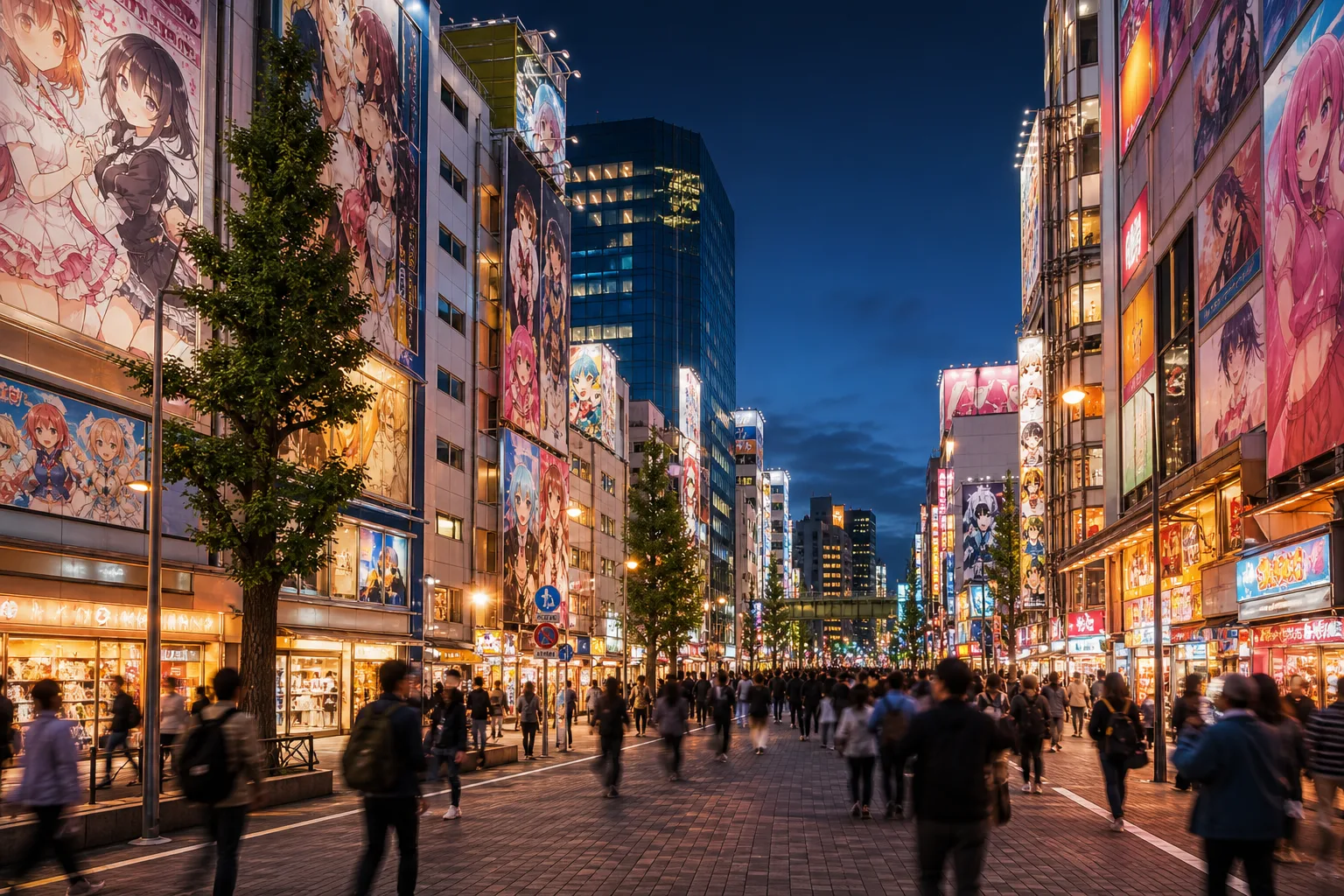
If you are building an anime trip to Japan, the hard part is not finding things to do. The hard part is fitting the right things into the right days so you do not waste half your trip crossing Tokyo for one store, one cafe, or one museum you should have booked earlier. Akihabara, Studio Ghibli, character merch, arcades, and retro gaming can all fit into one trip, but they work best when you treat them as separate planning decisions, not one vague "anime day."
Why anime travel in Japan needs a plan
Anime travel works best when you separate three different experiences: shopping and gaming in Akihabara, the slower museum-style Ghibli experience in Mitaka, and the broader Tokyo transit and neighborhood planning that ties everything together. If you treat them as one loose list of attractions, you can easily lose time to transfers, booking windows, and sold-out entry slots.
Anime travel in Japan is easier when you think in terms of neighborhood, reservation rules, and time blocks. Akihabara is a flexible half-day or full-day stop in central Tokyo, while Studio Ghibli is a timed, reservation-based visit that should anchor a different block of your itinerary. The best trip combines both without forcing them into the same afternoon.
What this guide helps you decide
This guide is for travelers who want a practical route, not just a fan list. It helps you decide:
- what Akihabara is actually best for
- how Studio Ghibli fits into a Tokyo trip
- when you need to book ahead
- how to avoid wasting a day on transit or sold-out tickets
- which practical basics matter most before you start chasing character cafes or collector shops
If you are also building the broader Tokyo portion of the trip, the Ultimate Tokyo Travel Guide 2026: Everything First-Timers Need to Know is the better companion piece because it handles the citywide structure that this article assumes.
Akihabara and Studio Ghibli play two different roles
Akihabara is the fast, dense, retail-heavy side of anime travel. Studio Ghibli is the slower, story-driven side. Akihabara gives you shelves, arcades, cafes, gachapon, figurines, retro games, and the feeling that anime culture is being sold, displayed, and celebrated all around you. Ghibli gives you atmosphere, design, pacing, and the kind of visit where the building and rules matter as much as the exhibits.
That distinction matters because travelers often assume the best anime trip is just one long shopping spree. In practice, the strongest itinerary balances sensory overload with something quieter and more deliberate. Akihabara can absorb your energy quickly. Ghibli asks you to slow down. If you schedule them well, the contrast is the point.
What Akihabara is best for
Akihabara is the district you choose when you want immediate variety. It is one of Tokyo’s most famous pop culture areas, and official local tourism materials still describe it as a sacred place for animation, comics, and idol culture. That is still the right mental model for visitors in 2026: this is where anime travel feels commercial, concentrated, and easy to customize.
What you can reliably expect from Akihabara:
- big electronics stores mixed with hobby and character goods shops
- arcade buildings with crane games, rhythm games, and prize machines
- maid cafes and concept cafes
- gachapon and capsule toy shops
- used game and retro-anime browsing
- a lot of foot traffic, especially near JR Akihabara Station
Akihabara is not a single attraction. It is a cluster of small decisions. You can spend 90 minutes there and feel satisfied, or you can spend most of a day if you browse deeply, chase rare merchandise, and stop for cafes and arcades.
What Akihabara is not
Akihabara is not where you go for a calm cultural deep dive. It is also not the best place to expect efficient shopping unless you know exactly what you want. The area is fun precisely because it is noisy, dense, and visually overloaded. If your goal is a quiet anime pilgrimage, Ghibli is the better fit. If your goal is finding a figurine, a themed snack, or an arcade prize, Akihabara is the better fit.
The fastest way to enjoy the area is to pick a category before you go. Do you want retro games, new figure releases, idol goods, gacha, or character cafes? If you do not narrow the target a little, Akihabara can become a long walk through similar-looking stores with no clear finish line.
What Studio Ghibli is best for
Studio Ghibli travel is about the experience rather than the haul. For most visitors, the core Ghibli stop is the Ghibli Museum in Mitaka. It is not in Akihabara, and that is the point: the museum sits away from the retail intensity of central Tokyo and rewards a separate block of time.
The museum is the right choice if you want:
- an atmosphere-driven visit rather than a shopping run
- a place that feels designed for slow looking
- architecture, exhibits, and storytelling details
- a family-friendly stop that still feels special for adults
- a high-value Tokyo side trip that is different from the usual city landmarks
A Ghibli day is more satisfying when you build around the museum and nearby transit rather than trying to bolt it onto a shopping-heavy Akihabara route. Think of it as a set piece, not a quick add-on.
Why Ghibli is usually a separate day
The biggest mistake travelers make is assuming they can combine Akihabara and Ghibli into one effortless anime marathon. On paper, both are in the Tokyo orbit. In practice, one is a district stop and the other is a timed museum visit that deserves its own pace. If you are coming from a long-haul flight, trying to do both in one day usually produces the worst version of each: rushed museum entry and fatigued shopping.
It is better to pair Akihabara with other central Tokyo neighborhoods and give Ghibli its own itinerary slot. That way you can keep your energy aligned with the experience.
How to build the right anime itinerary
The simplest approach is to think in layers. First, confirm your Japan basics. Second, lock in your Tokyo district days. Third, choose the reservation-based anime stop. Fourth, leave room for spontaneous browsing.
For the basics, use the Japan Travel Planning: Visa, IC Card, Rail Pass & Essential Logistics Guide when you need to sort entry requirements, transit payment, and long-distance movement before you get lost in theme-park style planning.
A good 2-day anime-focused Tokyo structure
Here is a practical structure that avoids overpacking:
Day 1: Akihabara and nearby central Tokyo neighborhoods
- start in the morning or early afternoon
- browse a few anchor stores first
- eat somewhere simple so you do not burn time deciding
- leave room for arcades, gachapon, and a final browse before dinner
- do not schedule a timed museum visit the same day unless you are sure about transport timing
Day 2: Ghibli Museum or another reservation-heavy cultural stop
- travel with margin
- arrive early enough to absorb delays
- treat it as a full experience, not a quick photo stop
- keep the rest of the day lighter so you can enjoy it instead of rushing off to another district
If you have more time, add a third day for Shibuya, Harajuku, Ikebukuro, or a second Akihabara session focused on collectibles or games rather than general browsing.
How to decide what belongs on your list
Not every anime-related stop deserves a place on a short Tokyo itinerary. Ask three questions before adding a destination:
- Is it something I can only do in Tokyo or Japan?
- Is it a timed booking, or can I do it flexibly?
- Does it fit the energy level of the day I have in mind?
If the answer to all three is yes, it probably belongs on the itinerary. If the answer is only maybe, leave it for a future trip. That discipline matters more in Tokyo than in many other cities because the transport is easy enough to encourage overplanning.
What to prioritize if it is your first anime trip
If this is your first anime-focused visit to Japan, prioritize the experiences that are most distinct from what you can do elsewhere:
- Akihabara for the density of stores and arcade culture
- Ghibli Museum for the curated and atmospheric side of Japanese animation
- one or two theme cafes or character stores if they genuinely interest you
- a simple, realistic transit plan that avoids long transfer chains
Do not try to turn the trip into a checklist of every franchise you know. You will get more out of a smaller route you can actually enjoy.
Practical Guide
This is the part most travelers need most: current admission rules, timing, and what to expect before you go.
Hours, admission, and prices
The Ghibli Museum currently operates on a reservation-only basis. You cannot buy a standard ticket at the museum itself. Admission is by advance reservation only, and the museum notes that no reservation or ticket purchase can be made on site.
Current admission prices are:
- ages 19 and over: JPY 1,000
- ages 13 to 18: JPY 700
- ages 7 to 12: JPY 400
- ages 4 to 6: JPY 100
- ages 3 and under: free
Current museum hours are listed as 10:00 to 18:00, and tickets become available at 10:00 a.m. JST on the 10th of each month for the following month. That means travelers need to plan ahead rather than waiting until arrival week.
For example, if you want a July visit, you should be watching the booking window in mid-June. The practical rule is simple: if Ghibli is part of your trip, treat the ticket as an itinerary anchor, not a spontaneous add-on.
Booking behavior you should expect
Ghibli booking is the opposite of a walk-up experience. The museum’s system rewards travelers who are ready on the calendar date, know their preferred day, and can choose quickly when tickets open. That is especially important in peak travel seasons, school holidays, and summer.
The museum also makes several visitor rules clear:
- photography and video are not allowed inside the museum
- the film screening in the Saturn Theater is generally one viewing per visitor
- there is no re-entry
- the rooftop may close in bad weather
- baby strollers must be left in the stroller area before entering
Those are not minor footnotes. They shape the experience. If you want a museum visit that feels immersive rather than performative, the rules make sense. The tradeoff is that you need to plan your day accordingly.
How to get there
Akihabara is straightforward because it is centered around JR Akihabara Station and the surrounding electric town area. That makes it easy to fold into a central Tokyo day with minimal transit friction.
The Ghibli Museum is in Mitaka, west of central Tokyo, and is reached by going through JR Chuo Line access and local transit from there. The museum is intentionally not placed in the most crowded retail core of the city, so expect a real transfer rather than a short walk from a major hub.
If you are planning both in the same week, the smart move is to group Akihabara with east-central Tokyo stops and Ghibli with a westward route. That reduces backtracking and leaves you with a more comfortable day.
When to go to Akihabara
Akihabara works best when you give yourself enough time to browse but not so much time that you drift. Late morning through early evening is the sweet spot for most travelers. The neighborhood is lively enough to feel worth the trip, but you still have enough daylight to navigate store clusters and decide where to stop.
If you care about arcades or late browsing, Akihabara can also be a good evening stop. Just remember that the district is made of individual businesses, not one single attraction with a universal closing time. Plan around your target stores and cafes rather than around the district name alone.
When to go to Ghibli
Go to Ghibli when you can give the museum your best attention. That usually means a quieter morning or a day when your afternoon does not already depend on a chain of other commitments. Because admission is reserved and timed, the visit is best treated as the fixed point of the day.
If you want a low-stress Tokyo plan, make Ghibli your one important reservation and keep the rest of the day open enough to enjoy transit, lunch, and a calmer pace.
What to book in advance besides the museum
You do not always need every part of an anime trip pre-booked, but several things are easier if you handle them early:
- your museum entry slot
- major intercity transport if your route is packed
- a hotel that keeps you close to the Tokyo lines you will use most
- any character cafe or special event that uses timed reservations
If you are already sorting those basics, the logistics guide above is the right place to start before you add more niche stops.
Tips and common mistakes
The most common anime travel mistakes are not about taste. They are about logistics.
1. Trying to fit too many districts into one day
Tokyo makes overconfidence feel reasonable because transit is good. That is also why many travelers overbuild their itinerary. If you add Akihabara, Ghibli, Shibuya, Harajuku, and Ikebukuro into one short stay, you will spend too much of the trip in motion.
Pick one major anime anchor per day. That gives you time to enjoy the neighborhood instead of just passing through it.
2. Assuming Ghibli is casual walk-up sightseeing
It is not. Ghibli is reservation-based, timed, and limited. If you miss the booking window or forget the slot details, you may lose the museum day entirely. For a high-demand trip, that is one of the easiest ways to damage the entire itinerary.
3. Treating Akihabara like a single store cluster
Akihabara is more interesting when you know what you are hunting. If you want games, go after game stores. If you want figures, identify the best floors and categories before you arrive. If you want gachapon, set a spending cap before the first machine pulls you in.
4. Overestimating how much time shopping takes
Browsing in Akihabara can look fast from the outside and still swallow hours because every store invites comparison. The trick is to give yourself a target list and a budget. Without those, you may leave with a bag full of small things and no sense of where the time went.
5. Forgetting that some of the best anime experiences are not in anime neighborhoods
A good anime trip to Japan is not only about anime-branded streets. It is also about train rides, convenience stores, city neighborhoods, and quiet stretches between the highlights. The more comfortable you are with ordinary Tokyo logistics, the better the pop culture stops feel.
6. Not leaving room for the unexpected
You will find random things that become favorites: a used game store, a surprise figure release, a gachapon series you did not know existed, or a small cafe that has exactly the vibe you wanted. Leave a little unused time in your day so the trip can breathe.
FAQ
Is Akihabara worth it if I am not deeply into anime?
Yes, but for different reasons. Akihabara still works as a pop culture and electronics district even if you are not collecting figures or following current series. You may enjoy the arcades, character goods, retro games, or general spectacle. If none of those appeal to you, keep it shorter and move on.
Can I do Akihabara and Ghibli on the same day?
You can, but it is usually not the best choice. Akihabara is flexible and can expand or shrink depending on your mood. Ghibli is timed and deserves more focus. If you have limited days, it is better to separate them.
Do I need to book Ghibli in advance?
Yes. Admission is by advance reservation only, and tickets are not sold at the museum. The museum’s standard online sale opens at 10:00 a.m. JST on the 10th of each month for the following month, so plan around that release date.
Is the Ghibli Museum good for adults?
Yes. It is often better for adults than many first-time visitors expect because the experience is about craftsmanship, atmosphere, and visual storytelling rather than only character recognition. It is also a good visit for travelers who want a slower, more intentional stop between busier Tokyo days.
What should I budget for the museum?
The museum itself is inexpensive compared with many Tokyo attractions. Standard adult admission is JPY 1,000, with lower prices for younger visitors and free entry for children 3 and under. The bigger budget issues are usually transport, food, and whatever you buy in Akihabara.
Conclusion
A strong anime trip to Japan is not about doing everything. It is about matching the right experience to the right day. Akihabara is where you go for density, shopping, arcades, and the thrill of being surrounded by pop culture. Studio Ghibli is where you go for a reserved, story-driven visit that slows the pace and gives the trip more depth.
If you are planning the broader Tokyo leg, use the city guide to map the rest of your neighborhoods, then lock in the reservation-based stops early. If you are still sorting transit, entry requirements, and rail strategy, the logistics guide will save you more time than any shopping list.
Most importantly, do not let the theme of the trip turn into a race. The best anime travel in Japan is the kind that leaves room for browsing, transit, surprise finds, and one or two well-chosen anchor experiences. Akihabara and Ghibli can absolutely be part of the same trip, but they work best when each gets the kind of day it deserves.