Studio Ghibli Museum Mitaka: Tickets, Rules & What's Inside

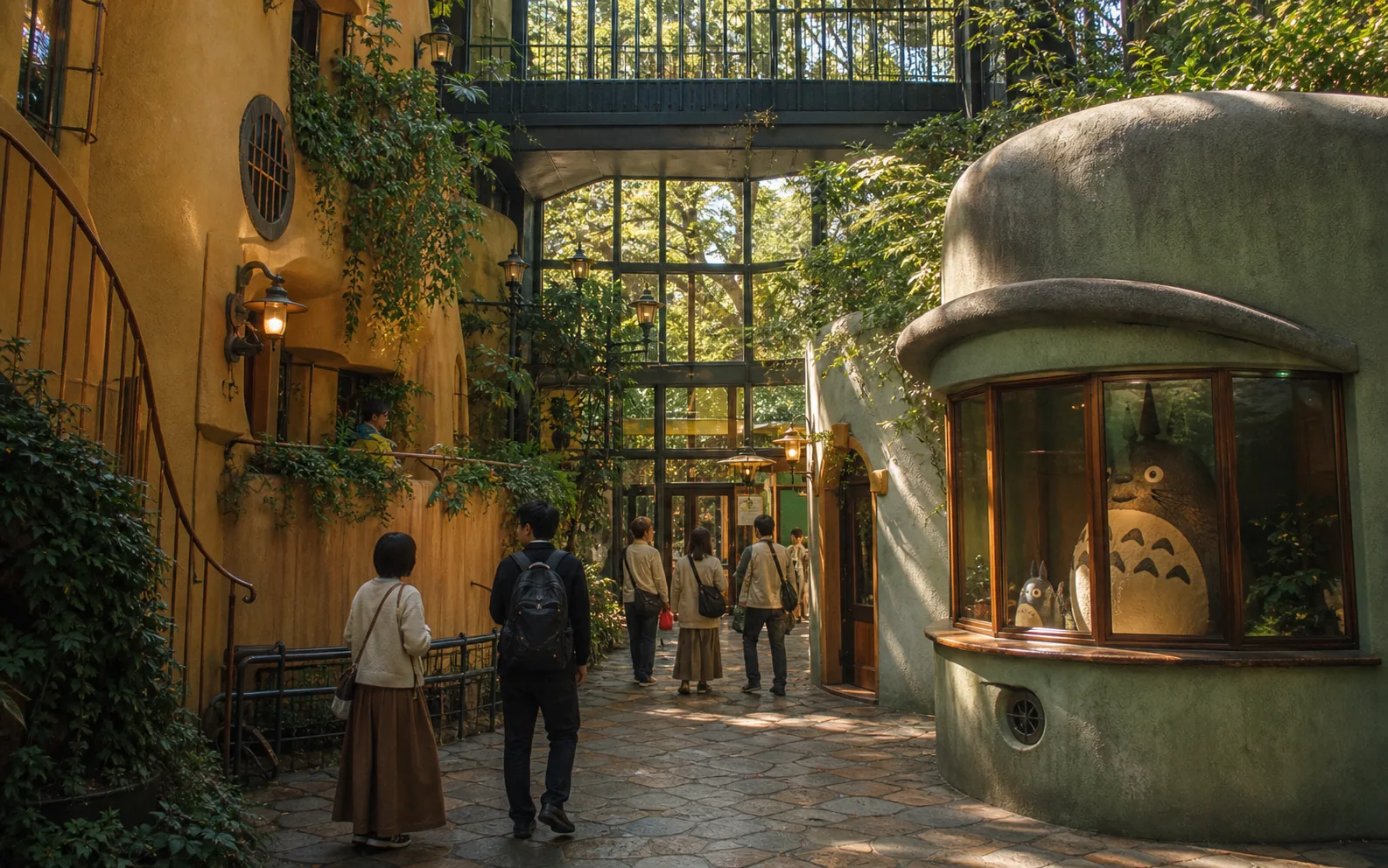
If you are trying to visit the Studio Ghibli Museum in Mitaka for the first time, the hard part is not deciding whether it belongs on your Tokyo itinerary. The hard part is getting the ticket, understanding the rules, and knowing what the visit will actually feel like once you arrive. This guide walks through all three, so you can plan the day without guesswork.
What the Ghibli Museum Actually Is
The Ghibli Museum in Mitaka is not a theme park, and it is not a standard museum with a simple start-to-finish exhibit loop. It is a small, carefully designed experience built around Studio Ghibli’s animation craft, with advance reservation entry only, rotating exhibitions, a short-film theater, and a building that feels like part of the story itself.
For travelers who love Japanese animation, the museum works best as a half-day stop that rewards curiosity rather than speed. You go to see design details, handmade touches, and a playful environment that reflects the worlds behind Studio Ghibli films. If your Tokyo trip already includes neighborhoods, train rides, and food stops, it fits naturally into a broader city plan, especially when paired with the Ultimate Tokyo Travel Guide 2026: Everything First-Timers Need to Know.
The most important thing to know is that the visit is deliberately controlled. You do not buy a ticket at the door. You do not wander in on a whim. You reserve for a specific date and entry time, then show up on time and enjoy the building at the pace the museum expects.
That is part of the appeal. The Ghibli Museum is designed to feel intimate, even a little secretive. Rather than chasing giant crowd-pleasing installations, it gives you rooms, corners, stairways, and displays that reward slow looking. If you want a quick summary before diving into the details: book early, read the rules carefully, leave buffer time for transit, and expect a compact but highly memorable visit.
The museum also sits comfortably inside a bigger anime-focused travel plan. If you are mapping a broader pop-culture itinerary across Japan, this stop pairs well with other Tokyo districts that already attract animation fans, and the Anime Travel in Japan: Akihabara, Studio Ghibli & Pop Culture Guide gives you a useful way to connect those pieces into one trip.
Tickets, Rules, and Booking Strategy
The Ghibli Museum is one of those attractions where the rules matter as much as the destination itself. Tickets are sold by advance reservation only, and the museum states clearly that no reservation or ticket purchase can be made at the museum. That means the ticketing process is the first hurdle, not the last-minute logistics.
Here is the practical version of the booking system. Admissions are priced by age: JPY 1,000 for ages 19 and over, JPY 700 for ages 13 to 18, JPY 400 for ages 7 to 12, JPY 100 for ages 4 to 6, and free for ages 3 and under. Tickets are sold through the official web ticket store, with sales opening at 10:00 a.m. JST on the 10th of each month for the following month. In other words, if you want a February entry date, you are preparing on January 10.
That release pattern is the key planning point for international visitors. The sale window is tied to Tokyo time, so travelers in the United States or Europe need to convert the release carefully and be ready at the opening minute. Tickets are date-specific and time-specific, so once you lock in a slot, the museum expects you to arrive for that exact reservation.
The museum also notes that ticket resale is not allowed. That matters because the Ghibli Museum is one of the rare Tokyo attractions where demand can push some people toward sketchy resale channels. The official guidance is straightforward: use the legitimate sale channel and avoid anything that looks like a workaround. If you are building your whole Japan trip around specific entries, this is one of those reservations you do not want to gamble on.
There is also a second official booking path worth knowing about. The museum lists a special bus tour by Sunrise Tours JTB that includes the Ghibli Museum among multiple destinations. That is not the same as a standard museum entry ticket, but it can be useful if you prefer a packaged day with transport included or if you want to reduce the friction of navigating the reservation process on your own.
The best way to think about the ticket system is this: the museum is accessible, but only if you plan ahead like a local event, not like an ordinary walk-in attraction. If you are already organizing transport, rail cards, and arrival windows for a Tokyo trip, a logistics-focused planning page such as Japan Travel Planning: Visa, IC Card, Rail Pass & Essential Logistics Guide is the right companion piece because the museum visit depends on getting those small trip details right.
For first-time visitors, there are three booking mistakes that cause the most stress:
- Waiting until the month of travel to start thinking about tickets.
- Forgetting that sales open on Tokyo time, not local time.
- Assuming there will be day-of tickets or on-site backup inventory.
None of those assumptions is safe. If the museum is essential to your trip, set a reminder for the 10th of the month, know the exact opening time in JST, and have your preferred date, passenger names, and backup options ready before the sale goes live.
Another useful strategy is to decide how central the museum is to your Tokyo schedule before you even book. If it is a core priority, build your trip around the ticket window. If it is a nice bonus, be flexible on date and entry time. The museum rewards planning discipline more than spur-of-the-moment excitement.
What's Inside the Museum
The Ghibli Museum is compact, but it is dense with detail. The visit is less about ticking off a list of giant attractions and more about moving through a sequence of spaces that feel handcrafted. The building itself is the first exhibit: winding stairs, layered rooms, stained glass, visual jokes, hidden corners, and the sense that no corridor was designed by accident.
One of the most distinctive spaces is the Saturn Theater, where the museum shows original short films. These are not extras you casually stream elsewhere; they are part of the museum experience. The theater is one reason the museum feels different from a normal art or animation collection. You are not just looking at artifacts. You are watching a film in a venue that is specifically connected to the museum’s identity.
The museum’s exhibition room changes over time, so repeat visitors can see different focuses across years. That makes the museum feel alive rather than frozen. It also means the visit is not only for people who want a permanent, static collection of Ghibli memorabilia. Some travelers go for the architecture, some for the animation process, and some because they want the emotional memory of being inside a Ghibli-branded space that does not feel commercial in the ordinary sense.
Another reason the visit is memorable is that the museum mixes childlike wonder with craft. You can stand in front of sketches, displays, and design details and still feel the space pushing you to look upward, downward, and around corners. That is different from a museum that lines up every object in tidy, chronological order. The Ghibli Museum asks you to wander a little.
If you are wondering what to prioritize once inside, think in layers:
- The building and its atmosphere.
- The special exhibition.
- The short film at the Saturn Theater.
- The café, reading room, and shop.
- The rooftop garden and outdoor details, if they are part of your route that day.
This is why many visitors leave saying the museum felt smaller than expected but richer than expected at the same time. You may not spend a whole day there, but you can spend a surprisingly satisfying amount of time if you do not rush.
The café and shop also matter more than they first appear. The Straw Hat Café is not a bonus stop you squeeze in after everything else; for many visitors it is part of the museum memory. The museum shop, MAMMA AIUTO!, is similarly attractive because it extends the museum world into practical souvenirs and gifts without feeling detached from the rest of the space.
One of the smartest ways to experience the museum is to treat it as a mood rather than a checklist. Go expecting atmosphere, detail, and gentle surprise. If you arrive looking for a theme-park style sequence of big attractions, you may underappreciate it. If you arrive ready to slow down, notice, and enjoy the artistry, the museum usually lands much better.
Practical Guide
Hours and Admission
The museum’s official hours are 10:00-18:00. That looks simple, but it has planning consequences. Because admission is tied to reserved entry times and the museum is not an all-day drop-in attraction, the exact slot you buy matters. Do not plan to arrive casually “sometime in the afternoon” and assume that flexibility will work in your favor.
Ticket prices, by official age band, are modest for Tokyo standards. Adults pay JPY 1,000, which is unusually affordable for an attraction with this much brand recognition. The lower age brackets are similarly reasonable. The real challenge is availability, not cost. That is why the booking calendar matters far more than the price itself.
If you are traveling with family, pay close attention to the age bands before you buy. The museum’s pricing is straightforward, but it is easy to misread the child categories if you are moving quickly through the reservation process. Double-check each traveler’s age against the stated bracket before payment, because there is no benefit to discovering a mismatch later.
How to Get There
The museum is at 1-1-83 Shimorenjaku, Mitaka-shi, Tokyo 181-0013, Japan. The standard route is to take the JR Chuo Line to JR Mitaka Station, which the museum states is approximately 20 minutes from JR Shinjuku Station. From the south exit of JR Mitaka Station, it is about a 15-minute walk to the museum.
There is also a community bus that runs from JR Mitaka Station to the museum every 15 minutes during opening hours. The museum lists fares paid in cash or by IC card, with adult and child pricing shown separately. That makes the bus a practical option if you want to reduce walking, if the weather is poor, or if you would rather keep the experience as easy as possible.
For many travelers, the most useful transport rule is to think in buffers rather than exact train times. Tokyo rail travel is efficient, but it is still easy to underestimate the time needed for platform changes, station exits, snack stops, and getting turned around once you leave a major hub. Mitaka is straightforward, but the museum visit becomes much less stressful if you leave yourself extra time instead of aiming to arrive exactly on the minute.
Booking Links and Planning Notes
The museum’s official sale channel is Lawson Ticket, and the museum explicitly states that tickets go on sale at 10:00 a.m. JST on the 10th of each month for the following month. The other official option is the Sunrise Tours JTB package that includes the museum as part of a broader tour.
For most independent travelers, the official reservation system is the cleanest option because it lets you build the rest of your day around a fixed slot. For travelers who prefer fewer moving parts, the package tour can be useful if the transport and booking logistics feel more important than total flexibility.
Before you book, decide on the kind of day you want:
- A tight Tokyo half-day centered on the museum.
- A relaxed Tokyo day with Mitaka as one stop among several.
- A package-style visit where transportation is simplified.
That choice affects everything else, from your departure time to where you eat lunch. A museum visit can be the anchor of a broader Tokyo route, but it works best if you know whether you are building around it or fitting it into a larger city loop.
If you are trying to combine the museum with other Tokyo neighborhoods, keep in mind that it pairs well with west-side city exploration rather than an east-side sprint. You can do other museum-adjacent or pop-culture stops on different days, but this one deserves breathing room because the reservation, transit, and entry-time system all reward calm planning.
Tips & Common Mistakes
The biggest mistake first-time visitors make is underestimating how much lead time the ticket release needs. The museum is not hidden, and it is not expensive, but it is highly controlled. If you treat it like a casual same-week attraction, you may miss your preferred date entirely.
Another common mistake is building the day too tightly. The Ghibli Museum is easy to reach from central Tokyo, but a museum visit should still include margin for getting to the station, finding the right exit, and dealing with minor train delays or crowding. When the reservation is date and time specific, a ten-minute delay can feel much bigger than it would at a normal attraction.
Photography rules are another thing visitors often misunderstand. The museum experience is intentionally curated, and parts of it are designed to be remembered rather than documented. That means you should go in expecting to look closely and enjoy the space, not to produce a full photo essay. If you spend the whole visit thinking about where to frame shots, you will miss the atmosphere that makes the museum special.
Food and souvenir timing also deserve attention. The café and shop can be easy to leave until the end, but if they matter to you, plan that time into the visit rather than assuming you can squeeze them in casually after the “main” exhibits. The museum is small enough that small delays matter.
Here are a few practical habits that make the visit smoother:
- Set a phone reminder for the 10th of the month in JST.
- Prepare the traveler list and ages before ticket sale time.
- Arrive with transport buffer, not just exact train timing.
- Keep your museum slot and the rest of your Tokyo day loosely planned.
- Read the official entry rules before purchase so nothing surprises you on the day.
There is also a mental mistake worth avoiding: expecting the Ghibli Museum to feel like a giant, high-energy attraction. It is more intimate than that. If you know that going in, the visit usually feels more special. If you expect something bigger and louder, you may misjudge its value.
For animation fans in particular, it helps to place the museum inside a broader appreciation of Japanese pop culture instead of treating it as a standalone icon. That perspective makes the building, the film screening, the shop, and the exhibition room feel like pieces of a larger travel story rather than isolated sights.
If you are traveling with someone who is less interested in Studio Ghibli than you are, the museum can still work well as long as you frame it properly. It is not just a fandom stop. It is a design-forward, carefully staged cultural space in one of Tokyo’s easiest suburban rail corridors. That means it can appeal to travelers who care about architecture, illustration, or curated spaces even if they are only casually familiar with the films.
FAQ
Do I need to book the Ghibli Museum in advance?
Yes. The museum states that all admission is by advance reservation only, and there is no ticket purchase at the museum itself. If the Ghibli Museum is important to your trip, treat the reservation as mandatory rather than optional.
How much are tickets?
Official admission is JPY 1,000 for ages 19 and over, JPY 700 for ages 13 to 18, JPY 400 for ages 7 to 12, JPY 100 for ages 4 to 6, and free for ages 3 and under. The price is not the issue; availability is.
When do tickets go on sale?
Tickets go on sale at 10:00 a.m. JST on the 10th day of each month for the following month. If you want a specific date, convert the Tokyo time carefully and be ready when sales open.
How long should I plan for the visit?
Most travelers should think in half-day terms rather than a quick drop-in. The museum itself may not require an entire day, but once you add transit, entry timing, the short film, the café, and the shop, the experience is more comfortable when you leave room in your schedule.
Is it easy to get there from central Tokyo?
Yes. The usual route is JR Chuo Line to Mitaka Station, then either a 15-minute walk from the south exit or the community bus during opening hours. The route is simple, but it still deserves time padding if your reservation slot is fixed.
Can I buy tickets at the museum if I miss the sale window?
No. The museum says no reservation or ticket purchase can be made at the museum. If you miss the sale window, your best move is to look for the next official release rather than assuming there will be same-day inventory.
Conclusion
The Studio Ghibli Museum is one of Tokyo’s most distinctive visits because it is controlled, small, and intentionally immersive. Once you understand the ticket system, the age-based admission, the reservation timing, and the transport from Mitaka Station, the rest of the experience becomes much easier to enjoy.
If you remember only four things, make them these: reserve early, use the official ticket path, leave room in your Tokyo schedule, and go in expecting atmosphere rather than spectacle. That mindset usually makes the museum land the way it was meant to.
For most travelers, the visit works best as part of a broader Japan itinerary that already has room for city travel, train planning, and a few slower cultural stops. Plan it that way, and the museum becomes a highlight rather than a logistics headache.