Korean Cooking Classes: Where to Learn to Cook Like a Local
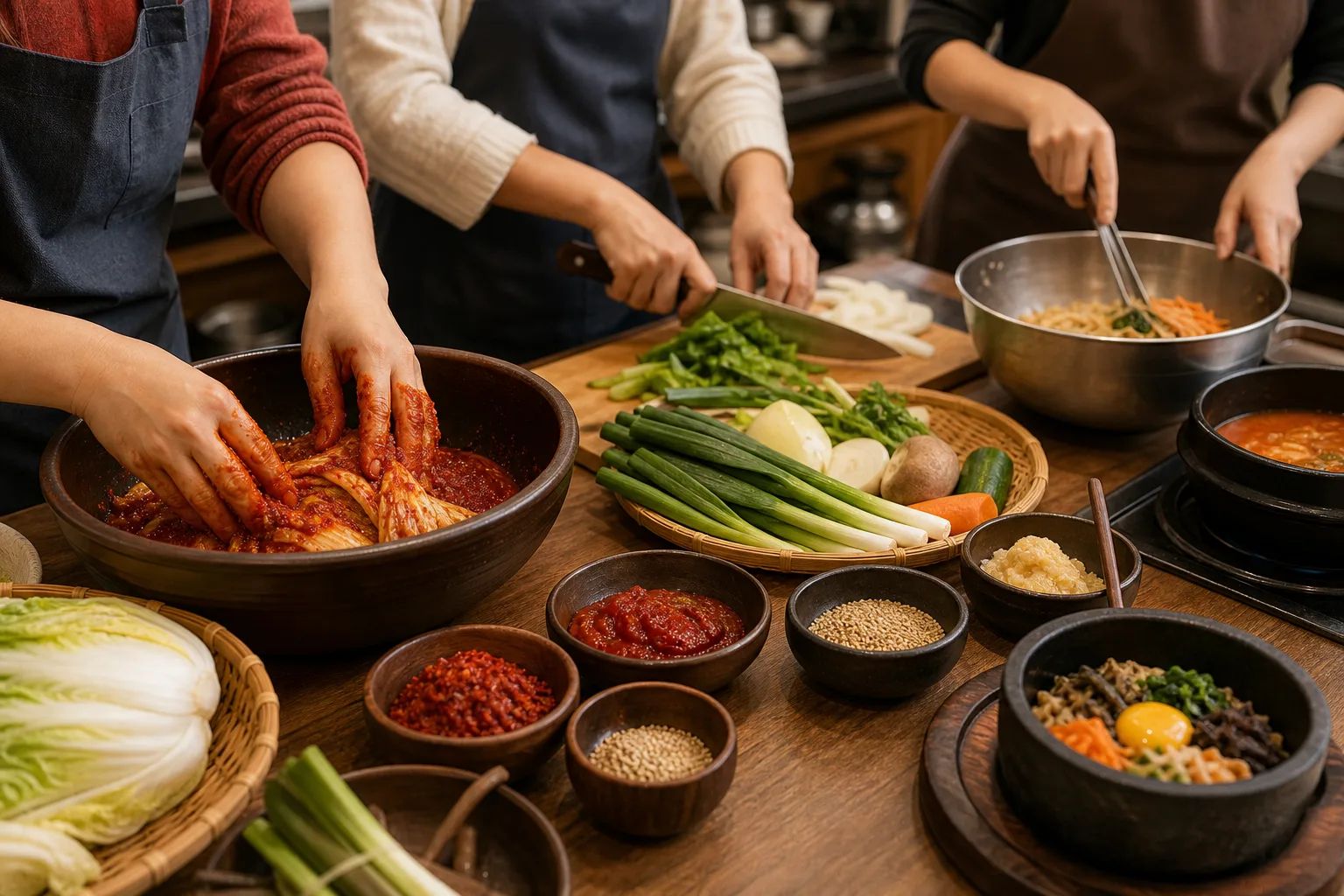
If you want to understand Korean food beyond the restaurant table, a cooking class is one of the fastest ways to do it. You get the ingredients, the techniques, the vocabulary, and the context in one sitting. That matters in Korea, where the difference between a home-style dish, a market snack, and a ceremonial meal can completely change how you eat, how you order, and how you travel.
The best part is that Korean cooking classes are not just for people who already know their way around a kitchen. Most of the good ones are designed for travelers who want a hands-on cultural experience, not a culinary exam. You can learn how to make kimchi, bibimbap, japchae, pajeon, temple food, royal-style dishes, or a full market-to-table meal, and you can do it in settings that feel very local: a hanok in Bukchon, a studio near Anguk, a market neighborhood, or a temple food center.
If you are planning your Korea itinerary around food, this is the kind of experience that turns a trip from "I tried the dishes" into "I understand why people eat this way." Pair it with The Ultimate 10-Day South Korea Itinerary for First-Timers, review Master the Meal: 10 Korean Dining Rules You Must Know, and keep The Ultimate Korean Street Food Guide: Tteokbokki to Tornado Potato open as your flavor reference while you read.
Why Korean Cooking Classes Are Worth It
Korean cooking classes solve a problem that many travelers do not realize they have until they are already in Seoul: you can eat incredibly well in Korea without understanding how the meal is built. That is fine if your only goal is to enjoy lunch. It is less helpful if you want to recognize pantry staples, understand seasonality, know what to bring home, or order confidently in a market or neighborhood restaurant.
A good Korean cooking class teaches you more than recipes. It explains the structure of a Korean meal, the balance of rice, soup, banchan, and sauce, and the local habits that shape everyday eating. For travelers, that makes the experience practical, memorable, and easier to repeat at home.
There are three big reasons travelers book these classes:
- They want a cultural activity that still feels useful after the trip.
- They want an indoor plan that works in any weather.
- They want a food experience that is more interactive than a restaurant meal and more structured than wandering a market alone.
The strongest classes also help with confidence. If you have ever stood in front of a Korean menu and guessed your way through dishes, the class gives you a better system. You start recognizing ingredient patterns: sesame oil, gochugaru, soy sauce, garlic, scallions, fermented pastes, rice, noodles, and seasonal vegetables. Once those patterns click, ordering becomes easier everywhere from a neighborhood diner to a temple food kitchen.
Another reason these classes are popular is that they fit different travel styles. Solo travelers use them as a social activity. Couples use them as a shared memory. Families use them because the pace is manageable and the result is dinner. Food-focused travelers use them because the class often includes a market walk, recipe cards, or a broader explanation of Korean food culture. That combination is hard to replicate with a self-guided day.
The Main Types of Korean Cooking Classes
Not every class is the same, and that is the first thing to sort out before you book. If you pick the wrong style, you can end up in a class that feels too touristy, too advanced, too rushed, or too focused on one dish when you wanted a larger meal.
1. Market Tour Plus Cooking Class
This is the classic "learn where the food comes from" option. A chef or guide meets you near a traditional market, you buy or inspect ingredients together, and then you move to the kitchen for the hands-on portion.
Why people like it:
- You see ingredients in context.
- You learn how Koreans choose produce, condiments, and specialty items.
- It feels like a food crawl and a class in one.
This is usually the best option if you want a first class that feels very Seoul-specific. A well-run market class often includes a meal at the end and a short explanation of how local markets still feed everyday cooking in the city.
2. Home-Style Seoul Cooking Class
This type focuses on dishes people actually cook at home. Think bibimbap, bulgogi, japchae, kimchi, pancake dishes, soup, and side dishes. It is less about performance and more about repeatable food.
Why people like it:
- The recipes are easy to take home and reuse.
- The atmosphere usually feels warm and conversational.
- It teaches structure, not just one-off novelty.
This is the best fit for most travelers. If your goal is "I want to cook Korean food later without feeling lost," this is the category to choose.
3. Hanok or Heritage Kitchen Class
A hanok class adds atmosphere. Instead of a modern studio, you cook in or near a traditional house setting. The environment changes the experience immediately. You feel less like a tourist participant and more like a guest in a carefully staged cultural space.
Why people like it:
- It is photogenic without needing to try hard.
- It pairs well with a Bukchon or Anguk day.
- It usually leans into cultural storytelling as much as technique.
This is often the best class type if you care about design, calmness, and place. It is also the easiest to combine with sightseeing in Jongno, Insadong, and Bukchon.
4. Temple Food Class
Temple food is one of the most distinctive Korean food experiences you can book. It is usually plant-based, seasonal, and closely tied to Buddhist practice. The cooking is simpler than many restaurant dishes, but the philosophy behind it is more nuanced.
Why people like it:
- It is unique even if you have taken other cooking classes in Asia.
- It works well for vegetarians and travelers who want a lighter meal.
- It teaches restraint, seasonality, and balance, not just flavor.
Temple food is not the right choice if you want heavy, celebratory, meat-based dishes. It is the right choice if you want to understand a quieter side of Korean cuisine and a very different idea of what a meal can be.
5. Specialty Class: Kimchi, Royal Cuisine, or Regional Food
These are the classes for travelers who already know the basics and want to go deeper. A kimchi workshop is great if you want fermentation knowledge. Royal cuisine classes are better if you want refinement and presentation. Regional-food classes are ideal if you are curious about dishes tied to specific provinces or historical traditions.
These classes are often more memorable than general ones, but they are also narrower. If you only have time for one food experience in Seoul, a broad home-style class is usually the safer choice. If you are returning to Korea or you already know what you want, specialty classes can be the more interesting pick.
Where to Learn in Seoul
Seoul is the best place to book a Korean cooking class because the city offers the widest spread of styles, neighborhoods, and price points. You can find market tours, modern studios, hanok kitchens, temple food centers, and premium dining-school experiences without leaving the city center.
Bukchon and Anguk
This is the best area if you want a traditional atmosphere. Bukchon and Anguk are close to hanok streets, palaces, tea houses, and old Seoul neighborhoods, so the setting supports the lesson. A class here feels like part of a broader cultural day rather than a standalone activity.
One well-known example in this area is SURA Seoul Cooking & Dining Studio, which sits in Bukchon Hanok Village and offers a hands-on class in about 2.5 hours. The appeal here is not just the menu. It is the way the food and setting work together. If you want a class that feels polished and heritage-driven, Bukchon is hard to beat.
Jongno and Gyeongbokgung
Jongno is one of the most practical areas for cooking classes because it is central, easy to reach, and close to many of the city’s cultural anchor points. It is also where a lot of travelers stay for palace sightseeing, so a class here often fits naturally into the same day.
This area is especially strong for temple food, royal cuisine, and classes that want to lean into historical Korean identity. If you are already planning palace visits, tea stops, and a slower walking day, a cooking class in Jongno is a smart add-on rather than a detour.
Mangwon and Mapo
Mangwon and Mapo make sense if you want a more neighborhood-based, food-forward experience. These districts are known for local markets, independent cafes, and the kind of everyday Seoul energy that feels less ceremonial and more lived-in.
A good example is cooKorean Cooking Class in the Mangwon area, which appears in Seoul tourism listings with a price of approximately 55,000 won per person and advance booking required. That kind of setup is attractive because it feels accessible, local, and budget-friendly without losing the hands-on element.
Near Universities and Transit Hubs
Some cooking classes are placed for convenience first. They are not necessarily in a famous neighborhood, but they are easy to get to, easy to recognize, and easy to work into a broader city day. These classes are often ideal for short-stay visitors who want a reliable experience without building their whole day around one part of town.
If you are on a tight schedule, convenience matters more than prestige. A good class near a subway station can be a better travel choice than a beautiful venue that takes an hour to reach.
What Classes Actually Cost in 2026
The 2026 price range for Korean cooking classes in Seoul is broad, but there is a clear pattern. Shorter, simpler classes are more affordable. Market tours, premium studios, and private experiences cost more. Specialization also pushes prices upward.
Here is the practical range most travelers should expect:
| Class Type | Typical Price Range | What It Usually Includes |
|---|---|---|
| Basic group class | 55,000 to 90,000 won | Ingredients, instruction, meal, sometimes a recipe sheet |
| Market tour plus class | 90,000 to 130,000 won | Market visit, guided shopping, cooking, meal |
| Premium hanok or heritage class | 90,000 to 150,000 won | Curated setting, English instruction, presentation-focused menu |
| Specialty kimchi or temple food class | 60,000 to 140,000 won | Focused menu, deeper cultural framing |
| Private or small-group experience | 100,000 won and up | More attention, more flexibility, higher privacy |
Recent listings give a useful reality check. O'ngo Food Communications lists a class price of USD 81 per person, while a Seoul tourism listing for cooKorean shows an approximate 55,000 won price. Klook listings currently span a similar spread, with examples in the US$75 to US$94 range depending on the class, neighborhood, and package.
That range tells you two things. First, you do not need to spend a luxury budget to get a good experience. Second, the most expensive class is not automatically the best one for every traveler. A 55,000 won market-style lesson may be exactly right if you want something friendly, local, and practical. A pricier hanok or premium feast class makes more sense if you are celebrating a trip or want a more immersive setting.
Current Booking and Schedule Reality
Cooking classes in Seoul are easy to book, but the details are not always identical from one operator to the next. The most important thing is to look at the booking style before you choose a class, not after.
Here is what the current landscape looks like:
- Some classes publish fixed time slots and run only on certain days.
- Some confirm the exact time after booking, especially small-group or private classes.
- Some include a market walk before the class, which makes them longer than they first appear.
- Some need advance booking several days ahead, especially the better-located or more specialized classes.
Examples from current listings:
- O'ngo Food Communications notes free cancellation up to 72 hours in advance, with stricter terms closer to the class date.
- Klook listings include experiences that run around 2 to 3 hours and may confirm timing after booking.
- Temple food class listings often recommend arriving early and may have specific weekday or weekend schedules.
This means your booking decision should be about more than menu preference. Ask yourself:
- Do I want a fixed time or a flexible confirmation?
- Do I want one dish or a full meal?
- Do I want a tour plus class or just the kitchen portion?
- Do I care more about price, atmosphere, or location?
If you answer those questions before you book, you are much less likely to end up in the wrong class.
How to Choose the Right Class for Your Trip
The easiest mistake travelers make is choosing a class by photo alone. A gorgeous kitchen is nice, but the setting is only one part of the value. The best class for you depends on the kind of trip you are taking.
Choose a market class if you want the full food story
Pick this if your ideal experience includes shopping, ingredient recognition, and context. You will probably leave with a better grasp of how Korean meals are built from pantry staples and seasonal produce.
Choose a home-style class if you want practical recipes
Pick this if you want to cook the dishes again later. A home-style class is the most useful option for most travelers because it teaches dishes you can actually repeat in a normal kitchen.
Choose a hanok class if you want atmosphere
Pick this if you care about setting, architecture, and photos. Hanok classes are especially good for couples or travelers who want their food activity to feel like a special cultural moment.
Choose temple food if you want a different philosophy
Pick this if you are curious about vegetarian cooking, calm pacing, and the spiritual side of Korean food culture. It is a strong fit for travelers who want something meaningful rather than simply delicious.
Choose a specialty class if you already know your food priorities
Pick this if you have a very specific interest, such as kimchi fermentation or royal court cuisine. Specialty classes are the most satisfying when you already know what you are looking for.
How to Fit a Cooking Class Into a Seoul Itinerary
A cooking class works best when it anchors a half-day rather than trying to squeeze into a rushed gap. If you want the experience to feel calm and useful, build the rest of your plan around it.
The ideal structure is simple:
- Start with a neighborhood that matches the class.
- Book a morning or early afternoon time slot if possible.
- Pair the class with a nearby walk, tea stop, palace, or market visit.
- Keep dinner light if the class includes a full meal.
For example, a Bukchon or Anguk class can pair with Gyeongbokgung, Insadong, or a hanok stroll. A Mangwon or Mapo class can pair with a market walk, cafe break, or an easy neighborhood dinner. A temple food class can pair with a quiet cultural day rather than a packed sightseeing schedule.
This matters because the class itself already gives you food, conversation, and time. If you force too much else into the same day, you lose the relaxed pace that makes the experience good in the first place.
What You Will Usually Learn
Even different classes tend to overlap on the same core lessons. The specific menu may change, but the deeper takeaways are often the same.
Ingredient logic
You will start to understand how Korean dishes rely on a handful of recurring ingredients: garlic, scallions, sesame oil, soy sauce, gochugaru, rice vinegar, fermented pastes, sesame seeds, and seasonal vegetables. Once you know the pattern, a lot of Korean cooking stops feeling mysterious.
Knife and assembly style
Korean cooking is often about prep and balance rather than flashy techniques. Dishes are frequently built from sliced vegetables, seasoned proteins, starches, sauces, and final assembly. The class usually teaches you how to handle the ingredients in the right order rather than how to do advanced culinary tricks.
Meal structure
Many classes explain how a Korean meal is arranged: rice, soup, main dish, banchan, dipping sauces, and shared side dishes. That structure changes how you think about ordering in restaurants and how you serve food at home.
Seasonality
You will also hear a lot about seasonal ingredients. This is especially true in temple food and market-based classes. Korea’s food culture pays close attention to what tastes best in each season, and that habit shapes recipes more than many travelers expect.
Cultural meaning
This is the part that often sticks with people. Food is not treated as an isolated skill in Korea. It is tied to family memory, regional identity, social behavior, and hospitality. A good class explains that without making it feel like a lecture.
Tips for Booking Smart
If you only read one practical section before booking, make it this one.
Book early for weekends and peak travel dates
The best time slots can disappear quickly, especially in spring, autumn, and major holiday periods. If the class is a must-do for your trip, do not leave it until the day before.
Read the cancellation policy carefully
Some classes are generous, and some are not. The policy matters because weather, transit delays, and itinerary shifts are normal in travel. A free-cancellation window can be worth more than a small price difference.
Check whether ingredients are included
Most good classes include ingredients, but you should still verify. You do not want to arrive expecting a full experience and discover that only part of the menu is covered.
Decide if you want a meal or a tasting
Some classes end with a complete meal. Others feel more like a guided tasting or a focused workshop. If you are booking a lunch slot, the difference matters.
Ask about language
English-language instruction is common, but not universal in every format. If language support matters to you, make sure the listing says so clearly.
Consider dietary limits before booking
Vegetarian, vegan, halal, and allergy-friendly options exist, but they are not always the default. If you have restrictions, look for a class that states accommodations explicitly rather than assuming it will be fine on the day.
Mistakes Travelers Make
Korean cooking classes are easy to enjoy, but a few common mistakes can make the experience weaker than it should be.
Booking by price alone
The cheapest class is not always the best value. Sometimes you save a little money and lose the things that matter most, like time, atmosphere, or clear instruction.
Expecting a restaurant-style performance
This is a class, not a tasting menu. If you want to be entertained without cooking, a different food activity may fit better. The point here is participation.
Choosing a class that is too advanced
Some travelers get excited by a premium menu and forget that they may not want a technically demanding session while traveling. If you want a relaxing activity, choose a simple menu with a known result.
Ignoring location
A class that is 20 minutes from your next attraction is much easier to enjoy than one that sends you across the city during rush hour. Seoul is efficient, but traffic and transit still cost time.
Not planning the rest of the meal day
If your class ends with a full meal, you may not want a heavy dinner afterward. This is one of the easiest ways to overbook your stomach.
What Makes a Class Feel "Local"
If the goal is to cook like a local, not just cook in Korea, look for these signs.
- The menu focuses on dishes people actually cook at home.
- The instructor explains ingredient substitutions instead of just reciting steps.
- The class talks about markets, seasonality, or pantry habits.
- You get a meal at the end, not just a demo plate.
- The class is set in a neighborhood that matches the food story.
The phrase "like a local" does not mean you need the most secret or obscure class in Seoul. It means the class helps you think like someone who lives there: what is practical, what is seasonal, what is shareable, and what fits an everyday meal.
That is why home-style classes and market tours are often more useful than ultra-polished gourmet options for first-time travelers. They teach the habits behind the food, not just the photo-friendly result.
FAQ
Do I need cooking experience to join a Korean cooking class?
No. Most traveler-friendly classes are built for beginners. They expect you to be curious, not expert. If a class is more advanced, the listing will usually say so.
What is the best first class to book in Seoul?
For most visitors, a home-style class or a market tour plus class is the best starting point. It gives you practical recipes, useful vocabulary, and enough context to make the rest of your food trip easier.
Are Korean cooking classes good for solo travelers?
Yes. They are one of the easiest activities to do alone because the format is naturally social. You are busy with your hands, but you are also talking, tasting, and learning with other people.
Are there vegetarian options?
Yes, especially in temple food classes and some specialty listings. If you need vegetarian or vegan food, check the exact menu before booking because some classes offer substitutions while others do not.
Can I book a class for a short trip?
Absolutely. In fact, cooking classes work well on short trips because they combine food, culture, and an indoor activity into one block of time. If you only have a few days, a class can do more than one museum stop.
Is a cooking class better than a food tour?
It depends on your goal. A food tour is better for sampling multiple dishes and neighborhoods. A cooking class is better for understanding ingredients, technique, and the structure of Korean meals. Many travelers end up doing both on different trips.
Bottom Line
If you want one food activity in Seoul that teaches you something real, book a Korean cooking class. It is more than a souvenir experience. It is a way to understand how Korean meals are built, how ingredients are chosen, and why the food culture feels so balanced between comfort and detail.
The best class for you depends on what you value most. Choose a market tour if you want context. Choose a home-style class if you want practical recipes. Choose a hanok class if you want atmosphere. Choose temple food if you want philosophy. Choose a specialty class if you already know exactly what you want.
In 2026, Seoul still offers a wide price range, from budget-friendly local studios around 55,000 won to premium classes that can run into the US$80 to US$90 range or higher. That flexibility is what makes the scene so good for travelers. You can spend modestly and still get a strong cultural return.
If you book smart, plan the rest of the day around the location, and choose the right style for your travel mood, a Korean cooking class can become one of the most rewarding meals of your trip, even before you sit down to eat it.