Best Time to Visit Japan: Sakura, Autumn Leaves & Winter Snow Guide

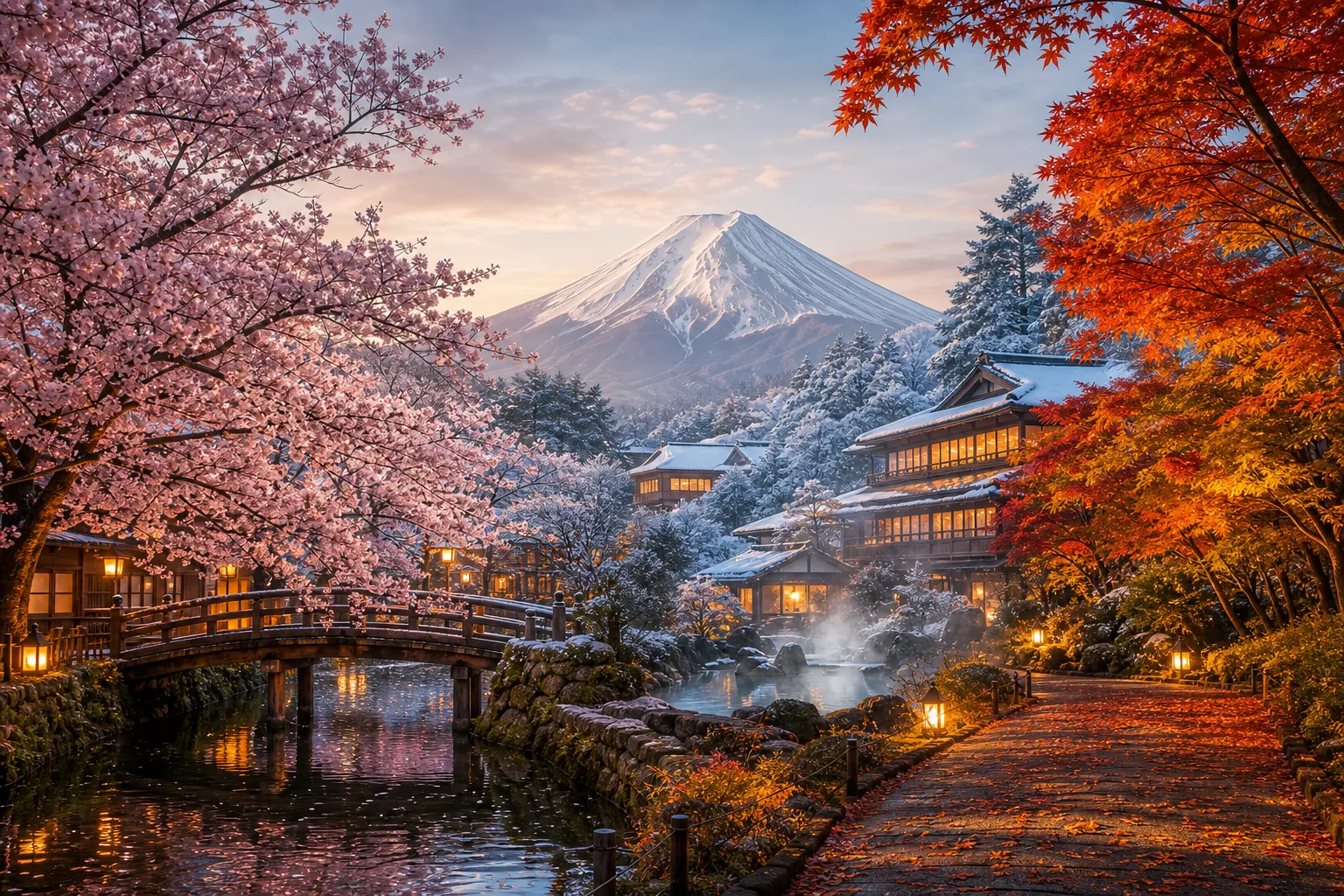
Japan rewards different kinds of travelers in different seasons. If you want soft pink cherry blossoms, plan around spring. If you want clear air and red maple leaves, aim for autumn. If you want powder snow, quieter cities, and hot springs, winter is usually the smarter bet. The best time to visit depends on what you want most: scenery, comfort, price, or crowds.
The Best Time to Visit Japan by Travel Goal
The best time to visit Japan depends less on a single “perfect” month and more on the experience you want. Spring is the classic choice for cherry blossoms, autumn is the most balanced season for weather and foliage, and winter is the best value for snow, skiing, and onsen. Summer can work well for festivals and northern or highland trips, but it is also the hottest and most humid time of year.
If you are deciding between the three signature seasons, think in terms of trade-offs. Sakura season is beautiful but short, crowded, and expensive in popular cities. Autumn is often more forgiving, with clear days, strong scenery, and easier walking conditions. Winter can be cold, but it rewards flexible travelers with lower crowd levels in many places and some of Japan’s best food, hot springs, and mountain scenery.
For most first-time visitors, the safest all-around window is late October to November or late March to early April, depending on whether you prefer fall leaves or cherry blossoms. Those windows usually give you a strong mix of good weather, urban sightseeing, and countryside scenery. If you want the simplest trip with less weather risk, autumn usually wins. If you want the iconic postcard experience, spring usually wins.
Spring: Sakura Season
Spring is the season most travelers picture first, and for good reason. Cherry blossoms transform parks, castle grounds, riversides, and neighborhood streets into soft pink landscapes that feel uniquely Japanese. The experience is not limited to Tokyo and Kyoto, either. You can find beautiful bloom windows across the country, from Kyushu in the south to Hokkaido in the north.
The key thing to understand is that cherry blossom season is brief and location-specific. The south blooms earlier, then the wave moves north over several weeks. Tokyo and Kyoto often peak in late March or early April, but exact timing shifts every year. A trip centered on sakura should be built with flexibility, because a visit that is too early or too late can miss peak bloom entirely.
Spring is also one of the busiest travel periods in Japan. Hotels fill quickly, train seats sell out faster, and popular viewing spots become crowded, especially in the evening and on weekends. If your trip must include cherry blossoms, book early and keep your schedule broad enough to move a day or two if needed. The best spring trips are built around the bloom forecast rather than a fixed date alone.
Autumn: Leaves and Clear Weather
Autumn is the most reliable season for many travelers because the weather is comfortable, the scenery is excellent, and the timing is easier to predict than sakura. Japan’s autumn foliage season usually starts in the north and highlands, then moves south and downward in elevation. That gives you a longer planning window and more flexibility than spring.
The strongest appeal of autumn is balance. You still get dramatic scenery, but the weather is often better for walking, temple visits, long train rides, and city exploration. Visibility is usually good, skies can be crisp, and the heat of summer is gone. For travelers who want to see both major cities and a more natural side of Japan, autumn is often the sweet spot.
Another advantage is that autumn works well across a wide range of itineraries. Tokyo, Kyoto, Osaka, Nikko, Hakone, the Japan Alps, and many regional destinations all offer some version of fall color. Unlike cherry blossoms, which are easy to miss by a few days, autumn leaves often last long enough that you can still have a great trip even if the peak shifts slightly.
Winter: Snow, Onsen, and Lower Crowds
Winter is the underrated choice for travelers who care more about atmosphere than flower forecasts. In snowy regions, the season delivers powder sports, quiet temples, dramatic mountain views, and the simple pleasure of a hot bath after a cold day outside. It is also often the best season for deals outside major holiday periods.
If skiing or snowboarding is on your list, winter should move to the top immediately. Hokkaido, Nagano, Niigata, and parts of Tohoku become prime destinations, and many travelers combine snow with onsen stays and regional food. Even if you do not ski, winter can still be excellent for a city-and-onsen itinerary because the rhythm of the trip slows down and the air feels cleaner and sharper.
Winter does require more planning for clothing and transport. Some rural areas have heavier snow, longer travel times, or more weather disruptions. But for the right traveler, those compromises are worth it. Winter Japan can feel peaceful in a way that spring and autumn rarely do, especially if you want a trip that is scenic without being overrun by seasonal demand.
How Japan Changes Across the Seasons
Japan is long enough from south to north that seasonality matters a great deal. That is why one “best time” answer never works for everyone. A traveler focused on Tokyo and Kyoto will experience the year differently from someone heading to Hokkaido, the Japan Alps, or southern Kyushu.
The easiest way to plan is to match the season to the type of scenery you want. Cherry blossoms favor late March through April in many famous cities, but early-blooming regions in the south can start earlier. Autumn colors often begin in the mountains and move into major cities later in the season. Winter snow favors the north and high-altitude areas, while many big cities stay cold but manageable for sightseeing.
That geographic spread matters because it gives you alternatives. If your spring timing is off in Kyoto, you may still catch blossoms elsewhere if you can shift north or higher in elevation. If the leaves are late in Tokyo, mountain areas may already be in full color. If city weather is too mild for snow, a short train ride can take you to a winter landscape.
Where Sakura Is Best
If you are planning around cherry blossoms, do not think only about famous city parks. Sakura is memorable in places where the flowers interact with architecture, water, or elevation. Castle moats, riversides, shrine paths, and mountain views all improve the experience.
Tokyo is the easiest spring base because it has transport, hotels, and multiple blossom spots, but Kyoto often feels more atmospheric because the flowers sit beside temples, wooden lanes, and old neighborhoods. Hirosaki, Kanazawa, and Nara can also be excellent if you want a more relaxed pace. For a very targeted sakura trip, travelers often choose one base and one or two side trips rather than moving too much.
If your goal is photography, early mornings and weekday visits matter almost as much as the season itself. Calm water, softer light, and fewer people can make a huge difference. For a more practical trip, the broader strategy is to stay flexible, monitor bloom forecasts, and avoid locking every hotel night too tightly.
Where Autumn Leaves Are Best
Autumn leaves are easier to distribute across a trip because the season lasts longer and covers more terrain. Kyoto is famous for a reason, but it is far from the only strong option. Mountain areas often turn earlier, while city parks and temple gardens may peak later. That allows you to build a route that catches multiple stages of color.
For many travelers, the ideal autumn itinerary mixes one major city with one natural area. Tokyo plus Nikko, Kyoto plus the surrounding hills, Osaka plus Nara, or a rail-focused route through the Japan Alps can all work well. The best fall trips often include both urban structure and quiet scenery, so you do not feel like you are racing from one photo spot to another.
The advantage of autumn is that it fits almost any travel style. Couples can treat it as a romantic season, solo travelers can keep it flexible, and families can use the better weather for easier sightseeing. If spring is about a short, fleeting spectacle, autumn is about consistency. You are more likely to get good days in a row.
Where Winter Is Best
Winter depends heavily on region. If you want snow as part of the experience, focus on the north or the mountains. Hokkaido offers some of the strongest winter scenery, while Nagano and Niigata are ideal if you want to combine ski access with rail convenience from Tokyo. Tohoku can also be excellent for travelers who want a quieter, more regional winter trip.
If you prefer city travel with only occasional snow, winter can still be appealing in Tokyo, Kyoto, and Osaka, but the season there is more about crisp air, illuminations, warm food, and fewer peak-season crowds than dramatic snowfall. That makes winter especially flexible for travelers who want museums, shopping, temple visits, and food-focused itineraries.
Winter is often the easiest season for soaking in onsen. The contrast between cold air and hot water is part of the appeal, and many ryokan stays feel more atmospheric in colder months. If your Japan trip includes a traditional inn, local baths, and scenic train rides, winter can be one of the most rewarding times to go.
Practical Guide
The practical question is not only when to go, but how to turn the season into a workable trip. The answer depends on booking windows, transport style, weather preparation, and the kind of base you want. Spring and autumn usually require earlier reservations. Winter often gives you more flexibility, especially outside ski resorts and holiday periods.
For broader logistics, start with Japan Travel Planning: Visa, IC Card, Rail Pass & Essential Logistics Guide. If you are adding mountain scenery, lakes, or coastline to your route, Japan's Best Nature Spots: Mountains, Forests & Coastal Views Guide is the better companion piece.
Hours, Admission, and Prices
There is no entrance fee for a season itself, but the real costs come from timing. Sakura and autumn are peak-demand periods, so hotels, flights, and some train services can be more expensive or sell out earlier. In winter, prices can be lower outside holiday weeks, but ski areas and snowy resorts can become expensive quickly.
For attractions, hours and admission vary by site. Public parks are often free, temple and shrine grounds may be free or low-cost for basic entry, and special night illumination events sometimes require separate tickets or timed access. Castles, gardens, museums, ropeways, and observatories each have their own pricing, so the best strategy is to check the specific destinations on your route rather than relying on a national rule.
If you are visiting during a seasonal peak, book the money-sensitive pieces first: international flights, main hotels, and any trains or day tours that are likely to fill. For many travelers, that means reserving the skeleton of the trip early and leaving meals, shorter local outings, and weather-dependent side trips flexible.
How to Get Around
Japan is easy to move around, but seasonal planning changes how you should use the transport network. In spring and autumn, trains are the most efficient way to keep your schedule reliable. In winter, trains are still excellent, but you should allow more buffer time if snow is heavy in the region you are visiting. In summer, heat and humidity can make long walking transfers more tiring, so staying near major stations becomes even more valuable.
For first-time visitors, the simplest approach is usually one or two bases with day trips. Tokyo, Kyoto, Osaka, and Sapporo all work well as anchors depending on season. If you are chasing a specific seasonal event, such as a cherry blossom corridor or an autumn foliage route, then it may be worth adding a shorter stop in a secondary city rather than trying to cover the entire country.
Rail passes are no longer a universal win in every case, so compare them carefully against point-to-point tickets before you buy. If you are doing only a short loop between major cities, individual tickets may be the better fit. If you are going far north, far south, or stacking multiple long-distance rides, a pass can still make sense. The right answer depends on your exact route, not on the season alone.
Booking Strategy by Season
Spring should be booked earliest, especially if you want popular neighborhoods, renowned cherry blossom spots, or holiday-adjacent travel dates. Hotels near major parks and train stations often get expensive quickly. If you wait too long, you may be forced into less convenient bases or a more fragmented itinerary.
Autumn is almost as important to book early because many travelers treat it as the ideal compromise season. Kyoto in particular can become crowded around peak foliage weekends. If you want better rates, consider traveling just before or after the most famous foliage windows, or choose a regional city with strong seasonal scenery but slightly less pressure.
Winter booking depends on your destination. City hotels can be relatively manageable unless you overlap with year-end holidays, New Year, or winter festivals. Ski resorts, on the other hand, should be booked early because room inventory tightens fast in the most desirable snow regions. If you want a ryokan with meals and an onsen, that also tends to sell earlier than a standard business hotel.
What to Pack
Packing for Japan should be seasonal, but also practical. Spring can feel warm during the day and chilly at night, so layers matter. Autumn can swing from crisp mornings to mild afternoons, which means a light jacket and comfortable walking shoes are usually enough for many city trips. Winter requires the most preparation, especially if you plan to spend time in snowy areas.
No matter the season, comfortable footwear is more important than stylish footwear. Japan sightseeing often involves long walks, train transfers, stairs, and uneven paths in older districts or temple areas. If you are visiting in spring or autumn, also bring enough flexibility in your clothing to handle indoor heating and outdoor temperature shifts.
Travelers heading into winter should think about gloves, a warm hat, water-resistant shoes, and socks that can handle long days outside. If you are going skiing or snowboarding, confirm the exact gear you need before arrival rather than assuming everything can be rented last minute. For city winter trips, you can usually travel lighter, but you still want layers that work in wind and cold.
Tips & Common Mistakes
The biggest mistake travelers make is treating Japan as if there is one fixed seasonal answer. There are really three different planning questions: when the weather is best, when the scenery is best, and when the crowds are easiest. Those do not always line up.
Another common mistake is booking too tightly around a single forecast date. Cherry blossoms are beautiful but volatile. A trip that is built for one exact week can miss the bloom window by a few days and become disappointing even if the country itself is still enjoyable. The safer move is to plan a broad window and build in one or two flexible days.
People also underestimate how different Japan feels by region. Tokyo in spring is not the same as Hokkaido in spring. Kyoto in autumn is not the same as the Japan Alps in autumn. Winter in Osaka is not the same as winter in a snowy mountain town. If you adjust your route to the actual seasonal pattern, the trip usually gets much better.
What Most Guides Miss
Most season guides focus on the postcard image and skip the logistics that make the trip enjoyable. In real travel planning, timing is only one variable. You also need to think about hotel inventory, rail seat availability, weather changes, crowd flow, and how much moving around you want to do.
The strongest trips are often the ones that combine a signature season with a clear structure. For example, a spring trip might center on Tokyo plus one side trip for blossom hunting. An autumn trip might use Kyoto as the cultural anchor and then add a quieter nature area. A winter trip might combine one ski stop with one city base and an onsen stay.
Another thing most guides miss is that not every traveler wants peak season. Some people actually have a better trip when they avoid the busiest weeks and aim for a shoulder period. You may not get the most famous image of the season, but you often get better prices, easier reservations, and a calmer pace.
How to Avoid Crowd Problems
Crowds are part of spring and autumn in Japan, but they are manageable if you make smart choices. Go early in the morning when possible. Visit famous spots on weekdays rather than weekends. Choose a slightly less central hotel if it gives you easier access to trains and lower rates. Most importantly, do not build a whole trip around one viral location.
If you want better crowd control, pick destinations with strong but dispersed seasonal appeal. A famous temple is more likely to be packed at the exact peak moment than a region that spreads visitors across multiple valleys, hillsides, or neighborhoods. That does not mean you should avoid famous places. It means you should pair them with quieter alternatives.
How to Match Season to Travel Style
If you are a first-time visitor who wants the most classic Japan experience, spring or autumn is the easiest recommendation. If you care most about weather comfort and scenic walking, autumn is usually the best fit. If you care most about iconic flowers and are willing to work around crowds, spring is worth the effort. If you care most about snow, food, and a slower pace, winter is the right call.
Families often do best in autumn because the weather is friendly and the trip feels less fragile. Couples often enjoy spring or winter depending on whether they want romance through blossoms or atmosphere through snow and hot springs. Solo travelers can make any season work, but should be especially strategic about transport and accommodation during spring peak dates.
FAQ
Is spring or autumn better for Japan?
Autumn is usually better for comfort, weather reliability, and easier planning. Spring is better if your main goal is cherry blossoms. If you want the most balanced trip overall, autumn often wins. If you want Japan’s signature seasonal image, spring is the stronger choice.
How many days do I need for a seasonal Japan trip?
Seven to ten days is enough for one main seasonal theme plus a city or side trip. Two weeks gives you more flexibility to chase blossoms, foliage, or snow across different regions. Shorter trips can still work, but you should focus on one season and one region rather than trying to cover everything.
When is cherry blossom season in Japan?
It usually falls from late March to early April in major cities like Tokyo and Kyoto, but timing changes every year and varies by region. Southern areas bloom earlier, while northern regions bloom later. Build a flexible window instead of assuming the same dates every year.
When are autumn leaves at their best?
Autumn foliage usually begins in the mountains and northern areas before moving into major cities later in the season. Many popular city destinations become strong from mid-October through November, depending on location and elevation. The exact peak shifts each year, so it is worth checking regional forecasts before you lock in a trip.
Is winter a good time to visit Japan?
Yes, especially if you want snow sports, onsen, lower crowds, or a quieter atmosphere. Winter is also good for food-focused travel and city sightseeing if you do not mind cold weather. It is less ideal if your goal is lush green landscapes or a broad outdoor itinerary in remote areas.
Conclusion
The best time to visit Japan depends on what you want the trip to feel like. Spring gives you cherry blossoms and peak seasonal energy. Autumn gives you the best balance of weather, scenery, and flexibility. Winter gives you snow, hot springs, and a calmer pace. There is no wrong season, only a season that fits your travel style better than the others.
If this is your first trip, start by choosing the experience you care about most, then build the route around that. Use spring if the blossoms are the reason you are going. Use autumn if you want the most comfortable all-around timing. Use winter if you want snow, onsen, or better value. The earlier you decide, the easier it is to book the right hotels, trains, and side trips.
The most practical next step is to lock in the season, then refine the logistics with route planning, transport choices, and accommodation. If you do that well, Japan is one of the easiest countries to tailor into a trip that feels personal rather than generic.