Tokyo Sumo Tournament: Ryogoku Tickets, Seats and Arrival

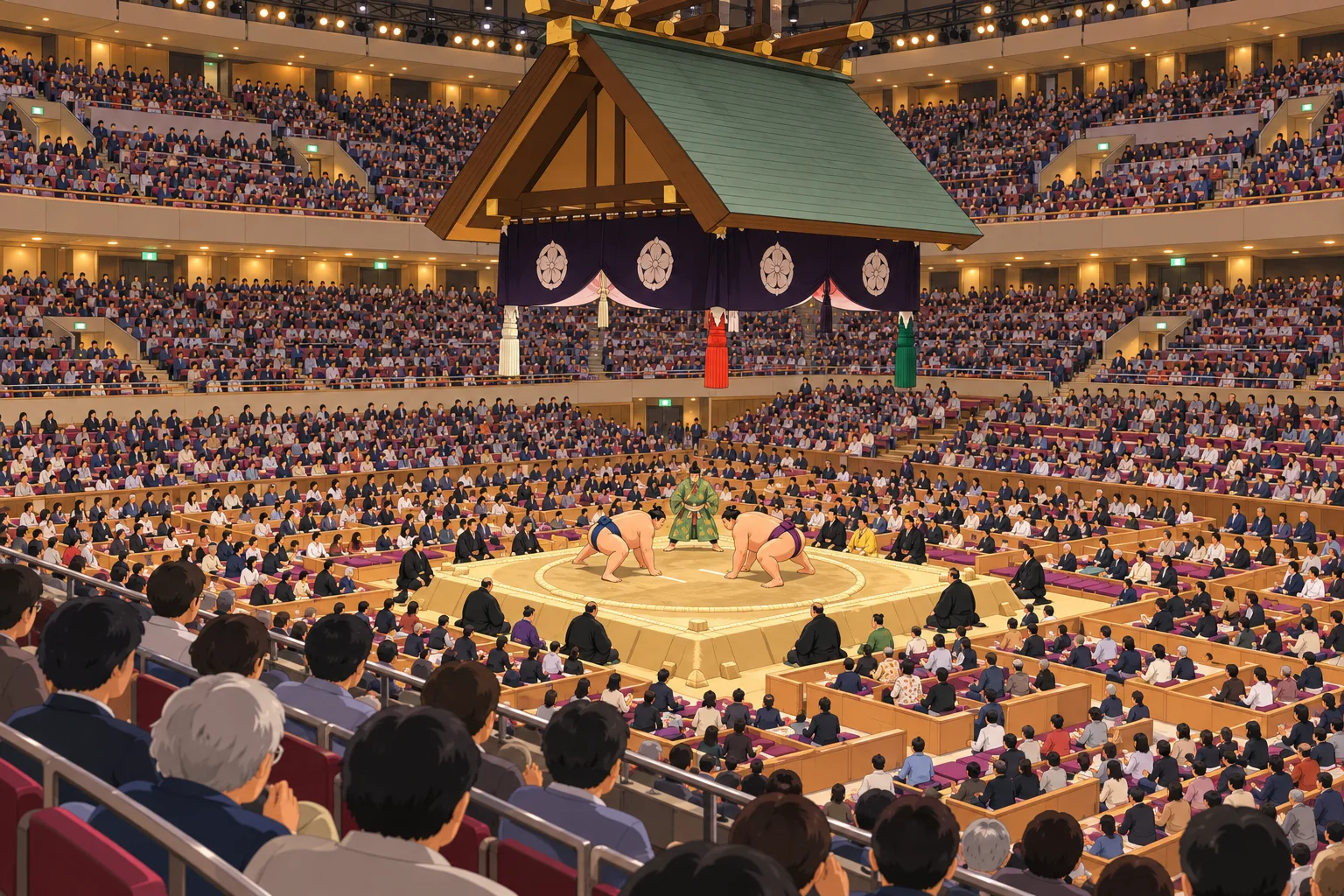
A Tokyo sumo tournament can be the most memorable event on a Japan trip, but only if your dates line up with an actual grand tournament. The sport has tours, ceremonies and other events throughout the year; a photograph of wrestlers at Ryogoku does not tell you whether a ticket is for a regular tournament day. Start with the Japan Sumo Association's calendar, then choose a seat and a day that work for your group.
This guide is for a Singapore-based visitor who wants to watch a professional grand sumo tournament at Ryogoku Kokugikan in Tokyo. It focuses on the decisions that travel articles often blur: tournament versus other events, chair seat versus floor-style box, official ticket channel versus an uncertain seller, and early bouts versus the top division. Specific sale dates, prices and venue rules can change; confirm them on the official page for the tournament you intend to attend.
Check the Japan Sumo Association grand tournament calendar for Tokyo dates
Start with the Association calendar, because Tokyo grand tournaments have listed dates and Kokugikan is not a daily show. Then choose a chair or floor-style box seat that fits your group. Buy through the official channel and read the specific event notice before deciding when to arrive.
The official grand tournament schedule is the starting point. It lists each tournament's venue, first and final day, and advance ticket sale date. Tokyo has regular grand tournament periods, but you should not infer that Kokugikan hosts a tournament every month. Check the calendar for your trip year rather than relying on a repeated “January, May and September” rule without dates.
One subtlety is the difference between a grand tournament and a regional tour or special event. A visitor may enjoy any of them, but they do not have the same format, seat map or ticket policy. If you want the full official tournament atmosphere at Kokugikan, verify that the listing says grand tournament and names Kokugikan as the venue. The Association's tour calendar belongs to a different category. A reseller's photo cannot substitute for the event name on the ticket.
Do not book a nonrefundable flight, room or guided activity on the assumption that tickets will still be available later. Decide how important the tournament is to your Tokyo trip. If it is essential, note the official sale date and be ready to buy through the linked channel. If it is optional, keep another cultural activity in mind so a sold-out date does not dictate the rest of the holiday.
Pick a day for the experience you want
A grand tournament runs across multiple days. The first day, middle days and final day can differ in atmosphere and ticket demand. The ranking announcement and daily bout schedule are separate notices from the annual calendar. Choose a day that leaves enough room for travel to the venue and, ideally, flexibility if your first seat choice sells out.
Avoid promising a particular wrestler on a particular day before the official schedule appears. Injuries, withdrawals and match assignments can change. If seeing one athlete is your main reason to go, understand that a ticket buys entry to that day's tournament, not a guarantee of a named bout. Check the current daily card close to the event and enjoy the wider programme as well.
The association publishes future dates well ahead, but the precise ticket product for a given tournament may appear separately. Treat the annual schedule as a planning anchor and the tournament-specific ticket page as the purchase authority. Save both links when comparing a third-party listing.
Compare arena chair seats and masu box seats by group size and comfort
The official ticket guide explains two broad seat experiences. Masu boxes are Japanese-style floor seating, often sold as a box for a group. Arena chair seats resemble stadium seats. Your choice affects comfort, group size, view and total price; “closer” is not automatically “better” for someone who finds sitting on the floor difficult.
For a couple or solo visitor, a chair seat can be the simpler unit to compare: one seat, one person, and a conventional posture. Check the seat category and arena map to understand distance from the ring. A cheaper chair can still make a good first visit if the goal is to follow the tournament atmosphere rather than inspect every facial expression. Bring the correct expectations for a large venue.
A masu box can suit a group that wants to sit together and accepts the floor arrangement. The official guide gives example pricing for a box accommodating four people, but a quoted box price must be divided and compared with the actual group size. Four friends filling a four-person box have a different per-person calculation from two people paying for the whole box. Check whether the exact tournament offers smaller or different box products; never infer availability from a generic diagram.
Comfort matters over a long event day. Ask whether everyone can sit in the required posture, manage stairs or steps, and see the ring from the selected area. If an older companion, pregnant traveler or person with a mobility limitation is coming, a conventional chair or official accessible seating route may be more appropriate. Contact the official ticket service about current accessible seats and companion procedures before paying. Do not decide from a photo alone.
The Kokugikan arena map helps locate seat blocks, directions and facilities. Match the map's seat label to the current product page. A map can explain where a section is, but the live seller determines whether a seat exists for your date. Note whether the ticket is for one chair, one place within a box or a whole box; the distinction can change the apparent price dramatically.
Compare the full cost, not only the category name
The Association ticket guide shows approximate examples of weekday, weekend and holiday prices, while warning that venue and ticket conditions vary. Do not paste one year's price into a future travel budget as if it were fixed. Read the checkout amount, service or handling fee, delivery method and any package inclusions. A guided tour or meal bundle may be worthwhile for some visitors, but compare it with the official seat price and what the extra money buys.
Use a simple group table in your notes: date, venue, seat category, number of actual places, total checkout cost, floor or chair posture, and ticket delivery method. This is more reliable than comparing a “box B” headline with a “chair B” headline. Seat category letters do not imply that one box and one chair are equivalent products.
If your group wants to split between seat types, agree where to meet and whether the arena's current rules allow movement or re-entry. Do not assume companions in separate sections can sit together for a popular bout. The ticket is tied to the assigned place. Choose one group arrangement before checkout rather than hoping staff can rearrange seats on the day.
Use official ticket release and resale rules before paying
The Japan Sumo Association's How to Buy page links to its official English ticket service. Follow that path from the Association site rather than clicking the first sponsored search result. Check the URL, tournament, day, venue, seat type, quantity and final price before entering payment details. A real-looking seat map on an unrelated seller does not prove the ticket is valid.
Use the advance-sale date on the official schedule as a reminder, not as a guarantee that every category opens or remains in stock at the same moment. Look at the specific tournament announcement for sale stages, special products, delivery formats and any official resale mechanism. If a date is sold out, the safe response is to inspect official options or choose another day, not to pay an unknown social-media account.
Ticket delivery rules deserve particular attention for an overseas buyer. The specific tournament may use electronic codes, distribution to each attendee, pickup or other methods. For example, a September 2026 Association spectator notice required QR tickets for a group to be distributed to individual attendees before entry and warned that screenshots or printouts would not be accepted for that event. That is evidence of how precise rules can be, not a promise that the identical rule applies to every future tournament. Read the notice attached to your own ticket.
Check identity, phone, email and payment requirements before the sale begins. A purchase can fail if the delivery process depends on a number or application you cannot use abroad. Keep confirmation emails, order numbers and the seller's official help page. Do not send the ticket image to strangers who offer to “verify” it. A screenshot may expose a code even where it is not accepted for entry.
Treat resale as a separate decision
The word “resale” does not mean every online listing is authorized. The Association may publish rules or a specific official mechanism for a particular tournament. Read those terms before buying or transferring a ticket. Avoid promises that a third-party reseller can change the seat, transfer a QR code or refund a purchase without checking the official event conditions.
If an unauthorized listing asks you to pay outside the platform or to communicate only through a messaging app, you may have little recourse if the ticket is invalid. Do not hand over a passport scan or banking credentials for a speculative purchase. A legitimate seller should state the event identity, price, ticket delivery and terms clearly. When the details cannot be confirmed, choose another date or activity.
If you can no longer attend, consult the official cancellation or resale route tied to your purchase. Do not assume you can simply resell at any price. Tournament rules and Japanese ticketing conditions may restrict transfers. Preserve the purchase record so you can follow the authorized process rather than improvising on social media.
Plan Ryogoku arena arrival around lower and top-division bouts
A grand tournament day unfolds in stages. The official Tokyo bout timetable shows the sequence of lower divisions, the intermediate Juryo division and the top Makuuchi division, while explaining that times are approximate. Decide whether you want a full day of sumo or mainly the later elite bouts, then arrive with enough margin for security, finding the seat and any meal.
Arriving only for the most famous late bouts can be efficient, but it may leave you with less time to absorb the venue. Earlier matches reveal the rhythm of the sport, and the ring ceremonies and divisional entrances add context. Someone new to sumo may enjoy watching the building fill and comparing the atmosphere across divisions. The ticket gives you the option; you do not have to remain seated every minute.
Do not quote a precise wrestler appearance time from an old schedule. The daily bout order and tournament day can affect the sequence, and the Association labels its timeline approximate. Check the live day's card, then aim to be in your seat well before the division you care most about. Build in the walk from Ryogoku Station, ticket checks and any queue at the entrance.
Kokugikan is in Ryogoku, but your Tokyo hotel may require transfers before you reach the area. Use your actual route planner on the day and confirm which station exit is practical. The venue's arena map is useful once inside; the official ticket and event page determine the entry gate and seat. If you are carrying luggage, check current venue bag rules and storage options beforehand instead of arriving with a large suitcase and assuming it can come through security.
Read the current arena rules on the day
The Association publishes spectator notices for particular tournaments. The September 2026 notice described opening times that varied by tournament day, ticket requirements for children, one permitted re-entry, QR handling and a request not to bring outside food and drink. These rules illustrate why an evergreen guide should send you to the current notice. Do not use this paragraph as the rulebook for a future tournament.
Before leaving the hotel, open your tournament's entry page. Check door time, ticket display method, bag inspection, food and drink policy, re-entry, child tickets and any photography restrictions. Share the relevant details with your companions. If tickets must be distributed to each phone, do it while everyone still has a reliable connection, not in the queue.
Once inside, use the seat assignment and staff directions. Avoid standing in another audience member's sightline during a bout. Keep conversation and photographs considerate; follow any announcements about flash, video or movement. A packed arena is a shared experience, and a seat that looks empty before Makuuchi may still belong to someone arriving later.
Put the four decisions into one booking sequence
First, confirm that your travel dates overlap a Tokyo grand tournament at Kokugikan. Second, decide whether your group prefers a chair or floor-style box and calculate the full checkout cost per person. Third, follow the Association's official ticket link and verify the specific sale, delivery and resale rules. Fourth, read the event notice and daily bout sequence so you arrive when the experience you want is actually happening.
Imagine a couple who can attend either of two Tokyo tournament days. They may prefer two chair seats if floor seating would be uncomfortable. They should compare available categories and total prices on the official seller, then choose the day with a workable journey from their hotel. A group of four may prefer a box, but only after checking that all four accept floor seating and the whole-box price. Both groups still need to verify the entry format and can decide independently whether to watch early divisions.
If no official seat fits your date or budget, do not let the sunk planning time push you toward a risky listing. Adjust the Tokyo itinerary, look for a different authorized day, or enjoy another cultural experience. The broad Japanese culture guide gives context for the wider trip; this article's task is the specific tournament decision.
Sumo is easier to enjoy when the ticket purchase is boring and verified. Use the governing body's calendar and sale pages, choose a seat you can comfortably use, leave time for the bouts you most want to see, and let the live tournament notice settle the details that change from year to year.