Noboribetsu Onsen in Hokkaido: The Volcanic Hot Spring Town

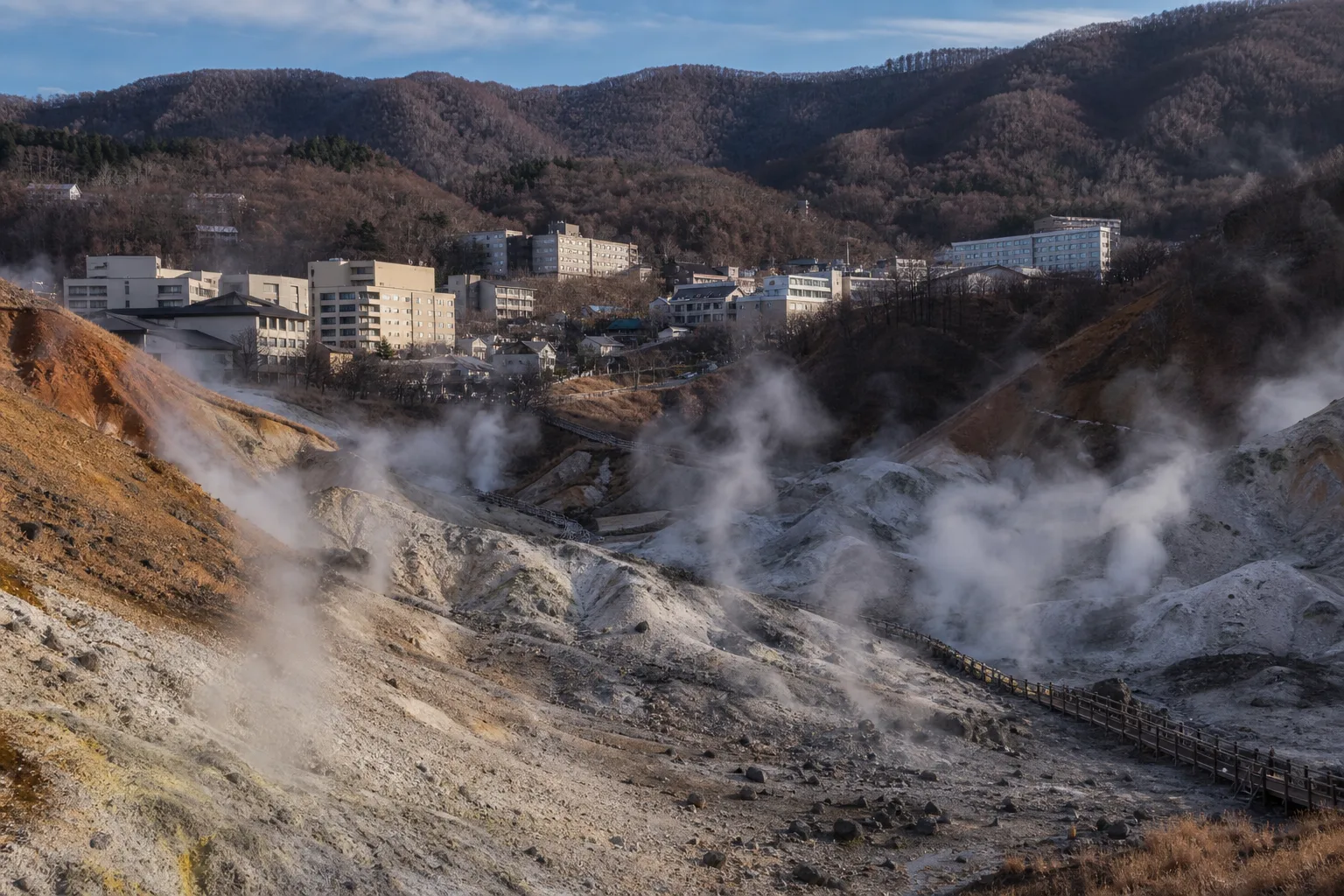
If you want one onsen town in Hokkaido that feels unmistakably volcanic, Noboribetsu is the one to prioritize. The air smells faintly of sulfur, the scenery turns dramatic fast, and the whole place makes the hot spring experience feel tied to geology instead of just hotel amenities. That matters if you are deciding between a quick bath stop, a ryokan night, or a full-on Hokkaido side trip.
Introduction
Noboribetsu Onsen is Hokkaido’s best-known hot spring town for travelers who want more than a soak. It combines an active geothermal landscape, an established ryokan district, easy day-trip logistics from Sapporo or New Chitose Airport, and a cluster of classic sightseeing stops that make the destination work for both first-timers and repeat Japan visitors.
This guide explains what Noboribetsu is, why it stands out among Japan’s onsen towns, how to get there without wasting half a day, and how to plan the visit around your budget and travel style. It also covers the practical details that many overviews skip, including the best order for sightseeing, the difference between a day visit and an overnight stay, and the mistakes that make a Noboribetsu trip feel rushed.
The most important thing to understand is that Noboribetsu is not just “a place with hot water.” It is a compact hot spring ecosystem shaped by volcanic activity, with Jigokudani at the center and a town that built its identity around the springs themselves. That combination is why it keeps showing up in rankings, route guides, and Hokkaido itineraries.
Why Noboribetsu Onsen Feels Different
Noboribetsu stands out because the hot springs are the attraction, the town’s identity, and the visual backdrop all at once. The area has multiple spring types, a strong sulfuric signature, and one of the most recognizable geothermal landscapes in Japan. If you have seen photos of steaming cliffs, yellowish mineral runoff, and boardwalks around a volcanic valley, you have probably seen Noboribetsu.
The town’s main draw is Jigokudani, or Hell Valley, where steam vents, mineral-stained ground, and hot spring runoff create a setting that feels more dramatic than a standard resort town. Nearby walking routes extend the experience into Oyunuma and other geothermal spots, so the destination works as a slow, scenic loop instead of a single viewpoint.
For travelers, the practical upside is that Noboribetsu gives you a lot of payoff for a relatively simple plan. You can arrive, walk the valley, eat in the onsen district, and either leave the same day or stay overnight in a ryokan. That makes it a good fit for people building a broader Hokkaido trip, especially if they want a contrast to city-heavy days in Sapporo or Hakodate.
If you are still mapping the wider trip, Japan's Best Nature Spots: Mountains, Forests & Coastal Views Guide is a useful companion because it shows how an onsen stop fits into a larger scenic itinerary. For broader arrival and rail planning, Japan Travel Planning: Visa, IC Card, Rail Pass & Essential Logistics Guide helps keep the transport side realistic before you commit to a detour. And if you are comparing bathing destinations across the country, Japan Onsen Guide: Best Hot Springs, Ryokan Stays & Etiquette Rules gives the wider etiquette and ryokan context.
What makes Noboribetsu especially appealing is that it still feels like a proper hot spring town rather than a theme park version of one. The district has inns, bathhouses, tourist facilities, souvenir stops, and enough foot traffic to feel established, but the landscape remains the star. That balance is rare.
The spring water itself is also part of the appeal. Noboribetsu is famous for offering several mineral types in close proximity, which is one reason it has a reputation as a “department store of hot springs.” In plain terms, that means you are not visiting for one generic bath. You are visiting a place with variety, character, and a very visible link between the land and the water.
Geology, Water, and Town Character
Noboribetsu’s appeal comes from the fact that the hot spring system is not abstract. You can see the steam, smell the minerals, and walk through the environment that feeds the baths. That gives the town a stronger sense of place than a resort that hides its geothermal identity behind a hotel wall.
The best way to understand the town is to think of it in three layers. First, there is the volcanic landscape, centered on Jigokudani and the surrounding geothermal zone. Second, there is the onsen district itself, where ryokan, bathhouses, and visitor facilities cluster along the main routes. Third, there is the wider city and access network, which makes the whole area reachable from Sapporo, the airport, and other Hokkaido destinations.
That structure matters because it changes how you should pace the visit. Many travelers try to “do Noboribetsu” as if it were just one attraction. In reality, the destination works best when you give it time to breathe. A half-day visit can work if your goal is to see the valley and move on. But if you want the full experience, an overnight stay is the better choice because the town becomes calmer at night and the hot spring atmosphere feels more immersive.
The water profile is another reason people come here specifically. Noboribetsu is associated with a mix of spring types, which is unusual enough to support the town’s reputation nationally. You do not need to memorize the chemistry to appreciate the difference. What matters as a traveler is that the town markets itself around variety, mineral character, and bathing culture rather than only scenery.
There is also a seasonal logic to the trip. In colder months, steam, snow, and warm baths make the town feel especially strong as an onsen destination. In warmer months, the walking routes and valley views become more comfortable, which makes Noboribetsu better for travelers who want to combine bath culture with a longer scenic stop. Either way, the site rewards slow movement.
If you are comparing onsen towns, Noboribetsu is usually the one people choose when they want an iconic, easy-to-understand first visit. It is not the quietest option, and it is not the most remote. Its strength is that it is vivid, accessible, and clear about what it offers.
What to Do in Noboribetsu Onsen
The core itinerary in Noboribetsu is simple, but it works best when you structure it in the right order. Start with the geothermal sights, then move into the onsen district, then decide whether you want a museum, theme-park-style stop, or a long bath session. That sequence keeps you from backtracking.
Jigokudani is the obvious first stop. The valley is the visual anchor for the whole town and the quickest way to understand why Noboribetsu became famous in the first place. You are walking in a landscape shaped by heat, gases, and mineral activity, so it is the kind of place where a short visit still feels meaningful. The paths are straightforward, but you should still give yourself enough time to pause for photos and observe the steam vents instead of rushing through.
Oyunuma is the next natural extension if you want the geothermal theme to feel more complete. It gives you a broader view of the hot spring environment and helps the town feel less like a single scenic stop and more like a connected landscape. Travelers who enjoy walking and landscape photography usually get the most out of this section.
For a more playful or family-oriented stop, Noboribetsu Date Jidai Mura is often included in local itineraries. It changes the tone from natural geology to Edo-period entertainment, which can be useful if you want a full day without making the trip feel repetitive. Just remember that this is an add-on, not the core reason to visit.
The ryokan stay is the real upgrade if your schedule allows it. An overnight visit lets you experience Noboribetsu at two different times of day. In the afternoon, the valley and streets are busy with sightseeing. At night and early morning, the town feels calmer, and the bath experience becomes the focus instead of the logistics. If you care about atmosphere, this is where the destination pays off.
Food is part of the experience too. Onsen towns are strongest when they make it easy to eat between stops without overplanning, and Noboribetsu fits that pattern. You will find regional snacks, simple meals, and ryokan dining options that support the rhythm of a bath-and-walk day. The key is not to overcomplicate it. A good Noboribetsu day is built around moderate pacing, not packed reservations.
If you are visiting on a day trip, the most efficient pattern is arrival, valley walk, lunch, one secondary attraction, and then either a footbath, a short soak, or departure. If you are staying overnight, reverse the pressure: arrive earlier, explore more slowly, bathe later, and spend the next morning on a short final walk before leaving.
Practical Guide
The practical question most travelers ask is whether Noboribetsu is worth the detour. The short answer is yes, if you value a destination that combines scenery and bathing culture. The longer answer is that it works best when you budget enough time to travel there properly instead of squeezing it between unrelated commitments.
There is no single universal admission price for Noboribetsu Onsen itself because the town is a district, not a single gate with one fee. Your actual costs depend on whether you are walking the public geothermal areas, entering a museum or theme park, or booking a ryokan stay. That is important because many first-time visitors look for one ticket when they really need a trip budget.
For transport, the most common route is from Sapporo or New Chitose Airport via JR and a local bus connection. JR Hokkaido’s current guidance confirms that limited express services in Hokkaido are reserved-seat services and that ticket rules changed with the 2025 fare revision and 2026 timetable updates. In practice, that means you should not assume the old Japan trip habit of “just show up and find a seat” still works the same way everywhere. Build the ride plan before you go.
The useful travel pattern is usually this: take a JR train to Noboribetsu Station, then transfer to the local bus up to the onsen area. JR Hokkaido’s route guidance for the Noboribetsu area remains the most reliable baseline for timing, and the attraction is close enough to the station that the last-mile transfer is manageable if you are comfortable with a bus segment.
For 2026 planning, keep two things in mind. First, rail rules and fares have been updated, so using current JR Hokkaido pages matters. Second, limited express reservations and pass coverage should be checked against your exact route rather than assumed from an older blog post. If you are traveling from Sapporo with other Hokkaido stops, route optimization matters more than chasing the cheapest individual fare.
If you want the booking side handled with less friction, check official rail pages first and then compare accommodation on a booking platform only after you know your arrival timing. That approach reduces the common mistake of reserving a ryokan that looks great but is awkward to reach after the last bus. For a longer Hokkaido trip, a pass or route bundle may help, but only if your itinerary actually uses it.
The best booking strategy depends on the kind of visit you want:
- Day trip: prioritize train timing, local bus intervals, and one or two public attractions.
- Overnight stay: prioritize ryokan quality, meal plan, bath access, and check-in timing.
- Scenic stopover: prioritize the walk from Jigokudani to Oyunuma and back, then keep the rest flexible.
If you are choosing between train and bus segments, use the current official JR Hokkaido site and route planner rather than old forum advice. Hokkaido rail rules have been adjusted recently, and what matters most is not the abstract pass name but whether your specific ride is included, whether the seat needs reservation, and whether your transfer window is realistic.
On the lodging side, the practical rule is simple: book close to the onsen area if your budget allows it. The reason is not luxury alone. Staying in the district gives you the full atmosphere, reduces evening transport stress, and makes it easier to enjoy the bath schedule the way Noboribetsu is designed to be enjoyed.
Hours, Prices, and Access
Because Noboribetsu Onsen is a town district, the relevant hours and prices vary by attraction. Public walking areas around Jigokudani are generally accessed as sightseeing spaces rather than ticketed amusement grounds, while facilities like museums or theme-park attractions have their own operating schedules and entry fees. You should verify each paid stop separately when you finalize your date.
For the best current baseline, use official tourism and operator pages. Hokkaido’s official tourism site and the Japan National Tourism Organization both currently describe Noboribetsu Onsen as a major hot spring destination, and the local tourism materials continue to position Jigokudani as the key scenic stop. For practical planning, the JR Hokkaido pages are the most useful current source for transport rules, reserved-seat policy, and timetable changes.
If you are visiting a paid attraction such as Date Jidai Mura, check the official fee and business-hours page directly before departure. These kinds of attractions are the most likely to change seasonally or to adjust last entry times, and that is the kind of detail that can ruin an otherwise smooth day if you show up too late.
Access is usually easiest from Sapporo, but the trip is also practical from New Chitose Airport if Noboribetsu is your first or last Hokkaido stop. The station-to-onsen transfer is short enough that the destination can fit into a broader northbound or southbound route without becoming a major detour.
For travelers using rail passes, verify coverage carefully. Some regional passes cover the main rail leg but not local buses or every reserved-seat arrangement. That is why people sometimes think a pass “covers Noboribetsu” when it only covers part of the actual journey. The safest rule is to check your exact station pair and transfer type before buying anything.
There is also a comfort question. If you arrive in winter, the combination of cold air, steam, and hot water is part of the attraction. If you arrive in peak summer, the landscape is still interesting, but you may care more about a shorter walking loop and more time indoors. The town supports both styles, but the ideal pacing changes with the season.
Tips & Common Mistakes
The biggest mistake first-time visitors make is treating Noboribetsu like a single photo stop. It is better than that. The town rewards people who slow down enough to understand how the valley, the baths, and the access routes fit together.
Another common mistake is arriving too late. If you only show up in the afternoon and need to leave soon after, you will likely see the main scenic spots but miss the real value of the district, which is the rhythm of walking, bathing, eating, and staying overnight. Even a one-night stay changes the experience substantially.
Do not assume every attraction is open on the schedule you saw in an old blog post. Seasonal adjustments, last-entry rules, and rail timetable changes are normal in Hokkaido. The safest workflow is to confirm the day’s plan on official pages the same week you travel, especially if your visit depends on a bus connection or a specific museum stop.
If you are on a budget, remember that the destination does not require luxury to be worthwhile. You can still enjoy Jigokudani, walk the district, and take in the atmosphere without booking the most expensive ryokan in town. The tradeoff is convenience versus immersion. Budget stays work if your goal is sightseeing. Full-service ryokan make more sense if your goal is the onsen experience itself.
If you like taking photos, plan for early morning or late afternoon light. The steam and the mineral landscape photograph better when the light is softer, and the crowds are usually easier to manage outside the most obvious midday window. That gives the scenery more depth and keeps the experience calmer.
Language is rarely a serious barrier in the core tourist area, but it still helps to know a few practical words. “Onsen,” “jigokudani,” “oyu,” and “kankō” will appear often enough that recognizing them makes maps and signs easier to read. Pair that with a translation or map app and the district becomes much easier to navigate.
The other mistake is overpacking the day with unrelated stops. Noboribetsu is not best experienced as a checklist marathon. It is better as a focused half-day or overnight segment where the geothermal scenery and hot spring culture can define the mood. If you are building a larger Hokkaido route, let Noboribetsu be one strong note instead of trying to make it do everything.
FAQ
Is Noboribetsu Onsen worth visiting if I only have one day in Hokkaido?
Yes, if you want a hot spring town with a strong visual identity and manageable logistics. A day trip works for Jigokudani, a short walk around the district, and one extra attraction. If you want to relax properly, stay overnight instead.
How long should I stay in Noboribetsu Onsen?
One night is the sweet spot for most travelers. It gives you enough time to see the geothermal area, enjoy a bath, eat a proper dinner, and experience the town after day visitors leave.
Can I visit Noboribetsu Onsen without staying in a ryokan?
Yes. You can visit as a day trip and still enjoy the scenery and public areas. You will miss some of the atmosphere, but the destination is still worthwhile if your schedule is tight.
Is Noboribetsu better than Jozankei?
They are good for different reasons. Noboribetsu is more dramatic and geothermal. Jozankei is closer to Sapporo and often easier for a shorter visit. Choose Noboribetsu if you want the most iconic volcanic hot spring setting.
What is the best season to go?
There is no single best season, but winter creates the strongest onsen mood, while spring and autumn are often easier for walking and sightseeing. Summer can still work if you keep the itinerary compact and avoid trying to do too much in one day.
Conclusion
Noboribetsu Onsen is one of those places that justifies its reputation once you arrive. The volcanic landscape is real, the town feels built around the springs instead of merely decorated with them, and the visit can be as simple or as immersive as your schedule allows. That flexibility is why it keeps earning a place on Hokkaido itineraries.
If you want the trip to feel complete, build it around three decisions: whether you are doing a day trip or overnight stay, which geothermal stops you want to prioritize, and how you will handle the rail-and-bus transfer in advance. Get those right and Noboribetsu becomes an easy recommendation.
For most readers, the smartest next step is to compare it against the rest of your Hokkaido plan, then lock the transport and lodging together instead of treating them separately. That is the difference between a rushed stop and a memorable onsen town visit.