Daejeon Museum of Art and the Science and Art Fusion Scene

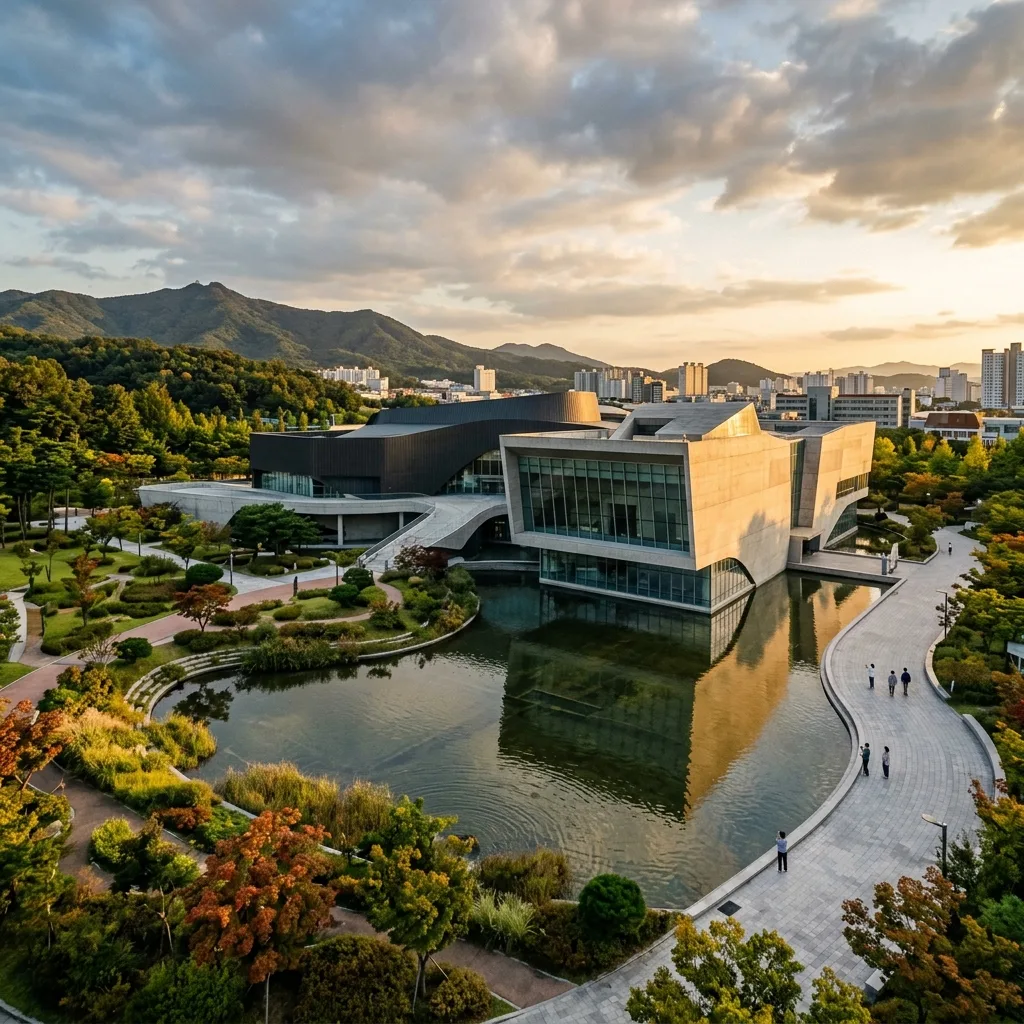
When travelers map out their cultural itineraries in South Korea, the spotlight almost always falls on the traditional palaces of Seoul, the vibrant coastal energy of Busan, or the historic streets of Gyeongju. However, if you're fascinated by the intersection of cutting-edge technology and contemporary art, skipping Daejeon would be a massive oversight. Known as the Silicon Valley of South Korea, Daejeon is home to the nation's premier research institutes, the prestigious KAIST university, and the historic Expo Park. But what makes this city truly unique is how it harnesses its immense technological prowess to fuel a groundbreaking, futuristic art scene. At the heart of this movement is the Daejeon Museum of Art (DMA), a cultural institution that relentlessly challenges the boundaries between the laboratory and the canvas.
If you're building a broader travel plan, you'll find that Daejeon makes an excellent, accessible stopover right in the center of the country. You can easily integrate it into our The Ultimate 10-Day South Korea Itinerary for First-Timers, offering a striking contrast to the ancient temples and traditional villages you might visit in the southern provinces.
The Daejeon Museum of Art: A Hub of Innovation
Established in 1998, the Daejeon Museum of Art is located in the Dunsan Grand Park area, an expansive green space surrounded by government complexes and neighboring the Daejeon Arts Center. While the museum hosts a variety of traditional and modern art exhibitions, its true defining characteristic—the thing that sets it apart from every other museum in the country—is its relentless focus on "Science and Art Fusion."
The building itself is a striking piece of modern architecture. Designed to blend harmoniously with the surrounding parkland, the museum features expansive glass facades that allow natural light to flood the interior lobbies, blurring the line between the indoor galleries and the outdoor environment. The museum boasts five massive exhibition halls, a media center, and an outdoor sculpture park.
Project Daejeon: The Biennale of Science and Art
One of the most significant events hosted by the DMA is its recurring Project Daejeon (formerly known as the Daejeon Biennale). This exhibition explicitly tasks international and domestic artists with creating works that utilize robotics, artificial intelligence, biotechnology, and interactive digital media.
Walking through these exhibitions feels less like visiting a traditional gallery and more like stepping onto the set of a high-budget sci-fi film. You might encounter robotic sculptures that react to your heart rate, generative AI paintings that evolve in real-time based on the weather outside, or immersive VR installations that explore the ethics of bioengineering and cloning. These exhibitions don't just use technology as a gimmick; they use it as a medium to ask profound philosophical questions about humanity's future in an increasingly digitized world.
If you are a fan of contemporary spaces and cutting-edge curation, you can see how the DMA stacks up against the capital's heavyweights in our guide to the Best Art Museums and Galleries in Seoul and Beyond: A Complete Guide.
Exploring the Wider Science-Art Scene
The fusion of science and art in Daejeon doesn't stop at the DMA's walls. The entire city leans into this identity, making it a massive playground for tech-forward creatives and science enthusiasts.
Expo Park and the Hanbit Tower
A short distance from the museum lies the Expo Park, the site of the historic 1993 Daejeon World Expo. This global event was a turning point for the city, cementing its reputation as Korea's tech capital. The iconic Hanbit Tower (Tower of Great Light) stands at the center as a monument to the city's scientific achievements.
While the park itself retained a slightly faded, retro-futuristic charm for many years, recent revitalizations have breathed spectacular new life into the area. Today, new media art installations are scattered around the grounds. The Expo Bridge, which spans the Gapcheon River, is illuminated in the evenings with dynamic LED light shows, reflecting beautifully on the water below.
Right next to the Expo Park is the newly opened Shinsegae Art & Science department store. Unlike a standard mall, this massive complex features an entire floor dedicated to an interactive science museum (the Daejeon Expo Aquarium) and an art gallery, proving that the city's unique theme permeates even its commercial spaces.
KAIST and Campus Art
The Korea Advanced Institute of Science and Technology (KAIST) is effectively South Korea's MIT. While primarily a hard-science research university, the campus frequently hosts collaborative projects where engineering students team up with fine arts majors to create kinetic sculptures and digital media installations.
Walking through the sprawling, tree-lined campus, you'll spot several permanent outdoor art pieces that celebrate mathematical principles, physics, and computer science. The university occasionally hosts public media art festivals where the facades of the brutalist engineering buildings are transformed through massive 3D projection mapping.
The National Science Museum
Located just across the street from Expo Park, the National Science Museum is one of the largest and most comprehensive science museums in Asia. While it is heavily geared toward education (making it fantastic for families), it also features several permanent exhibits that blur the line between scientific demonstration and visual art. The planetarium, for example, frequently hosts immersive, abstract audio-visual shows that feel more like a modern art installation than an astronomy lesson.
Practical Guide: Visiting the DMA
Planning your visit to the Daejeon Museum of Art is straightforward, but it helps to know the logistical details to make the most of your day.
Hours and Admission (2026)
- March – October: 10:00 AM – 7:00 PM
- November – February: 10:00 AM – 6:00 PM
- Culture Day: On the last Wednesday of every month, the museum extends its hours until 9:00 PM (March–October) or 8:00 PM (November–February).
- Closed: Every Monday, January 1st, Seollal (Lunar New Year), and Chuseok. If a Monday is a national holiday, the museum closes on the following Tuesday.
- Admission Price: The standard base fee for the permanent collection is incredibly affordable—typically just 500 KRW for adults and 300 KRW for children/teenagers. However, special exhibitions (especially the large-scale international biennales) will have separate, higher ticket prices (usually ranging from 10,000 to 15,000 KRW).
How to Get There
Daejeon is highly accessible, serving as the major railway hub connecting northern and southern Korea. You can take the KTX or SRT bullet train from Seoul Station or Suseo Station to Daejeon Station in just under an hour.
From Daejeon Station, take the Daejeon Subway Line 1 to Government Complex Daejeon Station (Daejeon Cheongsa). Take Exit 3 and walk for about 15 minutes through the scenic Dunsan Grand Park to reach the museum. The walk is flat and paved, making it very accessible. Alternatively, a short taxi ride from the KTX station directly to the museum will cost around 6,000 to 8,000 KRW and takes about 15 minutes depending on traffic.
Expanding Your Daejeon Itinerary
Daejeon is often unfairly labeled as a "boring city" by locals because it lacks the chaotic, neon-drenched nightlife of Seoul or the dramatic beaches of Busan. However, for the culturally curious traveler, it is an incredible hidden gem. If you're looking for more inspiration on where to go outside the capital, check out our guide on Beyond Seoul: The Top 10 Must-Visit Cities in South Korea.
The Lee Ungno Museum
You cannot visit the DMA without stopping at the Lee Ungno Museum, located literally right next door in the same park. Lee Ungno is one of Korea's most important modern painters. He spent much of his life in Paris and successfully blended traditional Korean ink painting with Western abstract techniques, creating a style known as "Abstract Lettering."
The building itself is an architectural masterpiece designed by renowned French architect Laurent Beaudouin. The crisp white walls and carefully controlled natural lighting make it one of the most beautiful museum interiors in the country. A combined ticket for the DMA and the Lee Ungno Museum is often available.
The Hanbat Arboretum
Adjacent to the museum complex is the Hanbat Arboretum, the largest man-made urban arboretum in South Korea. Spanning massive tracts of land, it is divided into a West Garden and an East Garden. The arboretum features themed spaces, including a magnolia garden, a medicinal herb garden, and a stunning rose garden that blooms in late spring. After spending hours indoors looking at digital art and robotic sculptures, walking through the lush, perfectly manicured nature of the arboretum provides the perfect palate cleanser.
The Famous Sung Sim Dang Bakery
No trip to Daejeon is complete without a pilgrimage to Sung Sim Dang, arguably the most famous independent bakery in South Korea. Founded in 1956, this bakery is legendary. Their flagship product is the Twigim Soboro—a fried streusel bread filled with sweet red bean paste. It is crispy on the outside, soft on the inside, and completely addictive. Another massive seller is the Buchu Ppang, a savory bread filled with chives, tofu, and egg that tastes almost like a steamed dumpling.
The main branch is located near Daejeon Station, but there are branches throughout the city. The lines can be long, often wrapping around the block on weekends, but the queue moves fast and the pastries are absolutely worth the wait.
Café Culture in Soje-dong
For a dose of aesthetic history, head to Soje-dong, located just behind Daejeon Station. This neighborhood was originally built to house Japanese railway workers during the colonial period. For decades, the area fell into disrepair and was largely abandoned.
Recently, however, young entrepreneurs and artists have taken over the historic, dilapidated wooden houses and transformed them into incredibly stylish cafes, restaurants, and galleries. The juxtaposition of the crumbling 100-year-old architecture with sleek, modern interior design makes Soje-dong one of the most Instagram-worthy spots in the city. Grab a hand-drip coffee or a matcha latte and wander through the narrow, winding alleyways.
Yuseong Hot Springs
After a long day of walking through museum galleries and exploring the city, head to the Yuseong district in the western part of Daejeon. This area is famous for its natural hot springs, which contain high levels of radium and are said to be excellent for joint pain and skin conditions.
You don't even need to book an expensive hotel to enjoy the water. There is a massive, free outdoor foot bath (ashiyu) located right on the main street of Yuseong. Simply roll up your pants, wash your feet at the tap, and soak your tired legs alongside the locals under the shade of the trees.
A Two-Day Culture and Science Itinerary
To help you piece everything together, here is a highly recommended two-day itinerary for Daejeon.
Day 1: Art and Architecture
- 10:00 AM: Arrive at Daejeon Station via KTX. Drop your bags at your hotel or in a station locker.
- 10:30 AM: Walk to the original Sung Sim Dang Bakery. Grab a Twigim Soboro and a coffee for a late breakfast.
- 11:30 AM: Take the subway to Government Complex Station and walk to Dunsan Grand Park.
- 12:00 PM: Explore the Daejeon Museum of Art (DMA). Spend 2 hours engaging with the science-art installations.
- 2:00 PM: Walk next door to the Lee Ungno Museum to admire the abstract ink paintings and the stunning white architecture.
- 3:30 PM: Take a relaxing stroll through the Hanbat Arboretum (East Garden).
- 5:30 PM: Head to Soje-dong. Wander the historic alleyways and have dinner at one of the renovated hanok restaurants.
- 8:00 PM: Enjoy a quiet evening coffee in a Soje-dong cafe before heading to your hotel.
Day 2: Science and Relaxation
- 10:00 AM: Head to the Expo Park area. Visit the National Science Museum.
- 12:30 PM: Walk over to the Shinsegae Art & Science department store. Enjoy lunch at the massive food court overlooking the river.
- 2:00 PM: Take the elevator up the Hanbit Tower or explore the Daejeon Expo Aquarium inside Shinsegae.
- 4:00 PM: Take a taxi or bus to the Yuseong Hot Springs district.
- 4:30 PM: Soak your feet in the free public foot bath on the main street.
- 6:00 PM: Enjoy a traditional Korean BBQ dinner in Yuseong.
- 8:00 PM: Head back to Daejeon Station. Grab a box of Sung Sim Dang pastries to take home before catching the KTX back to Seoul or onward to Busan.
Getting Around: Transportation Tips
Daejeon is a highly manageable city. While it is the fifth-largest metropolis in South Korea, its layout is logical and the traffic is generally less severe than in Seoul.
- The Subway: Daejeon currently has only one subway line (Line 1), but it conveniently connects the KTX Station, the central downtown area (Jungang-ro), the government complex (near the art museums), and the Yuseong hot spring district.
- Tashu Public Bikes: Daejeon is one of the most bicycle-friendly cities in Korea. The city's public bike-sharing system is called "Tashu." The bikes are painted bright orange and are available for rent at hundreds of stations across the city. You can rent them using a smartphone app. Riding a Tashu along the paved paths of the Gapcheon River from Expo Park to the museum district is a fantastic way to see the city.
- Buses: The city has an extensive and reliable bus network that fills the gaps left by the single subway line. You can use your standard T-Money transit card (the same one used in Seoul) on all buses and the subway in Daejeon.
Tips & Common Mistakes
- Mistake: Rushing through the special exhibitions. The interactive, tech-heavy installations at the DMA often require time to experience fully. Some generative art pieces change over a 20-minute cycle. Don't just snap a quick photo and walk away; take the time to observe how the art interacts with the environment, the lighting, and the audience.
- Tip: Check the exhibition schedule in advance. Because the museum relies heavily on complex, large-scale technological installations, the transition periods between major exhibitions can be quite long. If you visit during a changeover, entire wings of the museum may be closed. Always check the official website before traveling to ensure you aren't disappointed.
- Mistake: Skipping the museum gift shop. The DMA gift shop is excellent, often featuring unique, design-forward souvenirs created by local artists and industrial design students from KAIST. It’s a great place to pick up a unique memento that isn't a generic magnet or postcard.
- Tip: Use the luggage lockers. If you are doing Daejeon as a day trip on your way from Seoul to Busan, utilize the massive banks of coin lockers at Daejeon Station. They are cheap, secure, and will save you from dragging your suitcase through the art galleries.
FAQ
Is the Daejeon Museum of Art suitable for children? Absolutely. In fact, it is often much more engaging for children than traditional fine art galleries. Because many of the science-art fusion exhibits are interactive, kinetic, or utilize virtual reality headsets, children are actively encouraged to engage with the art rather than just stand quietly with their hands behind their backs.
Do I need to book tickets in advance? For general admission to the permanent collection, you can simply purchase tickets at the door without any issue. However, if you are visiting during the opening weekend of a major special exhibition or the Biennale, purchasing tickets in advance through platforms like Naver Booking or Interpark is highly recommended to avoid long queues.
How much time should I allocate for the museum? For the permanent collection and a standard special exhibition, 1.5 to 2 hours is usually sufficient. However, if you also plan to visit the adjacent Lee Ungno Museum and stroll through the massive Hanbat Arboretum (which we highly recommend), you should allocate at least a half-day (3 to 4 hours) for the entire Dunsan Grand Park area.
Is Daejeon safe for solo travelers? Yes, Daejeon is exceptionally safe. The crime rate is incredibly low, and the city is well-lit and easy to navigate. The university areas (around KAIST and Chungnam National University) and the Dunsan-dong commercial district remain busy and safe late into the night.
Conclusion
The Daejeon Museum of Art stands as a testament to South Korea's unique cultural landscape, proving that art and science are not mutually exclusive domains, but rather two sides of the same creative coin. By embracing the city's identity as a hub of technological innovation, the DMA offers an exhibition experience that you simply cannot find in Seoul or Busan.
Whether you are a tech enthusiast fascinated by AI and robotics, an art lover seeking new mediums, or simply a traveler looking to step off the beaten path and eat some incredible fried bread, Daejeon's science and art fusion scene is guaranteed to challenge your perceptions of what a modern city and a modern museum can be. Next time you book a KTX ticket, consider hopping off halfway and stepping into the future.