Chengdu Tea Culture: Renmin Park Teahouses & Afternoon Chengdu Life

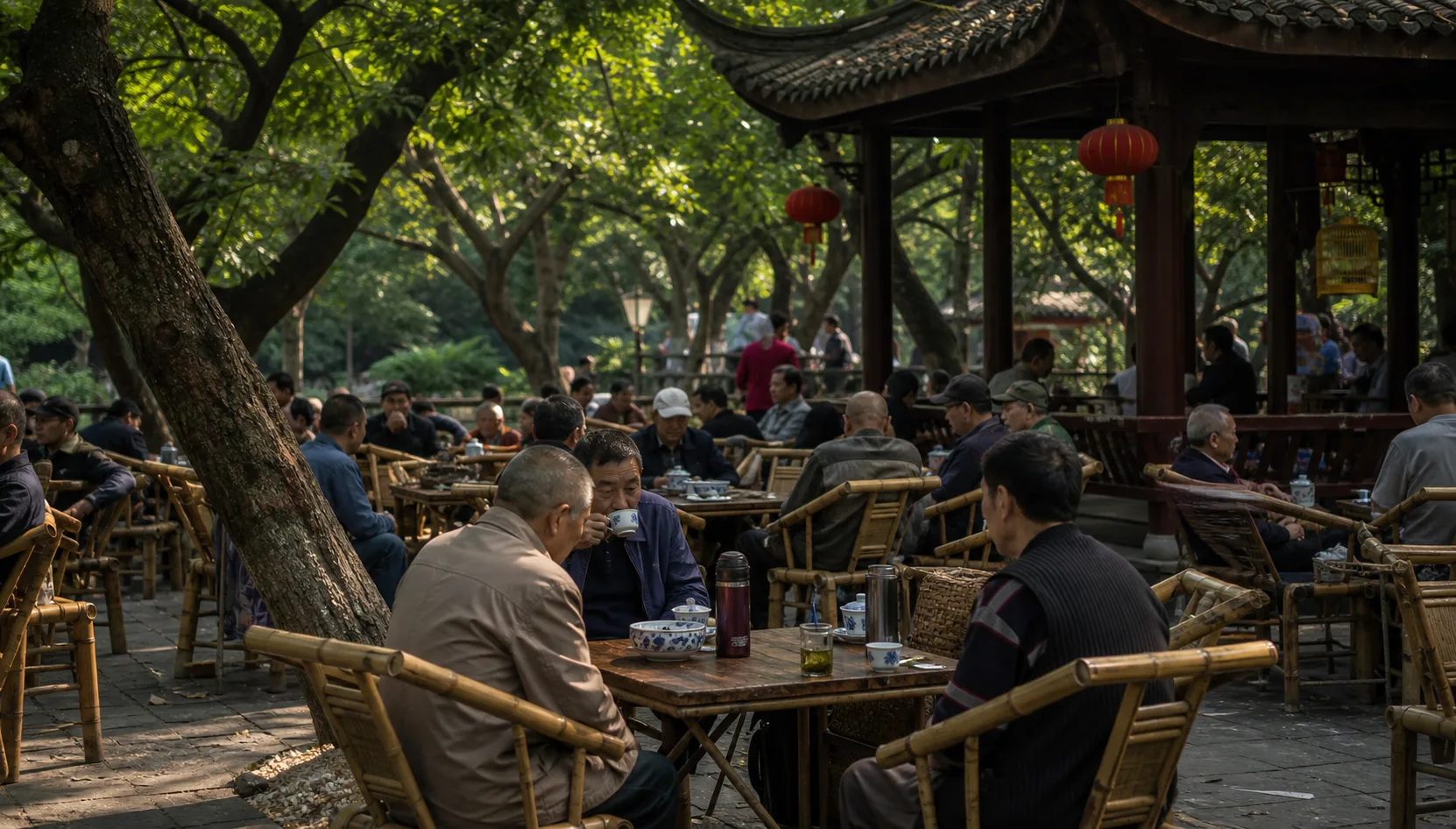
Chengdu is one of the few major Chinese cities where doing less can be the smartest thing you do all day. If your itinerary is packed with pandas, hotpot, and old streets, it is easy to treat tea culture as a side note. That is a mistake. An afternoon in Renmin Park shows you the rhythm underneath the city: unhurried conversation, gaiwan tea, card games, ear cleaning, people-watching, and the kind of everyday social life that most visitors only glimpse from a taxi window.
Why Chengdu tea culture matters
Chengdu tea culture is not a performance staged for tourists, even though tourists are welcome. It is a living social habit built around parks, shaded teahouses, shared tables, long conversations, and a public sense of leisure that still shapes the city’s identity. In practice, tea in Chengdu is less about formality and more about time: time to sit, time to talk, time to watch the city move at a slower speed than you expected.
For first-time visitors, the key idea is simple: Renmin Park is not just a place to drink tea. It is a working window into Chengdu life. You can spend an hour there and understand more about the city’s temperament than you might in a checklist-style sightseeing rush. The park is also one of the easiest places to combine tea, lunch, a stroll, and an evening transition into dinner or Sichuan snacks.
If you are building a broader Chengdu trip, this is one of the most valuable low-effort anchors you can include. Pair it with the city overview in Chengdu Travel Guide: Giant Pandas, Hotpot & the Best of Sichuan, then use the park as your reset button between more energetic attractions. That balance matters in Chengdu because the city rewards travelers who move slowly enough to notice how neighborhoods actually feel.
Tea culture also gives structure to a more practical travel question: how do you enjoy a big Chinese city without overscheduling it? The answer is often to block out one generous afternoon, keep transport simple, and choose one place where lingering is the point. Renmin Park is ideal for that because it is central, familiar to locals, and flexible enough to support a full visit or a casual stop.
What Renmin Park teahouses are like
Renmin Park teahouses are open-air or semi-open seating areas where locals come to drink tea, chat, play cards, read, rest, or meet friends. The setting is often simple: bamboo chairs, small tables, teapots, thermoses, and servers moving at a pace that fits the whole atmosphere. You will see older residents, office workers on a break, families, and visitors sharing the same social space without much fuss.
The most recognizable tea order is usually a traditional gaiwan-style service. In a typical setup, you receive hot water, loose tea leaves, and a lidded bowl or cup. The whole point is to keep topping up the tea while staying put. That makes the experience feel less like a cafe stop and more like joining a local habit.
There are a few reasons this setting matters. First, it is affordable enough to be a spontaneous decision instead of a luxury activity. Second, the environment is designed for staying rather than rushing. Third, the tea house is embedded in a park, which means the experience includes trees, paths, small scenic corners, and everyday public life rather than a themed interior.
If you want a first stop in Chengdu that immediately slows the pace of the trip, this is it. Renmin Park tea culture is the opposite of maximizing attractions per hour. It is about letting the city reveal itself through ordinary behavior. That is why many seasoned travelers treat the park as one of the best introductions to local life before they move on to food, temples, shopping streets, or nightlife.
Another useful thing to understand is that tea houses in Chengdu are not all identical. Some lean more local and old-school, while others are more polished and visitor-friendly. The exact vibe can vary by seating area and the time of day. If you arrive in the late afternoon, you are more likely to see a fuller social scene, which can make the experience feel richer and more memorable.
For travelers interested in food as well as tea, it helps to think of Chengdu tea culture as part of a wider regional approach to flavor and lingering social meals. If you want context for how this fits into the city’s culinary identity, the Chinese Regional Food Guide: Dim Sum, Sichuan Spice & Beijing Duck is useful background. Chengdu tea and Sichuan food belong to the same broader cultural logic: strong flavors, shared time, and a strong preference for social dining over isolated consumption.
How to plan an afternoon in Renmin Park
The best Renmin Park visit is usually built around a simple half-day plan. Start with a low-pressure arrival, settle into tea, walk the park afterward, and then decide whether to continue on to another neighborhood or keep the rest of the day loose. The park works especially well when you are recovering from a transit-heavy morning, a flight, or a busy sightseeing day.
A practical sequence looks like this:
- Arrive in the late morning or early afternoon.
- Choose a tea house seat before you are tired or rushed.
- Order tea and stay for a while instead of treating it like a quick stop.
- Walk the park after you finish your first tea round.
- Add one nearby meal or attraction only if you still have energy.
That sequence matters because Chengdu is not a city where you need to force constant motion to get value. The tea house is already the core experience. The park walk is the bonus. If you are trying to make the day feel balanced, resist the temptation to stack too many high-energy stops before or after.
The afternoon is the best time for most travelers because the park tends to feel active without being chaotic. You can still hear local conversation, see regular residents using the space, and enjoy enough daylight to appreciate the surroundings. If you stay later into the evening, the mood changes slightly and can feel calmer, but the visual experience is better in daylight.
This is also a good place to slow your whole itinerary down. Many travelers arrive in Chengdu with a list of things they think they should do immediately, especially if they have just landed from another city in China. Renmin Park reminds you that one of Chengdu’s main attractions is its tempo. If you leave feeling like you did not “do” enough, you probably did it right.
For practical China planning around transport, mobile payments, and entry logistics, it helps to review China Travel Planning: Visa, WeChat Pay, High-Speed Rail & Practical Guide before you build a Chengdu day around the park. That way, you can show up with the basics solved and spend your mental energy on the actual experience instead of troubleshooting on the sidewalk.
Practical Guide
Hours, admission, and tea prices
Renmin Park is generally open daily and is commonly listed as an all-day public park. For planning purposes, a daytime-to-evening visit is safe, with many travel references placing the park around 6:00 a.m. to 10:00 p.m., and some seasonal variations reported in the evening closing time. The important point is that this is not a tightly ticketed attraction with a narrow window. It is easy to fit into a flexible day.
Admission to the park itself is typically free. You are paying for the tea, snacks, or services you choose to use inside the park. That makes the experience especially attractive if you want a meaningful Chengdu stop without committing to an expensive excursion.
Tea prices vary by teahouse and tea type, but a useful travel budget is usually in the low tens of RMB per person for a basic sit-down tea session. Some places charge by the cup, some by the pot, and some by the hour or by the seat, depending on the house and how much service is included. If a server explains a set rate, ask what that includes before you sit down so you understand the total cost.
Budgeting for a park tea stop is straightforward:
- Basic tea session: usually affordable and suitable for most travelers
- Snacks or add-ons: optional and often modest
- Ear cleaning or other services: extra and not always something you need to try
- Time: the real “cost” is that you will want to stay longer than planned
The biggest mistake is approaching tea service like a five-minute drink order. In Chengdu, the point is to settle in. If you sit down with the expectation that you will leave in ten minutes, you are likely to miss the whole cultural logic of the place. Plan for at least one relaxed hour, and longer if you want to observe the social flow of the park.
How to get there
Renmin Park is central and easy to pair with other Chengdu sightseeing. Most travelers will reach it by metro, taxi, ride-hailing, or on foot from another central district. If you are staying near Tianfu Square or another downtown area, it is typically a simple, low-stress transfer rather than a long excursion.
Because Chengdu traffic can be slow at busy times, the smartest approach is to use the metro when it is convenient and reserve a taxi or ride-hailing app for the final leg if you are carrying bags or traveling during a busy meal period. If you are already building a walking route through central Chengdu, the park can slot neatly between other city-center stops.
When you plan the day, think in terms of districts rather than isolated attractions. Renmin Park works well before or after a nearby lunch, a short museum stop, or a dinner reservation in a central food street. It is not the kind of place where you need complicated transit planning if your hotel is already downtown.
If you are combining it with a larger Sichuan itinerary, do not forget the logistics around payments, rail tickets, and entry apps. Many foreign visitors still underestimate how much smoother the trip gets once mobile payment and transport basics are set up. That is one more reason to read the broader practical guide before you arrive.
What to order
If you are not familiar with Chengdu tea houses, keep the first order simple. A standard green tea, jasmine tea, or other local tea is usually enough to give you the experience you came for. The goal is not to sample the most exotic possible menu item. It is to understand how the place works.
You can ask the server what the house recommendation is if you want a little guidance. In many cases, the answer will be something straightforward rather than elaborate. That is fine. The tea itself matters less than the setting and the pace.
If you are traveling with a group, one useful strategy is to agree ahead of time that the tea stop is not a debate about menu optimization. Pick something easy, sit down, and spend the time watching how locals use the space. That keeps the visit centered on the culture rather than the transaction.
Can you book in advance?
Usually, no advance booking is necessary for a basic Renmin Park tea experience. That is part of the appeal. You can arrive, find a seat, and settle in. If you are trying to bundle the visit with a private guide or a more structured city tour, booking may matter for the tour itself, but the park tea stop generally remains easy to access on your own.
That said, if you are building a China trip around tightly managed timing, it can still be useful to compare local activities and transport options through a booking platform before you go. In higher-intent travel planning, booking convenience often matters more than price alone. This is where Klook can be a strong option for the broader trip, especially when you want simple confirmation, clear inclusions, and less back-and-forth in a language you do not read fluently.
What makes the experience feel authentically Chengdu
The authenticity of Renmin Park is not in old architecture alone. It comes from the social rhythm around you. People are not there to prove a point. They are there because the park still functions as a community living room. That is a very different feeling from a sightseeing square or a stylized “cultural” district.
You will notice small details that make the setting feel local:
- The unhurried pace of service
- The mix of ages sitting together
- The fact that conversation is the main activity
- The park’s role as a public room rather than a curated exhibit
- The sense that visitors are guests, not the point of the place
For many travelers, the most memorable moment is simply sitting still long enough to notice how many different things are happening around the tea tables. Someone may be reading. Someone may be playing cards. Someone may be chatting with a neighbor. Someone may be standing to look at the water or the trees, then returning to their seat as if nothing interrupted the afternoon. That is the Chengdu mood in miniature.
It is also worth saying that authenticity does not require discomfort. Some travelers hear “local” and assume they should accept poor planning or confusing service as part of the experience. That is not the point. The goal is not to be mistreated in the name of realism. The goal is to enjoy a genuine local routine in a simple, low-friction setting. Renmin Park does that well.
If your taste in travel leans toward everyday city life rather than staged sightseeing, Renmin Park belongs near the top of your Chengdu list. It is one of the easiest ways to experience the city without turning your afternoon into a performance of productivity.
Tips & Common Mistakes
Tips
Arrive with time to stay, not just time to take photos. The tea house becomes more rewarding the longer you remain seated.
Bring cashless payment options that actually work in China, and do not assume your home card will solve every transaction. A smooth payment setup reduces stress and keeps the visit pleasant.
Choose a seat based on shade and comfort, not only on appearance. In a park setting, a slightly less photogenic table can still be the better one if it keeps you comfortable for an hour.
Keep your schedule loose after the park if possible. Chengdu tea culture is best when you let it shape the rest of the afternoon instead of racing to the next item.
If you like food tourism, make tea the prelude to lunch or dinner rather than a replacement for it. The park works especially well as a reset before Sichuan dishes.
Common mistakes
Treating the tea stop as a fast caffeine break. That mindset defeats the purpose and often leaves people disappointed.
Over-planning the rest of the day. If your schedule is too tight, you will feel guilty for lingering. The park is specifically the kind of place that needs slack.
Assuming every tea house will feel identical. The mood can vary by seating area, weather, and time of day. Build in a little flexibility.
Ignoring the broader city context. Renmin Park is better when you understand it as part of Chengdu’s social culture rather than a standalone attraction.
Skipping nearby food entirely. Tea and food belong together in Chengdu’s travel rhythm, even if you do not want a full meal immediately.
Not respecting the park as a daily public space. Visitors should observe, enjoy, and participate lightly without taking over the atmosphere.
FAQ
Is Renmin Park worth visiting if I only have one afternoon in Chengdu?
Yes. If you only have one afternoon, Renmin Park is one of the smartest low-effort choices because it gives you a strong sense of local life without requiring a long transit commitment or a complex reservation. It is especially valuable if you want one cultural stop that feels different from standard sightseeing.
How long should I stay in the tea house?
Most first-time visitors should plan for at least an hour, and longer if the goal is to actually feel the atmosphere rather than just sample tea. The experience improves when you stop trying to optimize it. If you only have twenty minutes, you will still see something interesting, but you will miss the deeper rhythm.
Is Renmin Park good for families or older travelers?
Yes. The park setting is relatively gentle, flexible, and easy to navigate. Families and older travelers often appreciate that there is no heavy walking requirement and no need to race between ticketed attractions. The main thing is to choose a comfortable seating arrangement and avoid overloading the day with too many extra stops.
Do I need to speak Chinese to enjoy the tea houses?
No, but a few basic phrases or translation tools help. Even without language fluency, the experience is accessible because it is mostly visual and behavioral: you sit, order tea, observe, and relax. Communication is simpler if you know how to say that you want tea, how many people are in your group, and whether you prefer a simple option.
Is Renmin Park better in the morning or afternoon?
Afternoon is usually the best first visit for most travelers because the park feels lively and social, and the lighting is better for lingering and walking around afterward. Morning can still be pleasant, but the afternoon tends to match the city’s tea culture more naturally.
Conclusion
If you want to understand Chengdu beyond the headline attractions, spend an afternoon at Renmin Park and let tea set the pace. The park is easy to reach, inexpensive to enjoy, and rich in the kind of everyday social detail that makes a city memorable. It is not a box to check quickly. It is a place to sit long enough for the city to show you what it values.
Use it as a pause between bigger plans, or make it the centerpiece of a slower Chengdu day. Either way, the visit works best when you leave your schedule a little loose and your expectations simple. For a broader trip framework, combine it with the city overview in Chengdu Travel Guide: Giant Pandas, Hotpot & the Best of Sichuan, then review China Travel Planning: Visa, WeChat Pay, High-Speed Rail & Practical Guide so the trip logistics stay out of your way. If you want to understand the food context that shapes the city’s pace, the Chinese Regional Food Guide: Dim Sum, Sichuan Spice & Beijing Duck is the right companion piece.
The takeaway is simple: in Chengdu, tea is not a pause from life. For many people, it is the way life is lived.