Rotenburo (Open-Air Bath) Guide: Best Outdoor Onsen Experiences in Japan

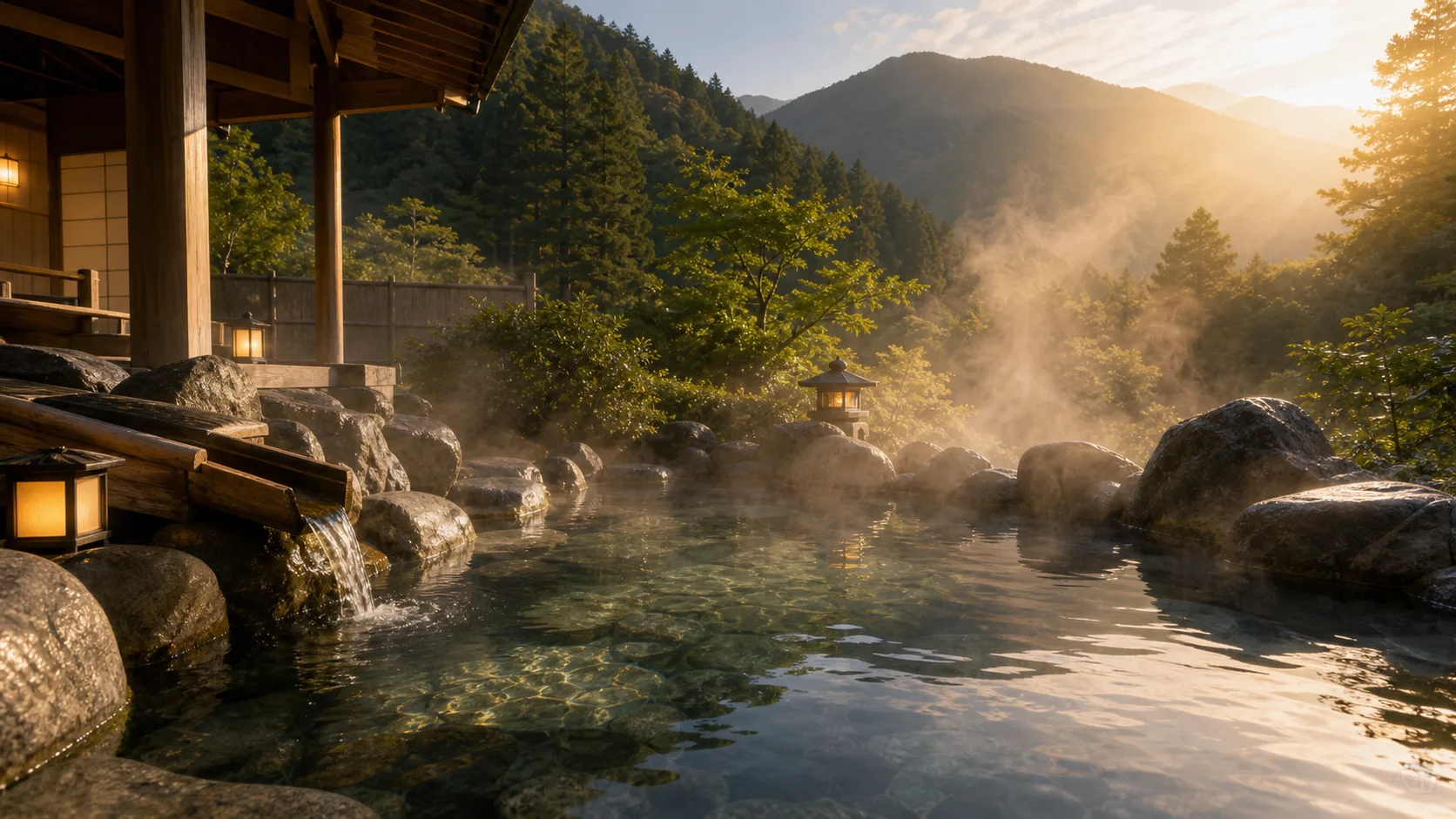
The best rotenburo are not simply scenic baths. They are the places where Japan’s bathing culture, seasonal weather, and landscape design meet in one quiet, memorable experience. If you are deciding when to go, what to book, and how to avoid etiquette mistakes, this guide gives you the planning framework before you choose an onsen town or a specific inn.
Introduction
Outdoor baths are the version of onsen most travelers imagine first: steam rising into cold air, rock walls blending into the landscape, and the sound of wind, water, or snow instead of city traffic. In Japanese, an open-air bath is called a rotenburo, and it is one of the most rewarding ways to experience the country’s hot-spring culture.
This guide focuses on the decisions that matter before you go. You will learn what rotenburo actually are, how they differ from regular onsen baths, what kinds of scenery and water experiences are worth planning around, how to handle etiquette and tattoo policies, and how to choose a stay that matches your comfort level. If you are building a trip around relaxation rather than sightseeing alone, a rotenburo can become the emotional center of the itinerary.
For broader background on the culture and etiquette of hot springs, see the Japan Onsen Guide: Best Hot Springs, Ryokan Stays & Etiquette Rules. If you still need to connect the bath plan to a wider trip, the Japan Travel Planning: Visa, IC Card, Rail Pass & Essential Logistics Guide is the practical companion for transport and entry logistics.
What Makes Rotenburo Different
Rotenburo are outdoor baths built around Japan’s hot spring culture, usually as part of an onsen ryokan, a public bathhouse, or a resort with a natural setting. The appeal is not only that you are bathing outside. It is that the bath experience is framed by weather, scenery, and stillness in a way that a standard indoor bath cannot replicate.
The basic idea
An onsen is the broader category: it refers to a hot spring and the bathing facilities built around it. A rotenburo is specifically the outdoor bath component. Many travelers use the words interchangeably, but the distinction matters when you are comparing properties. An onsen inn may have indoor baths only, an outdoor bath only, or both. If the rotenburo is the reason you are booking, check the listing carefully and look for photos that clearly show the open-air section.
Japan’s hot spring culture is extensive. JNTO notes that the country has more than 2,300 hot spring facilities, and many of the most memorable ones are designed around nature rather than architecture. That is why some of the best outdoor baths are found in mountain valleys, forested towns, coastal settings, or winter regions where the environment changes the whole atmosphere of the soak.
Why the setting matters
The value of a rotenburo is not just the water itself. The setting changes how the bath feels. A bath with a view of snow-covered trees feels completely different from a bath facing a river, a volcanic valley, or a private garden. The same bath can feel quiet and introspective in the morning, dramatic at dusk, and almost cinematic in winter.
There are a few common reasons travelers choose rotenburo over a normal hot spring:
- They want a stronger sense of place.
- They prefer a more memorable, photo-friendly stay.
- They are traveling in winter and want the contrast of hot water and cold air.
- They want a ryokan experience that feels like a real break from urban sightseeing.
- They want a private or semi-private option that is more relaxing than a crowded public bath.
The strongest rotenburo experiences often come from places where the bath is integrated into the landscape rather than added onto it as an afterthought. Rock-lined tubs, wooden decks, steam rising through snow, or low walls that preserve privacy without blocking the view are all signs that the property was designed with the open-air experience in mind.
Public bath, ryokan bath, or private bath
Not every rotenburo is accessed the same way. Some are public day-use baths. Others are inside ryokan and reserved for overnight guests. Many properties also offer private baths, sometimes called kashikiriburo, which can be a smart choice if you want privacy, if you are traveling with a partner, or if you are nervous about public bathing etiquette.
Choose the format based on how you want the trip to feel:
- Public baths are best if you want the most traditional, social, and budget-friendly experience.
- Ryokan baths are best if you want the full stay: dinner, breakfast, yukata, and slow travel pacing.
- Private baths are best if you want comfort, flexibility, or a simpler first-time experience.
If you are new to onsen culture, the private-bath route is often the easiest way to enjoy the scenery without worrying about every social detail on your first visit.
Where the Best Outdoor Baths Tend To Be
There is no single “best” rotenburo in Japan. The best choice depends on what kind of atmosphere you want. Some travelers want dramatic mountain scenery. Others want deep winter silence. Some want easy access from a major city, while others are willing to travel farther for a more special stay.
Mountain onsen towns
Mountain hot-spring towns are among the most reliable places to look for memorable rotenburo. The combination of elevation, forest air, and mineral water creates a setting that feels removed from ordinary travel. These towns often cluster ryokan, public baths, foot baths, and small shops into a compact walkable area, which makes them easy to enjoy slowly over one or two nights.
What makes mountain settings especially effective is the contrast. In colder months, steam becomes more visible and the bath feels warmer and more sheltered. In spring and summer, the surrounding greenery creates a softer, calmer mood. If you are trying to decide between a city base and a mountain stay, the mountain option usually gives you the more distinctive rotenburo memory.
Snow country baths
If you have seen images of someone soaking in hot water while snow falls around them, that is the classic rotenburo fantasy. It is popular for a reason. Snow-country baths are especially good when you want a trip that feels clearly seasonal rather than generic. The soundscape becomes quieter, the lighting changes, and the contrast between cold air and warm water is hard to beat.
This is also the time to think about slippers, outerwear, and arrival logistics. The bath itself may be warm, but the path from room to bath, or from changing area to outdoor pool, can be cold enough to matter. If you want that experience to feel pleasant rather than inconvenient, pack with the transition in mind.
Forest and river baths
Forest settings are ideal for travelers who want peace and a softer, less dramatic mood. River-side rotenburo often feel open without being exposed, and they work well for people who are sensitive to crowded or overly commercialized resorts. A good forest bath does not need a famous landmark in the background. It just needs a sense of quiet and a natural frame.
These baths are often at their best early in the morning or just before sunset. That is when light, mist, and temperature combine to create the strongest atmosphere. If you prefer travel that feels slow and restorative, these are usually the kinds of baths worth prioritizing.
Coastal and island baths
Coastal rotenburo are less common than mountain versions, but they can be memorable when done well. The attraction is the sense of openness. Instead of a forest or valley, the horizon becomes part of the experience. This kind of setting works especially well when the bath faces a rocky shoreline or a quiet sea view with minimal development.
The tradeoff is exposure. Wind can make the exit from the bath feel colder, and some coastal facilities are more seasonal in how they present themselves. If your ideal trip is about ocean views and fresh air, these baths can be worth the detour. If your priority is warmth and shelter, a mountain or inland bath may be better.
Resort-style versus traditional ryokan style
The other major choice is atmosphere. Some rotenburo are polished resort installations with strong amenities, modern rooms, and easy access. Others are traditional ryokan baths with tatami rooms, multi-course dinners, and a slower ritual around check-in and bathing.
Neither is better in general. Resort-style properties are easier for first-time visitors and usually simpler to book. Traditional ryokan are more immersive and often feel more memorable if you want the whole stay to revolve around bathing culture. If you are booking a trip for an anniversary, a winter break, or a once-per-trip splurge, the ryokan style often delivers more emotional value.
How to Choose the Right Rotenburo Experience
The key is not to ask whether a rotenburo is good. It is to ask what kind of rotenburo experience fits your trip.
Decide what you want from the bath
Start with the reason you want the experience in the first place:
- If you want scenery, prioritize open views and distinctive surroundings.
- If you want relaxation, prioritize quietness, privacy, and a smaller property.
- If you want tradition, prioritize ryokan with strong bathing culture and meals.
- If you want convenience, prioritize places near a station or major resort area.
- If you are nervous about public bathing, prioritize private baths or room baths.
This matters because many travelers book based on photos alone and later realize the property matches a different travel style. A bath can look beautiful in pictures and still feel stressful if the access, bathing rules, or crowd levels do not suit you.
Check the bathing layout
Before booking, look for the exact bath layout. Ideally, you want to know whether the property has:
- Indoor baths only.
- A small outdoor section attached to an indoor bath.
- A dedicated large rotenburo with a strong view.
- Separate baths for men and women that rotate by time or day.
- Private baths that must be reserved in advance or on arrival.
These details matter because “open-air bath” can mean very different things in practice. In some places, the rotenburo is the highlight. In others, it is just a modest add-on. If the outdoor bath is central to your trip, be picky.
Think about season and weather
Seasonality is part of the point. A rotenburo does not feel the same in every month.
- Winter gives you the strongest steam-and-snow effect.
- Spring brings cleaner air and lighter temperatures.
- Summer can feel refreshing if the bath is shaded or breezy.
- Autumn often gives the best combination of comfortable weather and scenery.
If you are traveling for one specific visual effect, do not just choose the right bath. Choose the right month, too. Some of the most appealing baths are less about fixed scenery and more about how the environment changes around them.
Compare privacy level
If you are shy or traveling with someone who is new to onsen culture, privacy matters more than most guides admit. A large public rotenburo can be beautiful and still feel intimidating. A private bath can be less dramatic in scale but much easier to enjoy fully.
Privacy choices usually fall into three categories:
- Shared public baths with standard etiquette expectations.
- Time-limited private rentals for a couple or family.
- In-room open-air baths attached to your accommodation.
The right choice depends on what would let you relax without distraction. If your mind is occupied by whether you are doing things correctly, the bath stops feeling restorative. Privacy is often the simplest fix.
Practical Guide
This section covers the operational side: hours, admission patterns, prices, access, and what to book ahead of time. Because rotenburo settings vary widely, the safest rule is to confirm each property directly before you travel. That matters especially for day-use access, seasonal closures, and whether a bath is available to non-overnight guests.
Hours, admission, and prices
There is no universal schedule or price for rotenburo in Japan. Some baths are included in a ryokan stay. Some allow day-use access for a fee. Some operate on fixed morning and evening windows, while others have time-based access for private baths or rotating bath periods.
Before you commit, check:
- Whether the bath is open to overnight guests only.
- Whether day-use bathing is available.
- Whether you need to reserve a bathing slot.
- Whether there are separate male and female bathing windows.
- Whether there are seasonal closures or maintenance days.
For the traveler, the practical issue is not only cost. It is the whole time budget. A cheap day-use bath can become inconvenient if it sits far from your route or requires a complicated transfer. A more expensive ryokan can be the better value if it bundles the bath, dinner, breakfast, and a quiet overnight stay into one coherent experience.
How to get there
The best rotenburo experiences are often in places that reward a slower approach. That may mean a train to a regional station, a bus transfer, a short taxi ride, or a direct shuttle from a ryokan. If you are planning an outdoor bath trip as part of a larger Japan itinerary, map the transport leg before you book the stay.
Here is the practical approach:
- Decide your region first. Hokkaido, Tohoku, the Japan Alps, Kyushu, and certain coastal areas are all strong rotenburo regions.
- Check the nearest station or bus stop.
- Confirm whether the property offers a shuttle.
- Compare total transfer time against your check-in window.
- Build the bath around the route, not the other way around.
That last point matters more than people think. A rotenburo is supposed to slow you down. If getting there turns into a rushed transfer with luggage stress, the experience becomes weaker even if the bath itself is beautiful.
What to book ahead of time
If the property is popular, book in advance. Rotenburo stays often sell out during peak foliage, snow season, weekends, and holiday periods. For private baths, advance booking may be required or strongly recommended. For room baths, the most desirable views are usually limited.
When booking, look for these clues in the listing:
- Explicit mention of rotenburo or open-air bath.
- Photos of the actual bath, not only the room.
- Whether the bath is shared or private.
- Whether the room itself has an attached bath.
- Whether meals are included.
If you are trying to keep the planning simple, choose a property with clear language and a simple package structure. If the listing is vague, do more research before paying. The rotenburo part of the stay is too central to leave to assumptions.
Booking platforms and official sites
For many travelers, the easiest path is to compare the property on an official website and then check if a reputable booking platform offers a better cancellation policy or transport bundle. If you are using a travel platform, make sure it lists the actual bath type rather than a generic hotel image.
The best practice is straightforward:
- Use the official site for bath specifics and policies.
- Use a booking platform if it gives clearer room inventory, payment convenience, or refund terms.
- Use direct booking when the property offers a meaningful perk or a more complete description of the bath setup.
If the stay includes broader planning concerns, like transit cards, rail passes, or visa checks, finish those logistics before you narrow your bath choice. A rotenburo trip is more enjoyable when the rest of the itinerary is already under control.
Booking notes for first-timers
First-time visitors should prioritize clarity over prestige. A famous bath is not automatically the best one for your first visit. A simpler property with strong instructions, obvious bathing rules, and an easy arrival process is often the better choice.
Use this quick decision checklist:
- Is the bath actually open-air?
- Is it private, shared, or time-restricted?
- Does the property explain etiquette clearly?
- Is the access realistic for your trip?
- Do you know whether tattoos are allowed?
If you can answer those questions confidently, the booking is probably ready.
Tips & Common Mistakes
This is where a lot of first-time rotenburo trips go wrong. Most mistakes are not dramatic. They are small planning failures that reduce comfort and make the experience feel less special than it should.
Do not treat all onsen like the same thing
Some travelers search for “best onsen” and assume the list is interchangeable. It is not. One property may be a grand bathhouse in a town center, another may be a quiet mountain inn, and another may be a modern resort with a private rooftop tub. The word onsen tells you almost nothing about atmosphere until you inspect the actual bath type.
When the outdoor bath matters, ask for details:
- Is it fully open to the air or partially enclosed?
- Does it have a meaningful view?
- Is it attached to a room?
- Is it available to day visitors?
The more important the bath is to your trip, the more specific your research should be.
Do not skip the wash station
The wash station is not a formality. It is essential. JNTO’s bathing guidance is clear about washing thoroughly before entering the bath. You sit down, clean yourself carefully, rinse off, and then enter the water. That is part of the shared social contract of the space.
For first-timers, the cleanest mental model is this: the bath is not where you wash. The bath is where you relax after washing. Keeping that distinction in mind prevents awkwardness and helps you settle in faster.
Do not put towels in the water
This is one of the most common beginner mistakes. The small towel is for modesty, drying, or gentle wiping, but it should not go into the bath water. Place it on your head, set it aside on the bath edge, or keep it in the changing area depending on the facility’s rules.
Likewise, long hair should be tied up so it does not touch the water. The social logic is simple: the water is for everyone, so cleanliness is a shared responsibility.
Do not assume tattoos will be accepted
Tattoo policies vary, and that variability is still important in Japan. JNTO notes that attitudes are gradually changing and that more tattoo-friendly options exist, but traditional baths may still refuse entry. If you have tattoos, verify the policy before you travel.
Practical solutions usually include:
- Choosing a tattoo-friendly facility.
- Booking a private bath.
- Selecting a room with an attached open-air bath.
- Using cover patches only if the facility accepts them.
If your trip depends on a specific bath, this is not a detail to leave for the day of arrival.
Do not overpack the schedule
The temptation is to combine a rotenburo stay with a packed sightseeing day. That usually weakens both. A better onsen trip has buffer time before check-in, a quiet evening, and a slow morning. You want enough slack to bathe, dry off, eat, rest, and maybe bathe again without watching the clock the whole time.
If you only have one night, protect that night. Leave the museums, shopping streets, and transit errands for another segment of the trip.
Do not ignore weather and footwear
Outdoor baths mean outdoor movement. That sounds obvious, but it matters in practice. If you are walking outside in winter, rain, or snow, you need shoes that are easy to remove, clothing that is easy to layer, and a bag that can hold wet items afterward.
Think beyond the bath itself:
- What happens after you leave the water?
- How far is the bath from the room?
- Do you need a robe, slippers, or extra socks?
- Will your luggage be awkward if you use a shuttle or taxi?
The smoother the transition, the more relaxing the bath feels.
Do not assume the most famous place is best for you
Some famous onsen towns are beloved because they are historically important, scenic, or easy to visit on a larger tour. That does not automatically make them the best rotenburo choice for your own goals. A less famous bath with better privacy, easier access, or a more attractive view for your season may be the smarter pick.
Use the following filter:
- Choose fame only if you value the destination itself.
- Choose privacy if comfort matters more than prestige.
- Choose scenery if the visual experience is the main goal.
- Choose convenience if the bath is one element of a broader itinerary.
That mindset will save you from overpaying for a name that does not match your actual preferences.
FAQ
Are rotenburo and onsen the same thing?
Not exactly. Onsen is the broader term for hot springs and the bathing facilities around them. Rotenburo specifically means an outdoor bath. Many onsen properties have rotenburo, but not all onsen are outdoor baths, and not all outdoor baths are the same in scale or style.
Do I need to stay overnight to use a rotenburo?
Not always. Some properties allow day-use bathing, but many of the most memorable rotenburo are inside ryokan and are most convenient for overnight guests. If you want an easy experience, check whether the bath is open to day visitors and whether any reservation is required.
Can I visit if I have tattoos?
Sometimes, but not always. Tattoo policies vary by property. Some baths are tattoo-friendly, some require cover patches, and some still refuse entry. If you have tattoos, check the policy in advance and consider a private bath if you want a low-stress option.
What should I bring to an onsen?
Bring easy-to-remove clothing, toiletries if the property does not provide them, a small bag for wet items, and a clear understanding of the bath rules. If you are staying overnight, the ryokan may provide most necessities. If you are doing a day-use visit, pack more like you would for a spa day.
What is the best season for rotenburo?
It depends on the atmosphere you want. Winter is the most dramatic because of snow and steam. Autumn often offers excellent weather and scenery. Spring and summer can also be beautiful, especially in forested or mountain areas. The best season is the one that matches the setting you want to experience.
Conclusion
A great rotenburo is not just a bath with a view. It is a place where the pace of travel changes. When the setting, season, access, and etiquette all line up, the experience becomes one of the most memorable parts of a Japan trip.
If you want the strongest result, choose the bath based on your actual travel style rather than the photos alone. Decide whether you want privacy, scenery, tradition, or convenience. Check the bathing layout, confirm the access rules, and make sure the rest of your itinerary leaves room for a slow arrival and an unhurried soak.
For most travelers, the best rotenburo trip is the one that feels easy once you are there. That usually means fewer assumptions, more planning, and a better match between the bath and the season. Start with the right region, confirm the property details, and build the experience around time to relax instead of time to rush.