Gyeonggi Museum of Modern Art: A Day Trip from Seoul Worth Taking

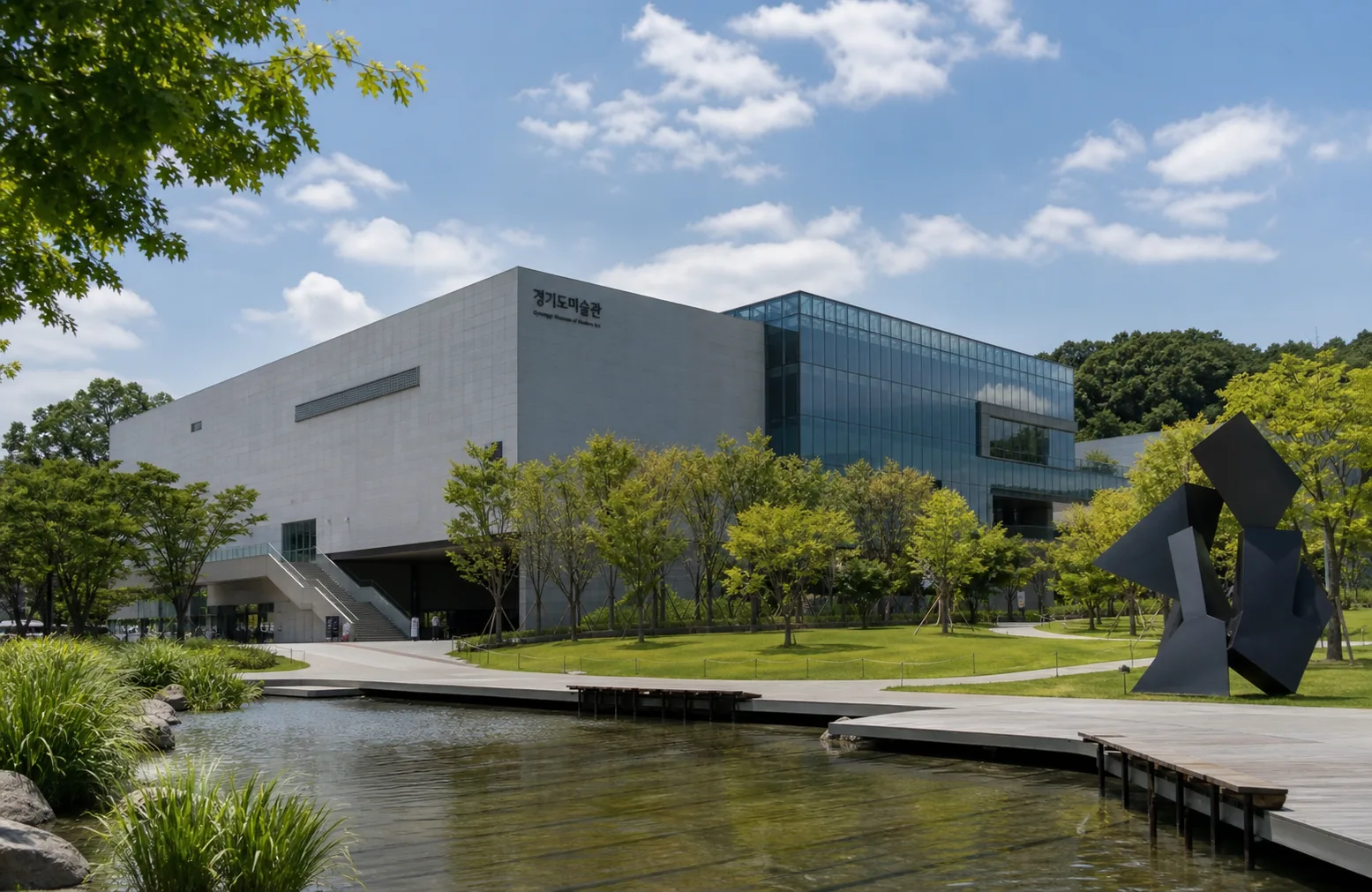
If you want a museum day that feels calmer than central Seoul without turning into a complicated excursion, the Gyeonggi Museum of Modern Art is a strong candidate. It is close enough to fit into a half-day or full-day plan, free to enter, and surrounded by the kind of open-air space that makes the trip feel more like a reset than a checklist item.
Why the Gyeonggi Museum of Modern Art belongs on a Seoul day trip
The Gyeonggi Museum of Modern Art works well for travelers who want art without the crowds, transit stress, or spending pressure that can come with bigger destination museums. It is in Ansan, so it is not a “walk out of your hotel and arrive in five minutes” museum, but it is also not a multi-hour logistics project. For many visitors, that balance is exactly the point.
At a high level, the visit solves three common travel problems. First, it gives you a cultural stop that feels substantial enough to justify leaving Seoul. Second, it is free, so you can spend your budget on transport, coffee, lunch, or another attraction instead of an admission ticket. Third, it sits in a broader park-and-museum setting, which means the experience is not limited to indoor galleries. You can stretch the visit into something more relaxed and more memorable than a quick “see the art, leave immediately” stop.
If you are building an art-heavy itinerary, this museum also gives you a useful contrast to the major institutions in the capital. Seoul’s top museums can be excellent, but they also compress your time and attention. A museum in Gyeonggi-do lets you slow down, especially if you pair it with a more deliberate itinerary rather than trying to cram in three districts and five cafés in one afternoon. If you are mapping out broader cultural stops, Best Art Museums and Galleries in Seoul and Beyond: A Complete Guide is a helpful companion because it places this museum in a wider art-travel context.
What kind of traveler should go
This museum is a good fit if you are:
- Already spending several days in Seoul and want one outing that feels different from the usual downtown rhythm
- Interested in contemporary Korean art or exhibitions that change over time
- Looking for a low-cost culture stop that still feels intentional
- Traveling with someone who prefers quieter spaces, outdoor walking, or a slower pace
- Combining museum time with a broader local day in Ansan or western Gyeonggi-do
It is less useful if you want a blockbuster, one-stop tourist icon with a lot of English-language spectacle built in. This is a better museum for visitors who like the experience of moving through a site thoughtfully, taking time with the architecture and setting, and letting the visit breathe.
The simplest way to think about the experience
Think of the Gyeonggi Museum of Modern Art as a day trip museum that rewards pacing. You do not need to arrive with a tightly scripted plan, but you will get more out of it if you treat the visit as part of a larger day rather than a standalone errand. That could mean a late morning museum stop followed by lunch, or an afternoon visit paired with a walk and a slower evening back in Seoul.
What to expect inside and around the museum
The museum experience is strongest when you approach it as a mix of exhibitions, surrounding space, and timing. Even when you are mostly there for a specific show, the setting changes the feel of the visit. You are not just moving from subway platform to white cube and back again. You are entering a cultural site with enough room around it to make the outing feel like a destination.
The museum’s programming changes, so the exact exhibition you see will depend on when you go. That is one reason the place works well for repeat visits or for travelers who are flexible. On a fixed itinerary, you can still treat it as a reliable cultural anchor rather than a one-off novelty. If a special exhibition is on, it gives you a reason to go. If not, the free admission and quiet setting still make it worthwhile as a lower-pressure art stop.
Why the setting matters as much as the exhibition
Many travelers underestimate how much the surrounding environment changes the quality of a museum visit. In a dense downtown core, a museum can feel like one more thing squeezed between transport, queues, and lunch reservations. Here, the experience has more room. That matters if you value art in a reflective way rather than as a pure “must-see” task.
For first-time visitors, the biggest benefit is psychological. It is easier to be present when the visit does not feel rushed. You can spend a little longer in a gallery, pause between rooms, or step outside and reset before deciding whether to stay for another round. That pacing is one of the reasons this museum can feel more restorative than a busier Seoul stop.
How it compares to a day of central Seoul museums
If you compare it with the museums you might visit in central Seoul, the Gyeonggi Museum of Modern Art is less about location convenience and more about the shape of the day. A central museum run often works best when your hotel, lunch, and next stop are all nearby. This museum works best when you want the museum itself to be the anchor, not a five-minute filler between other obligations.
That difference matters for travelers planning limited time in Korea. A strong itinerary often mixes one major urban day with one slower cultural day. If you are already building a longer route, The Ultimate 10-Day South Korea Itinerary for First-Timers can help you decide whether this museum should be a stand-alone outing or part of a broader west-side day away from the center of Seoul.
The current exhibition context
Museum visits are more rewarding when you know what is on before you go. As of the latest official schedule checked for this article, the museum’s exhibition programming includes a 20th-anniversary presentation titled 《흐르고 쌓이는》 running from 2026-03-26 to 2026-06-14, with guided commentary at set times. That matters because it means a visit in early June can still coincide with a time-sensitive show rather than a generic in-between period.
If you care about matching your visit to a specific exhibition, check the museum’s own exhibition pages before you leave Seoul. The practical takeaway is simple: this is not a museum you should approach with a “I’ll figure it out when I arrive” mindset if your main goal is a particular show. For casual visitors, though, the changing program is part of the appeal. It gives you a reason to return and keeps the experience from feeling static.
Practical guide: hours, admission, and how to get there
This is the part most travelers want first, so here is the short version before the details: the museum is free, open Tuesday through Sunday from 10:00 to 18:00, and the last entry is one hour before closing. It is closed on Mondays, New Year’s Day, Seollal, and Chuseok Day. The official address is 268 Dongsan-ro, Danwon-gu, Ansan-si, Gyeonggi-do.
That makes the visit straightforward enough for a half-day outing, but you still want to plan the route carefully if you are coming from Seoul. The main thing to remember is that the museum sits inside Hwarangyuwonji, so your final approach includes a park-style walk rather than a direct street-front arrival.
Hours and admission
The museum’s visitor rules are easy to remember:
- Open: Tuesday to Sunday, 10:00 to 18:00
- Last entry: 17:00
- Closed: Monday, except public holidays; January 1; Seollal Day; Chuseok Day
- Admission: Free
For a trip from Seoul, that schedule is friendly because it gives you a reasonable daytime window without forcing an early departure. You could leave the city after breakfast, arrive for late morning or early afternoon, and still have time for an unhurried meal afterward.
Free admission also changes how you should think about the cost-benefit calculation. If you are paying for a long intercity ride or a taxi from a remote location, the transport savings matter more than the ticket price. But for most Seoul-based travelers, the free entry makes the museum an easy add-on rather than a budget strain.
How to get there by subway and bus
The easiest transit option is to use the subway and then walk from the nearest station. The museum’s official access guidance points travelers to two station options:
- From Line 4, exit 1 at Choji Station and walk about 15 minutes
- From Seohae Line, exit 4 at Choji Station and walk about 10 minutes
The walk takes you past local streets and into Hwarangyuwonji before you reach the museum. That final stretch is part of the experience, so do not treat it like a mistake. It helps the day feel like a destination outing instead of a quick errand.
If you prefer to transfer by bus, the museum’s official guidance includes routes from Hanyang University at Ansan, Gojan Station, and nearby bus stops. For travelers who are already comfortable with Seoul-area transit, this is manageable. For first-time visitors, the simpler route is usually to ride the subway to Choji Station and walk.
What to expect if you go by car
If you are traveling as a family, with older companions, or on a wider western Gyeonggi-day plan, driving can make sense. The museum says it is about 10 to 15 minutes from Ansan IC on the Yeongdong Expressway toward Danwon-gu Office. Parking is also substantial, with three lots listed on the official site.
That said, driving only helps if your overall day is already car-friendly. If you are coming from central Seoul, parking and traffic can easily erase the convenience you think you are buying. In most cases, public transport remains the cleaner option unless you are pairing the museum with several other off-rail stops.
Best time to go
The best time to visit is usually late morning or early afternoon on a weekday or a non-peak weekend day. That timing gives you enough daylight to enjoy the walk in and out of the museum, and it avoids the feeling of arriving too close to closing time.
If you are interested in guided interpretation, check the schedule in advance. Some exhibitions have specific commentary times, and that can shape your arrival more than the general opening hours. If the visit is mostly about the atmosphere and the collection or exhibition itself, then timing is more flexible.
Ticketing and reservations
Because admission is free, you do not need to approach this as a booking-heavy activity. There is no major upfront ticket decision for the permanent visit, which makes the museum especially appealing for travelers who dislike locked-in reservations. That said, exhibition-specific programs, educational events, or performances can have separate rules.
If you are traveling with a broader public-transport plan across Korea, it is worth matching the museum visit with your transit choices elsewhere in the itinerary. For example, if you are deciding how much you need a transit card versus a budget-friendly ride-sharing or local pass strategy, Battle of the Cards: K-Pass vs. Climate Card vs. T-Money is a useful reference when you are planning the rest of your Seoul-area movement.
How to structure the day trip so it does not feel rushed
The most common mistake travelers make with out-of-center museums is treating them like a single stop with no rhythm. That can work for a few places, but it is not the strongest way to visit here. The better approach is to give the museum a role in the day and then let the rest of the day support that role.
A simple half-day version
If you only have a half day, keep the plan compact:
- Leave Seoul after breakfast or late in the morning.
- Arrive at Choji Station and walk to the museum without rushing.
- Spend time in the galleries and any outdoor or adjacent spaces.
- Take a slower lunch nearby or after you return toward Seoul.
This version works best when your main goal is a cultural reset rather than a long sightseeing chain. You will still feel like you did something meaningful, but you will not burn an entire day on transport.
A better full-day version
If you want the outing to feel complete, structure it like this:
- Start with a late breakfast in Seoul or near your departure station.
- Go to the museum with a mindset of staying long enough to absorb the exhibition.
- Add a walk before or after the museum so the trip does not collapse into “indoor only.”
- End the day with a relaxed meal rather than immediately pushing into more sightseeing.
That pacing gives the museum more weight. It also keeps the day from feeling like a transit exercise with a cultural stop inserted in the middle.
Who should extend the day outside the museum
You should make this a longer day if you are traveling with:
- Someone who prefers unhurried pacing
- A camera and time to photograph the site and surrounding environment
- A flexible itinerary that does not need to hit a fixed dinner reservation in central Seoul
- An interest in local neighborhoods rather than just landmark tourism
You can also combine the museum with a wider Korea itinerary if you are trying to build a trip that balances city days with suburban or regional cultural stops. That is especially useful for repeat visitors who have already covered the standard Seoul classics.
Tips and common mistakes
This is not a difficult trip, but a few small choices will make the difference between a satisfying outing and a slightly awkward one.
Tip 1: Do not arrive too late
Because the last entry is one hour before closing, a late arrival can turn into a compressed visit. Even if you technically make the cutoff, the experience will feel thin. If you care about enjoying the museum rather than just checking it off, aim to arrive earlier than you think you need.
Tip 2: Check what is open on the day you go
The museum itself has a regular schedule, but special programs and supporting spaces may run on different hours or have temporary changes. If you care about a café, reading room, or exhibition-related activity, check the official site before leaving Seoul rather than assuming the whole campus operates identically.
Tip 3: Expect the trip to feel different from a Seoul core museum
This is not a flaw. It is the point. The museum is more rewarding when you accept that the trip has a regional character. The walk from the station, the lower pressure, and the park context all create a different rhythm from a central-city museum route.
Tip 4: Keep your expectations aligned with free admission
Free admission is a huge advantage, but it also means the visit is not trying to sell you a premium, high-gloss “everything is bundled into one curated spectacle” experience. What you get instead is a thoughtful museum stop that is easy to fit into a travel day. That tradeoff is a win if you want substance without a high entry price.
Tip 5: Build the day around one main reason to go
The strongest reason to visit may be a particular exhibition, a quieter cultural day, or the desire to leave Seoul for a while without going far. Pick one main reason and let the rest of the day support it. That keeps the visit coherent.
Common mistake: assuming it is a casual walk-in from central Seoul
Because the museum is still within reach of Seoul, some travelers underestimate the transit time and mental effort involved. It is reachable, but not casual in the same way a downtown gallery is casual. If you think of it as a destination, you will plan better and enjoy it more.
Common mistake: treating the walk as an inconvenience
The final walk from Choji Station to the museum is not wasted time. It is the transition that sets the mood for the visit. If you treat it as part of the outing rather than a nuisance, the entire day feels more intentional.
FAQ
Is the Gyeonggi Museum of Modern Art worth it for a short Seoul trip?
Yes, if you want one quieter cultural outing that is different from the usual central-Seoul route. It is especially worth it when you value free admission, a more relaxed pace, and a museum visit that feels like a genuine day trip rather than a quick stop.
Do I need to buy tickets in advance?
For a standard visit, no. Admission is free, so the museum is easy to fit into a flexible itinerary. Special programs or exhibitions may have separate rules, so check the official site if you are targeting a particular event.
How long should I plan to stay?
Most travelers should budget at least two hours, and longer if they want to walk the grounds, read labels carefully, or spend time with a special exhibition. If you arrive from Seoul and want the trip to feel worth it, half a day is the safer minimum.
What is the easiest way to get there from Seoul?
The simplest option is usually the subway to Choji Station, then a short walk to the museum through the Hwarangyuwonji area. If you are already traveling with a car-based itinerary, driving is possible, but it is not necessary for most visitors.
Is this museum good for non-art specialists?
Yes. You do not need to be a specialist to enjoy it. The free entry, calm atmosphere, and changing exhibitions make it approachable for casual visitors, while the setting still gives art-focused travelers enough substance to stay engaged.
Conclusion
The Gyeonggi Museum of Modern Art is a strong day trip from Seoul because it solves a very specific travel problem: how to leave the city without turning the day into a complicated production. It is free, reachable by transit, and set up in a way that encourages slower, more thoughtful visiting.
If you want a museum experience that feels calmer than downtown Seoul but still meaningful enough to structure a half day or full day around, this is an easy recommendation. Check the current exhibition schedule, plan around the museum’s hours, and give yourself enough time for the walk in and out so the visit can unfold naturally.
For readers building a larger South Korea trip, it can also serve as a useful reminder that the best travel days are not always the most packed ones. Sometimes the smartest move is to choose one good cultural anchor, give it room, and let the day feel unhurried. If you are still shaping the larger route, compare this stop with other museum days, then match the outing with your broader transport plan so the trip feels easy instead of overbuilt.