Mixed Onsen (Konyoku) in Japan: Where They Still Exist & the Etiquette

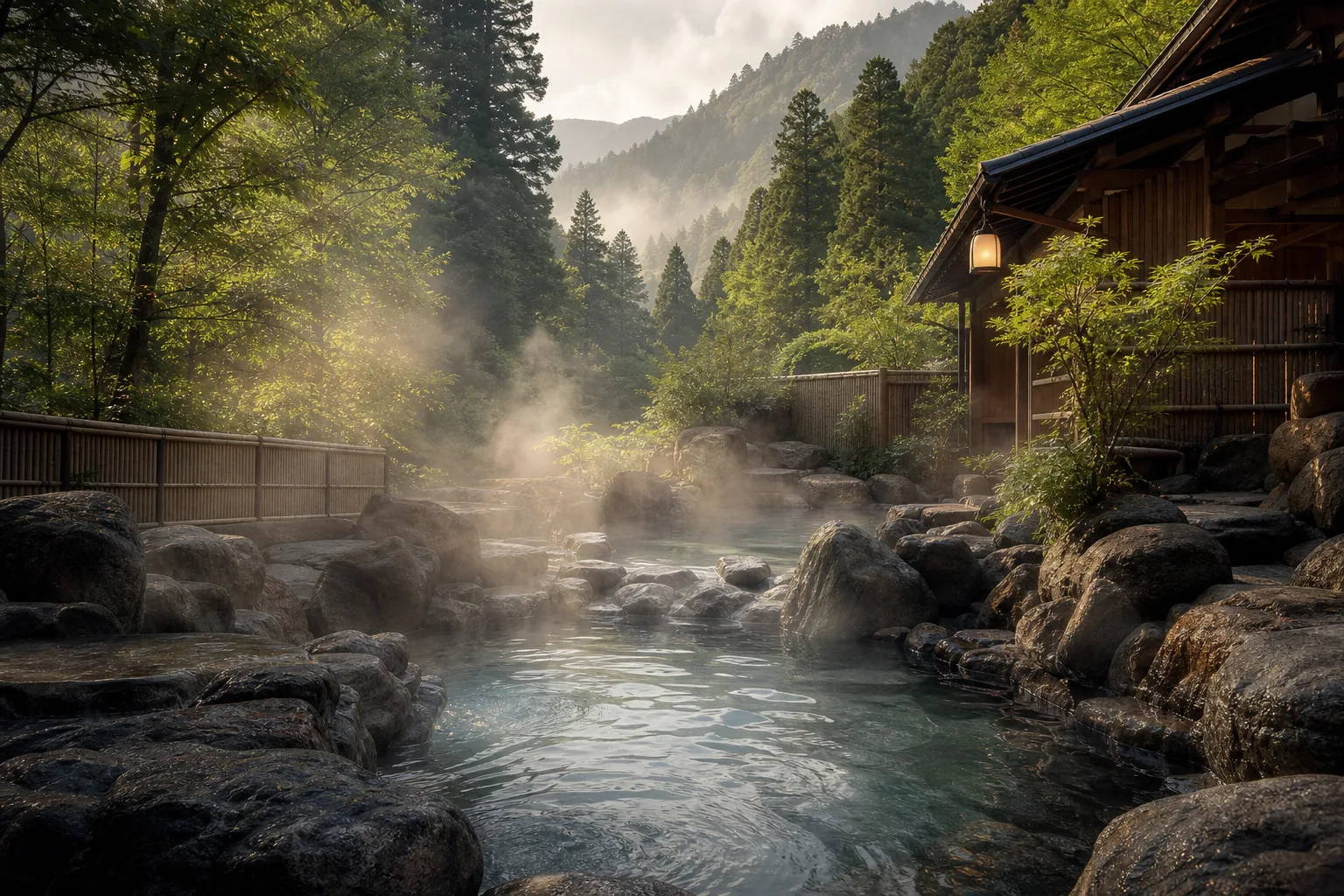
Mixed onsen in Japan can still feel mysterious, because the real question is no longer whether they exist at all, but what form they take now and how a traveler is supposed to behave without making the experience awkward.
Introduction
Mixed onsen, or konyoku, are shared baths where people of different genders bathe in the same space. Today that may mean a nude bath, a bath with supplied clothing, or a women-only time window. The real challenge for travelers is understanding the exact rule before arrival.
This guide is meant to solve that exact problem. It explains where mixed onsen still exist, why the experience varies so much from place to place, and how to behave in a way that feels respectful and unforced. If you are building a broader Japan trip around hot springs, the bigger planning context in Japan Onsen Guide: Best Hot Springs, Ryokan Stays & Etiquette Rules is the right next read, because mixed baths make much more sense once you understand the rest of onsen culture.
The short version is that konyoku is no longer the default in Japan. Many bathhouses have separated by gender, and the places that still keep mixed bathing alive usually do so because of geography, tradition, or a deliberate effort to preserve a historical bathing style. That makes them more interesting for visitors, but also more sensitive to the local etiquette.
Where Mixed Onsen Still Exist
Mixed onsen still exist in Japan, but they are rarely the kind of casual public bath that a first-time visitor stumbles into by accident. They are more often found at mountain ryokan, older hot spring resorts, or historic bathhouses that have kept a traditional mixed bathing culture while adapting their rules for modern guests.
The most important thing to understand is that "mixed" does not always mean the same thing. In some places, mixed bathing happens in a large outdoor bath where guests wear a provided bath garment. In others, the same spring may have separate hours for men and women, or a mixed area plus a separate women-only bath. A traveler who assumes every konyoku onsen works the same way will almost certainly get something wrong.
Takaragawa Onsen Osenkaku in Gunma is one of the best-known examples because it shows how the modern version of konyoku often works. Its official bath manner notice explains that the mixed-bath rules changed in 2019 and that the day-trip side uses original bath dresses rather than fully nude mixed bathing. That is a useful model for understanding the current landscape: many travelers are not going to a nostalgic free-for-all, but to a carefully managed shared bath with clearer boundaries and more guest support than older stories suggest.
Sukayu Onsen in Aomori is another strong example, and it is probably the clearest current reference point for what a famous mixed bath looks like in 2026. Its Hiba Senninburo remains a large mixed bath, but the property now offers rental bathing clothes for both men and women, and it also sets aside a women-only time window. That combination matters, because it shows how a traditional bath can stay traditional without being static.
The Nyuto Onsenkyo area in Akita is different again. It is not a single bath, but a hot-spring village made up of several inns with distinct policies and bathing styles. For travelers, that means mixed bathing can appear as part of a broader ryokan stay rather than as the main draw. The area rewards people who like quiet, rural hot springs and who are willing to check each inn individually instead of relying on a simple yes-or-no label.
The common thread is that these places are not trying to be museum pieces. They are operating businesses and active inns with living bathing customs. That is why the etiquette matters so much. A mixed onsen is less about "seeing something unusual" and more about participating carefully in a local practice that has survived because people have treated it with enough respect to keep it going.
What Makes Konyoku Different Now
The word konyoku can still trigger a lot of assumptions, especially among travelers who have only seen old photos or internet rumors. The modern reality is more varied. Some baths are fully mixed but add modesty garments. Some use mixed bathing only in designated zones. Some let you soak together only during certain hours. Some offer separate but nearby alternatives so no one is forced into a setup they do not want.
That variety is not a contradiction. It is the reason mixed onsen still survive. They are adaptable. Instead of disappearing completely, many have changed shape to fit the expectations of contemporary visitors, international guests, and families who want a shared experience without the anxiety that comes from a fully nude bath.
For a traveler, the practical question is not "Is this old tradition still pure?" The practical question is "What exactly is allowed here today?" That means reading the bath rules, looking for the current admission notice, and checking whether the bath uses supplied garments, towels, or specific time windows. In other words, the etiquette is now part of the product.
This is also why mixed onsen are easier to enjoy when you already understand the basic onsen customs. If you are new to Japanese hot springs in general, the bigger expectations around quiet behavior, cleanliness, and respectful movement are worth learning before you arrive.
Practical Differences Travelers Notice
The first difference travelers notice is clothing. Some mixed baths require a provided bath dress, also called a bathing garment or modesty garment. Others may allow a towel to be carried but not worn in the water. Some have women-only hours instead of separate clothing rules. If you are uncertain, assume the answer is not "whatever feels normal at home" and wait for the facility's instruction.
The second difference is privacy. A mixed bath in a remote ryokan often feels calmer than a mixed bath in a highly visited resort, because the guests are already there for a slower, more deliberate stay. That does not mean you can relax your manners. It simply means the atmosphere may feel more subdued and less like a public pool.
The third difference is visibility. In many places, mixed bathing now means shared space without showiness. People tend to keep to themselves, move slowly, and treat the bath as a place for quiet soaking, not social performance. If you are expecting a scene, you are likely to misread the entire experience.
The fourth difference is who chooses mixed baths. It is easy to imagine that konyoku exists only for couples, but that is too narrow. Families, long-stay ryokan guests, curious hot-spring travelers, and people who simply want a scenic bath all use them. The best mixed baths are the ones that feel welcoming to a range of travelers without becoming casual or careless.
Why Many Mixed Baths Survive in Mountain Ryokan
Mountain ryokan have an advantage: they are already destination stays. Guests are not rushing in and out the way they might at an urban day spa. That slower rhythm makes it easier for a property to maintain a mixed bath with specific manners, supplied garments, or limited hours.
There is also a historical reason. Many of these properties sit on springs that were used long before modern ideas about separating bathers by gender became the standard. In remote areas, the bath evolved around the spring itself, not around a modern wellness brand. That is why some of the most interesting konyoku examples are also the most scenic. The natural setting is part of the appeal, not an add-on.
Why Some Mixed Baths Feel Less Intimidating Than You Expect
The emotional experience is usually calmer than first-time visitors imagine. The bath is not typically loud, theatrical, or awkward. Most guests are focused on relaxing, not staring at anyone else. In the places that still allow mixed bathing, the shared norm is usually discretion.
That makes mixed onsen less about exhibition and more about trust. You trust the facility to make the rules clear. You trust other bathers to behave. And everyone trusts you to keep your own attention where it belongs: on the water, the steam, and the quiet time you came for.
Practical Guide
Planning a mixed onsen visit is easiest when you treat it like a logistics problem rather than a novelty hunt. Decide whether you want a day trip or an overnight stay, check the current bath rules, and then build the rest of your route around that decision. If you are still shaping the wider trip, the transport and entry basics in a broader Japan travel planning guide can help you avoid the small mistakes that turn a bath day into a transit headache.
Current Examples Worth Knowing
Here are two of the clearest current reference points for travelers:
-
Sukayu Onsen, Aomori
- Hiba Senninburo mixed bath: open daily from 7:00 a.m. to 6:00 p.m.
- Women-only time: 8:00 a.m. to 9:00 a.m.
- Day-use admission: 1,000 yen for adults, 500 yen for elementary school children
- Bath garment rental: 500 yen, with rental available from 7:00 a.m. to 8:00 p.m.
- The mixed bath is part of a long-standing public bath culture, but the bath garment option makes it much easier for first-time visitors to participate comfortably.
-
Takaragawa Onsen Osenkaku, Gunma
- Day-trip bathing is listed on the official site, and the mixed-bath notice explains that the bath-dress system and admission rules were updated for modern guests.
- The site also publishes a day-trip opening window from 10:00 a.m. to 4:00 p.m.
- The official notice says adult day-use admission for the mixed bath changed to 2,000 yen and child admission to 1,000 yen, with the original bath dress included.
- Because the site presents both a current notice and a day-trip page, it is smart to confirm the latest figure just before departure.
These two places are useful because they show the two most common modern patterns. Sukayu shows a famous mixed public bath that has added optional clothing and a women-only hour. Takaragawa shows a scenic mixed bath whose experience is shaped by a ryokan-style day trip model. Together, they explain most of what a traveler needs to know.
How to Get There
Access matters because many mixed onsen are not city-center attractions. The more traditional the bath, the more likely it is to sit in a place where buses, mountain roads, or connection timing become part of the experience.
Takaragawa is a good example. The official site lists access through Minakami Station and Jomo-kogen Station, then a bus or courtesy-car connection for the final stretch. That means the bath is not difficult to reach, but it is not a spontaneous walk-in either. You should budget time for transfers and avoid planning the visit as if it were a simple suburban outing.
For Sukayu, the experience is more like a mountain excursion. That is part of the appeal. The journey reinforces the feeling that you are going somewhere specific rather than simply stopping by a generic spa. In mixed onsen travel, access is often part of the story, because the location helps preserve the atmosphere that made the bath famous in the first place.
Booking and Timing
If you want the least stressful experience, consider going on a weekday outside of peak holiday periods. Mixed baths are already niche; on busy weekends they can become crowded enough that the peaceful atmosphere disappears. A more deliberate time slot gives you a better chance to follow the rules carefully and enjoy the bath without feeling rushed.
Overnight stays are often the easiest option because they remove the pressure of a narrow day-trip window. A ryokan guest can usually settle in, ask questions at check-in, and ease into the bath at a time when the facility feels less hectic. That is especially helpful if you are nervous about the etiquette or want a second chance in the evening after you have watched how other guests use the space.
What to Bring
The best packing strategy is minimal. Do not overthink it.
- Cash, because not every bath is equally convenient for card use
- A small towel and a hair tie if you have long hair
- A bag that can hold wet items separately from dry ones
- A phone left in your room or locker rather than in the bathing area
- Any personal hygiene items you might need after bathing
If the bath provides a garment, use that system exactly as instructed. Do not assume your own swimsuit, rash guard, or towel substitute will be acceptable. Mixed baths are one of the places where improvisation is least useful.
Tips & Common Mistakes
The most common mistake is assuming that "mixed" is a single category. It is not. A mixed bath with a bath garment is a different experience from a historical nude bath. A mixed bath with women-only hours is different again. If you do not check the exact rule set, you may arrive with the wrong expectation and feel awkward before the soak even begins.
The second common mistake is moving too fast. The etiquette of an onsen, mixed or not, is built around calmness. That means washing first, rinsing thoroughly, entering gently, and avoiding any behavior that makes the bath feel like a pool party. Travelers who keep their movements deliberate usually blend in much more easily.
The third mistake is using the towel incorrectly. In many onsen settings, the small towel is for modesty or for drying off lightly, not for dipping into the bath water. If a facility provides a specific bathing garment, use that garment exactly as intended. The little details matter because they are part of how the bath stays pleasant for everyone.
The fourth mistake is not paying attention to time windows. Women-only hours, cleaning closures, and day-trip cutoffs are real. In a mixed bath, missing the window can matter more than in a standard public bath because the whole point is often tied to one specific bathing arrangement. Check the clock before you enter, not after you settle in.
The fifth mistake is treating mixed bathing like a performance or a talking point. It is neither. If you are there because it is unusual, that curiosity should stay quiet and respectful. The goal is to enjoy the spring, not to turn your visit into a story you are already telling in your head.
What Most Guides Miss
Many guides talk about konyoku as if the main issue is courage. That is the wrong framing. The real issue is literacy: knowing how the bath is organized, what garment or towel rule it uses, whether there are women-only hours, and whether it is really a mixed bath or a mixed bathing zone within a larger ryokan.
Another detail that gets missed is that the best mixed onsen are usually also excellent non-gimmick hot springs. If the water, setting, or ryokan service were weak, the mixed-bath history would not be enough to keep travelers interested. The fact that they survive is partly because they are good baths in their own right.
How to Handle Social Awkwardness
If you feel uncertain, make your uncertainty practical. Ask one clear question at reception. Wait for the answer. Follow it exactly. Most awkwardness comes from trying to infer rules from memory or from what you assume is common sense.
If you are traveling with a partner or friends, decide in advance whether you are comfortable bathing together or would prefer to split the visit and meet afterward. Mixed onsen are not automatically romantic or social. They are simply shared spaces. The more you treat them that way, the easier they are to enjoy.
FAQ
Are mixed onsen still common in Japan?
No. They still exist, but they are much less common than separate men’s and women’s baths. The places that remain tend to be historic, remote, or intentionally traditional. That rarity is part of why travelers are curious about them.
Do mixed onsen always mean nude bathing?
Not anymore. Some mixed baths are nude, but many now use bathing clothes or modesty garments, and some rely on women-only time windows instead. Always check the current rule before you go, because the exact format matters more than the label.
Are mixed onsen suitable for first-time visitors?
Yes, if the facility is clear about its rules and you are comfortable with the setting. A first-timer will usually have the easiest time at a ryokan or famous hot spring that already expects international guests and explains the bathing arrangement in advance.
Can couples or families use mixed onsen together?
Often, yes. In fact, many travelers choose mixed baths because they want to share the experience with a partner or family rather than split into separate baths. That said, always confirm the specific facility’s policy, because each bath has its own rules.
What if I am nervous about etiquette?
Choose a place that offers a bathing garment, a women-only hour, or a private alternative nearby. Then slow down and watch what other guests do. Most of the etiquette is easier than it sounds once you see the sequence: wash, rinse, bathe, dry off, leave quietly.
Conclusion
Mixed onsen in Japan still exist, but they are best understood as carefully managed living traditions rather than a single old-fashioned category. Some are fully mixed with bath garments, some blend mixed and women-only hours, and some survive as part of a quiet ryokan stay in a mountain setting. The common thread is that they reward travelers who check the rules and move with care.
If you want to keep planning a trip around Japanese hot springs, the best next step is to combine this guide with a broader logistics view and the practical cultural context behind it. The travel mechanics in Japan Travel Planning: Visa, IC Card, Rail Pass & Essential Logistics Guide will help with the route, while Japanese Culture Guide: Customs, Etiquette & Dos and Don'ts for Travelers will help you fit in once you arrive.
The simplest rule is also the most useful one: do not treat mixed bathing as a curiosity to be solved. Treat it as a local practice to be understood. If you do that, the bath becomes much less intimidating and much more rewarding.