Mokpo City Guide: Where the Train to the End of Korea Ends

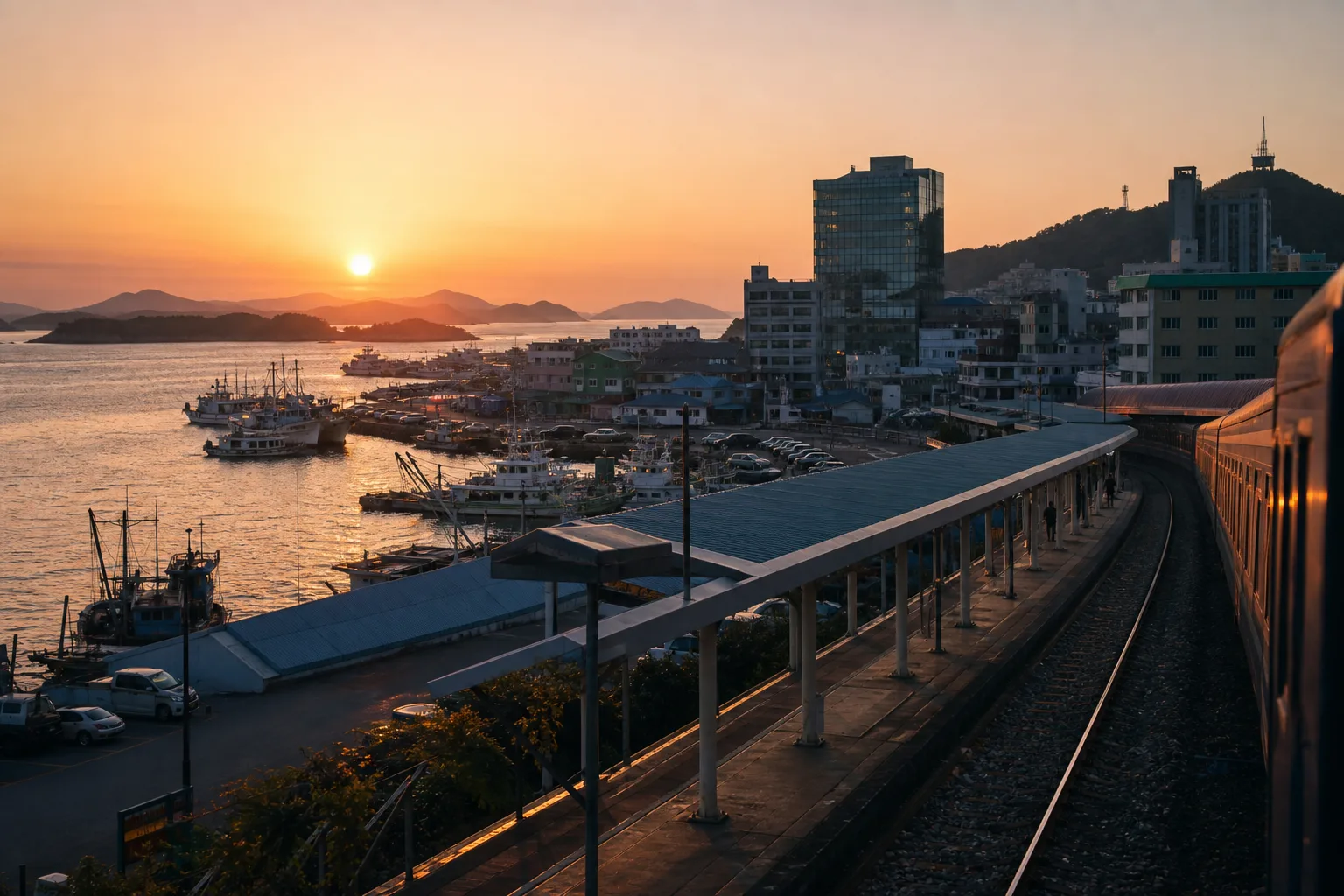
Mokpo is the kind of city that rewards travelers who like places with a clear edge. The train line ends here, the port opens to the sea, and the pace drops from Seoul-speed to something more spacious and local. If you want a Korean city break that feels practical, walkable, and a little underexplored, Mokpo makes a strong case.
Introduction
Mokpo is the final major rail stop on Korea’s southwest coast and one of the easiest places to understand the country’s geography through a single visit. It is a port city, a seafood city, a museum city, and a base for coastal day trips. For travelers who have already seen Seoul and Busan, it offers a different kind of South Korea: less polished in the obvious tourist sense, but richer in atmosphere and easier to enjoy at a slower pace.
Mokpo also fits a very specific travel style that many Singapore-based travelers appreciate. It works as a short add-on after Seoul, a stop on a Jeolla road trip, or a one-night pause before the islands and ferries farther south. You do not need an elaborate itinerary here. You need a comfortable pair of shoes, enough appetite for Jeolla food, and a willingness to let a city near the end of the rail line set the tempo.
The practical advantage is simple. You can arrive by KTX, get around by taxi and short walks, and see the core of the city without spending much time on transit. That makes Mokpo a good answer to a common Korea-travel problem: where do you go when you want something interesting, but you do not want another full-on urban marathon?
Why Mokpo Feels Different From Other Korean Cities
Mokpo is best understood as Korea’s rail-and-seaport city: the last major stop on the Honam Line, a compact base for Yudalsan, the old harbor, seafood streets, and coastal viewpoints. Come for the train terminus story, stay for the slower pace and Jeolla food.
The obvious reason people remember Mokpo is the train. Mokpo Station is where the long Honam Line effectively runs out, and that ending gives the city a sense of destination that you do not feel in many other Korean cities. When you arrive, you can sense that the rail map has reached the edge of the peninsula’s southwest corner. That geography matters. It shapes the waterfront, the road network, the ferry connections, and even the psychological feel of the place.
The second reason is the food. Jeollanam-do has a strong reputation for good ingredients and less showy cooking, and Mokpo benefits from that reputation. Seafood is central, but the real point is freshness and range. You see raw fish, braised fish, shellfish, soups, and side dishes that are meant to be ordered in generous combinations rather than treated as one-off “must eat” items. If you are used to Singapore’s hawker logic, Mokpo makes sense quickly: this is a city where lunch and dinner can become part of the sightseeing.
The third reason is that Mokpo does not try to compete with Seoul’s scale or Busan’s beach-city drama. Instead, it gives you a tighter set of experiences. The old harbor, Yudalsan, the cable car, the museum cluster near Gatbawi, and the downtown and waterfront areas can all be combined into a short trip without feeling rushed. For travelers who prefer a city you can actually finish in a day or two, that is an advantage.
There is also a visual argument for visiting. Mokpo has a fringe-of-the-country feeling that shows up in small ways: rail terminus energy, working port scenery, aging streets mixed with newer developments, and wide views over water and islands. That mix is useful if you like cities with a little friction in the frame. It is not a postcard city in the usual sense. It is better than that. It feels lived in.
What To See First
If this is your first time in Mokpo, do not scatter your energy across too many places. Start with the city’s core identity: the waterfront, Yudalsan, the old town area, and one or two museums. That gives you the best sense of how the city actually works.
Start at the station and the old harbor
Mokpo Station is not just a transport stop. It is part of the story. The station sits close enough to the central city that it is easy to begin a visit here and immediately understand why the city became important. From there, move toward the old harbor and waterfront. This is where the city’s maritime identity is easiest to read.
The harbor area is where you should slow down. Walk a little, look at the fishing and ferry activity, and notice how much of the city still points toward the sea. Mokpo is not only a place where you transit to somewhere else. It is a place where the sea remains active and visible in daily life. That is one reason it feels different from inland cities that have polished their waterfronts into generic promenades.
Spend time on Yudalsan
Yudalsan is one of the easiest ways to grasp Mokpo at a glance. The mountain rises close to the city center, which means you get elevated views without needing a long transfer. If weather is clear, you can see the port, the city blocks, and the surrounding water. For a short stay, this is one of the highest-return activities in Mokpo because it gives you orientation and scenery at the same time.
Do not treat Yudalsan as a hard hiking objective unless you enjoy that. For most visitors, it works better as a flexible scenic stop. You can walk a bit, take in the outlooks, and then continue to the next neighborhood. If you are traveling in humid summer conditions or with older family members, it is enough to approach it as a view stop rather than a long trek.
Walk the old town and waterfront edges
The older streets around the central city and harbor are part of what gives Mokpo character. You will not find one single preserved district that behaves like a theme park. Instead, you get fragments of older urban fabric, a working-port atmosphere, and the kind of everyday commercial streets that still serve local life. That is valuable. It lets you see Mokpo as a city rather than as a curated attraction list.
If you are the kind of traveler who enjoys looking at signage, local bakeries, fish markets, and low-rise city blocks with history layered into them, this part of Mokpo can be surprisingly satisfying. It is not flashy, but it is honest. That makes it an excellent stop for anyone who prefers context over spectacle.
Add one museum cluster
If you want a more structured visit, the museum cluster near Gatbawi is the most efficient way to add substance to your trip. The National Maritime Museum and the Mokpo Natural History Museum are the obvious pair to target. They work especially well if the weather is poor, if you are traveling with children, or if you want a break from walking between outdoor viewpoints.
For first-timers, the smartest museum strategy is not to try to do everything. Choose one museum that matches your interest, then keep the rest of the day loose. Mokpo is a city that benefits from buffering your schedule rather than overpacking it.
Practical Guide
How to get there
The easiest way to reach Mokpo is by KTX from Seoul, usually from Yongsan, with some services also extending to Seoul Station or Haengsin. The practical takeaway is that Mokpo is not a difficult destination, but it is far enough away that rail makes more sense than trying to force a long bus ride unless your departure point is better suited to a coach.
The fastest KTX services between Yongsan and Mokpo are roughly in the low two-hour range, and a realistic planning assumption is about 2 hours 20 minutes to 2 hours 40 minutes depending on the train and stop pattern. That is short enough for a comfortable morning departure and lunch arrival, which is one reason Mokpo works well as a one-night or two-night trip.
If you are coming from a Seoul base, book early enough to get a departure time that does not wreck your first day. If you are coming from elsewhere in Korea, check whether a transfer at Osong, Daejeon, or Gwangju-Songjeong makes more sense than waiting for a direct train. The right choice depends on where you start, but the bigger rule is simple: do not treat Mokpo like a casual commute. It is reachable, but it is still a proper intercity trip.
If you prefer buses, intercity coach routes are another option and can be useful if your accommodation is near a terminal that makes transfers easy. Still, the train is usually the cleanest choice for first-time visitors because the city-ending rail narrative is part of the experience. Arriving by rail also means you step into the city with a stronger sense of place.
For travelers planning from Singapore, the most comfortable model is often this: fly into Seoul, spend a few days there, then take KTX to Mokpo as a contrast stop before heading elsewhere in the southwest. That keeps the trip efficient and avoids forcing too many long transfers in one go.
Hours, admission, and prices
The frustrating truth about Mokpo’s best-known sights is that the exact hours and ticket rules can change more often than a good travel article can safely promise. Museums may close on Mondays, cable car operations can be affected by wind, and special exhibits can alter the normal schedule. So the best practice is to treat your timing as flexible and verify the day before you go.
The good news is that the city is still easy to enjoy even when you are not chasing exact opening hours. Yudalsan is not a ticketed attraction in the same way a theme park is. The waterfront, old town edges, and harbor views are free to explore. That means you can build a good Mokpo day around low-risk, low-cost movement and use paid attractions as optional add-ons rather than the core of the trip.
The place where pricing matters most is the Mokpo Marine Cable Car. In cities like Mokpo, cable car fares can vary by cabin type, age category, and whether you choose standard or premium options. Because wind can also affect operation, you should not anchor the day around it unless you have already checked the official timetable. The cable car is a “nice if conditions work” attraction, not something to assume will behave like a subway line.
For the museums, think in terms of standard admission rather than a major expense. In practical terms, they are budget-friendly compared with many destination attractions elsewhere in Asia, and they are best treated as a half-day complement to walking and eating. If you are traveling with family, the value goes up because they give you an air-conditioned, educational option that fits a weather backup plan.
The same caution applies to any ferry-related or island-extension plan. Mokpo is connected to island routes and maritime travel, but those departures are more schedule-sensitive than a city bus. If your trip depends on a ferry connection, treat the ferry as the fixed point and build your hotel, meals, and museum time around it.
Booking links and when to use them
If your Mokpo plan includes the cable car or a timed attraction, use the official site or a trusted booking platform only when the site gives you a real benefit: faster entry, clearer scheduling, or a lower-friction payment flow. Do not book everything in advance just because it feels responsible. In Mokpo, overbooking can be more limiting than helpful.
For rail, Korail booking is usually the only thing you really need ahead of time if you are traveling on a busy weekend or during a Korean holiday. If you are flexible, a same-day seat may still be possible, but that is not the better habit for a first visit. One reserved seat is enough to turn the whole city trip into an easy day.
For everything else, use the city itself as the booking system. Eat where the crowd is moving, stop where the view is good, and keep the schedule open enough to detour if the weather turns. Mokpo rewards that style.
Tips & Common Mistakes
1. Treating Mokpo like a half-day photo stop
The most common mistake is trying to see Mokpo too quickly. Yes, the city is compact. Yes, the core sights can be hit in a short window. But that does not mean Mokpo is best experienced as a drive-by. The city needs at least a proper afternoon, and ideally an overnight, to let you absorb the harbor atmosphere and seafood rhythm.
If you arrive on a KTX and immediately rush to take photos, grab one snack, and leave, you will miss the city’s main value: the feeling of being at the edge of the rail network where the pace changes. Give the city room.
2. Ignoring wind and weather
Mokpo is a coastal city, which means weather is not a side note. Wind, haze, and sudden rain can change how much you enjoy viewpoints and cable car rides. A clear morning can be great, while a windy afternoon can make exposed areas less pleasant. Check the forecast, then build your day with indoor backup options such as museums or longer meal stops.
For summer travel, this matters even more. Heat and humidity can turn what looks like a light walking itinerary into a tiring one. In that case, split the day into short chunks and add taxi hops between areas. A few short rides are better than one overambitious walking plan.
3. Overplanning meals
Mokpo is a good city for spontaneous eating, not just reserved tasting. Many travelers make the mistake of trying to lock in every restaurant in advance. Unless you are chasing a very specific spot, that is unnecessary. A better approach is to identify the category you want, then let the neighborhood and the crowd guide you.
If you want seafood, ask yourself whether you want grilled, raw, braised, or soup-based dishes. If you want something easier for a mixed group, look for set meals that reduce decision fatigue. Mokpo is generous enough that you do not need to build a rigid food itinerary to eat well.
4. Forgetting that Monday exists
This is a boring but real Korea travel issue. Many museums and some attractions operate on a Monday closure or reduced schedule. If you are building a weekend trip, check the calendar before you finalize the route. A smart Mokpo plan often starts with outdoor sights on one day and indoor sights on another, so you are not trapped if one venue is closed.
5. Making Mokpo an afterthought in a longer trip
Mokpo works best when it is given a clear purpose. It can be a coastal city stop, a seafood stop, a train-end stop, or a Jeolla gateway stop. It is less effective when it is squeezed into a longer trip with no narrative. If you are already traveling in Korea, decide why Mokpo is on your route, and let that reason shape your day.
If your wider trip is still in the planning stage, these guides will help you place Mokpo in context:
- The Ultimate 10-Day South Korea Itinerary for First-Timers
- Beyond Seoul: The Top 10 Must-Visit Cities in South Korea
- Hidden Korea: Off-the-Beaten-Path Destinations Worth Visiting
FAQ
Is Mokpo worth visiting for first-time travelers to Korea?
Yes, if you already know you want more than Seoul and Busan. Mokpo is not the obvious first Korea stop, but it is a good second-layer destination. It gives you a clearer sense of regional Korea, especially if you like ports, food, views, and cities that are easier to navigate than the big-name tourist centers.
How long should I stay in Mokpo?
One overnight is the minimum that makes sense for most travelers. A long day trip is possible if you are disciplined with time, but an overnight lets you see the harbor at a relaxed pace, eat properly, and avoid making the city feel like a checklist. Two nights is ideal if you want ferries, museums, and slow meals.
Do I need a car in Mokpo?
Not for the core city experience. Mokpo is manageable with taxis, walking, and public transport for most short-stay itineraries. A car becomes more useful if you are pairing the city with rural Jeolla, island routes, or multiple food stops outside the center. For the average first-time visitor, rail plus taxis is enough.
What is the best time of year to go?
Spring and autumn are the easiest seasons. Spring gives you more comfortable walking weather, while autumn usually offers clearer air and less exhausting temperatures. Summer can still work, but the heat and humidity make a loose itinerary important. Winter is manageable if you are focused on food, museums, and short outdoor windows.
Is the Mokpo Marine Cable Car necessary?
No, but it can be one of the most memorable parts of a short visit if the weather is good. If you are short on time, prioritize Yudalsan, the harbor, and a good meal first. If you have extra time and the wind is calm, the cable car is a strong optional add-on rather than the centerpiece.
Can I combine Mokpo with other southwest Korea stops?
Yes, and that is often the best way to use it. Mokpo pairs naturally with Gwangju, nearby coastal towns, and island-focused routes farther south. It also works as a rail stop between Seoul and a slower southwest itinerary. The city is strongest when it is part of a broader region rather than a one-off detour.
Conclusion
Mokpo is not trying to be Korea’s most famous city. That is exactly why it is worth your time. It gives you a clear train-end destination, a working port atmosphere, strong regional food, and a compact set of sights that do not demand a complicated plan. If you like travel that feels grounded rather than overproduced, Mokpo is a smart addition to a Korea itinerary.
The simplest way to approach it is this: arrive by KTX, spend your first hours around the waterfront and Yudalsan, choose one museum or cable car depending on the weather, and leave enough space for a proper seafood meal. That combination is enough to make Mokpo feel complete.
If you are building a broader Korea trip, use Mokpo as your reminder that some of the most memorable places are the ones sitting at the edge of the line. The train may end here, but for the right traveler, that is where the interesting part begins.