WeChat Mini-Programs for Budget Travel: Local Restaurant Discovery

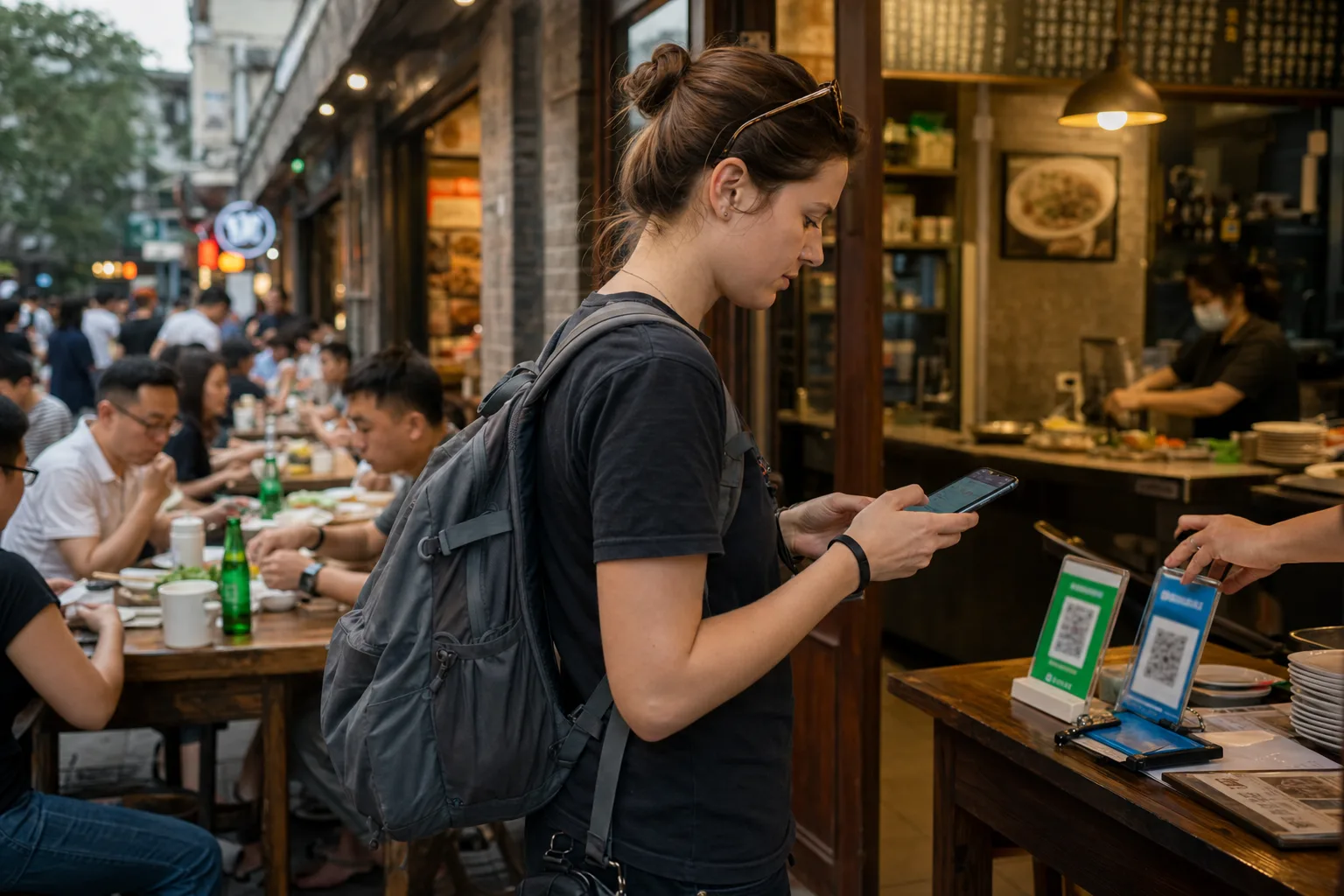
If you are trying to eat well in China without paying tourist markup, WeChat mini-programs are one of the most useful tools on the trip. They can help you find nearby restaurants, inspect menus, check wait times, place orders, and sometimes reserve a table before you arrive. Used well, they cut decision fatigue and keep budget meals from turning into expensive guesswork.
Introduction: Why WeChat Mini-Programs Matter for Budget Travelers
WeChat mini-programs are lightweight apps that run inside WeChat instead of forcing you to download a separate service for every task. For restaurant discovery, that matters because the Chinese dining ecosystem is not built around one universal English-language app. It is fragmented across restaurant brand pages, local listing tools, delivery platforms, reservation systems, transport maps, and neighborhood-specific services. Mini-programs sit in the middle of that system.
If you are traveling on a budget, the benefit is not just convenience. It is leverage. A traveler who can compare prices, locate the nearest branch, see the menu, and check queue pressure before leaving the hotel has already reduced the odds of a bad meal. That traveler is less likely to end up in a glossy tourist restaurant with inflated prices and more likely to find the normal places locals actually use.
For the broader trip logistics around payment and rail planning, the companion guide on China Travel Planning: Visa, WeChat Pay, High-Speed Rail & Practical Guide is the right place to start. If you want a tighter budget frame for food and transport together, How to Travel China on a Budget: Cheap Transport, Food & Stays is the better companion piece. This article focuses on the restaurant-discovery layer that sits on top of those basics.
The main idea is simple. You do not need to become fluent in Chinese or memorize every local food app. You do need a repeatable method for finding places that serve ordinary meals at ordinary prices. WeChat mini-programs are useful because they let you search, compare, and decide in one place instead of bouncing between screenshots, translations, and random map pins.
What this guide covers
This article explains what mini-programs are, how they help with restaurant discovery, what to check before you go, and where the common traps are. It is written for travelers who care about spending less, eating better, and wasting less time on the street.
What WeChat Mini-Programs Actually Do
WeChat mini-programs are small in-app tools that let you search for restaurants, check menus, compare branches, see queue status, book tables, and sometimes order ahead. For budget travelers, they are useful because they reduce guesswork, show local options faster, and help you avoid paying for convenience you do not need.
Mini-programs are not just restaurant apps
The easiest mistake is to think of a mini-program as a thin copy of a normal app. In practice, they are closer to a toolkit. Some mini-programs are official brand pages for one restaurant chain. Some are city services. Some are food-delivery or map layers. Some are reservation systems used by multiple venues. Many restaurants expose more than one function through the same mini-program, especially if they are trying to serve locals who already know what they want.
That means discovery can happen in several ways:
- Search by restaurant name.
- Search by cuisine or dish.
- Search by neighborhood or metro stop.
- Open a nearby-places feature and sort by distance or rating.
- Tap into a restaurant's own mini-program after seeing it in a recommendation post or a map result.
For the traveler, the useful part is not the app structure. It is the result: better visibility into what is actually nearby, what it costs, and whether the place is worth walking to.
Why mini-programs beat generic search in practice
General web search can help, but it often does not solve the actual problem in a Chinese city. You may find a place that looks interesting and then discover that the directions are vague, the English page is stale, the menu is incomplete, or the hours are inconsistent. Mini-programs are often more current because they are tied to the operator's own account or to a service that updates from local business data.
That is especially helpful for budget dining because price sensitivity is local and time-sensitive. A cheap lunch set may exist only at certain hours. A branch may be much cheaper than another branch a few subway stops away. A restaurant may have a clearer lunch special in the mini-program than on any other public page. If you want normal people prices, you need normal people tools.
What mini-programs can show you
Depending on the service, a mini-program may show:
- Branch locations.
- Menu photos and item names.
- Set meals or lunch specials.
- User reviews and ratings.
- Waiting or queue information.
- Table reservation links.
- Delivery or pickup options.
- Map directions.
- Promotional coupons or membership discounts.
- Seasonal dishes or limited-time items.
The exact mix varies, but the pattern is consistent. You are using the restaurant's own digital front door. That is usually much better than walking in cold and hoping the place is affordable.
Why budget travelers should care more than food tourists do
Food-focused travelers often care most about famous dishes. Budget travelers care about total value. Those are not the same thing. A famous place can be excellent and still expensive, crowded, or inconvenient. A less famous branch can be perfectly good, easier to book, and priced in a way that keeps the rest of the day on budget.
Mini-programs help with that tradeoff because they reveal operational details that glossy blog posts often skip. If you can see branch choice, meal timing, and queue pressure, you can pick the version of the restaurant that fits the day instead of the version that looks best in a photo.
How to Use Mini-Programs to Discover Local Restaurants
The most effective way to use WeChat mini-programs is to search like a local would search. That means searching by geography, dish type, chain name, or neighborhood routine rather than by the single English phrase you would use at home. Once you start thinking in those terms, the results become much more useful.
Start with the kind of meal you want
Do not begin with "best restaurant near me." Begin with the meal shape. Ask yourself whether you want noodles, rice, dumplings, barbecue, a set lunch, hot pot, a cafe-style quick meal, or a sit-down dinner. Then search that category. Chinese restaurant ecosystems are often highly specialized, and the mini-program results usually reflect that specialization.
For a budget traveler, this matters because the cheapest good meal is usually the one designed for repeat local use:
- Noodle shops for solo lunch.
- Rice set meals for fast, filling dinners.
- Dumpling or bun counters for breakfast and light snacks.
- Midday lunch set menus for higher-value sit-down meals.
- Chain casual restaurants when you want predictable pricing.
If you know the meal category, you are much more likely to get a good result than if you simply type "restaurant" and hope the ranking algorithm understands your budget.
Search by neighborhood, not just attraction
Tourist attractions are convenient, but they are often the least efficient place to eat. Instead, search by a subway station, business district, university zone, office area, or residential neighborhood near where you are already going. In many cities, the best value is one or two blocks away from the headline street.
Mini-programs can be especially useful here because they often surface branches in the immediate area and let you compare them fast. A place near a landmark may have a scenic location tax. A place near a commuter station may have better turnover and lower prices. If you are moving around anyway, it usually makes sense to eat where the locals commute rather than where the tourists photograph.
Use menu photos and set meals to reduce uncertainty
The menu is the first filter for value. A restaurant with a clear menu, visible prices, and multiple photos is easier to trust than one that hides everything behind vague categories. Mini-programs often make this simpler by showing dishes, portions, and bundled meals.
Look especially for:
- Lunch sets.
- Combo meals.
- Small-portion or solo-serving dishes.
- Local specialties with a fixed price.
- Family-style dishes that are clearly marked as shareable.
If you are traveling alone, the set meal is often your best budget move. It prevents over-ordering and avoids the awkward situation where a large shared dish lands on your table when you really wanted something cheaper and easier.
Check the branch, not only the brand
One overlooked advantage of mini-programs is that many chains have multiple branches with different pricing or service patterns. A branch near a tourist district may be slower, more crowded, or more expensive than a branch in a normal neighborhood. The food may be broadly the same, but the real-world experience is not.
When a restaurant has several branches, compare them before you commit. Look at:
- Distance from your current location.
- Whether the branch supports dine-in, takeaway, or both.
- Queue pressure during your planned time.
- Whether the menu has local specials or only generic items.
- Whether the branch looks like it serves commuters or sightseeing traffic.
This is one of the easiest ways to save money without sacrificing quality. The brand may be the same. The economics are often not.
Use ratings carefully
Ratings are helpful, but they are not a full answer. A highly rated place may be expensive because it is better, not because it is cheap. A modestly rated place may still be a strong budget choice if the food is straightforward, the service is fast, and the dishes are consistent. You are not looking for internet fame. You are looking for a useful meal.
Treat ratings as a screen, not a verdict. If a place has strong local traffic, clear photos, and a menu that fits your budget, that often matters more than a perfect score. The best value restaurants are not always the most glamorous ones.
Translate the search terms to the local logic
If you search only in English, you may miss most of the useful results. Search terms based on the Chinese food logic are often stronger. Even if you do not type Chinese characters yourself, many apps and keyboards allow you to search by pinyin or by copied Chinese text from a map result or a recommendation post.
Useful search shapes include:
- The dish name.
- The cuisine type.
- The neighborhood name.
- The station name.
- A phrase like "near me" or "near station."
The point is to stop searching like a tourist brochure and start searching like a person trying to solve dinner in a city they actually plan to walk around.
Practical Guide: What to Check Before You Go
This is the part that saves the most time in the field. Before you leave your hotel, the mini-program should already have answered four questions: what is this place, where is it, how much does it cost, and what is the least painful way to get there?
Hours, prices, and what they really tell you
Mini-programs are useful because they often show the current operating window, menu prices, and sometimes whether a place is on a lunch or dinner rhythm. But you should read those details as guidance, not as law. In China, some restaurants are open all day. Others close between lunch and dinner. Some are technically open but have limited dishes during off hours. Some serve their best-value meals only during a particular window.
The practical rule is this: if the mini-program suggests a lunch set, treat that as an opportunity. If it shows a time-bound promotion, assume the best value disappears outside that window. If the prices look too broad, look for the specific set meals or house specials instead of the generic menu category.
For budget travel, the best mini-program result is often not the restaurant with the lowest sticker price. It is the restaurant whose timing matches your day. A slightly more expensive lunch at the right hour can still be better value than a cheap dinner in the wrong place.
How to get there without wasting money
The cheapest restaurant is not always the best one if getting there requires a long taxi ride. This is why mini-program map tools matter. They help you decide whether the destination works with your existing route.
When comparing options, ask:
- Is it near the metro line you are already using?
- Can you walk there from a sightseeing stop?
- Is it close enough to combine with another errand?
- Does the branch sit on the correct side of a large station or intersection?
- Would the travel time erase the savings from the cheaper meal?
The last question is the one most people ignore. A restaurant that is 20 RMB cheaper but costs 30 RMB extra in transport is not cheaper. Budget travel only works when the full trip cost makes sense.
Booking or queueing if the restaurant is busy
Some restaurants and chains support table booking directly through their mini-program. Others only expose queue numbers. Both are useful. If you are eating during peak lunch or dinner, queue data can tell you whether the place is worth waiting for or whether you should pick a second option nearby.
Queue visibility is particularly helpful in Chinese cities because a restaurant can look manageable from the street and still have a long wait inside. Budget travelers benefit from being flexible. If one place is packed, a similar place two blocks away may have the same cooking style and a much better line.
If a restaurant supports reservations, use that only when the meal itself matters enough to justify it. For routine budget meals, queue management is usually enough. Reserve the table when the place is known to be busy, the branch is far from your base, or you are trying to coordinate with other travelers.
What to do when you cannot read enough Chinese
You do not need perfect language ability to get good results, but you do need a few habits. Use menu photos. Use the location pin. Use the branch name. Use the dish images. Use the service tags. If a restaurant has photos from regular users, those are often more helpful than the polished promotional pictures.
When the text is unclear, focus on the following:
- Price range.
- Portion size.
- Lunch or dinner set.
- Queue pressure.
- Proximity to your route.
This lets you make a sound decision even when the translation is messy. The goal is not to understand every line. The goal is to avoid an expensive mistake.
When mini-programs are better than third-party platforms
Third-party platforms are useful, but they are not always the best source for local restaurant decisions. A brand's own mini-program may be more current on promotions, branch details, or seasonal items. A local service mini-program may surface neighborhood choices that a global platform barely indexes.
Use the mini-program when:
- You want the most current branch data.
- You need direct queue or booking support.
- You are comparing local set meals or promos.
- You want to verify whether a branch is dine-in or takeaway only.
Use a broader platform when:
- You need English support.
- You want to cross-check reviews.
- You are comparing with other cities or brands.
- You need a fallback for payment or booking.
The best travelers do not pick a side. They use whichever tool answers the question fastest.
How this fits into a budget day
A good budget day in China usually has three layers: transit, food, and time. Mini-programs help with all three. They tell you where the restaurant is, what it costs, and whether the wait is worth it. That means you can build your day around one efficient lunch stop or one practical dinner stop instead of wandering into a random mall cafe because you got hungry and tired.
If you are trying to keep the whole trip low-cost, the restaurant decision should support the route, not interrupt it. That is where mini-programs earn their keep.
Tips & Common Mistakes
Most failures with WeChat mini-programs come from using them too late or expecting them to behave like a Western app directory. Once you adjust your habits, they become much more useful.
Tip 1: Search before you are hungry
Do not wait until your blood sugar is low. Search the restaurant while you still have enough patience to compare three or four options. Hungry people make expensive choices. Prepared people choose better meals and better branches.
Tip 2: Use the branch that fits the route
People often pick the "best" branch on paper and then spend half an hour trying to get there. That is a budget leak. The right branch is the one that works with your walking plan, rail plan, or hotel location. Good food is only good value if you can actually reach it without burning extra time and money.
Tip 3: Trust local timing
A restaurant that is busy at lunch and quiet at 3:00 p.m. is not a mystery. It is a clue. Local timing tells you when a place is built for everyday use. If the mini-program shows special lunch sets or dinner queue pressure, use that information. It is usually the most honest signal available.
Tip 4: Do not overvalue English text
The presence of English is not the same thing as value. In fact, places that optimize heavily for English-speaking tourists often price for convenience, not for local routine. The mini-program may be more useful precisely because it shows the local structure instead of the polished version.
Tip 5: Avoid dining decisions that require a taxi
The moment you need a taxi for a cheap meal, the meal is no longer obviously cheap. A strong mini-program search should turn up options that are on your way, near a station, or within a reasonable walk. If it does not, keep looking.
Common mistake 1: Confusing chain convenience with best value
A chain restaurant is not automatically the cheapest or the best. Chains are good because they are predictable. They are not always the cheapest. Compare the branch price and set meal before you assume consistency means savings.
Common mistake 2: Ignoring wait times
Some travelers will happily walk to a restaurant with a famous dish and then spend 40 minutes waiting. That may be fine for a one-off meal, but it is not a good default budget habit. If another branch offers the same style of food with a shorter queue, choose the shorter queue.
Common mistake 3: Ordering too much because the menu is interesting
Mini-program menus make it easy to get excited and order more than you need. That is how budget travelers accidentally turn a cheap meal into a medium-expensive one. Stick to one main dish, one side if needed, and one drink only when it actually adds value.
Common mistake 4: Forgetting that delivery is not discovery
Delivery mini-programs are convenient, but they are not the same thing as learning the food environment around you. If your goal is to discover local restaurants, use the app to identify nearby places and then go there if the route works. Delivery should be the backup, not the whole strategy.
Common mistake 5: Not keeping a mental shortlist
Once you find two or three reliable budget restaurants near your route, save them mentally or in a note. That way, you are not redoing the whole search every day. Reuse is part of budget travel. The more often you can repeat a good decision, the less time and money you waste.
FAQ
Do I need to know Chinese to use WeChat mini-programs for restaurant discovery?
No, but it helps. You can still get value from branch names, map pins, photos, queue indicators, and menu images. If you can also recognize a few dish names or neighborhood names, the results improve a lot. The main skill is not fluency. It is pattern recognition.
Are mini-programs only useful for big restaurant chains?
No. Chains are the easiest place to see the system, but many individual restaurants, local dining services, and reservation tools also use mini-programs. Smaller places may not look polished, but they can still be useful for menus, hours, or location checks.
Can mini-programs help me find cheaper restaurants than normal map search?
Often yes, because they show the restaurant's own structure more clearly. You can compare branches, look for lunch sets, and see whether a place is built for locals or tourists. That said, you still need to judge price and convenience. A mini-program is a decision tool, not a guarantee.
Should I use a mini-program or just ask my hotel?
Both can help. Hotel staff can point you toward a safe, nearby choice. Mini-programs let you verify the details yourself. If you want speed and control, the app wins. If you are unsure about the neighborhood or language, a hotel recommendation can be a useful first filter.
What is the biggest mistake first-time travelers make with restaurant discovery in China?
They search too late, choose too far away, and judge places by the wrong signals. They focus on English, photos, or fame instead of branch location, queue pressure, and meal timing. Mini-programs solve some of that, but only if you use them before hunger makes the choice for you.
Conclusion
WeChat mini-programs are one of the simplest ways to improve restaurant discovery in China without adding a lot of complexity to your trip. They help you find nearby places, compare branches, inspect menus, check wait times, and make a faster decision about whether a restaurant fits your budget and your route. That combination matters more than any single feature.
The main habit to build is this: search early, compare locally, and choose the branch that matches the day. Do that, and you will spend less time wandering, less money on taxi-backed decisions, and less energy on food guesses that do not pay off.
For travelers trying to keep China affordable, the mini-program is not a gimmick. It is part of the operating system. Use it to narrow the field, then let the actual price, distance, and queue tell you what is worth eating.