Hanami Spots Beyond Tokyo: Best Cherry Blossom Viewing by Region

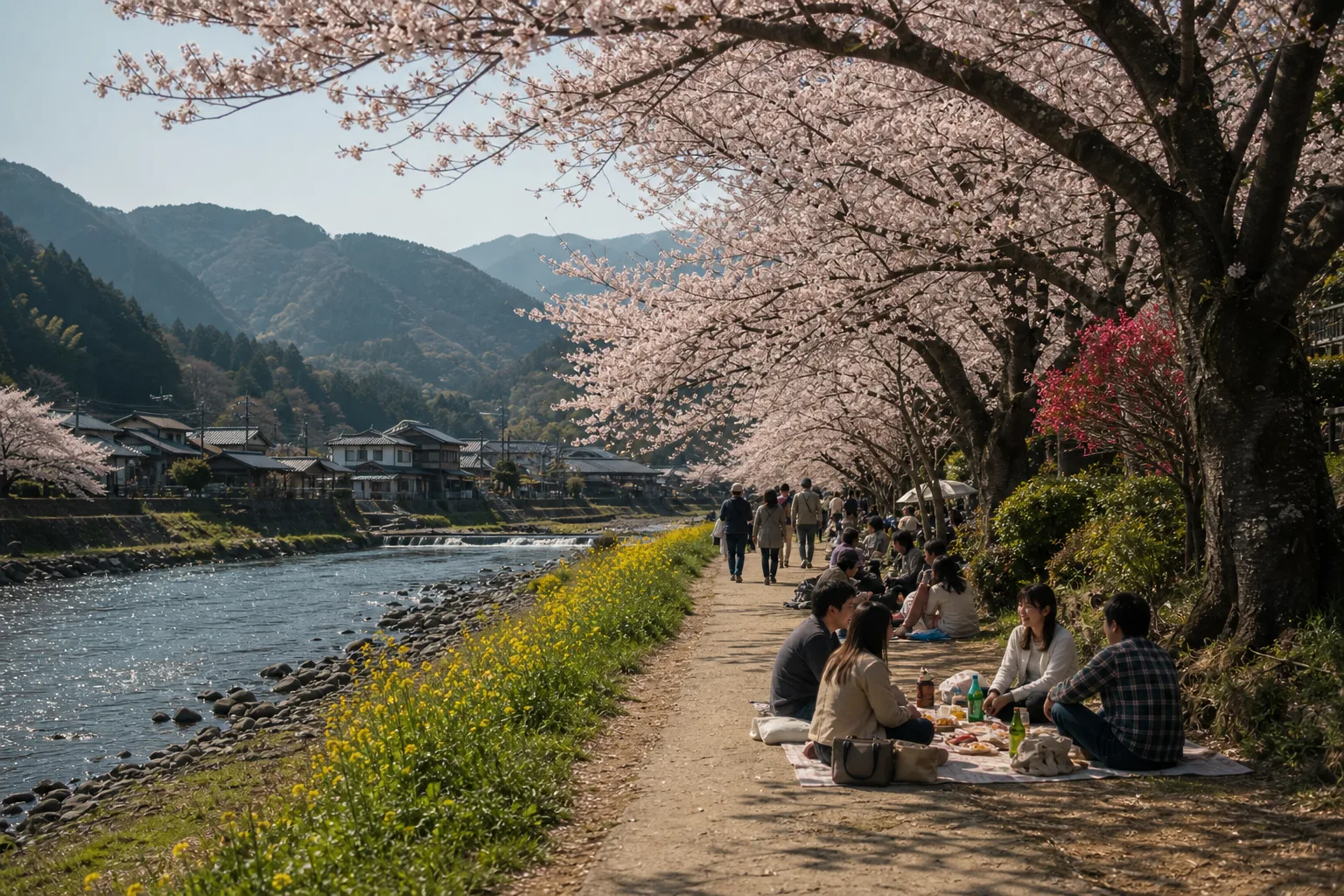
Tokyo gets the attention, but cherry blossom season in Japan is a moving target that rewards better planning. If you only look at the capital, you can miss the first blooms in the south, the classic late-March window in Kansai, and the longer-lasting season that stretches into Tohoku and Hokkaido. This guide helps you choose the right region, the right week, and the right kind of hanami experience.
Why Region Matters More Than the Headline Bloom Date
Cherry blossom season moves north and upward through Japan, so one forecast never tells the whole story. If your dates are fixed, the region you choose determines whether you see early flowers in the south, peak bloom in central Japan, or late blossoms in the north. That makes hanami planning more about geography than luck.
The blossom calendar in plain language
For most travelers, cherry blossom season breaks into five rough bands. Okinawa starts first, usually in January or February, with early-blooming varieties and a very different feel from the classic honshu hanami scenes. Kyushu follows in late March. Kansai and central Honshu tend to peak from late March to early April. Tohoku reaches peak later in April, and Hokkaido often finishes the season in late April or early May.
The important part is that these are ranges, not promises. In 2026, first blooms were confirmed in Kochi, Gifu, and Yamanashi in mid-March, which is a useful reminder that even within the same year, timing can shift earlier or later depending on weather, altitude, and local conditions. If you are traveling from Singapore, the best habit is to treat forecasts as a final check, not as your only plan.
What this means for Singapore-based travelers
If you are flying out from Singapore, your trip length matters almost as much as your dates. A short break of four to six days usually works best if you focus on one region, such as Kansai or Kyushu. A seven- to ten-day trip gives you room for a regional loop, such as Kyoto to Okayama or Aomori to Hakodate. If you want to chase blossoms across multiple climate bands, you need more time and a flexible attitude.
That is why this article is organized by region instead of by one national top-ten list. A good hanami trip is not the one with the biggest headline spot. It is the one that matches your travel window, your pace, and the kind of crowd level you can actually enjoy.
Best Cherry Blossom Viewing by Region
Cherry blossoms are beautiful almost anywhere they bloom, but some places are stronger than others because the setting amplifies the experience. A river lined with trees feels different from a castle moat. A mountain valley feels different from a city park. A late-bloom northern garden feels different from a temple path in Kyoto. The best region for you depends on whether you want scenery, atmosphere, convenience, or a quieter crowd.
Okinawa: earliest bloom, lowest pressure
Okinawa is the answer if you want sakura before most of Japan has started thinking about spring. The bloom window is much earlier than the rest of the country, and the feeling is less like the classic big-city hanami season and more like an early seasonal detour. The blossoms are often associated with hilltop parks and festival settings rather than the dense temple-and-river landscapes that most first-time visitors picture.
The main value of Okinawa is timing. If you are traveling in January or February, it lets you build a cherry blossom stop into a broader warm-weather trip without waiting for March. That can be ideal for travelers who want to avoid Japan's peak spring congestion or who are planning a longer Southeast Asia to Japan route.
The tradeoff is that Okinawa does not give you the same iconic classic hanami feel you get on Honshu. If your fantasy is a carpet of petals under a castle wall or a riverbank lined with thousands of trees, Okinawa is more of a warm-up than the main event. But if your goal is to see blossoms early and enjoy a more relaxed pace, it is a smart choice.
Kyushu: early spring with easy city access
Kyushu is one of the best regions for travelers who want early-to-mid spring blossoms without committing to a complex trip. It gives you city parks, castle grounds, and temple settings, often within straightforward train or subway reach. The region is especially useful if you want one base city and easy half-day outings.
Kyushu works well because the blooms come early enough to catch many travelers who are still trying to avoid Tokyo's biggest crowds, but late enough that you are still in a comfortable spring season. It is also a good region for families or first-timers who want strong cherry blossom scenery without adding too much logistics.
Good places to consider in Kyushu include:
- Kumamoto Castle, where the blossoms frame a major historic landmark and the wide grounds help disperse crowds.
- Maizuru Park in Fukuoka, which is one of the easiest city-based hanami options in northern Kyushu.
- Dazaifu Tenmangu, which pairs spring flowers with a shrine setting and a popular sightseeing stop.
- Mifuneyama Rakuen in Saga, which is more of a garden experience and can feel especially good if you like layered landscaping rather than just open park space.
Kyushu is strongest when you want one of three things: a lower-stress first hanami, a short spring trip, or a region where you can combine blossoms with food and city sightseeing without changing bases every night.
Kansai: the classic hanami region
If you want one region that balances convenience, variety, and iconic scenery, Kansai is hard to beat. Kyoto, Osaka, and Nara all have distinct blossom personalities, and the region gives you enough transport density to move between spots without turning the trip into a logistics project. For many travelers, Kansai is the best all-around answer.
Kyoto is the most obvious draw, but it is not just about famous temples. The Philosopher's Path is popular because the walk itself feels like part of the flower experience. Maruyama Park gives you a more lively evening atmosphere. Riverside and neighborhood temple areas can be quieter if you arrive early. In Kyoto, the best blossom day is often one that combines a destination spot with a slower walk through a residential or temple district.
Osaka is better if you like bigger, more open spaces. Osaka Castle Park is the classic name because the castle backdrop gives the blossoms a strong visual frame, and the grounds can absorb a lot of people. It is one of the easiest choices if you are already based in Osaka or if you want a less museum-like and more social hanami scene.
Nara is the better choice if you want a calmer atmosphere and do not mind blending cherry blossoms with deer, temples, and a more relaxed pace. Nara Park itself is wide and easy to move through, which makes it useful for travelers who want blossom photos without having to fight for every step.
Mount Yoshino deserves its own mention. It is not a simple city park, and that is exactly why people go. The mountain slopes create a layered bloom effect that feels different from the flat, urban settings most travelers know. It is worth the extra effort if you want a destination that feels more like a pilgrimage than a checklist stop. Because it draws serious domestic attention, you should think about timing, lodging, and train capacity early.
If you only have one cherry blossom trip to Japan and you want maximum reliability, Kansai is often the safest region choice. It gives you strong bloom odds, excellent transit, and enough variety that you can adjust plans if one spot is crowded or one day gets washed out by rain.
Chubu and Hokuriku: castle towns, gardens, and a better tempo
The Chubu and Hokuriku areas are excellent if you want a cherry blossom trip that feels less obvious than Tokyo or Kyoto but still delivers a strong visual payoff. This region is especially appealing for travelers who want a mix of nature and old-town atmosphere, or who want to combine blooms with mountain weather and a more relaxed pace.
Takato Castle Ruins Park in Nagano is one of the best known blossom spots in this band. It is famous for a dense display of small, pinkish cherry trees that give the whole area a soft color wash rather than the pale white haze you often get from Somei Yoshino. The visual effect is distinct enough that even experienced travelers notice the difference immediately.
Niigata and Kanazawa are also useful bases if you want a blend of city convenience and spring scenery. Takada Castle Site Park is popular for its moat reflections and night illumination atmosphere, while Kenrokuen in Kanazawa offers a more formal garden setting with carefully composed views. These places are especially good if you enjoy places where the blossoms are part of a broader landscape design rather than the only attraction.
Chubu works well for travelers who want a pace that feels a little less compressed than Kansai. You can stay in one city, take day trips, and still see a strong range of hanami settings. It is also a practical choice if you are traveling with family or prefer to keep evening movement low.
Tohoku: later bloom, stronger payoff
Tohoku is where you go when you want cherry blossoms after the main Honshu rush has already peaked. This region is one of the biggest rewards in spring travel because it gives you a second chance at the season if your Tokyo or Kansai dates were too early. The bloom comes later, and that later window can be a real advantage.
Hirosaki Park in Aomori is one of the region's signature spots and one of Japan's most celebrated cherry blossom destinations overall. Its moat, castle structures, and petal accumulation create a strong visual effect, especially if you arrive when the trees are near full bloom and the ground is already collecting fallen petals. It is the kind of place that lives up to the photos, but it also deserves more than a quick pass.
Kakunodate in Akita is a different kind of experience. The historic samurai district gives the blossoms a more intimate, streetscape-based feel. Instead of a giant park, you get a town walk where cherry trees line the old streets and the architecture changes the mood. This is a strong choice if you like historic districts and want a more measured, neighborhood-scale hanami.
Kitakami Tenshochi in Iwate is useful if you want a riverside feel with long blossom corridors. It is especially good for slow walks and for travelers who want a spacious setting rather than a tightly packed attraction. On sunny days, the combination of water, path, and bloom line can feel almost cinematic.
Tohoku is best for travelers who can wait a little later into spring or who want to avoid the psychological pressure of "catching" the Tokyo peak exactly. If your trip window is flexible, Tohoku can be the smartest region in the entire country because it stretches the season and often feels less hurried.
Hokkaido: the final blossom window
Hokkaido is the last major region to bloom, which makes it extremely useful if you missed the earlier season or simply prefer cooler weather. For many travelers, it is the cleanest answer to the question, "Where can I still see sakura in late April or early May?"
Goryokaku Park in Hakodate is one of the standout blossom spots in Hokkaido. The star-shaped fort and its surrounding trees create a distinctive aerial and ground-level view, especially if you can see the full shape of the site from above. It is one of those places where the setting is as memorable as the flowers.
Matsumae Park is another excellent Hokkaido option if you want a castle-town atmosphere with a long blossom season. Because the region blooms later, you can often still find good conditions after central Japan has already moved on. That makes Hokkaido especially attractive for travelers who are planning around school holidays, work leave, or a spring trip that starts a little too late for Tokyo.
If you are trying to decide between Tohoku and Hokkaido, think about your goal. Tohoku gives you a stronger chance of classic Japanese spring scenery with easier rail-based routing from Honshu. Hokkaido gives you the latest season and the freshest spring escape, but it usually asks for a bit more travel commitment.
Practical Guide: Timing, Tickets, and Getting Around
The best hanami trip is usually the one that is simplest on paper. Pick the region first, then lock the date window, then book the transport that gets you there with the least stress. People often do this in reverse and end up with awkward overnight changes, overloaded train days, or too many destinations crammed into too few nights.
How to choose the right region for your dates
Start with your actual travel window, not your dream region. If you are traveling in early March, focus on southern or low-altitude areas and accept that central Japan may be too early. If your dates are around the end of March, Kansai, central Honshu, and parts of Kyushu are strong candidates. If you are traveling in mid-to-late April, Tohoku becomes much more interesting. If you are going even later, Hokkaido may be your best chance.
That also means you should not book a cherry blossom trip as if it were a single city problem. A spring break trip to Japan can still work even if the bloom forecast shifts, but only if your itinerary has some flexibility. That flexibility usually comes from choosing a region with multiple viewing spots rather than betting everything on one famous tree-lined avenue.
Hours, admission, and prices
There is no universal hanami ticket. Many of the best viewing spots are public parks, riversides, shrine grounds, or city walkways, so admission is often free. Castle grounds, botanical gardens, special nighttime illuminations, and certain event periods may charge entry or require advance booking.
As a practical rule, budget for a mixed-cost day. Some stops will cost nothing. Others may charge a few hundred yen to around 1,000 yen for the main grounds, with extra fees for special exhibitions, tower access, or illuminations. That is normal, and it is part of why cherry blossom trips are easy to tailor to different budgets.
Opening hours also vary more than people expect. Public parks may be open from early morning or effectively all day, while paid gardens and castle interiors usually have fixed daytime hours. Evening illuminations can run on separate schedules and may have last-entry cutoffs. Always check the local city or park page shortly before departure, especially if your trip is centered on one famous site.
How to get there without wasting bloom time
Transport is usually the difference between a relaxed hanami day and a tiring one. For major city spots in Kansai or Kyushu, local trains and subways are often enough. For mountain or regional destinations like Mount Yoshino, Hirosaki, or Kakunodate, you should assume that the journey is part of the day and not just an annoying detail.
For travelers coming from Singapore, the easiest strategy is often:
- Fly into the region that matches your bloom window.
- Stay in one base city.
- Use day trips or one overnight side trip if you want a second spot.
- Reserve long-distance rail seats during the busiest spring weekends.
If your trip lines up with late March or early April, reserved seating matters more than usual. Demand can rise quickly, especially for popular leisure routes. If you prefer not to manage all of that yourself, official railway booking platforms are usually the safest option, and major travel platforms can be useful for packaged day tours or transfers where the local transport is less direct.
When to book accommodation
Book your lodging before you fine-tune your blossom day plan. That sounds backward, but it is the right order for the busiest regions. Kyoto, Osaka, Kanazawa, Hakodate, and Aomori all become more complicated when you wait too long. A good base hotel near a rail line or a major station can save more time than chasing the "perfect" view from a place that is hard to reach.
If you are going to a high-demand area like Mount Yoshino or Hirosaki during peak bloom, book even earlier. Those are the kinds of places where the right room can matter more than a slightly cheaper room in the wrong part of town.
Tips & Common Mistakes
Most cherry blossom mistakes are not dramatic. They are planning errors that make a beautiful day more tiring than it should be. The good news is that they are easy to avoid if you think about timing, weather, and movement instead of only the photo.
Mistake 1: Treating Tokyo as the entire forecast
Tokyo is not the country. If the capital is early, central Japan might be perfect. If Tokyo is at full bloom, Tohoku may still be too early. This is why regional planning matters. A national forecast only becomes useful when you translate it into the specific latitude, altitude, and travel window you actually have.
Mistake 2: Chasing full bloom on a tight schedule
Many travelers want the perfect day and only the perfect day. That is a risky way to plan because weather can move the petals quickly. Rain, wind, and temperature spikes can shorten the useful window. A smarter plan is to build a three-day cushion around your priority region, then be ready to shift your viewing day earlier if the forecast turns fast.
Mistake 3: Overloading one day with too many spots
Hanami is not a museum checklist. If you try to hit four blossom spots in one day, you spend too much time moving and too little time actually enjoying the setting. Two strong locations are usually enough. One morning spot and one late-afternoon or evening spot is often better than a rushed all-day circuit.
Mistake 4: Ignoring weather and footwear
Spring in Japan can still be cool, wet, or windy. Grass, riverbanks, and park paths get muddy after rain. Castle grounds and temple approaches often mean more walking than you expected. Bring comfortable shoes, a light jacket, and something that handles sudden drizzle. If you plan to sit under the trees for a while, a compact mat or picnic cloth can also make the day better.
Mistake 5: Assuming every spot is equally crowded
Famous blossom sites are famous for a reason, and that reason is usually beauty plus access. It also means crowds. If you want calmer photos, go early, go on a weekday, or choose a less obvious region. Tohoku and some parts of Chubu often reward travelers who are willing to trade a little convenience for a better pace.
What experienced hanami travelers do differently
Experienced spring travelers tend to make three choices well. First, they pick a region that matches the bloom calendar instead of forcing a city into the wrong date. Second, they keep transport simple so they are not rushing between destinations. Third, they leave room for weather and mood. That last one matters more than it sounds. A blossom trip is better when you can slow down and stay a little longer at the place that feels right.
Related reading
- Best Time to Visit Japan: Sakura, Autumn Leaves & Winter Snow Guide
- Japan Travel Planning: Visa, IC Card, Rail Pass & Essential Logistics Guide
- Japanese Culture Guide: Customs, Etiquette & Dos and Don'ts for Travelers
FAQ
When is the best time to see cherry blossoms outside Tokyo?
It depends on how far north you are going. Okinawa can start in January or February, Kyushu often blooms in late March, Kansai and central Honshu usually peak from late March to early April, Tohoku often peaks in April, and Hokkaido can stretch into late April or early May. If your dates are fixed, choose the region that fits your window.
Which region is best for a first-time hanami trip?
Kansai is often the best first choice because it gives you a lot of variety in one trip. Kyoto, Osaka, and Nara each offer a different setting, and the rail network makes movement easy. If you want a later bloom or a quieter pace, Tohoku is the strongest alternative.
Are the best cherry blossom spots expensive?
Not always. Many of the most enjoyable viewing areas are free public parks or riverbanks. Paid gardens, castle grounds, and special evening events may charge a modest fee. For most travelers, cherry blossom viewing is more about transport and lodging costs than entry fees.
Do I need to reserve trains or tickets in advance?
For popular spring weekends, yes, especially if you are traveling long distance. Reserved seats can save a lot of stress on peak routes. At the destination level, some gardens, illuminated events, or special castle areas also use timed entry or advance tickets, so it is worth checking the official site before you go.
What if the forecast changes after I book?
That happens every year. Weather can accelerate or delay the bloom, and wind or rain can change the quality of the viewing quickly. The best protection is to leave a few days of flexibility, pick a region with multiple viewing spots, and avoid tying the entire trip to one exact tree or one exact morning.
Conclusion
Cherry blossom travel gets easier when you stop thinking only in terms of Tokyo and start thinking in terms of region, elevation, and timing. Okinawa gives you the earliest flowers. Kyushu gives you an easy early-spring option. Kansai gives you the classic all-round hanami experience. Chubu and Hokuriku offer a slower, more varied pace. Tohoku extends the season. Hokkaido lets you finish late.
If your dates are fixed, let the calendar choose the region. If your region is fixed, let the bloom window choose the neighborhood and the day. That is the most reliable way to turn sakura season from a race against forecasts into a trip you can actually enjoy.
When you are ready to build the rest of the journey, use the broader Japan planning guides in this site to fine-tune timing, transport, and behavior on the ground.