Japan's Rainy Season (Tsuyu): When It Is and How to Dress & Plan

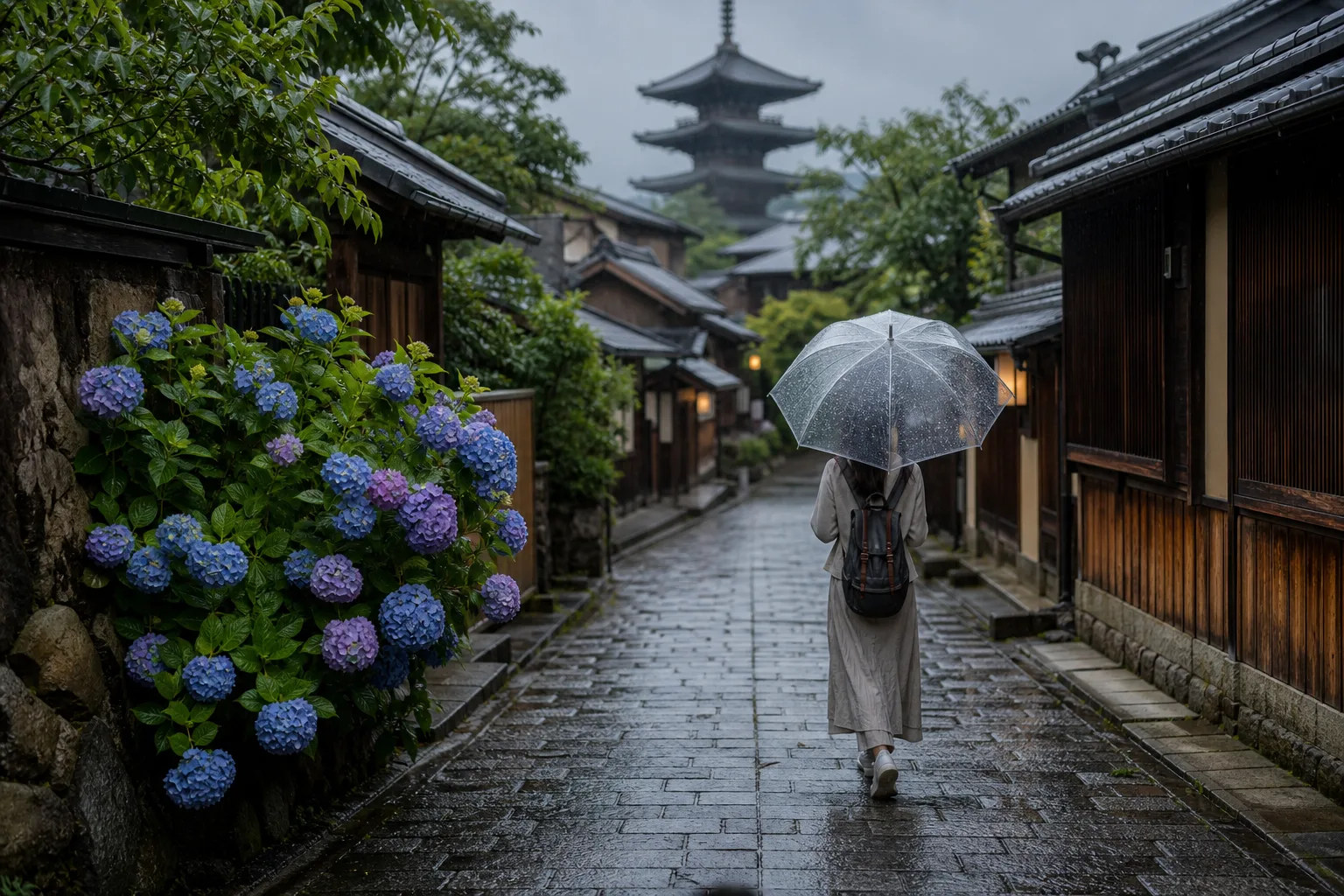
Japan's rainy season can look intimidating on a weather app, but it is not a travel deal-breaker. Tsuyu is more of a planning problem than a cancellation problem: wet streets, sticky humidity, occasional heavy downpours, and a need to think a little harder about shoes, transit, and day plans. If you are coming from Singapore or another humid climate, the weather will feel familiar in one sense and inconvenient in another. The difference is that Japan asks you to manage the rain, not just tolerate the heat.
What Tsuyu Actually Means
Tsuyu is Japan's rainy season, the stretch of weeks when a persistent weather front brings frequent rain, cloud cover, and high humidity across much of the country. It is not a monsoon in the dramatic, all-day sense many travelers imagine. A tsuyu trip often includes long dry windows, light rain, short bursts of heavy rain, and mornings or evenings that are perfectly usable if you plan around the forecast.
For most travelers, the key is not “Will it rain every day?” but “How should I structure the trip so rain becomes a minor inconvenience instead of the main event?” Tsuyu matters because it changes what you wear, which neighborhoods feel pleasant on foot, whether mountain or coastal day trips are worth the effort, and how often you will want an indoor backup plan.
When tsuyu usually happens
In much of Honshu, including Tokyo, Kyoto, and Osaka, tsuyu usually starts in early June and tapers off around mid-July. Okinawa gets its rainy season earlier, often from May into early June. Hokkaido is different again: the rainy season is weak or sometimes barely noticeable compared with the rest of Japan. The exact start and end shift each year, so the practical rule is simple: if you travel in June or the first half of July, assume you will meet rain somewhere on the main islands.
Why it matters more for some travelers than others
Tsuyu affects travelers differently depending on the style of trip. A city-focused itinerary with trains, cafés, museums, and shopping is easy to reshape around rain. A trip built around gardens, castle walks, temple hopping, or scenic viewpoints needs more flexibility. The same is true for families with children, travelers carrying heavy luggage, and anyone relying on multiple transfers in a single day. Rain does not ruin these plans, but it makes the margin for error smaller.
If you are a first-time visitor, the biggest mistake is treating tsuyu like a reason to cancel sightseeing altogether. The better response is to lower your expectations for perfect weather and raise your standards for logistics. You can still have a very good trip in tsuyu if you choose the right neighborhoods, keep transit simple, and avoid overpacking each day.
Tsuyu is not the same everywhere in Japan
Japan is long enough north to south that “rainy season” is not a single nationwide block. Southern areas feel it first, central and western regions get the classic tsuyu stretch, and the north may avoid the same pattern entirely. That matters because a traveler who spends a week in Okinawa and then flies to Tokyo can experience two very different weather realities within one trip.
For planning purposes, think in zones:
- Okinawa and the far south: earlier, more obvious rainy-season timing.
- Tokyo, Kyoto, Osaka, Hiroshima, and most of central Japan: the classic June-to-mid-July window.
- Northern Japan: less pronounced and often less disruptive.
That north-south difference is one reason experienced travelers stop asking, “Is June a bad month for Japan?” and start asking, “What part of Japan, and what kind of itinerary?”
How Tsuyu Changes the Way a Japan Trip Feels
The real impact of tsuyu is not just rainfall. It is the combination of damp air, unpredictable showers, slippery surfaces, and the way all of that changes what feels comfortable on a given day. A 15-minute walk can feel longer when you are dodging puddles, and a perfectly manageable train connection can become stressful if you are also trying to keep shoes, bags, and documents dry.
Rain in Japan is often manageable, not continuous
Many visitors picture a full gray wash of misery from morning to night. In practice, tsuyu often looks like intermittent rain, especially in big cities. You may wake up to drizzle, get a dry block around lunch, then run into a short evening shower. That pattern makes flexible planning more useful than rigid scheduling. If one shrine visit gets wet, you can swap it with a museum, department store, or station-area meal without losing the day.
The best mindset is to assume your trip will have wet and dry segments rather than “rainy days” and “non-rainy days.” That change in thinking leads to better packing and better pacing.
Humidity is as important as the rain itself
Rainy season in Japan is also sticky season. Moist air slows down drying, makes clothes cling, and turns a short uphill walk into something you will remember. For many travelers, especially those coming from air-conditioned urban routines, humidity becomes the real discomfort. You will sweat faster, fabrics will feel heavier, and you may want more than one shirt per day if you are moving around a lot.
This is why breathable clothing matters. Cotton is comfortable in moderation, but quick-dry synthetics often work better for active sightseeing. A thin layer that dries overnight is more practical than a stylish layer that stays damp until noon the next day.
Shoes matter more than almost anything else
The fastest way to make tsuyu miserable is to wear the wrong shoes. Open sandals can be fine if you are used to wet feet, but they are not ideal for long walking days, crowded train platforms, or sudden stair climbs. Heavy waterproof boots can keep water out, but they may also trap heat and dry slowly if they do get soaked.
The sweet spot for most travelers is a pair of shoes that can tolerate light rain, dry reasonably fast, and still support several hours of walking. If you only bring one pair, choose comfort and recovery time over fashion. If you bring two, make sure one pair can rest and fully dry while the other is in rotation.
Urban travel is easier than scenic travel
Tsuyu is usually a small problem in Tokyo, Osaka, Kyoto, and other major cities because these places have dense transport networks, indoor dining, shopping streets, underground connections, and enough indoor attractions to absorb a weather shift. It is a bigger challenge in places where the trip depends on long outdoor walks, mountain views, or extensive transfer chains.
That is why tsuyu can be a better season for city-first trips than for “see everything in one week” itineraries. You can still visit temples, parks, and gardens, but you should be ready to compress outdoor time into the best weather windows.
If you are coming from Singapore
Travelers from Singapore often adapt to Japanese rainy season faster than visitors from temperate climates because the humidity is already familiar. The bigger adjustment is the pace of movement. Singapore weather may be wet, but Japan's transit-heavy sightseeing day can expose you to more walking, more station transfers, and more time with damp clothes before you reach your hotel.
That means tsuyu planning is less about “Can I survive the weather?” and more about “Can I keep the trip efficient while staying dry enough to enjoy it?” The answer is usually yes, provided you pack smart and do not overschedule.
What to Pack and Wear During Tsuyu
Packing for tsuyu is mostly about reducing friction. You do not need expedition gear. You need items that dry quickly, protect the essentials, and make it easy to keep moving when the forecast changes.
Start with quick-dry clothing
Bring lightweight tops, breathable bottoms, and at least one set of clothing that can dry overnight after a wet day. This matters more than trying to “dress for rain” in a fashion sense. If you get caught in a shower and return to the hotel, the real victory is having dry clothes ready for dinner or the next morning.
Avoid overpacking heavy denim if you plan to walk a lot. Denim absorbs water, takes time to dry, and can become uncomfortable in humid weather. For a short trip, one pair is enough if you like it, but do not make it your default daily option during tsuyu.
Bring a light rain shell, not a bulky coat
A packable rain jacket does more useful work than a thick coat in tsuyu. You want something that shields your torso, fits over a T-shirt or light layer, and can live in your day bag without becoming a burden. If it packs down well, you are more likely to carry it instead of leaving it at the hotel.
Ponchos can work for short bursts of heavy rain or bike use, but many travelers find a jacket more comfortable for city sightseeing and train transfers. The best choice is the one you will actually wear for several hours.
Choose footwear you can trust
Footwear is the heart of your rainy-season packing list. Look for:
- Shoes with decent grip on wet pavement.
- Materials that dry quickly.
- Enough room for a slightly thicker sock if needed.
- Comfort for stairs, station exits, and long walks.
If you know you sweat easily, bring spare socks. A dry pair can change your mood in minutes. If you are traveling with kids, pack extra socks for them too. Wet feet become a family logistics issue faster than almost any other tsuyu problem.
Use a compact umbrella and a bag strategy
In Japan, compact umbrellas are easy to buy, but bringing your own saves time and reduces last-minute shopping. A small umbrella is useful for light rain and can make short city hops much more pleasant. Still, umbrellas alone are not enough if the rain is strong or the wind picks up. Pair the umbrella with a rain shell so your upper body stays protected if conditions worsen.
Your bag should also be part of the rain plan. A tote that leaks at the seam, a daypack with an exposed laptop sleeve, or a camera bag with no cover can become a problem quickly. Use a waterproof pouch, a rain cover, or even a simple plastic liner for electronics and documents. That small habit protects your passport, transit card, charger, and cash.
Keep a small “dry rescue” kit
You do not need much:
- A spare pair of socks.
- A small towel or microfiber cloth.
- Zip pouches for tickets and documents.
- A power bank.
- A few resealable plastic bags for wet items.
That kit is especially useful if you are changing hotels, using lockers, or doing a day trip with multiple stops. It also keeps wet items from turning your entire day bag into a damp, sour-smelling mess.
Dress for temperature swings
Tsuyu days can start cool, turn warm, and then feel colder again once the rain stops. Air-conditioned trains and malls complicate that further. Layering solves this better than one thick garment. A light shirt, a breathable middle layer, and a rain shell give you more control than a single heavy outfit.
The goal is not elegance. The goal is to avoid being too hot, too cold, or too wet at any point in the same day.
Practical Guide: Planning Around Rainy Season
Once you accept that some rain is unavoidable, the planning question becomes how to design a trip that stays resilient. Tsuyu does not remove the value of sightseeing; it changes the order of operations. You should front-load flexibility, simplify transport, and keep a shortlist of indoor options in each city.
Plan around weather windows, not fixed “perfect days”
Instead of assigning every activity to a specific date and hour, group your itinerary by weather sensitivity. Put outdoor-heavy visits like gardens, castle grounds, scenic walks, or temple districts into time blocks that can move. Keep museums, shopping streets, aquariums, food halls, and train-linked attractions as your rain-day substitutes.
That structure gives you a working plan even if the forecast shifts. If the morning looks clear, take the long walk then. If the rain holds off until noon, switch to indoor sights afterward. The itinerary stays intact because it is built around categories, not just names.
Keep transfers simple
During tsuyu, complicated transfer chains are more tiring than usual. Every extra platform change means more exposure to wet surfaces, more time with luggage, and more chances to arrive sweaty or soaked. If you can cut one train hop, do it. If a direct route costs a little more but saves you from a rain-soaked connection, the tradeoff is often worth it.
This is where a good logistics guide helps. If you are still sorting out the basics of transport, passes, and arrival prep, use the Japan Travel Planning: Visa, IC Card, Rail Pass & Essential Logistics Guide as a companion while you build your route.
Be selective with day trips
Day trips are where tsuyu can either work well or waste a lot of energy. Short, direct day trips with a clear indoor fallback are fine. Overpacked rural excursions with buses, long walks, and fragile schedules are not ideal unless the weather forecast is stable.
Good rainy-season day trips are usually:
- Easy to reach by direct train.
- Strong on indoor or semi-indoor content.
- Flexible enough that a single shower does not break the plan.
Poor rainy-season day trips are usually:
- Multiple bus transfers.
- Long scenic walks with no sheltered alternative.
- Heavy dependence on mountain views or open-air sightseeing.
If you have only one or two “must do” outdoor experiences, keep them in the itinerary but leave breathing room around them.
Book with weather risk in mind
For tsuyu, the best bookings are the ones that can absorb small changes. That does not mean refusing to reserve anything. It means avoiding a schedule so rigid that one wet afternoon destroys your day. Book timed entries where needed, but do not stack them too tightly. Leave enough margin for late departures, slower walking, and extra time to dry off or change clothes.
This is also the right season to prefer centrally located hotels. A hotel near a station or major shopping district reduces the number of exposed minutes between transport and shelter. Even if the room costs a little more, the convenience often pays back in comfort.
Think in terms of “wet weather density”
Not all rain hits the trip equally. Three days in a row of light showers can be easier than one sudden downpour that arrives just as you are changing trains. When you review the forecast, do not only look at total rain. Look at when rain is likely to arrive, how intense it may be, and whether your plan depends on being outside at that exact time.
That is the difference between a tolerable rainy trip and a frustrating one. A traveler who keeps an indoor backup can absorb a heavy shower without stress. A traveler who commits to a three-hour outdoor loop at the wrong time is the one who suffers.
Use tsuyu to improve, not shrink, the itinerary
Rainy season is a good excuse to make your trip smarter. Instead of trying to “beat” the weather, you can use it to balance your days:
- Start with outdoor spots in the morning.
- Shift to food halls, museums, or shopping after lunch.
- Reserve evening time for restaurants, observation decks, or station-adjacent neighborhoods.
That rhythm is often better than a fully packed sun-chasing plan. You spend less time fighting the weather and more time actually enjoying the city.
Tips & Common Mistakes
Most tsuyu mistakes are not dramatic. They are small planning errors that compound into unnecessary discomfort. Fixing them improves the entire trip.
Mistake 1: Assuming every rain forecast is equally serious
Forecast apps can make a day look worse than it is. A 40 percent chance of rain does not mean your sightseeing is doomed. Sometimes it means a brief shower in one part of the day. Learn to read the timing, not just the icon. In Japan, weather changes quickly enough that a morning forecast may be outdated by lunch.
Mistake 2: Overcommitting to outdoor sightseeing
A tsuyu itinerary that is 90 percent outdoor walks is fragile. Build in indoor buffers. Even one flexible afternoon can save the trip if the weather turns. If you want temples, shrines, and gardens, fine, but cluster them with easy indoor exits nearby.
Mistake 3: Wearing the wrong shoes
People forgive many packing mistakes. Shoes are not one of them. Bad shoes turn wet pavement, staircases, and train stations into a daily annoyance. If you know you will walk a lot, choose comfort and grip over style.
Mistake 4: Forgetting that trains and stations can still be crowded
Rain pushes more people into rail networks, station shops, and covered shopping streets. If you are traveling at rush hour or on a weekend, you may face both weather inconvenience and crowd congestion. Leave extra time. A 10-minute connection can become a 20-minute stress point if you are trying to stay dry while carrying luggage.
Mistake 5: Ignoring laundry and drying time
In a humid season, yesterday's clothes may still feel slightly damp in the morning. That matters if you are trying to travel light. Pick accommodation with decent drying options if possible, and do not expect thick garments to dry quickly overnight. Packing one or two quick-dry outfits is often smarter than packing more clothing overall.
Mistake 6: Treating tsuyu as the wrong season for food and city travel
This is the mistake most guides miss. Tsuyu can actually be a strong season for food-focused travelers, department store exploration, museum-heavy itineraries, and neighborhood wandering with lots of cafés and covered streets. If your trip is built around eating well and moving efficiently, rainy season may be more comfortable than a scorching midsummer week.
Practical advice most visitors appreciate too late
Keep a small towel accessible, not buried in your suitcase. Put valuables in waterproof pockets. Choose hotel check-in times that do not force you to arrive at the worst part of the afternoon rain. And if you are traveling with someone who hates wet feet, schedule at least one indoor anchor each day so they never feel trapped outside.
FAQ
Is tsuyu a bad time to visit Japan?
Not necessarily. It depends on your itinerary. If you want long scenic walks, mountain views, and outdoor sightseeing every hour of the day, tsuyu is inconvenient. If you like cities, food, shopping, museums, and flexible planning, it can still be an excellent travel period.
Should I avoid Tokyo, Kyoto, and Osaka in June?
No. Those cities remain very doable in June. You just need to pack for rain, keep your daily schedule flexible, and avoid assuming every plan must be outdoors. Urban Japan is built for weather adaptation better than many travelers expect.
What should I wear in Japan during rainy season?
Wear breathable, quick-dry clothes, comfortable shoes with decent grip, and a light rain shell. Bring a compact umbrella and extra socks. If you expect to walk all day, prioritize comfort and drying speed over appearance.
Does rain ruin cherry blossom or temple sightseeing?
Rain does not ruin either, but it changes the experience. Blossoms can still be beautiful in light rain, and temples often feel atmospheric in wet weather. The issue is comfort and logistics, not the attraction itself. Plan shorter outdoor blocks and have an indoor backup nearby.
Is Hokkaido also rainy during tsuyu?
Hokkaido usually does not experience the same pronounced rainy season as central and southern Japan. That does not mean it is always dry, only that tsuyu is typically less of a defining travel factor there.
Conclusion
Tsuyu is not a reason to skip Japan. It is a reason to travel with a better plan. If you accept that rain, humidity, and slower walking days are part of the season, you can still build a trip that feels smooth, practical, and enjoyable. Pack for drying time, choose footwear carefully, keep your day flexible, and favor transport and hotels that reduce exposure to the weather.
If you are choosing travel dates from scratch, compare rainy season against the rest of the year before you book. The seasonal tradeoffs are different from traveler to traveler, and the best month is rarely just the driest month. For a broader timing view, start with the Best Time to Visit Japan: Sakura, Autumn Leaves & Winter Snow Guide and then match the season to the kind of trip you actually want.
Tsuyu rewards travelers who plan for wet sidewalks, not perfect skies. If you do that, you can keep moving, stay comfortable, and make the season work for you instead of against you.