Budget Itinerary: China's Best Highlights in 14 Days Under 1000 Dollars

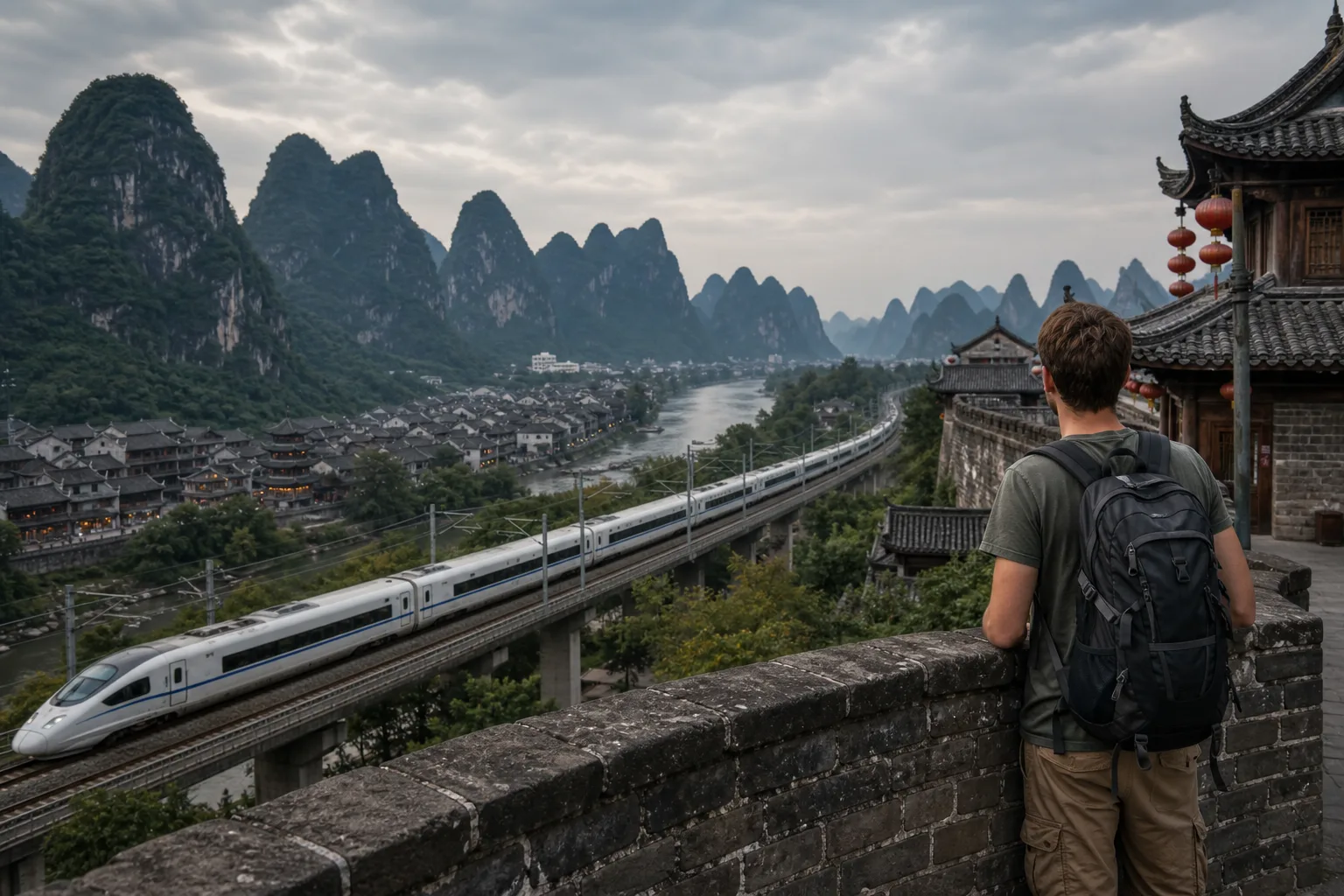
If you want a first China trip that feels ambitious without becoming expensive, this is the version to copy. It focuses on the big-name highlights, keeps most long transfers on high-speed rail, and leaves room for good food and the occasional splurge while staying close to a $1,000 in-country budget.
The 14-Day Route
This itinerary assumes international airfare is excluded. The target is your in-country spend only: hotels, trains, local transport, food, and admission tickets. In practice, that means choosing clean but basic accommodation, booking rail early, and spending on one or two major-ticket experiences instead of trying to see everything.
This itinerary assumes you travel efficiently, not luxuriously. If you book trains early, stay in central budget hotels or hostels, and keep meals in the casual range, you can usually stay within $850 to $980. The biggest budget risks are last-minute rail fares, expensive hotel nights near landmarks, and too many paid attractions.
The route below is designed around China’s strongest first-timer highlights:
- Beijing for the Great Wall and the Forbidden City.
- Xi'an for the Terracotta Army and old-city atmosphere.
- Chengdu for pandas and a slower pace.
- Shanghai for the modern city contrast at the end of the trip.
That mix gives you variety without forcing too many long detours. It also keeps the trip logical: north to west to southwest to the east coast. If you try to thread in too many side trips, the budget starts leaking through transport and hotel changes.
Day 1-3: Beijing
Start in Beijing because the city gives you the classic China entry point and the strongest concentration of major sights per day. Spend the first three days absorbing the capital at an unhurried pace so jet lag does not eat the whole trip.
Day 1 should be light. Arrive, check into a budget hotel or hostel near a subway line, walk a nearby food street, and keep the evening simple. The goal is to recover and adjust to the scale of the city rather than force yourself into a packed sightseeing day.
Day 2 is the Forbidden City and its surrounding axis. Go early, keep your timing disciplined, and spend the rest of the day on Jingshan Park, Tiananmen-area exteriors, or hutong wandering. This is also the best place to feel how much of Beijing can be done cheaply if you rely on the subway and walkable neighborhoods instead of cabs.
Day 3 is the Great Wall day. For budget travelers, this is where planning matters most. Mutianyu is usually the better all-around choice for a first visit because it is less punishing than the busiest sections and gives you a more relaxed visit, though Badaling is the easiest name recognition if you want the most famous option.
If you want a deeper planning map for the city, use the Ultimate Beijing Travel Guide: Great Wall, Forbidden City & More as the city-specific companion. For this itinerary, though, the rule is simple: keep Beijing focused on the two icons, not on every museum and palace in the city.
Day 4-6: Xi'an
Leave Beijing on a morning high-speed train and arrive in Xi'an with enough daylight to settle in and do a short evening walk. Xi'an is one of the easiest places in China to enjoy on a budget because the old city core is compact, food is inexpensive, and the sightseeing flow is straightforward.
Day 4 is mostly transport plus a first city impression. Walk the ancient city wall area if you still have energy, then head for a night-market dinner. Day 5 should be the Terracotta Army, which is the headline attraction and deserves a full morning or half day. Do not rush it. The site is worth the time because it is one of the few places in the country that feels both historically huge and physically tangible.
Day 6 can be a lower-cost recovery and city day: Muslim Quarter food, the Drum and Bell Tower area from the outside, the Big Wild Goose Pagoda district, or a slower cycling loop along the city wall. This is the day to keep ticket spending low and let your budget breathe.
Xi'an works especially well for travelers trying to balance landmark density and price. You can eat well without overspending, and you can still get the feeling that you are moving through several layers of Chinese history at once.
Day 7-9: Chengdu
Use Day 7 to travel to Chengdu. Depending on your rail and flight options, this may be the trip where a domestic flight becomes more efficient than a very long train ride. If the price difference is small, choose the option that protects both your budget and your energy.
Day 8 is panda day. Go early, get there before the crowds build, and do not try to pair the visit with too many other major attractions. Chengdu is a city that rewards slow pacing, and that is actually helpful on a budget because it keeps taxi use down and lets you eat casually instead of always planning around booking windows.
Day 9 is for the city itself. Wide and Narrow Alleys, tea houses, local noodle shops, and a relaxed evening make sense here. If you want a bigger excursion, Leshan is the classic side trip, but budget-wise you should treat it as optional rather than mandatory.
Chengdu is the buffer zone in the itinerary. After Beijing and Xi'an, it gives you a change of pace before the final coastal stretch. That matters more than it sounds like it does, because the best cheap trip is not the one that packs in the most admissions; it is the one that avoids burnout and expensive last-minute changes.
Day 10-14: Shanghai and one short day trip
Fly or take a long rail ride to Shanghai on Day 10. Save energy on arrival and spend the first evening on the Bund or around Nanjing Road. Shanghai is where the trip shifts from imperial history and inland culture to a modern city finish.
Day 11 should be your classic Shanghai contrast day: the Bund on one side, Pudong on the other, with the city skyline doing most of the visual work for you. Day 12 can be French Concession streets, coffee stops, and a slower neighborhood walk. Day 13 is the ideal time for a low-cost side trip to Suzhou or another nearby city if you want one more scenic change without blowing the budget.
Day 14 is a buffer day for departure, airport transfer, or one final Shanghai meal if your international flight leaves late. That buffer matters. On a tight budget, one missed connection can cost more than an intentionally unglamorous spare day.
The itinerary works because it gives you the strongest concentration of top-tier China sights without turning the trip into a sprint. You see the capital, the historical heartland, the southwest, and the modern east coast, but you do not spend half the trip on transit.
How the Budget Works
The easiest way to keep this trip under $1,000 is to think in categories, not in individual treats. A first-time traveler often blows the budget by spending too much on one city and then trying to save in a way that creates extra transport costs later. This route avoids that trap.
Your rough budget can look like this:
- Accommodation: $280 to $420 for 13 nights.
- Domestic transport: $180 to $280.
- Food and drinks: $200 to $280.
- Attractions and entry tickets: $90 to $180.
- Local transport, SIM/eSIM, and small extras: $60 to $100.
That puts the practical total around $810 to $1,260, which is too wide if you want a hard target. The reason this itinerary still works is that the middle of that range is very achievable if you choose one or two cost-saving levers and avoid common mistakes. In other words, the sub-$1,000 version is not magic; it is just disciplined.
The main savings levers are:
- Book trains early instead of last minute.
- Stay within a short subway ride of the city center, not right on top of tourist landmarks.
- Eat local lunches and one nicer dinner every few days instead of paying tourist premiums every day.
- Avoid too many paid add-ons inside the same attraction cluster.
- Use one domestic flight only if it genuinely replaces an expensive and tiring rail day.
If you are deciding where to spend versus where to cut, travel style matters more than the city itself. Beijing and Shanghai are easy to overpay in if you stay in the wrong area, but both can also be surprisingly reasonable if you choose a business hotel slightly off the tourist core. Xi'an and Chengdu are friendlier to budget travelers from the start.
For a broader framework on transport, food, and cheap stays, the best companion piece is How to Travel China on a Budget: Cheap Transport, Food & Stays. Use this article for the route, and use that guide for the cost-control habits that make the route work.
Practical Guide
Hours / Admission / Prices
The biggest budget trap on a China itinerary is assuming all major sights are equally flexible. They are not. Some of the most famous places now require advance booking windows, timed entry, or a very specific arrival strategy.
The Palace Museum in Beijing is the clearest example. The official site says it is closed on Mondays except public holidays, opens for entry at 08:30, stops entry at 16:00, and closes at 17:00. Tickets open 7 days ahead at 20:00, and same-day tickets are not sold. As of the current official ticket policy, general admission is 60 RMB in the peak season and 40 RMB in the off-season. Additional section tickets such as the Treasure Gallery and Clock and Watch Gallery are 10 RMB each.
That makes one thing obvious: if you want the Forbidden City on this trip, book it early and build your day around the official time window, not around what looks convenient after breakfast. This is the kind of detail that saves you from wasting an entire morning in line or getting locked out of the booking window.
For Beijing train logistics, the official 12306 English site is the correct place to think about rail ticketing. The site states that it provides information queries and ticket refunds 24 hours a day, and ticket sales and endorsement services from 5:00 to 1:00 the next day. That is the practical rhythm you should plan around when you are booking intercity legs or changing an itinerary after arrival.
For this route, the rough budget logic for major entries is simple:
- Forbidden City: plan around 40 to 60 RMB for admission depending on season, plus optional add-ons.
- Great Wall: budget for entrance plus transport, not just the ticket itself.
- Terracotta Army: budget for the site ticket and the return transport from Xi'an.
- Panda research base in Chengdu: low-to-moderate entry cost, but the real cost is arriving early enough to see active animals.
- Shanghai skyline and neighborhood days: one of the cheapest high-impact city segments because the best part is often walking, not buying tickets.
Admission prices change, especially for temporary exhibits, so the right habit is to check official ticket pages before you build the final route. That matters more than trying to memorize a static list in a blog post.
How to get there
The practical transport rule for this itinerary is to let high-speed rail do the heavy lifting inside the north and west, then decide whether a flight or another rail ride makes more sense for Chengdu to Shanghai.
Book the Beijing to Xi'an leg as early as you can. It is one of the best-value intercity connections on the trip because it keeps you on the ground, avoids airport friction, and still moves you quickly enough that the day is not lost. Xi'an to Chengdu is similar: the line is usually efficient enough that rail is still very attractive unless a fare sale makes flying much cheaper.
When you compare rail and flight options, do not just compare ticket prices. Compare:
- Total door-to-door time.
- Number of transfers.
- Luggage stress.
- The cost of arriving exhausted and needing a higher-quality hotel.
That last point is what budget guides often miss. A cheaper ticket can still be more expensive if it pushes you into a bad arrival time and forces a pricier hotel or an unplanned taxi.
If you want a fuller explanation of visas, mobile payments, and rail booking flow, use China Travel Planning: Visa, WeChat Pay, High-Speed Rail & Practical Guide. This itinerary assumes you already understand the basics there: how to pay, how to book rail, and how to keep your phone and transport setup working from day one.
Booking links if applicable
For the rail segments, use official China Railway booking channels first. For the Palace Museum, use the official ticketing system and respect the 7-day booking window. For the Great Wall and other timed attractions, use the attraction's own official reservation route when one is available.
If you need to book a domestic flight inside China, the budget rule is to compare the fare against the time saved. A flight is worth it when it preserves a full sightseeing day, but not when it only saves a small amount of time and adds airport friction. For this specific itinerary, the best candidate for flight substitution is usually Chengdu to Shanghai.
The biggest booking mistake is waiting until you land. That can work for museums and casual neighborhoods, but it does not work for the most iconic sites. If you want this trip to stay both smooth and cheap, book the fixed items first and let the flexible items fill the gaps.
Tips & Common Mistakes
The most common mistake on a budget China itinerary is over-optimizing for the headline attraction and under-optimizing for the transfer in between. The trip feels cheap on paper, then becomes expensive because of a late train, a bad hotel location, or a missed reservation window.
Here are the mistakes that cost the most:
- Booking hotels too far from a subway line. Saving $10 a night can cost more in taxis and time.
- Treating the Forbidden City like a casual walk-in. It is not. You need to respect the booking window and entry timing.
- Trying to see the Great Wall after an already full Beijing day. You will pay for that mistake in fatigue and transport.
- Packing too many paid attractions into Xi'an. The city is strongest when you mix one major ticket with a slower old-city day.
- Using the wrong app or assuming card tap will work everywhere. China travel is easier when your phone setup is sorted before you arrive.
There are also a few habits that improve the trip without increasing cost:
- Eat breakfast near your hotel and save the city center for lunch.
- Keep one afternoon in each city open so you can absorb delays.
- Use convenience stores and simple noodle shops for one meal a day.
- Move between cities in the morning so you can still salvage a sightseeing evening.
- Carry the official passport or ID you used for booking when tickets are tied to real-name entry.
If you are building this as a first trip, the real value is not just in saving money. It is in creating a route that feels stable enough that you can actually enjoy the trip instead of managing it like a spreadsheet.
FAQ
Is 14 days enough for China's best highlights?
Yes, if you focus on one major city cluster per region and do not try to cover the entire country. Fourteen days is enough for Beijing, Xi'an, Chengdu, and Shanghai if you keep the route tight and accept that this is a highlights trip, not a complete China survey.
Can I really do it for under $1,000?
Yes, but the answer depends on what the $1,000 covers. If it is only in-country spending, then yes, a disciplined traveler can do it. If you are including international airfare, the budget becomes much tighter and may not work unless you catch a very cheap flight deal.
What is the best city to spend more money in?
Spend a little more in Beijing if you want the most meaningful guided history experience, or in Shanghai if you want a better hotel and a more comfortable finish to the trip. Do not overspend in every city. Pick one place where a slightly better room or a more convenient location will save time.
Should I choose trains or flights inside China?
Use trains for shorter and medium-length legs when they preserve the day and reduce airport friction. Use a domestic flight only when it clearly saves enough time to justify the extra complexity. For this itinerary, Beijing to Xi'an and Xi'an to Chengdu are strong rail candidates, while Chengdu to Shanghai is the leg most likely to justify a flight.
Do I need to book everything before I arrive?
No, but you should absolutely book the fixed items before departure or immediately after landing. That means rail, major timed attractions, and any city-specific experience with a limited quota. Flexible meals, neighborhood walks, and low-stakes museums can stay spontaneous.
Conclusion
This itinerary works because it is selective. It gives you the great wall, the Forbidden City, the Terracotta Army, pandas, and Shanghai's skyline without forcing you into a rushed or expensive loop.
If you keep the route tight, book the fixed entries early, and choose budget-friendly accommodation near transit, you can see China's biggest highlights in 14 days without blowing past $1,000 in local spend. The point is not to visit everything. The point is to visit the right things in the right order.
Use Beijing for the historic core, Xi'an for the ancient capital feel, Chengdu for the slower southwest break, and Shanghai for the modern finish. Then tighten the trip with official tickets, sensible rail choices, and one deliberate buffer day.
If you want to go further on the planning side, pair this route with the city and logistics guides linked above, then lock in your dates and bookings before the cheapest seats and timed-entry slots disappear.