Namhae Island: Korea's Most Beautiful Southern Sea Destination

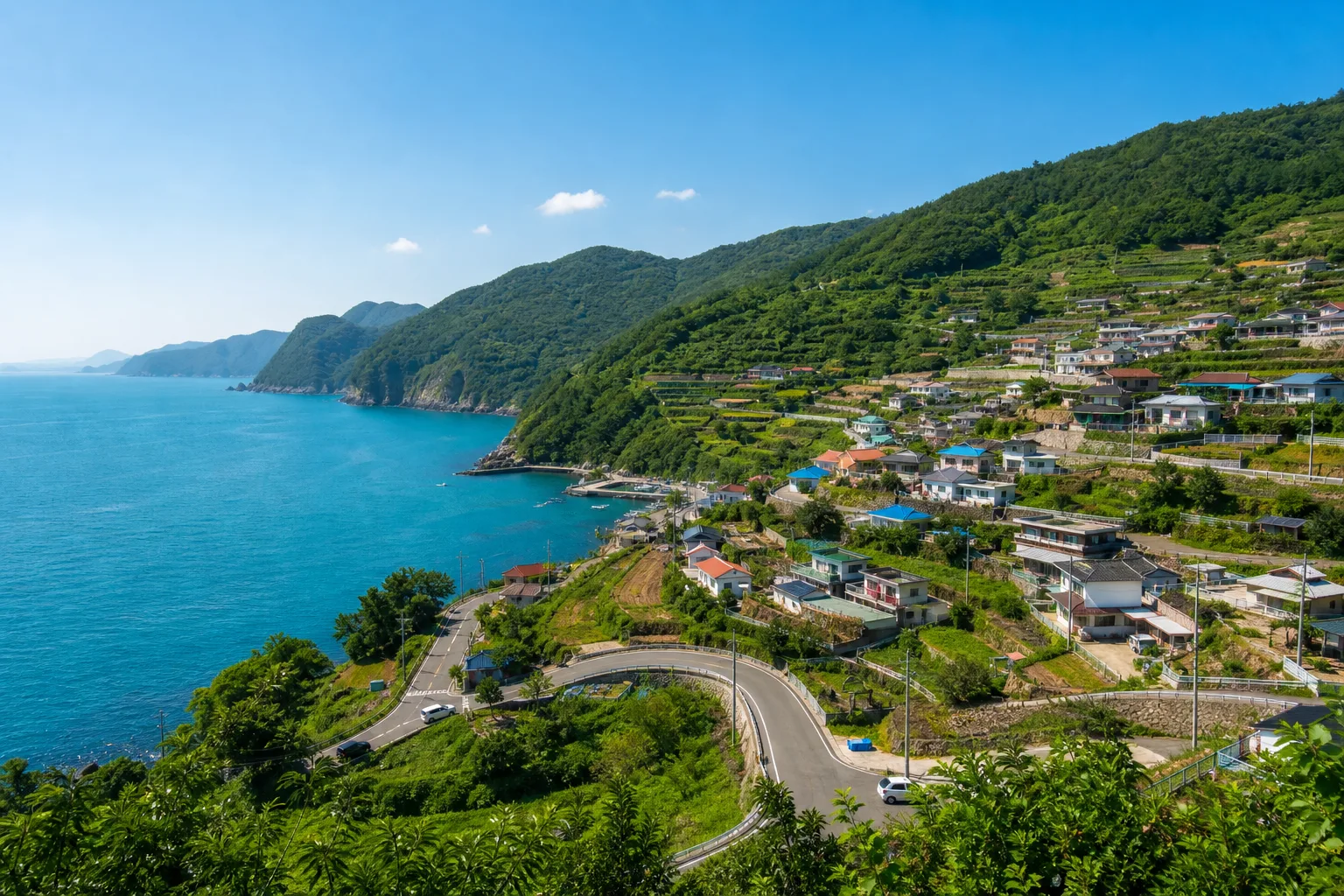
Namhae is the kind of place that makes travelers slow down in a good way. The island has a coastal rhythm that feels different from Korea's bigger mainland cities: sea views at almost every turn, terraced hillsides, small villages with distinct identities, and a road trip pace that rewards detours. If you want one destination that blends scenery, local food, and a genuinely restful atmosphere, Namhae belongs near the top of the list.
Introduction
Namhae Island is a strong fit for travelers who want Korea without the pressure of a packed city itinerary. It is scenic, but not only in the obvious "look at the ocean" sense. The island combines coastal roads, mountain viewpoints, farming villages, small museums, temples, and residential neighborhoods that still feel lived in rather than packaged for visitors. That mix is the reason Namhae keeps coming up in conversations about Korea's most beautiful southern destinations.
The big planning question is not whether Namhae is worth visiting. It is how to visit it well. Many first-time travelers underestimate the island's size, assume they can treat it like a quick stop, or try to force it into a schedule that makes sense for Seoul or Busan but not for a spread-out island. The right approach is to think in terms of one relaxed overnight, two nights if you want the island to breathe, and a route that prioritizes a few high-value stops instead of dozens of short photo breaks.
If you are building a broader Korea route, The Ultimate 10-Day South Korea Itinerary for First-Timers is a useful companion because Namhae works best as part of a balanced itinerary, not as an isolated detour. And if you are comparing Namhae with other lesser-known domestic destinations, Hidden Korea: Off-the-Beaten-Path Destinations Worth Visiting helps show where Namhae sits in the wider "slow travel" category.
This guide focuses on the practical version of Namhae: what makes the island beautiful, which places are actually worth your time, how to move around, what to expect on prices and hours, and which mistakes waste the most energy.
Why Namhae Feels Different
Namhae is on Korea's southern coast and is connected to the mainland, so it does not have the remote, ferry-only feel that some islands do. That matters because it makes the island easier to reach, but it does not make it ordinary. The landscape is still defined by water on multiple sides, mountain ridges, agricultural terraces, and small pockets of development separated by long scenic drives.
The island's appeal comes from contrast. You can spend part of a day in a lively village with cafes and tourist shops, then drive a few minutes to a quiet road with views over farms and sea stacks, then end the day at a hillside temple or a beach. It is this back-and-forth between developed and natural spaces that gives Namhae its character.
Another reason travelers remember Namhae is that it feels culturally specific rather than generic. German Village is the best-known example, but the island's appeal goes beyond that one attraction. Terraced farmland, fishing settlements, roadside seafood restaurants, and hilltop temple views all create a destination that feels rooted in the everyday southern coast of Korea.
The island's main travel identity
Namhae is easiest to understand as a scenic circuit rather than a single attraction. The island works well for:
- slow road trips
- coastal photography
- food-focused travel
- couples' trips
- low-stress family sightseeing
- travelers who want nature without a full hiking-only trip
It is less ideal for visitors who want dense urban nightlife, highly walkable transit, or an itinerary that can be completed entirely by subway and short walks. Namhae rewards travelers who are comfortable with a car or with a route anchored around a few bus connections and local taxis.
Why the scenery stands out
Many coastal destinations in Korea are beautiful in a similar way: beaches, cliffs, seafood, and sunrise viewpoints. Namhae stands out because the scenery is layered. The coast, hills, village textures, and roadside farms are all part of the same view. You do not just see the sea; you see the sea framed by daily life.
That layered quality is especially strong in places like the German Village area, the terraced fields around Daraengi Village, and the upland routes toward Geumsan and Boriam Temple. On a clear day, the island can feel almost composed, as if each turn in the road reveals a new scene that was positioned for a camera even though it is simply how the island lives.
Who Namhae is best for
Namhae works especially well for travelers from Singapore, Kuala Lumpur, Bangkok, or other Southeast Asian cities who are building a Korea trip around a mix of major city time and one or two scenic side trips. If you are already spending several days in Seoul or Busan, Namhae gives you the softer counterweight: less shopping pressure, less transit friction, and more space between activities.
It is also a good fit for travelers who care about practical comfort. You can book a car, choose a compact overnight base, and plan a day that has enough structure to feel productive without becoming exhausting. That balance is one reason Namhae often ends up feeling more memorable than more famous but more crowded day-trip destinations.
What To See
The best way to approach Namhae is to divide it into four types of stops: a cultural village, a scenic mountain-temple viewpoint, a terraced-farm landscape, and one or two comfort stops for food and coastal rest. That gives you a trip that feels complete without forcing you to see everything.
Namhae German Village
Namhae German Village is the island's most recognizable landmark and the place many first-time visitors will see first. It began as a settlement for returnees who had lived and worked in Germany, and that history gives it a story that is more interesting than a typical themed attraction. The result is a village that is partly residential, partly tourist-facing, and more grounded than it might seem from photos alone.
Expect a mix of red-roofed homes, cafes, souvenir shops, and viewpoints looking down toward the sea. The area is compact enough to explore without a complicated plan, but it is worth slowing down and looking beyond the main photo spots. Some of the charm is in the details: signs, small garden spaces, and the way the village sits in the larger coastal landscape.
The village is especially effective as a first stop because it sets the tone for the rest of Namhae. You immediately understand that this is not an island of isolated natural parks. It is a lived-in place where scenery and community overlap.
Boriam Temple and Geumsan
Boriam Temple is one of the island's most important scenic stops. The appeal is not only religious or historical. It is also one of Namhae's best payoff viewpoints, especially if you enjoy temple settings that feel elevated above the coast. The combination of mountain air, layered water views, and the approach road makes it one of the most satisfying half-day stops on the island.
For most visitors, Boriam works best when paired with Geumsan rather than treated as a standalone visit. The landscape here has real vertical drama. You are not just looking out over the ocean; you are looking down from a higher position that makes the coastline appear wider and more complex. If you enjoy places that feel calm but expansive, this is where Namhae often becomes unforgettable.
Daraengi Village
Daraengi Village is one of the island's most photogenic landscapes because of its terraced fields. It is not the kind of place you rush through. The point is to see how the farming terraces shape the hillside and how the pattern changes with the season. Spring and summer bring brighter greens, while autumn usually adds richer tones and more texture.
Travelers sometimes treat terraced villages as a quick photo stop, but Daraengi is more rewarding if you use it as a slow walk or a pause between other parts of the island. It helps show the agricultural side of Namhae, which is just as important as the island's sea views.
Coastal beaches and roadside stops
Namhae has enough beaches and coastal pull-offs to build a flexible itinerary around weather conditions. Some visitors prefer a beach morning, then a village lunch, then an afternoon viewpoint. Others do the opposite and save the coastline for sunset. Either way, the island works best when you allow the weather to influence your day.
This is especially helpful in summer, when heat and humidity can make long outdoor walks less pleasant. In that season, a beach stop plus a shaded cafe break often makes more sense than trying to stack three strenuous outdoor activities in a row.
Why a road trip works best
You can visit Namhae without driving, but the island clearly rewards a car. The roads are part of the experience, and many of the best stops are spaced in a way that makes public transportation feel limiting. With a car, you can connect German Village, Boriam, Daraengi, lunch, and a beach stop in a logical loop.
Without a car, the trip is still possible, but you should simplify your plan. Pick one base, use taxis strategically, and accept that you will see less. That is not a flaw if your goal is to relax. It only becomes a problem if you expect to "cover" the island in a single day the way you might cover a compact city district.
Practical Guide
Hours, admission, and prices
Namhae itself has no single entry fee because it is an island, not a ticketed park. What matters are the individual attractions, and those can change by season, local policy, and operating schedules. In practice, many of the island's scenic stops can be visited for free or at very low cost, while some enclosed museums, exhibitions, parking areas, or activity venues may charge a small fee.
For a 2026 trip, the safest planning rule is simple: assume the landscape is open, but verify the exact hours for anything that depends on staff, parking control, or an indoor exhibit. That is especially true for:
- German Village shops and exhibition spaces
- temple-related access and any shuttle or parking arrangements near Geumsan
- seasonal festivals and special events
- beach facilities that may vary by weather or month
If you are deciding whether Namhae is expensive, the answer is usually "not especially." The bigger cost is transport. Once you are on the island, your budget goes more toward food, fuel, and any overnight stay than toward entrance fees.
How to get there
Most visitors reach Namhae from one of the major southern transport hubs. Bus connections from Busan, Jinju, or other nearby cities are often the most practical option if you are not driving. If you are traveling from Seoul, the most sensible route is usually to combine a KTX or express bus leg with a local bus or rental car connection rather than forcing the whole journey into one direct, long-haul ground transfer.
From a planning perspective, there are three realistic arrival styles:
- Drive from Busan or another southern city if you want flexibility.
- Take public transport to a nearby hub and continue by bus or taxi.
- Join a day tour only if you specifically want a low-effort overview and are comfortable with a fixed schedule.
For most independent travelers, a car is the cleanest answer. It reduces the friction between attractions and gives you control over lunch stops, sunset timing, and weather changes. If your trip is part of a longer Korea itinerary and you are already moving between major cities, a car for just the Namhae portion is often enough.
Booking strategy
Namhae is not a destination where every decision has to be booked far in advance. You do not need to pre-book the island itself, and many scenic stops do not require reservations. What you should book early are the things that make the trip easier:
- transport if you are renting a car during peak travel periods
- accommodation with parking
- any guided coastal activity that sells out on weekends
- restaurant reservations if you are traveling during a holiday period
If you are the kind of traveler who prefers to lock in every moving part, use booking platforms for any paid local activity, but keep the island day flexible. The value of Namhae comes from open time more than from a tightly packed checklist.
Recommended trip lengths
One night is the minimum that lets Namhae feel like a destination rather than a detour. Two nights is the sweet spot for most travelers. That gives you one arrival afternoon, one full island day, and one slower departure morning or coastal brunch before leaving.
You can see a lot in one day if you drive well and keep expectations realistic, but a day trip often produces the wrong kind of travel memory: a fast sequence of scenic stops without enough time to sit anywhere. Namhae is better when the journey has a pause built into it.
Suggested routing
If this is your first visit, use a simple structure:
Day 1: arrive, settle into your base, visit German Village, and keep dinner easy.
Day 2: choose one mountain or temple stop, one village or terrace stop, and one relaxed coastal meal.
Day 3: add a short beach or cafe stop before leaving.
That routing works because it avoids the biggest beginner mistake, which is overfilling the island day with too many back-to-back viewpoints. The island is at its best when the transfer time between stops feels like part of the travel experience instead of dead time you are trying to eliminate.
Food to prioritize
Namhae is not a place to overcomplicate meals. Coastal Korean food is the safe win: grilled fish, sashimi if you know what you like, stews, rice dishes, and simple seafood sets. German Village adds a different angle with cafes and snack options, but most visitors will still be happiest when they eat at least one or two proper local meals rather than chasing only novelty food.
If you are traveling as a couple or in a small group, a good strategy is to combine one more scenic lunch with one more practical dinner. Use the lunch stop to enjoy the view and the dinner stop to recover from the day. That pacing is one of the reasons an overnight works so much better than a rushed half-day plan.
Tips & Common Mistakes
The most common Namhae mistakes are all versions of the same problem: underestimating distance, overestimating how much you can see in one stretch, and not planning around weather. Here is how to avoid them.
Mistake 1: treating Namhae like a city hop
Namhae is not a place where you can casually wander from one major attraction to the next in ten minutes. Roads curve, viewpoints sit on hills, and the island is spread out. If you plan it like a city center, you will feel rushed even if you leave early.
The better approach is to cluster stops by area and build in buffer time for parking, photos, and unexpected detours.
Mistake 2: only visiting German Village
German Village is worth seeing, but it is not the whole island. If you stop there and leave, you will miss the parts that make Namhae feel distinct: Geumsan, Boriam, the terraced landscape, and the calmer coastal atmosphere. The village is the introduction, not the full story.
Mistake 3: ignoring weather and visibility
The island's best views depend on clear conditions more than many travelers expect. A foggy or rainy day can soften the coastline dramatically. That does not ruin the trip, but it changes the value of the mountain and temple stops.
When the forecast is mixed, prioritize low-friction stops, good food, and one or two viewpoints rather than trying to force the perfect panoramic itinerary.
Mistake 4: building an itinerary without a meal plan
Namhae is much easier when lunch and dinner are planned around your route. The island is not hard to eat on, but you will waste time if every meal decision is made in the car after you are already hungry. Pick at least one anchor restaurant area before you arrive.
Mistake 5: expecting every attraction to be open the same way year-round
Seasonality matters. Some spaces have variable hours, some venues are more active on weekends, and outdoor routes naturally change with weather. Check the exact opening status before you leave if a stop matters to your trip. This is especially important for travelers who are combining Namhae with a tight Korea schedule and do not have room for surprises.
Insider advice
The best Namhae trips usually do less, not more. Pick one major scenic highlight, one cultural stop, one relaxed meal, and one open-ended coastal drive. That is enough to create a strong memory of the island without turning the visit into a spreadsheet.
If you want a day that feels more active, you can contrast Namhae with a faster, more city-accessible outdoor experience like Hiking Bukhansan National Park: Top Trails Near Seoul. The comparison is useful because it shows why Namhae is not a hiking-only destination; it is a slower coastal one.
FAQ
Is Namhae worth visiting if I only have one day?
Yes, but only if you keep the plan simple. A one-day visit should focus on one or two high-value scenic areas, not an attempt to see the entire island. If you can stay overnight, do it. If you cannot, choose the stops that matter most to you and accept that you will not see everything.
Do I need a car in Namhae?
No, but it helps a lot. A car gives you the flexibility to connect the island's spread-out attractions efficiently. Without one, you can still visit Namhae, but you will need to simplify your route and rely more heavily on taxis or fixed transport schedules.
What is the best season to visit?
Spring and autumn are usually the easiest seasons for comfort and visibility. Spring gives you fresh green scenery and milder weather, while autumn tends to offer better air and more comfortable walking conditions. Summer works too, but you should plan around heat and humidity. Winter can be quiet and beautiful, but some travelers will find it too subdued unless they specifically want a calm off-season trip.
Is Namhae expensive?
It does not have to be. The island itself is not a ticket-heavy destination, and many of the best views are free. Your main costs are transport, food, and accommodation. If you are budget-conscious, you can keep the trip reasonable by choosing one good base and limiting unnecessary movement.
Can I do Namhae as a family trip?
Yes. Families who like scenic drives, easy walks, and food stops usually do well here. The main adjustment is pacing: avoid trying to stack too many long viewpoints in one day, and choose stops with simple parking and low walking demand.
Conclusion
Namhae is one of those places that becomes more appealing the better you understand it. It is not trying to be a metropolitan sightseeing machine. Its strength is the combination of sea, hill, village, and daily life, all compressed into a route that feels peaceful rather than crowded.
For first-time visitors, the key is to plan for rhythm instead of quantity. Use German Village as the cultural entry point, add Boriam or Geumsan for a high-view scenic stop, include Daraengi Village for texture and agricultural beauty, and then leave room for the coastline and a good meal. If you do that, Namhae will feel like a destination with its own pace rather than a box to tick on the way somewhere else.
The island is also a reminder that the best Korea trips are not always the fastest ones. Sometimes the most memorable part of the journey is a place that asks you to slow down, look out to sea, and stay a little longer than you planned.