Market-to-Table Cooking in Seoul: Gwangjang Market + Lesson Combos
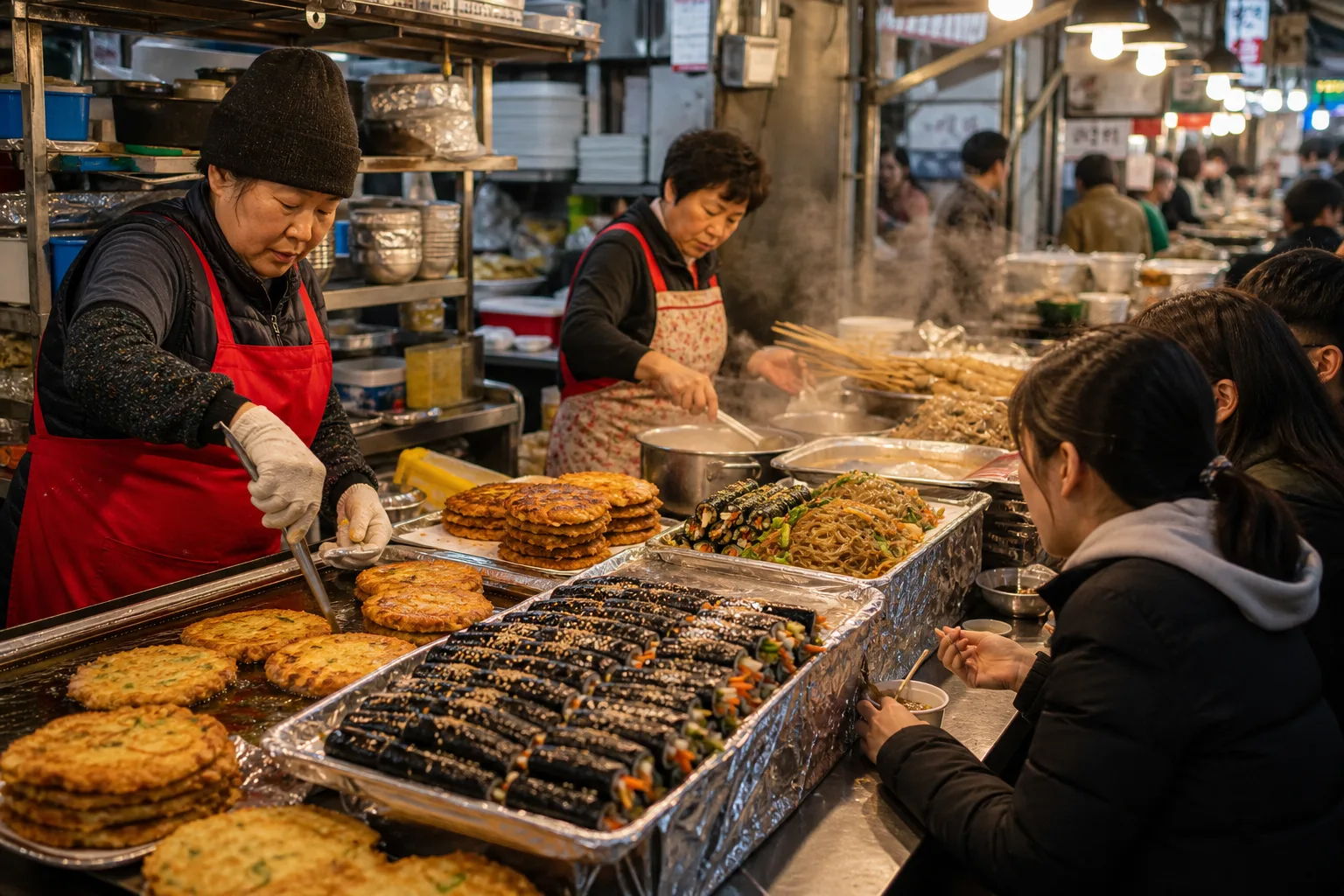
If you want to turn a Seoul food stop into a full experience, pair Gwangjang Market with a cooking lesson instead of treating the market as a quick snack break. The result is a better meal, a clearer understanding of Korean ingredients, and a trip plan that works even if you only have half a day.
Why Gwangjang Market Works So Well for a Market-to-Table Day
Gwangjang Market is one of Seoul’s easiest places to build a market-to-table itinerary because it compresses several travel needs into one compact area: classic street food, traditional ingredients, strong local atmosphere, and easy subway access. For many first-time visitors, that matters more than chasing the most famous restaurant in the city. You can arrive hungry, sample the market, learn a dish in class, and leave with a mental map of what you just ate.
At its best, this is not a shopping errand. It is a food story. You start with a bowl, pancake, roll, or dumpling from a stall, then connect that taste to ingredients and techniques in a cooking lesson. Instead of leaving the market with a vague memory of “that thing with the mung beans,” you leave knowing how the ingredients are handled, why the texture matters, and what makes one version better than another.
Gwangjang Market also works because the market experience is broad enough to suit different travel styles. Some visitors want a guided tasting route. Others want to wander, point, and order a few things with minimal planning. Others want to use the market as a pre-class stop so they can compare the street version of a dish with the version they later cook indoors. If you are building a Seoul food day around that idea, the article Korean Cooking Classes: Where to Learn to Cook Like a Local is the best companion piece because it helps you choose the lesson type before you commit to the market side of the plan.
What makes the combo more useful than doing either activity alone
The market gives you context. The lesson gives you structure. When you do both, each one improves the other.
The market answers the questions travelers usually do not know to ask at the beginning:
- What are the iconic dishes people actually line up for?
- Which ingredients show up again and again in Korean home cooking?
- What does good texture look like in a snack, pancake, or roll?
- How do locals decide what is worth eating now versus later?
The class answers the next set of questions:
- How are these dishes built from pantry ingredients?
- What is the role of seasoning, knife work, and heat?
- Why do some versions taste richer, lighter, or cleaner than others?
- What can a traveler realistically recreate after returning home?
That pairing matters for practical travel as well. Instead of eating multiple heavy dishes in random order, you can choose a few market foods strategically, then focus on one or two recipes in class. That keeps the day from becoming a blur of carbs and sauces. It also keeps your appetite under control if you plan to continue into Insadong, Jongno, or the Cheonggyecheon corridor afterward.
Why Gwangjang is the right market for first-timers
For a first visit, Gwangjang Market offers a better learning curve than many larger or more fragmented food districts. The layout is manageable, the famous foods are easy to identify, and the market has enough repeatability that you can make a sensible plan without over-researching every stall. If you only have one market stop in Seoul, this is a good candidate.
The market is especially good for travelers who want three things at once:
- A strong visual sense of “old Seoul” without needing a long transfer from the central city.
- Food that is distinctively Korean but not intimidating for someone who cannot read Korean well.
- Enough variety to support both grazing and a structured lesson later in the day.
That is why the market works so well as the anchor for a lesson combo. You are not building a complicated restaurant crawl. You are building a coherent experience around a small cluster of foods that tell the same story from different angles.
The dishes that connect best to a cooking lesson
Not every famous market dish makes sense as a class topic. The best market-to-table choices are the ones with clear ingredients, repeatable technique, and enough home-cooking logic to be worth teaching. At Gwangjang Market, the obvious crossover dishes are:
- Bindaetteok, because it shows how Korean pancakes balance batter, filling, oil, and crisp edges.
- Mayak gimbap, because it teaches rice seasoning, rolling, and the logic of bite-sized street food.
- Mandu, because dumpling folding is one of the most satisfying beginner-level kitchen skills.
- Noodles and soups, because broth and seasoning are central to Korean everyday cooking.
- Bibimbap-style bowls, because they let you explore vegetable prep, seasoning balance, and sauce management.
If you want a broader street-food framework before you go, the The Ultimate Korean Street Food Guide: Tteokbokki to Tornado Potato helps you see how Gwangjang fits into the wider Seoul snack landscape. That is useful because not every visitor knows which foods are essential and which are just popular in a given season. The market becomes easier to navigate once you know the bigger menu of Korean street food.
How to Build the Best Lesson Combo
The biggest mistake visitors make is treating the market and the class as two independent activities. They are better when sequenced intentionally. The best plan depends on whether you want to eat first, learn first, or split the day into a tasting block and a cooking block.
Option 1: Market first, lesson second
This is the most intuitive approach and usually the best choice for first-timers.
Start at Gwangjang Market with an empty stomach and order a few foods you have actually come to Seoul to try. Keep it to small portions. The point is to taste, not to finish a full meal before the lesson. Then head to your class with a better sense of the ingredients and a more specific appetite.
Why this works:
- You enter the lesson with sensory memory already in place.
- You can compare the classroom version against the street version.
- You are less likely to over-order at the market, because you know you still have dinner obligations.
This option is especially good if your class includes hands-on knife work, sauce mixing, or folding. It is also good if the lesson is late afternoon or early evening, because you can fit the market into a relaxed lunch or snack window.
Option 2: Lesson first, market second
This sequence works better for travelers who care more about technique than indulgence. If you take the class first, the market becomes an exercise in comparison. You will know what you are looking at, which ingredients matter, and which flavors are meant to stand out.
Why this works:
- You avoid the common trap of arriving at the lesson overly full.
- You pay more attention in the class because you have not yet tired yourself out walking and eating.
- You can shop at the market more intelligently afterward, because you know which ingredients are worth noticing.
This option is usually better for early classes or travelers who prefer a calmer pace. It can also work well in winter, when standing around the market for too long may be less pleasant than heading indoors sooner.
Option 3: Split the day into a tasting route and a cooking block
If you want the most satisfying experience, separate the day into two blocks rather than trying to do everything in one rush. For example:
- Morning: slow arrival, light market walk, one or two food stops.
- Midday or afternoon: cooking lesson.
- Evening: optional neighborhood walk or light snack.
This gives you enough time to enjoy the textures and smells of the market without feeling forced to rush to class. It also protects the lesson from becoming a tired, overfull activity at the end of a long food crawl.
That is usually the best shape for travelers who want a memorable, structured day rather than a checklist stop.
What to look for in a good lesson
Not every cooking class is equal, even if the marketing looks similar. For this type of itinerary, the best lessons usually share four traits:
- A small class size or enough instructor attention that you actually get to cook.
- A menu focused on dishes you saw or bought ingredients for earlier in the day.
- Clear language support for non-Korean speakers.
- A location that does not turn the travel day into a subway marathon.
If a class is all demonstration and no hands-on cooking, it can still be useful, but the combo becomes less satisfying. The main value of the market-to-table idea is participation. You want to feel how the ingredients change as they move from stall to cutting board to pan to bowl.
How to choose the food you compare in class
It helps to choose one “hero dish” and one “supporting dish.”
The hero dish should be the thing you most want to understand. For many visitors, that will be bindaetteok, mandu, or a rice-based dish. The supporting dish should be something simpler that reinforces the same skills, such as a basic banchan, a dipping sauce, or a rice roll variation.
That structure keeps the lesson focused. Instead of leaving with five half-learned recipes, you leave with one or two recipes that actually stick. This is the same principle that makes the best travel itineraries work: fewer moving parts, better recall, better food, and less stress.
Practical Guide: Hours, Admission, Prices, and Transit
Market hours and the best time to go
Gwangjang Market is open daily, but its energy is not uniform across the day. Food stalls, dry-goods vendors, and textile sellers do not always operate on exactly the same schedule, and the market feels different in the morning, at lunch, and later in the afternoon. In practical terms, the easiest window for a first visit is late morning through early afternoon, when the food area is active and the market is still lively.
If your goal is street food, aim for the middle of the day. If your goal is browsing textiles or household goods, go earlier and expect a more vendor-driven rhythm. If you want the cleanest market-to-table flow, arrive with enough time to snack, photograph, and walk before your class time.
The safest planning assumption is simple: do not leave the market stop to the very end of the day. If you are combining it with a lesson, build a cushion so you are never forced to choose between eating quickly and making your reservation.
Admission and spending expectations
There is no entrance fee to walk through the market. You pay for what you eat, buy, or book. That makes the market itself a low-risk stop, but your total spending can vary a lot depending on how deep you go into the food stalls.
A practical budget framework looks like this:
- Light tasting stop: a few small dishes plus drinks.
- Moderate food stop: several dishes shared between two people.
- Full food stop: enough sampling to replace lunch.
- Lesson: priced separately depending on length, inclusions, language support, and class size.
Because cooking classes vary by operator, the real question is not “what does a class cost?” but “what is included?” A class that includes ingredients, full instruction, and a finished meal can be better value than a cheaper class that leaves you cooking less and translating more.
How to get there
Gwangjang Market is easy to reach by subway, which is one reason it works so well in a compressed travel day. The nearest stations most travelers use are Jongno 5-ga and Euljiro 4-ga. From there, the walk is short enough that you do not need to budget for a taxi unless you are carrying bags or arriving during bad weather.
That transit simplicity matters. A market-to-table day becomes much harder if the market is in one corner of the city and the class is in another. In Seoul, the best plan is one that keeps the market, the class, and your next neighborhood stop close enough that you can move by subway or on foot.
What to book and when
For the market itself, you do not need to book anything. For the class, booking ahead is usually the smarter move, especially if you want an English-friendly lesson, a small group, or a specific dish. This is where a combo mindset helps. Instead of booking the cheapest class available, look for one that matches the market dishes you want to understand.
If you are already building an itinerary around food, the “market plus class” day often fits best inside a larger first-timer route. In that case, it can sit naturally alongside The Ultimate 10-Day South Korea Itinerary for First-Timers, which is useful when you are deciding whether to place the food day early in the trip or save it for the middle.
What kind of class pairing works best with Gwangjang Market
The best pairings are not necessarily the fanciest. They are the most logically connected.
Good pairings include:
- Gwangjang street snacks + a class focused on buns, rolls, or pancakes.
- Gwangjang food stalls + a class focused on rice and banchan.
- Gwangjang dumplings + a class focused on folding and dipping sauces.
- Gwangjang noodle dishes + a class focused on broth or soup techniques.
Less useful pairings include:
- A market snack stop followed by a completely unrelated dessert workshop.
- A very late dinner class after an overlong market binge.
- A class in another district if it requires a long, complicated transfer after lunch.
The point of the combo is continuity. When the market and the lesson reinforce the same flavor logic, the day feels intentional rather than random.
Tips and Common Mistakes
Don’t arrive with the wrong appetite
The most common mistake is eating too much before the class. Gwangjang Market is famous because it makes overeating easy. That is not a virtue if your goal is to cook afterward. A better plan is to arrive with enough hunger to sample, not enough hunger to panic-order.
A practical rule: choose two or three things at the market, share everything, and stop before you feel heavy. That leaves room for the lesson and makes the comparison between street food and home-style cooking much sharper.
Don’t assume the market is only for tourists
Gwangjang Market is popular with visitors, but it is still a working market. That means you should act like a guest in an actual food district, not like you are moving through a theme park. Keep noise reasonable, let the stall workflow happen, and pay attention to the rhythms of the vendors.
The market feels better when you slow down. If you rush, you will miss what makes it interesting: the repetition of movements, the oil and steam, the small variations between stalls, and the way locals order with confidence.
Don’t build a plan that is too wide
The worst itinerary shape is: market, far-away class, shopping detour, extra café stop, then a late dinner reservation. That version sounds productive and usually feels exhausting.
Instead, keep the plan tight:
- Market.
- Lesson.
- One nearby follow-up stop.
That is enough for one day.
Choose the class based on the food you actually like
Do not pick a cooking class just because it looks nice in photos. The best lesson is the one connected to the dishes you are genuinely curious about. If you do not like dumplings, do not force a dumpling class. If you are more interested in vegetables and rice, build around that. If you want snacks and quick bites, choose a class that matches.
That sounds obvious, but it is where many travelers waste a valuable Seoul day. They choose the most photogenic option instead of the most coherent one.
Think about weather and comfort
Seoul’s weather changes how a market-to-table day feels. In summer, a long outdoor food stop can be draining, so you may want a shorter market visit and a longer indoor class. In winter, the market may feel brisk enough that you will appreciate moving indoors sooner. In the rainy season, keeping your route short and your backup transport simple matters more than usual.
If you are traveling in shoulder season, the combo is especially pleasant because you can balance open-air wandering with a warm indoor session.
Leave room for one meaningful purchase
If the market part of your day is purely about eating, you are missing half the value. Even if you do not buy ingredients, consider buying one thing that extends the experience: a snack, a small pantry item, or a packaged ingredient you can recognize from class.
The purchase does not need to be big. It just needs to create a bridge between what you tasted and what you learned. That is the real payoff of the market-to-table format.
FAQ
Is Gwangjang Market worth it if I already booked a cooking class?
Yes, if you want context rather than just instruction. The market turns the class into a story you can taste first. If you are short on time and only want one activity, the class may be more efficient. If you want a richer food day, do both.
Should I eat at the market before or after the class?
For most travelers, before is better, but only in small portions. The market becomes the “appetizer and reference point,” while the class becomes the deeper learning experience. If you tend to eat large meals quickly, reverse the order and do the class first.
How long should I allow for the market?
Plan on enough time to walk, order, and sit without rushing. A short visit can be done quickly, but a satisfying visit needs enough margin for a few stalls and some people-watching. If you are combining it with a lesson, do not compress the market into a ten-minute stop.
What should I try first at Gwangjang Market?
Start with the most iconic items and keep portions small. That usually means the foods that are already tied to the market’s identity: savory pancake-style dishes, rice rolls, dumplings, and noodles. Then choose the class based on whichever of those foods you want to understand more deeply.
Is this a good idea for families or solo travelers?
Yes for both, but the emphasis changes. Solo travelers can move quickly and sample more selectively. Families often benefit from the shared structure because it reduces decision fatigue. In both cases, the combo works best when the class menu and the market snacks overlap.
Do I need to know Korean?
No, not for the basic experience. But it helps to know the names of a few dishes and a few simple ordering phrases. Even if you do not speak Korean, the market-to-table format is still approachable because the visual connection between ingredients, cooking, and finished food is strong.
Conclusion
The best reason to combine Gwangjang Market with a cooking lesson is not novelty. It is efficiency with meaning. You get the flavor, the context, and the technique in one day instead of treating food as a series of disconnected stops. That makes your trip more memorable and usually more satisfying.
If you only remember one planning rule, make it this: keep the market stop compact, the lesson tightly related, and the rest of the day simple. Gwangjang Market gives you the food story; the class gives you the method; the combination gives you a cleaner understanding of Korean cooking than either one alone.
For most first-time visitors, that is the right balance. It is also one of the easiest ways to turn a regular Seoul food stop into a travel highlight you will actually remember after the trip.