Learn Korean Baking: Hotteok, Yakgwa & Traditional Confections Classes

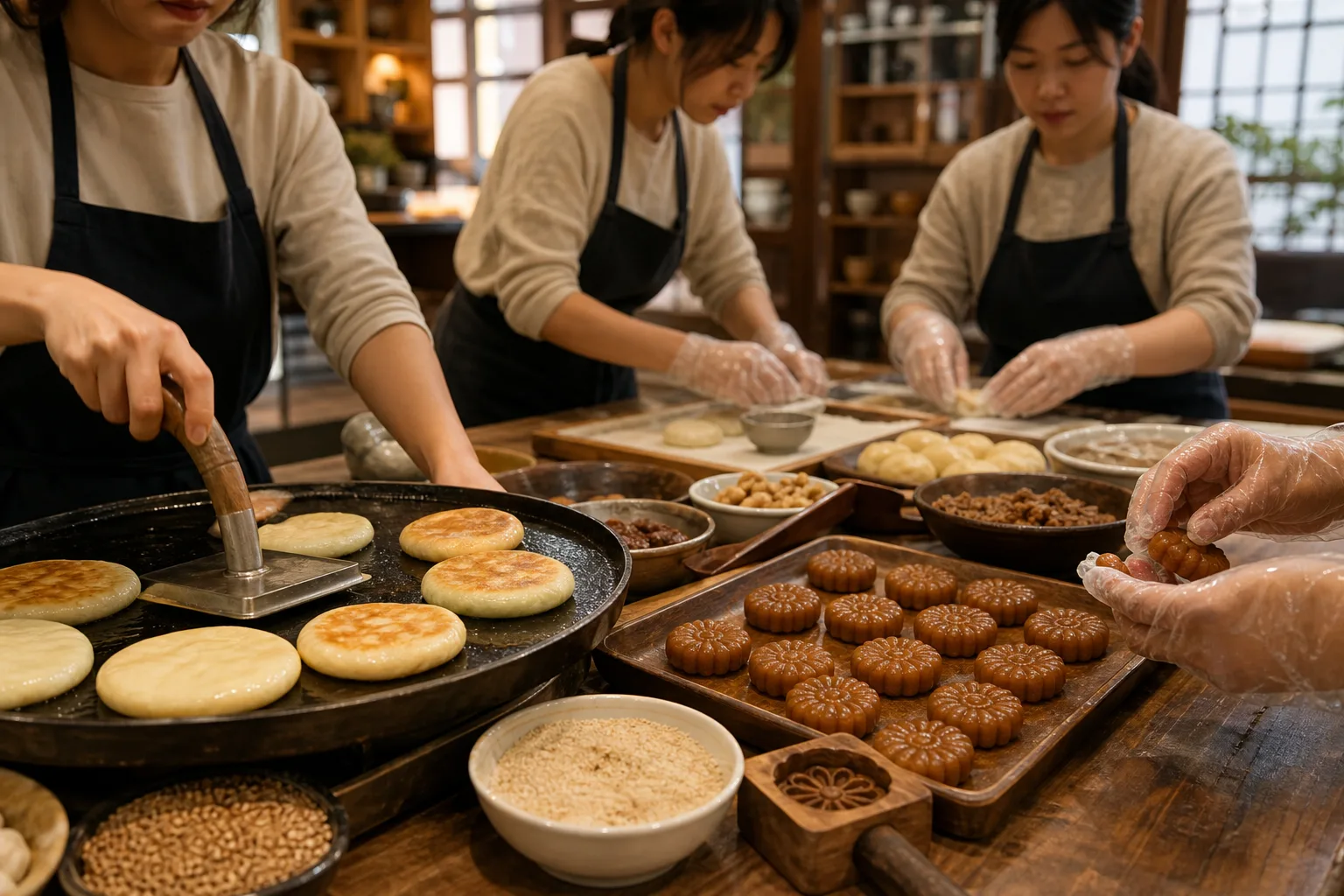
If you want a food activity in Korea that feels both fun and useful, a traditional confection class is one of the best choices. Hotteok gives you a warm, street-food style snack to make and eat right away, while yakgwa and other hangwa-style sweets show you a slower, more ceremonial side of Korean dessert culture. The best classes are short, hands-on, and easy to fit between sightseeing stops.
Fast Answer
The fastest way to decide is this: choose a hotteok or traditional confection class if you want a low-pressure, memorable cooking activity that also produces a giftable snack or dessert. It works especially well for first-time visitors who want something more tactile than a tasting tour but less demanding than a full Korean meal workshop.
A good class usually lasts one to three hours, includes ingredients and tools, and ends with a box or plate of sweets you can eat on the spot or take with you. Hotteok classes are the easiest for beginners because the dough is forgiving and the result is immediate. Yakgwa and other hangwa classes tend to be slower, more detailed, and better if you care about tradition, presentation, and learning the cultural context behind the recipe.
If you are building a Korea food itinerary, this kind of class fits naturally between a market visit, a hanok village walk, and a tea stop. For broader planning, you can pair it with Korean Cooking Classes: Where to Learn to Cook Like a Local if you want savory dishes too, or use it as a lighter alternative on a busy sightseeing day. If you are still sketching out your route, The Ultimate 10-Day South Korea Itinerary for First-Timers is a useful companion. And if you are curious why dessert culture matters so much in the first place, The Rise of Korean Cafe Culture: Why It’s So Unique gives helpful background.
Context You Need
Korean baking classes for hotteok, yakgwa, and related confections sit in a small but important corner of Korea travel. They are not just about dessert. They are a hands-on introduction to how Koreans think about flour, honey, sesame, rice syrup, tea, and seasonal sweets. In practice, these classes often sit somewhere between a cooking lesson, a cultural workshop, and a souvenir-making activity.
Hotteok is the more familiar of the two headline sweets. It is a filled pancake that is usually cooked on a griddle and served hot. Traditional versions are sweet, with brown sugar, cinnamon, nuts, or seeds inside, although modern versions can lean creative. Because it cooks quickly and tastes best fresh from the pan, it is a good entry point for beginners, families, and travelers who want something interactive but not intimidating.
Yakgwa belongs to the broader family of hangwa, or Korean traditional confections. It is typically made from wheat flour, sesame oil, honey, and sometimes rice wine or ginger, then shaped and finished in a way that feels more ceremonial than street-food casual. In Korean food culture, yakgwa is tied to holidays, gifting, ancestral rites, and tea pairing, so a class centered on it often feels more deliberate and slower-paced than a hotteok lesson.
That difference matters when you choose a class. Hotteok is hands-on, quick, and satisfying for people who want to eat what they make immediately. Yakgwa is better for travelers who want to understand the craft behind Korean sweets, learn careful shaping and syruping techniques, and come away with a dessert that feels more like a cultural artifact.
Most travelers do not need a deep culinary background to enjoy either one. A good instructor will explain the ingredients, show the shaping process, and adapt to beginners. What you do need is a realistic expectation: these classes are usually compact, urban experiences, not half-day school-style workshops. They are designed to be easy to book, easy to fit in, and easy to combine with nearby cafes, markets, or heritage neighborhoods.
If you are deciding whether the class is worth your limited time in Seoul or another major city, the answer is usually yes when you want a food activity that doubles as a cultural lesson. It is especially worthwhile if you are traveling with someone who likes dessert more than savory food, or if you want an activity that produces an actual takeaway instead of only memories and photos.
Step-by-Step Guide
The best way to approach a Korean confection class is to think of it as a small itinerary within your day, not a standalone event with lots of logistics. You are usually choosing among location, recipe focus, class length, language support, and what you want to do with the finished sweets afterward.
1. Decide what kind of sweet experience you want
Start with the flavor and format, not the listing.
- Choose hotteok if you want something warm, quick, and familiar.
- Choose yakgwa if you want a more traditional, giftable sweet with stronger cultural context.
- Choose a mixed confection class if you want variety and do not want to commit to just one dessert.
If your trip is already food-heavy, hotteok is often the better balance because it is lighter and more casual. If your trip leans toward heritage neighborhoods, hanok cafes, tea houses, or museum visits, yakgwa fits that mood more naturally.
2. Pick the area based on your sightseeing plan
In Seoul, the easiest choice is usually to stay within a district you were already going to visit. That keeps the class from becoming a transport project.
Good pairing logic looks like this:
- Bukchon, Insadong, or Ikseon-dong for traditional sweets, tea houses, and hanok streets.
- Hongdae or nearby youth-oriented neighborhoods for casual food workshops and flexible schedules.
- Central Seoul for easy subway access and the simplest cross-city planning.
If your day already includes palace visits, old streets, or a tea stop, a confection class makes sense as a cultural anchor. If you are coming from farther away, factor in transit time and leave room for a post-class cafe break.
3. Check the booking page for the practical details
When you compare listings, focus on a few concrete items instead of getting distracted by photos:
- Duration.
- Number of participants.
- Language options.
- Whether ingredients and tools are included.
- Whether you get to take leftovers or boxed sweets home.
- Cancellation and late-arrival policy.
- Meeting point versus on-site arrival.
For first-time visitors, a class with clear English instructions and a simple meeting point is usually worth paying slightly more for. If the listing is vague about what you make, how long it lasts, or where it starts, skip it.
4. Book for the right time of day
The timing of the class changes the experience.
- Morning classes are good if you want to combine the workshop with sightseeing afterward.
- Afternoon classes are good if you want a slower pace and a tea pairing afterward.
- Evening classes are good if you want a cozy indoor activity after a full day of walking.
Hotteok classes work best when you are hungry and want to eat immediately. Yakgwa classes feel better when you are not rushed and can appreciate the shaping, syruping, and presentation.
5. Prepare for a very hands-on session
Do not overpack the day. You usually do not need special clothes, but you should expect:
- Light flour handling.
- Sticky syrups or glazes.
- Warm pans, trays, or griddles.
- Some waiting time during dough resting or cooling.
Wear something comfortable and avoid planning a high-pressure dinner directly afterward unless the class is very short. A confection workshop is not physically strenuous, but it does benefit from patience and a little free time.
6. Think ahead about what to do with the finished sweets
This part is often overlooked. Many travelers finish the class, eat a few pieces, then realize they still have more sweets than they can comfortably carry.
Useful options:
- Eat some immediately with tea or water.
- Pack the rest as a snack for later in the day.
- Use them as a souvenir for a travel companion or hotel snack.
- Pair them with a cafe stop so the dessert does not feel rushed.
If you are traveling in summer, ask whether the class offers packaging suitable for heat and transport. If you are traveling in winter, hotteok is especially rewarding because it is designed to be eaten warm.
7. Combine the class with nearby food culture
The strongest versions of this experience are never only about the workshop itself. They sit in a larger food day.
Try this sequence:
- Start with a market stroll or neighborhood walk.
- Take the confection class.
- Visit a tea house or cafe.
- Finish with a light meal, not a heavy one.
That structure helps the class feel like part of your trip instead of an isolated activity. It also gives you time to compare traditional sweets with the more modern cafe desserts Korea is famous for.
Costs, Hours, and Logistics
Pricing for Korean confection classes varies a lot by neighborhood, duration, and whether the class is private or group-based. As a general travel rule, expect a short group workshop to cost less than a private or premium cultural session. Classes that include a full tea service, English-speaking instructor, or specialized packaging usually sit higher.
Because this is a travel activity, the most useful way to judge value is by what is included:
- Ingredients and tools.
- Instructor time.
- Eating portion versus take-home portion.
- Tea or beverage pairing.
- Short cultural explanation.
- Photo-friendly setup or presentation.
The hours are usually easy to work around because many studios and experience providers run timed sessions rather than open walk-ins. That means you should not assume you can just appear whenever you want. In 2026, the safest move is still to book ahead, especially for weekends, public holidays, cherry blossom season, autumn foliage season, and summer vacation periods when visitor volume is higher.
Transport is straightforward if you stay central. Most travelers will use subway plus a short walk, or a taxi if they are coming from a food-heavy day with bags, children, or tight timing. If a class is in a traditional neighborhood, expect narrower streets, slower walking, and a little more time between the station and the studio.
Payment is usually simple if you are booking online. For in-person add-ons or cafe-style experiences, card acceptance is common in Seoul, but smaller operators can still prefer local payment methods or prepayment through a booking platform. If you are traveling with a foreign card, do not leave payment until the last minute.
The most important 2026 booking caveat is not a specific law or closure but the general pattern of urban travel experiences: schedules can change by season, instructor availability, and group size. If a class looks limited, do not wait to see if it is still there a week later. Reserve early and double-check the meeting instructions the day before.
A few practical notes make the day smoother:
- Arrive 10 to 15 minutes early.
- Confirm the exact address, not just the neighborhood.
- Check whether the space has stairs or elevator access.
- Ask if the class ends with a tasting or just a box to-go.
- Confirm whether the instructor can accommodate allergies such as nuts, sesame, wheat, or honey.
If your main concern is fitting the class into a sightseeing itinerary, the best approach is to anchor it near a district you already plan to visit. That lowers transport risk and makes it easier to continue to a cafe, museum, or dinner reservation afterward.
Variations and Edge Cases
Not every confection class is the same, and the differences matter more than many travelers expect. The recipe, neighborhood, and class style can all change the feel of the experience.
Travelers who care about tradition
If your priority is cultural depth, choose a yakgwa or mixed hangwa class instead of a pure dessert novelty. You are more likely to hear about holidays, ancestral offerings, tea pairing, and how sweets fit into Korean hospitality. This is also the better option if you like the idea of an edible souvenir that feels formal rather than playful.
Families with children
Hotteok is usually the easiest family choice because children can understand the filling-and-flattening process quickly, and the finished product is immediately rewarding. Yakgwa can still work, but it may require more patience and attention to shape and decoration. If you are traveling with younger children, check whether the studio has age guidance or helper support.
Solo travelers
Solo travelers often get the best flexibility because they can fill a single seat without needing to coordinate group preferences. A small-group class is also a nice way to meet people without committing to a social event that lasts all night. If you are alone, prioritize classes with English-friendly instruction and easy transit access.
Budget travelers
Budget travelers should think in terms of time efficiency, not just sticker price. A cheaper class that takes three subway transfers may be less attractive than a slightly pricier one that sits on a route you already need. Also consider whether the class gives you enough finished sweets to replace a separate snack purchase later in the day.
Travelers in summer
Summer adds one important wrinkle: heat. Sticky sweets, syrupy coatings, and boxed desserts can become messy if you carry them around too long. In warm weather, favor classes near your next stop or plan to return to your hotel soon after. This is another reason not to overbook your afternoon.
Travelers in winter
Winter is the ideal season for hotteok. Warm pancakes make more sense when the air is cold, and the experience of eating one fresh from the pan is part of the appeal. Yakgwa works year-round, but hotteok can feel particularly seasonal and satisfying in colder months.
Travelers who want modern dessert culture too
Some travelers prefer to pair a traditional class with cafe exploration rather than treat it as a standalone experience. That is a smart move in Korea because the dessert scene is broad. After your workshop, you can compare what you made with modern shop-bought sweets, premium yakgwa boxes, or tea pairings at a neighborhood cafe.
Mistakes to Avoid
The biggest mistake is booking a class just because the photos look pretty. If the listing does not clearly tell you what you will make, how long it takes, where it starts, and whether you can eat or take home the results, it is not a good booking.
The second mistake is assuming hotteok and yakgwa are interchangeable. They are not. Hotteok is warm, fast, and casual. Yakgwa is slower, more traditional, and better for travelers who care about presentation and heritage. Pick the one that matches your trip style.
The third mistake is ignoring timing. A class that ends right before your dinner reservation, museum slot, or train departure can turn an enjoyable activity into a stressful one. Leave buffer time.
Finally, do not forget packaging and transport. If you make sweets to take away, ask how they will be packed and how long they will stay in good condition. That small question can save you from carrying sticky dessert through the rest of the day.
FAQ
Is a Korean confection class good for beginners?
Yes. Most hotteok and yakgwa classes are designed for beginners, not trained bakers. The instructor usually leads the process step by step, and you are not expected to know Korean techniques in advance.
Which is easier, hotteok or yakgwa?
Hotteok is easier for most travelers. The process is simpler, the cooking time is shorter, and the result is more forgiving. Yakgwa has more detail and is better when you want something traditional and giftable.
How long does a class usually take?
Many classes run one to three hours. Shorter workshops are common for hotteok, while yakgwa or mixed confection classes may run longer because there is more shaping, explanation, and cooling time.
Should I book in advance?
Yes, especially in 2026 travel periods when small-group classes can sell out or move schedules. Advance booking also gives you time to confirm language support, dietary concerns, and the exact meeting point.
Can I do this if I do not speak Korean?
Usually yes. Many travel-facing classes in Seoul are built for international visitors and offer English guidance or at least simple visual instruction. Still, check the listing carefully before booking.
Are these classes worth it if I already visit cafes and bakeries?
Yes, if you want more than a tasting. A class gives you a process, a story, and a takeaway. That makes it different from ordering dessert at a cafe, even if the final sweet overlaps in flavor.
What should I combine it with?
A market walk, a hanok neighborhood, or a tea stop works well. If you want a broader food day, combine the class with a savory cooking workshop or a cafe crawl rather than another heavy meal.
Next Steps
The best next move is to decide whether you want a warm, casual hotteok experience or a slower yakgwa-and-hangwa workshop, then book a class in the same district you already plan to visit. That keeps the activity easy to fit into your day and makes the transport side almost effortless.
If you want to deepen the food itinerary, move from this dessert class to a savory cooking lesson, then finish with a tea or cafe stop. That sequence gives you a full Korean food story in one day: street snack, traditional confection, and modern cafe culture, all without overloading the schedule.