Korea Winter Wonderland: Ice Festivals, Snow and Onsen Season
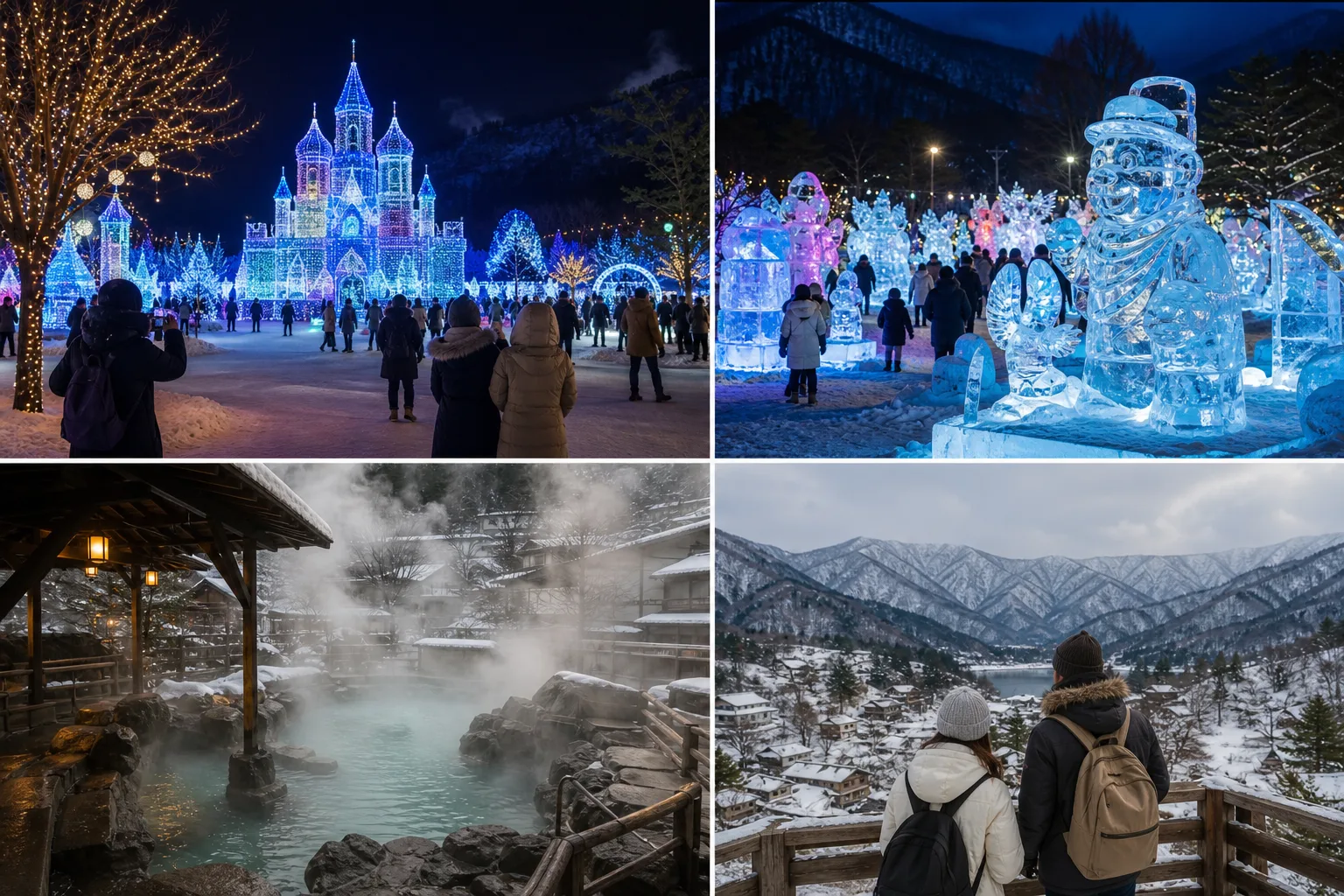
If you are trying to make a Korea winter trip feel magical instead of miserable, the trick is not just packing warmer clothes. It is building the trip around the right mix of ice festivals, snow access, and a reliable warm-up plan after dark. This guide shows how to do that without wasting time on guesswork.
Introduction
Winter in Korea works best when you stop treating the whole country as one weather pattern. Seoul, Gangwon-do, the east coast, and the southern onsen towns can feel like different trips entirely. The best winter itineraries combine one high-energy snow or ice experience with one recovery day in a bathhouse, hot spring, or cozy city neighborhood.
That is why many travelers struggle with winter Korea planning. They want snow, but not endless bus transfers. They want a festival, but not a schedule that falls apart when the dates shift. They want a warm soak after a cold day, but they do not know whether to choose a jjimjilbang, a hot spring, or a hotel spa. The right answer depends on your route, your budget, and how much movement you want between cities.
This article is built for first-time and return visitors who want a winter trip that feels efficient, scenic, and easy to execute. You will get a practical framework for deciding where to go, how to fit in ice festivals, where snow is most likely to be worth the detour, and how to end the day in warm water instead of frozen regret.
If you are building a broader trip around the season, the Korea Seasonal Travel Guide: Best Time to Visit by Month helps you place winter in the full year, and the The Ultimate 10-Day South Korea Itinerary for First-Timers is useful if you need a route that already balances cities, day trips, and pacing.
Why Winter Works So Well in Korea
Winter in Korea is not only about cold air. It changes the shape of the trip. Streets feel sharper, food feels more rewarding, and the same neighborhoods that are ordinary in spring become more atmospheric in January and February. Snow also makes short escapes from Seoul and Busan more appealing, because a single winter day can justify the effort of leaving the city.
For many travelers, the season creates a rare travel pattern: active outdoors in the morning, warm indoors by afternoon, and slow food and bathhouse time at night. That rhythm is a better fit for Korea than trying to overpack every day with sightseeing. The country rewards travelers who are willing to do less but do it well.
What winter adds to the trip
The first benefit is visual. Snow changes bridges, rivers, pine forests, palace roofs, and mountain villages in a way that feels distinctly Korean rather than generic winter Europe. Even in places that do not get heavy snow every week, a single snowfall can make a familiar route feel completely different.
The second benefit is practical. Winter is one of the easiest seasons to justify hot baths, steam rooms, and long meals indoors. That matters because Korea is excellent at all three. You can spend a cold afternoon at an ice festival or in a mountain valley, then move directly to a heated floor, a bathhouse, or a restaurant with boiling stews.
The third benefit is planning leverage. Winter encourages narrow, intentional trips. Instead of trying to cover every region, you can base yourself in Seoul, add one snow destination, and still feel like you had a complete seasonal experience. That is especially useful for travelers with limited time or travelers who hate constantly switching hotels.
What winter does not forgive
Winter travel in Korea is rewarding, but it is not casual. If you ignore transit timing, you will waste the best daylight. If you assume the same outerwear works for wind, wet snow, and freezing river valleys, you will be uncomfortable by lunchtime. If you expect festival dates to be identical every year, you may miss the actual event.
The most important mindset shift is to plan around conditions rather than attractions alone. An ice festival is not just a place; it is a timing window. A snow village is not just an activity; it is also a road and weather decision. A bathhouse is not just a spa; it is your winter recovery system.
How to think about the season
The cleanest winter itinerary usually has three parts:
- A city base with easy food, transit, and indoor backups.
- One cold-weather highlight, such as an ice festival, snow village, ski area, or mountain day trip.
- One warm-down experience, such as a jjimjilbang, public bath, or hot spring area.
That structure works whether you have four days or two weeks. It also scales well for different budgets. Budget travelers can use express buses, basic inns, and public bathhouses. Comfort-focused travelers can add private transfers, ski resort hotels, and premium spas. The core pattern stays the same.
Ice Festivals and Snow Days Worth Building Around
Korea's winter festivals are most useful when you treat them as anchors, not the only reason to travel. The best-known events are usually concentrated in Gangwon-do and nearby snowier regions, where temperatures stay cold enough for ice activities and river surfaces can support winter programming. Exact dates and admission details move from year to year, so the practical rule is simple: choose the region first, then confirm the festival calendar before booking transport.
The most famous format is the ice-fishing festival, where visitors walk onto frozen river surfaces to fish, ride sleds, eat grilled trout, and join seasonal games. Even if you are not there to fish, the atmosphere is the point. These events give you a concentrated winter experience without needing a ski trip or long mountain hike.
How to choose an ice festival
Not every festival suits every traveler. If you are going mostly for photos and novelty, choose the easiest option from Seoul or your overnight base. If you want a fuller winter day, look for festivals that combine fishing, sledding, snow play, light displays, and food stalls. If you travel with children or older family members, prioritize flatter walking areas and fewer transfer steps.
The strongest festivals usually share four qualities:
- They are reachable by direct bus or a manageable rail-plus-shuttle connection.
- They offer more than one activity, so the trip stays worthwhile even if one attraction is crowded.
- They have clear online ticketing or easy on-site admission.
- They sit near other winter scenery, so the day can expand naturally.
That combination matters because winter day trips fail most often when the main attraction is isolated. If the festival is great but the area has no food, no indoor rest, and no easy exit, the whole experience becomes harder than it needs to be.
What to expect on the ground
Most winter festivals are busy in the late morning through afternoon window. If you arrive early, you get better photos and shorter queues. If you arrive too late, you may still enjoy the event, but you will spend more time in lines than on activities. In practical terms, that means planning your outward transit as if the festival were the only thing you will do that day.
Dress for standing still, not only for walking. People often underestimate how cold they feel when they stop moving to fish, wait in line, or take photos. Waterproof shoes, warm socks, hand warmers, and a windproof outer shell matter more than fashion. If you plan to kneel on ice or snow, also think about gloves that still let you use your phone.
Food is part of the winter appeal. Hot stew, grilled fish, roasted chestnuts, fishcake soup, and sweet street snacks all become part of the festival memory. Do not try to be too efficient about meals. A winter festival is one of the few times where the right lunch break improves the entire trip.
Snow days beyond the festival
If your dates do not line up with a major festival, you still have good winter options. Ski resorts, mountain cable cars, and winter scenery parks can deliver the same emotional payoff without a festival schedule. That is often the better choice for travelers who want flexibility, or for anyone traveling late in the season when event programming may be winding down.
For many first-time visitors, the easiest win is to combine Seoul with a winter day trip to a colder region, then return to the city for dinner and a bathhouse night. That keeps the trip simple while still giving you a real snow experience.
The Best Warm-Up Strategy: Jjimjilbang, Hot Springs, and Onsen-Style Recovery
Once you have spent a day in the cold, the warm-up matters as much as the snow. Korea does not use the Japanese onsen system in the same way, but the country offers a strong recovery culture through jjimjilbangs, public bathhouses, spa hotels, and hot spring towns. In winter, that is not a luxury add-on. It is how you make the trip feel sustainable.
If you want a deeper primer on bathhouse etiquette, room types, and how to behave like a local, the Ultimate Guide to Jjimjilbang: How to Use a Korean Sauna Like a Local is the right companion piece.
Jjimjilbang vs hot springs
The two experiences solve different problems. Jjimjilbangs are the most flexible option. They are good for a city stay because they are often open late, easy to reach, and priced for ordinary travelers. They are ideal when you want to shower, soak, lie on heated floors, and spend a few hours warming up before dinner or sleep.
Hot springs are better when the bath itself is the destination. They work especially well on mountain or coastal routes where the point is to leave the city behind. If you are building a romantic winter day, a hot spring stay can feel more memorable than a standard bathhouse because the scenery and quiet are part of the product.
When people say "onsen season" in Korea, they usually mean the season for soaking, not a literal Japanese onsen experience. That is an important distinction. In Korea, the question is less about naming and more about choosing the right recovery format for your route.
Why winter is the best bathhouse season
Winter makes every warm indoor space feel more valuable. A bathhouse after an ice festival is the obvious example, but the same logic applies after a long temple visit, a coastal walk, a ski day, or a cold market crawl. Your body needs a reliable reset, and Korea gives you many ways to get it.
Bathhouse time also helps you travel better the next day. Warmth, rest, and hydration improve the rest of the itinerary far more than trying to push through another cold evening. That is especially true on short trips, where one bad day can distort the whole schedule.
How to pair warm and cold experiences
The best winter pairings are simple:
- Morning snow activity, afternoon bathhouse.
- Afternoon festival, evening stew and jjimjilbang.
- Mountain day trip, overnight hot spring stay.
- City sightseeing, late-night sauna, early start next day.
You do not need to do all of them. In fact, most travelers should not. One cold highlight and one warm recovery session are enough to make the trip feel intentional.
Practical Guide
Hours, admission, and prices
Winter festival logistics change every year, and that is especially true for ticketing, shuttle options, and special activity pricing. A responsible plan is to treat official websites as the final source and use travel blogs only for route ideas. For 2026 and beyond, assume that:
- peak activity windows may sell out on weekends,
- shuttle schedules may be limited,
- on-site food and rental prices may differ by time slot,
- night programs may have separate admission rules.
For jjimjilbangs, prices usually depend on the neighborhood, the quality of the facilities, and whether you stay only for a short session or overnight. Budget city bathhouses are often the most efficient value, while premium spa complexes charge more but reduce friction if you want a clean, easy experience.
If you are comparing options, do not only look at the ticket number. Look at what is included:
- locker and towel policy,
- rental clothing,
- sleeping or lounge access,
- bath and sauna variety,
- food availability,
- parking or transfer convenience.
That checklist matters because a "cheap" winter activity can become expensive if you add multiple taxis, cold-weather gear, and meals on the fly. In Korea, the smarter choice is usually the one that minimizes small annoyances.
How to get there
Most winter destinations are easiest from Seoul, but the transit mode changes by region. For the major winter festival corridor in Gangwon-do, intercity bus and organized day tours are often the least stressful options. If you are traveling independently, check whether the venue has a shuttle from the nearest rail station or bus terminal.
If you are heading to a ski resort or mountain town, remember that winter roads can slow travel even if the distance looks short on a map. Give yourself a bigger buffer than you would in summer. A one-hour transfer can easily become two once snow and weekend traffic are added.
For city bathhouses, local subway access is often enough. That makes jjimjilbangs a practical last stop after a festival or winter market evening. You can keep the day flexible and avoid committing to a full overnight outside the city.
Booking strategy
Book ahead when the experience is limited, timed, or weekend-heavy. That includes popular ice festivals, ski packages, and resort stays. For standard bathhouses, you usually do not need elaborate reservations unless you are choosing a premium spa or a place with private rooms.
If you are deciding between a day tour and self-arranged transport, compare the hidden time cost. A tour may be more expensive, but if it saves you from coordinating buses, tickets, and last-mile transfers in freezing weather, it may actually be the better value.
For first-time winter travelers, the simplest booking pattern is often:
- Reserve the long-distance transfer or tour first.
- Book the overnight base second.
- Add bathhouse or hot spring reservations only if the venue requires them.
- Leave room for weather changes.
That order keeps the itinerary stable without overcommitting before you know how cold or snowy the week will be.
Sample winter planning window
If you are traveling for five to seven days, a practical winter window looks like this:
- Day 1: arrive in Seoul, light sightseeing, dinner, rest.
- Day 2: city winter highlights, palace or market photos, jjimjilbang.
- Day 3: ice festival or snow day trip.
- Day 4: slow morning, coffee, indoor neighborhood exploring.
- Day 5: hot spring or ski-side day trip.
- Day 6: buffer day for weather or shopping.
- Day 7: depart.
That pacing is useful because winter weather is not something you "win" by forcing more activities into the day. The trip becomes better when you build in a few lower-intensity blocks.
Tips and Common Mistakes
Bring the right layers, not just a heavy coat
The most common winter mistake is overvaluing thickness and undervaluing layering. A bulky coat helps, but only if it blocks wind and fits over insulating layers. Thermal base layers, warm socks, gloves, and a hat matter more than many travelers expect.
If your feet get cold, the whole day feels worse. If your hands are freezing, you stop taking photos and checking routes. If your ears are exposed in wind, you will rush the experience instead of enjoying it. Winter gear is not about looking ready for the snow; it is about staying comfortable long enough to actually enjoy the plan.
Do not assume every venue is the same temperature
Korean winter travel often mixes indoor heat with outdoor freezing. Bathhouses, cafes, restaurants, transit platforms, and hotel rooms may all feel different. Bring layers you can remove easily. That matters because the biggest comfort problem is usually temperature swings, not constant cold.
Do not overbuild a festival day
Ice festivals are easy to ruin by adding too much. If you try to combine a festival, a major museum, a long market crawl, and a second distant attraction, the day turns into transit instead of travel. One anchor activity and one warm meal are enough.
Watch for weather and timing drift
Winter weather can change the whole tone of a trip. Snow may arrive later than expected. Ice conditions can change. Special events may move or shorten hours. That is why you should verify the latest official details close to departure, especially if you are traveling for a specific festival rather than general winter atmosphere.
Use bathhouses strategically
Many first-time visitors treat a jjimjilbang as a novelty. It is more useful than that. It can be your post-festival reset, your late-night recovery option, your early-morning shower stop, or your transition between cities. Once you see it that way, the whole itinerary becomes easier to manage.
Common mistakes to avoid
- Booking winter transport too tightly.
- Assuming a snow attraction will look the same every day.
- Wearing fashion boots instead of weatherproof shoes.
- Forgetting that cold weather makes simple food and drinks part of the experience.
- Treating bath time as optional instead of part of the route.
The best winter trips are not the most ambitious ones. They are the ones that feel easy while you are actually on the road.
FAQ
When is the best time to visit Korea for snow and winter festivals?
The most reliable winter window is usually January through early February, when the cold is strongest and festival programming is at its peak. That said, the exact timing varies by year and by region. If your trip depends on a specific event, confirm the official dates before booking flights or nonrefundable lodging.
Are ice festivals worth it if I do not fish?
Yes. The appeal is not only the fishing. Most winter festivals offer sledding, winter games, food stalls, river scenery, and an atmosphere you cannot easily recreate elsewhere. If you enjoy seasonal travel and photos, the trip can still be worthwhile even if you never touch a fishing rod.
Is a jjimjilbang better than a hotel spa in winter?
It depends on the kind of rest you want. A hotel spa is better if you value privacy and a polished setting. A jjimjilbang is better if you want a more local, flexible, and budget-friendly experience that can include sleeping, snacking, and longer indoor downtime. For many winter trips, the jjimjilbang is the more practical choice.
Do I need to book bathhouses in advance?
Usually not for standard city jjimjilbangs. You should book ahead only for premium spa complexes, private suites, or places that explicitly require reservations. For most travelers, the bigger priority is checking opening hours, last entry, and whether the venue has separate pricing for overnight use.
What should I pair with a winter festival day?
A warm dinner and a bathhouse session are the easiest pairings. If you have more time, combine the festival with one nearby winter-viewpoint stop and keep the rest of the day light. Winter travel works best when you avoid turning every day into a marathon.
Conclusion
Korea winter travel works best when you build around contrast: cold and warm, outdoor and indoor, active and restorative. Ice festivals give you the seasonal peak. Snow regions give you scenery. Jjimjilbangs and hot springs make the trip sustainable. Put those pieces together, and winter stops being a season to avoid and starts becoming one of the best times to visit.
If you want the easiest version of the trip, choose one winter highlight, one warm recovery stop, and a city base with flexible food and transit. That simple structure will get you farther than an overpacked itinerary ever will.
For most travelers, the winning formula is not complicated. Pick the cold thing that excites you, choose the warm place where you will recover, and leave enough room for weather to do its work. That is how a Korea winter trip becomes memorable without becoming exhausting.