Long-Stay Visa Options for China: Tourist Extension & Residence Permits

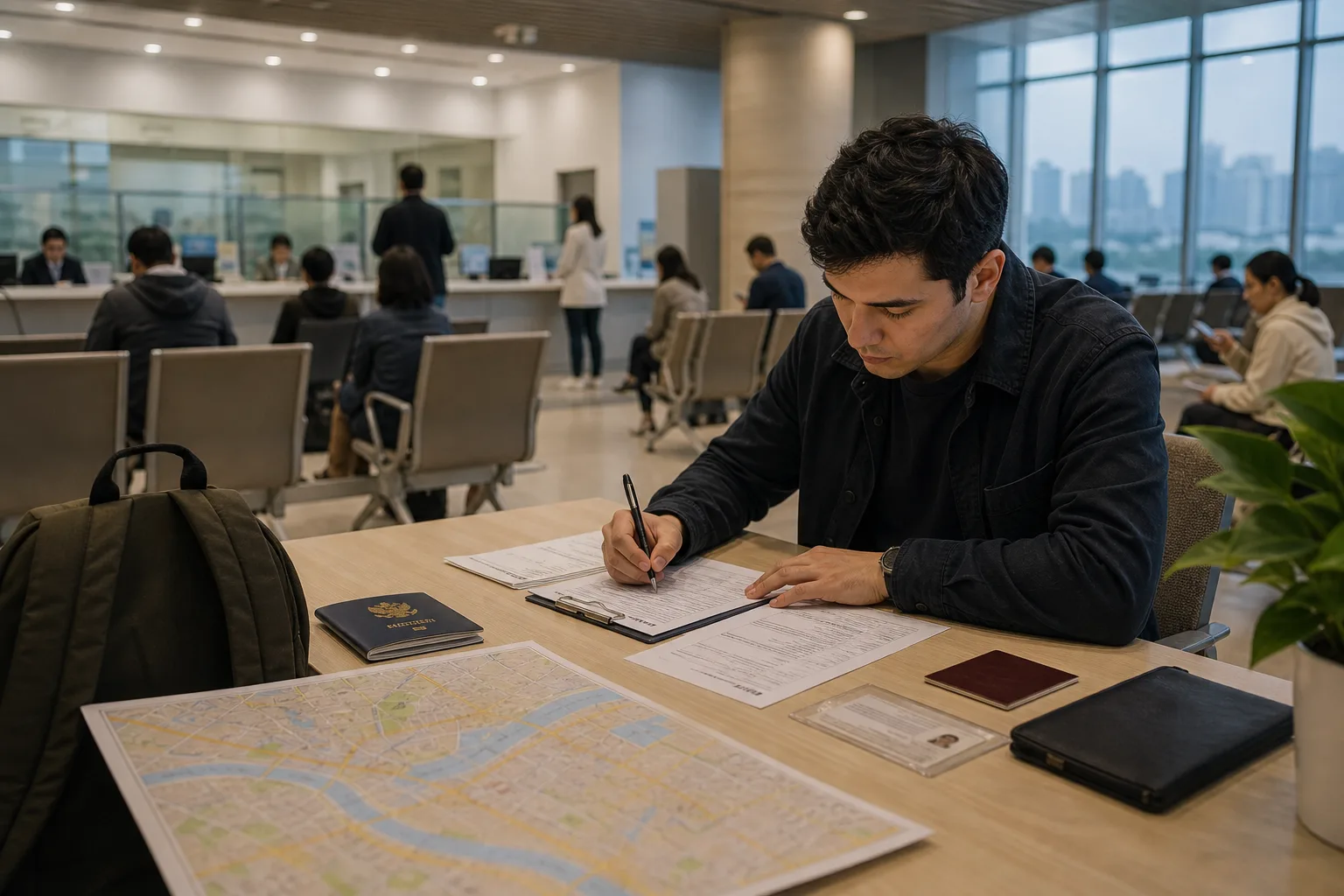
If you are already in China and your trip is turning into a longer stay, the biggest mistake is treating every long-stay problem as if it has the same answer. Some travelers only need a tourist visa extension. Others need to switch into a different visa class and then apply for a residence permit. A few should leave and re-enter with a cleaner plan instead of trying to improvise at the last minute.
Introduction
China rewards planning, but it does not reward assumptions. A short holiday can become a month of rail travel, a family visit can become a relocation trial, or a business trip can turn into a work assignment before anyone has time to sort out paperwork. That is where travelers get into trouble: they hear “extension,” “residence permit,” and “status change” used loosely, then assume each route works the same way.
This guide breaks the process into the practical choices you actually face. First, it explains when a tourist visa extension is the right tool and when it is not. Then it compares residence permits, which are usually tied to work, study, family reunion, or private affairs rather than tourism. Finally, it walks through the real-world process: where you apply, what to bring, what office timing looks like, how approval tends to work, and the common mistakes that create overstay risk.
For broader trip planning, especially if you are lining up rail routes, payment methods, and region-to-region logistics while deciding whether to stay longer, the broader context in China Travel Planning: Visa, WeChat Pay, High-Speed Rail & Practical Guide is useful. If your stay in China is tied to remote work or a longer nomadic plan, Living in China as a Digital Nomad: Visa, VPN & Remote Work Guide adds the separate practical and legal caution that tourist status is not a work status.
Primary Topic Section
The simplest way to think about long-stay options in China is this:
- A tourist extension is for someone who entered on a tourist-type stay and needs a bit more time for tourism or short personal reasons.
- A residence permit is for someone whose purpose of stay is longer and more structured, such as work, study, family reunion, or certain private affairs.
- A status change is not a casual “upgrade” from tourism to long-term living. It usually requires a new underlying purpose, supporting documents, and the correct visa path.
The distinction matters because many travelers try to stretch a tourist stay far beyond what the law and the local office will accept. In China, the office that handles your case is usually the local exit-entry administration under the public security system. Approval is discretionary. If your reason is weak, your documents are incomplete, or your timing is bad, you may be told to leave instead of being granted extra time.
Tourist extension: what it is and when it fits
A tourist extension is the right answer when your reason for staying longer is still basically tourist-related: you want more time to see another region, your itinerary changed, you need a few extra days because of a cancelled train, or you need to stay a little longer for practical travel reasons. It is not meant to support a new life plan.
In practice, that means the extension is most plausible when:
- You entered on an ordinary tourist stay and your passport and current stay status are still valid.
- You can explain the delay with a straightforward reason.
- You are not trying to use tourism as a cover for work, study, or long-term residence.
- You have enough supporting documents to show where you are staying, when you plan to leave, and how you will support yourself.
The key limitation is that a tourist extension is usually short and uncertain. Even when local offices approve it, the extension often buys time rather than solving the underlying plan. If your real goal is to stay several months, work remotely from inside China, join family, or settle into a longer arrangement, then a residence permit or another visa category is the more honest route.
Tourist extension requests are also highly local. One city may process them routinely. Another may be more conservative. A third may ask for extra documents that you did not expect, such as a hotel registration printout, proof of onward travel, or a written explanation of your itinerary. You should not assume that advice from a friend in Beijing will match the way your local office works in Hangzhou, Chengdu, or Guangzhou.
Residence permit: the real long-stay tool
A residence permit is not a tourist extension with a better name. It is the document that usually supports longer lawful residence after you have entered on the appropriate underlying visa type. In other words, if your purpose is genuine long-stay, the residence permit is often the end result of the correct visa pathway, not something you casually ask for after landing as a tourist.
Residence permits are commonly tied to:
- Employment
- Study
- Family reunion
- Private affairs
- Other recognized long-term purposes under the local rules
Most travelers should understand one practical point: if your plan is to live in China for a while, the visa category you use to enter matters more than people expect. A tourist stay is not a universal backdoor to a residence permit. If you are already in China and your purpose has changed, the office may want you to regularize the situation through the proper exit and re-entry route, not through a simple tourism extension.
Residence permits also come with different document burdens. You may need an invitation letter, employer registration paperwork, school admission documents, family relationship proof, or health-related documentation depending on the category. That is why travelers should separate “I want more time” from “I now have a different reason to stay.” They are not the same problem.
Which option matches your situation
Use this as the simplest decision filter:
- If you just need a little extra time for tourism, start with a tourist extension.
- If your purpose has changed to work, study, or family residence, move toward the correct visa route and residence permit process.
- If you do not have a strong lawful basis to remain, leaving on time is better than trying to force an extension that may be refused.
There is also a psychological trap here. Travelers often delay the decision because they think the office will “probably” grant the extra time. Sometimes it will. Sometimes it will not. The important question is not whether a workaround exists in theory, but whether your actual documents and purpose fit the local office’s expectations.
Secondary Topic Section
The long-stay conversation in China is really about three different levels of certainty.
First is the tourist extension, which is the least structured and most discretionary. Second is the visa change or status regularization process, which depends on having the right reason and paperwork. Third is the residence permit, which is the most stable but also the most demanding because it is tied to a recognized long-term purpose.
Why tourist extensions are not a substitute for planning
The travelers who get into difficulty are usually not reckless; they are simply late. They arrive with a flexible itinerary, then decide they want to spend another two weeks in Sichuan, another few days in Yunnan, or another month in Shanghai. By the time they look into paperwork, they are close to expiry and trying to solve a legal issue on a travel deadline.
That creates four problems:
- You may be too close to expiry to gather the documents calmly.
- The local office may require in-person processing during weekday office hours only.
- Your hotel, address registration, and onward travel proof may not be neatly organized.
- You may discover that the extension is possible, but not for the length you hoped.
The smarter move is to decide early whether your stay is still a trip or has become a longer project. If it is still a trip, keep it in tourist territory and apply early. If it is becoming a relocation, start collecting the documents that match the actual purpose.
When a residence permit makes sense
Residence permits make sense when your stay is tied to a more durable reason than tourism. That usually means you have a sponsoring school, employer, family relationship, or other recognized basis. The advantage is stability: once the permit is issued, you are not constantly wondering whether the next week of travel is legal.
The tradeoff is commitment. A residence permit is not a vague “stay longer” option. It comes with a specific purpose, a specific local process, and a responsibility to keep your status aligned with reality. If you stop studying, leave the job, or change the basis of stay, your document situation may need to change too.
That is why long-stay travelers should not think in terms of “What is the longest I can stay on a tourist path?” Instead, ask: “What is the correct legal basis for the stay I actually want?” Once you ask that question, the options become clearer.
If your plan is long-term but not work-based
Not everyone is coming for a job. Some people are visiting family, helping with personal matters, or trying out life in China before they decide on a longer move. In those cases, the route is still not a generic tourist extension if the stay becomes substantial.
The practical question is whether your purpose can support a residence-type path. If it cannot, then you may need to structure the trip as a series of lawful visits rather than one long improvised stay. That is especially important for anyone who assumes that a tourist entry can quietly cover remote work, client calls, or day-to-day business activity. It usually cannot.
The difference between “can I stay?” and “should I stay?”
People often ask whether a tourist extension is possible when the better question is whether it is sensible. Just because an office may accept an application does not mean the route fits your purpose or risk tolerance.
Use these questions:
- Do I still have a tourist reason for being here?
- Do I have the documents the local office usually wants?
- Will I actually leave when the extension ends?
- If I am staying longer, do I need a different visa path entirely?
If your honest answer to the first or last question is “no,” then forcing the tourist route is usually a mistake.
Practical Guide
The practical side is not glamorous, but it is what prevents overstay problems.
Where to apply
Most extension and residence-permit matters are handled by the local exit-entry administration office in the city where you are staying. In larger cities, there may be a dedicated service hall or immigration office. In smaller places, the process may feel more like a public-security bureau visit with specialized counters.
Do not assume you can apply anywhere in China. Local jurisdiction matters. You normally apply where you are registered or where you are lawfully staying, and the office may want proof of your local address registration. If you move between cities, that can complicate the process.
What to bring
The exact document list varies by city and by the purpose of stay, but a practical baseline is:
- Passport with enough validity remaining
- Current visa or stay information
- Temporary accommodation registration or proof of local registration
- Passport-style photo if requested
- Completed application form
- Supporting explanation of why you need more time
- Proof of onward travel or a revised itinerary, if the office asks for it
- Any invitation, employer, school, or family documents if you are applying for a non-tourism stay path
The biggest mistake is arriving with just a passport and hope. Office staff are not there to build your file for you. If your case is straightforward, the process is much easier. If your case is borderline, missing one supporting document can be enough to delay or refuse the application.
Hours, queues, and timing
There is no single national office schedule that you should rely on blindly. In practice, many offices follow weekday government hours, often with a lunch break, and some cities require appointments or issue queue numbers early in the day. The safest assumption is that you should plan for a weekday morning and verify the exact local hours before you go.
Do not leave this for the final day. Even if a city accepts same-day processing, a crowded office, a missing registration slip, or a request for an extra document can turn a simple visit into a stressful scramble. Give yourself buffer time so you can fix small problems without risking an overstay.
Prices and fees
This is another place where travelers get lazy and search for a universal answer. There usually is not one.
Fees can depend on:
- Nationality
- Service type
- Local city or province
- Length of the requested extension
- Whether you are changing status or applying for a residence permit rather than a simple extension
If an office or service hall publishes a current fee notice, use that as the source of truth. If not, ask the local counter before you submit. Do not assume a blog, forum, or old screenshot still matches the current schedule.
How to get there
Most offices are in urban government districts, not in tourist areas. The simplest approach is to use your map app to search for the local exit-entry administration bureau, then check whether the office is in a public-security service center or a separate building.
In practical travel terms, that means:
- Leave extra time for subway transfers and security screening.
- Bring your passport whenever you go, not just the documents you think you need.
- Keep a digital copy of your accommodation registration and travel itinerary.
- Save the office address in both English and Chinese if possible.
If you are already planning rail hops and city moves, make the visa office stop part of your itinerary rather than a last-minute detour. The broader travel workflow in the China travel planning guide is the right companion for that kind of planning.
Step-by-step process for a tourist extension
The broad flow is usually:
- Check your stay expiry date and confirm you have enough time left.
- Confirm the local office and its current document list.
- Complete accommodation registration if needed.
- Prepare your passport, photo, form, and supporting explanation.
- Submit the application in person, if the office requires in-person filing.
- Wait for review and keep your passport available if the office retains it.
- Collect the result and verify the new stay period immediately.
If the office asks for additional documents, respond quickly and keep copies of everything. The more organized your application packet is, the better your chances of an easy outcome.
Step-by-step process for a residence permit
The residence-permit path is more structured:
- Confirm that your actual purpose of stay fits a residence-permit category.
- Gather the sponsor or basis documents required for that category.
- Enter China with the correct underlying visa or legal basis, if applicable.
- Complete the required local registration steps.
- Apply within the required time window after arrival or status change.
- Complete any biometrics, medical, or photo requirements the office requests.
- Track the validity dates and renew before expiry.
If your underlying purpose is not compatible with the document trail you have, stop and fix that first. Residence permits are about consistency, not improvisation.
Tips & Common Mistakes
The people who handle this smoothly usually do a few simple things well.
Start early
The most important tip is also the least exciting: do not wait until your stay is almost over. Start checking the rules well before expiry, especially if you are moving between cities or if your accommodation arrangement is changing.
Keep your address registration current
China’s local registration rules matter more than many travelers expect. If you change hotels, apartments, or cities, your registration situation may change too. Some offices will want proof that your current stay is properly registered before they process anything else.
Do not assume tourism can cover work
This is the mistake that turns a simple travel question into a status problem. If you are doing meetings, contracts, client work, or any kind of regular remote work, do not assume a tourist extension makes that okay. If your real goal is a work-capable life in China, you need a proper visa strategy from the beginning.
Treat official wording as more important than internet advice
Different cities may handle similar cases differently, and old forum posts age badly. Use local official guidance first, then use travel articles to understand the landscape. When the two conflict, the office notice wins.
Keep copies of everything
Bring printed copies and digital photos of:
- Passport identification page
- Current visa page
- Accommodation registration
- Flight or rail itinerary
- Invitation or sponsor papers, if relevant
That way, if the counter asks for something you did not expect, you are not stuck running back to a hotel or relying on hotel staff to retrieve paperwork.
Know when to stop pushing
If your application is clearly misaligned with your purpose, do not keep trying to force the wrong route. The cleanest solution may be to leave on time and re-enter later with the right structure, or to restart the plan from the correct visa type.
Understand the digital-nomad trap
Many travelers think they can convert a tourist stay into a long remote-work stay just by “staying quietly.” That is risky and often incompatible with the actual legal basis of the stay. If your intention is to keep working while in China, read the digital-nomad-specific guidance and treat the visa question as part of the core plan, not an afterthought.
FAQ
Can I extend a China tourist visa if I only want to stay a little longer?
Sometimes, yes, but approval is not automatic. The office will look at your current status, your reason for staying, your documents, and your local registration situation. If the reason is weak or the paperwork is incomplete, the answer may be no.
Is a residence permit the same as a tourist extension?
No. A tourist extension usually gives more time on a short-stay basis. A residence permit is tied to a longer-term purpose such as work, study, family reunion, or another recognized category. They solve different problems.
Do I need to apply before my visa expires?
Yes. Do not wait until the last minute. In practice, you should start the process early enough to handle document requests, office hours, and possible delays. If your stay expires before you file or before a decision is made, you can create an overstay problem.
Can I switch from tourism to work or family residence while I am in China?
Sometimes a status change is possible, but it depends on the category, your supporting documents, and local processing rules. You should not assume every case can be converted in place. In many situations, the proper visa route should have been set up before entry or through a formal local process.
What happens if my extension request is refused?
You should depart promptly and avoid turning a refusal into an overstay. A refusal means the office did not agree that your current reason justifies more time. If you still need a longer stay, re-plan the trip around the correct visa category instead of trying to push past the decision.
Conclusion
If your China trip is becoming longer than planned, the right response is not to guess. Decide whether you need a small tourist extension or a real long-stay route, then match the application to the purpose of your stay. Tourist extensions are for short extra time. Residence permits are for structured longer stays. They are not interchangeable.
The safest strategy is simple: know your expiry date, keep your local registration current, collect the right documents early, and apply at the correct office before time runs out. If your real plan is work, study, or another long-term stay, do not force a tourist solution onto a non-tourist life.
When you treat the visa question as part of trip design rather than a last-minute fix, China becomes much easier to navigate. Plan the stay you actually want, then choose the status that supports it.