Japan Budget Food Strategy: Convenience Stores, Ramen & Teishoku Sets

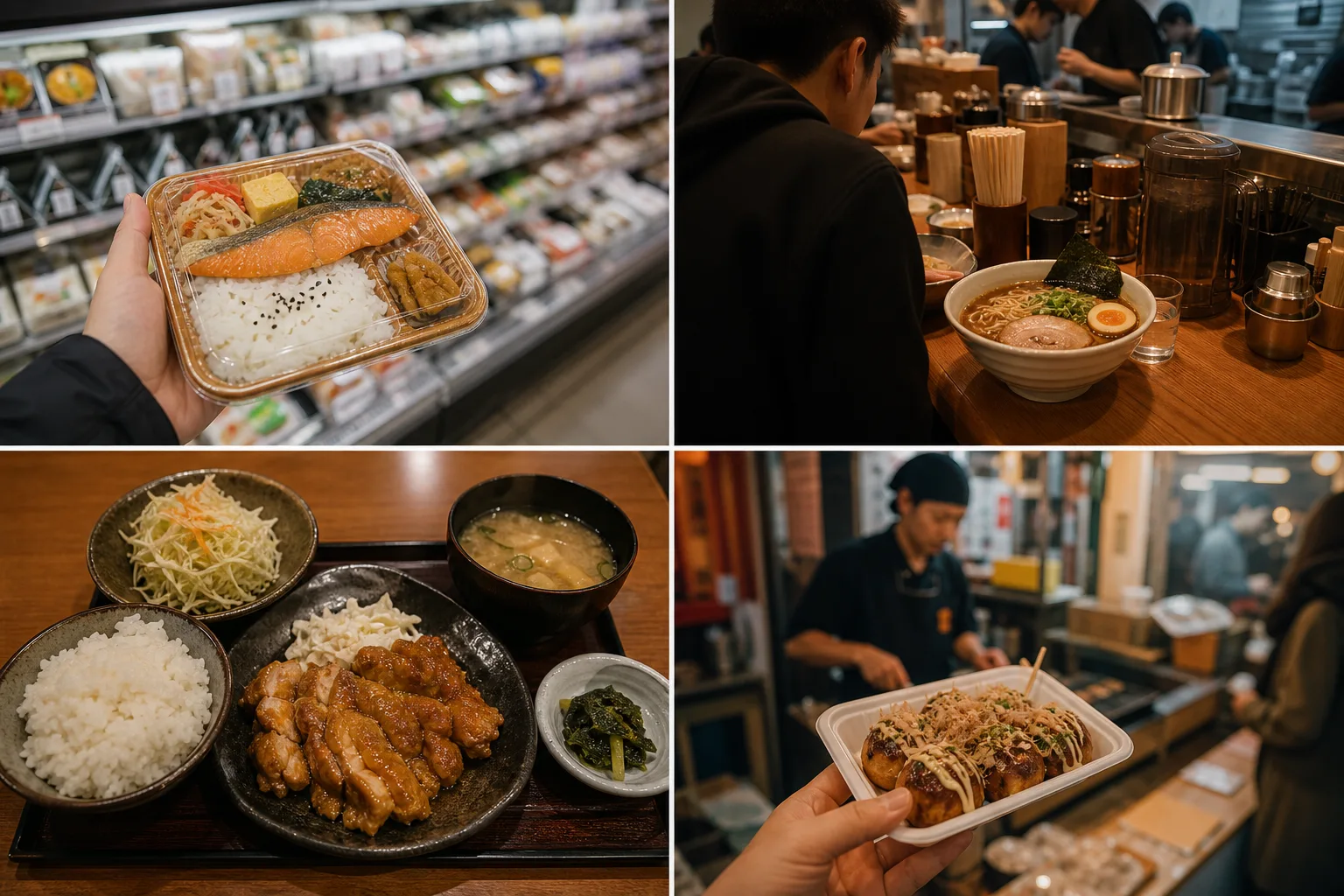
Japan is one of the easiest countries in Asia to eat well without spending a lot, but only if you stop thinking of every meal as a “must-try” event. The real budget strategy is simple: use convenience stores for the gaps, ramen for reliable hot meals, and teishoku sets when you want a full sit-down lunch or dinner that still feels disciplined. If you are building the rest of your trip too, this food plan works best alongside Japan Travel Planning: Visa, IC Card, Rail Pass & Essential Logistics Guide.
Convenience Stores, Ramen, and Teishoku Sets
The cheapest way to eat well in Japan is to build a repeatable pattern: convenience-store breakfast, ramen or teishoku lunch, and one flexible dinner choice based on location. That keeps costs predictable, avoids tourist markups, and still leaves room for a few memorable meals.
The budget food system that actually works
The mistake most first-time visitors make is treating food as a series of isolated decisions. They wake up hungry, search for the nearest famous breakfast spot, wander into an expensive station restaurant at lunch, and then pay whatever the nearest dinner place charges because they are tired. That pattern is how a “budget trip” quietly turns into a mid-range one.
A better Japan food strategy is to pick a default meal structure and repeat it. Convenience stores handle the small, boring, and urgent meals. Ramen shops cover the quick hot lunch or dinner. Teishoku restaurants fill the gap when you want a complete meal with rice, soup, pickles, and a main dish. None of these options are glamorous. That is why they work.
If you want a broader view of the country’s food landscape before narrowing in on low-cost choices, keep Japanese Food Guide: Ramen, Sushi, Yakitori & What to Eat and Where open as a companion. That guide is about the bigger menu. This one is about the wallet.
What budget food means in 2026
For 2026 travel planning, a practical food budget in Japan usually looks like this:
- Convenience-store breakfast or snack: roughly 300 to 600 yen
- Ramen bowl: roughly 800 to 1,300 yen at an ordinary chain or neighborhood shop
- Teishoku set: roughly 900 to 1,500 yen at a casual restaurant
- A slightly better meal with a drink or extra side: roughly 1,500 to 2,000 yen
Those are not luxury numbers and they are not absolute ceilings. They are the working ranges that make budget planning realistic. Japan is expensive only when you keep paying for location, branding, and convenience all at once. If you eat where locals eat between errands, the same country becomes much more manageable.
The other useful 2026 reality is that Japan still rewards early planners and penalizes spontaneous tourists. In busy train hubs, everything costs more: the room, the coffee, the lunch set, even the convenience-store sandwich if you are buying it from the branch inside a premium station complex. The cheapest version of a meal is often a few blocks away from the most convenient version.
Why this combination is so effective
These three categories work together because they solve different problems.
Convenience stores solve timing. If you arrive late, leave early, or need something between trains, a convenience store is the most efficient answer.
Ramen solves hunger quickly. It is warm, filling, and usually priced in a way that makes it hard to regret.
Teishoku solves balance. You get a rice-centered meal with protein and side dishes, which makes it ideal when you want to eat like a normal person instead of grazing all day.
Together, they create a food rhythm that keeps the trip from drifting. You are not hunting for perfection. You are building a stable base so you can spend your money on the experiences that actually matter.
Convenience Stores Done Right
Convenience stores in Japan are not the “backup plan.” For budget travelers, they are part of the plan. If you use them intelligently, they can cover breakfast, transit snacks, emergency dinner, and a surprisingly decent late-night meal without wrecking your daily spending target.
What to buy
The classic convenience-store budget basket is still the most useful one:
- Onigiri
- Sandwiches
- Boiled eggs
- Yogurt
- Salad packs
- Instant soup
- Banana or cut fruit
- Ready-made bento
- Hot snacks like fried chicken, croquettes, or skewers
- Coffee or tea
The best part is flexibility. You do not need to commit to a full meal every time you enter the store. You can build a small breakfast for less than the cost of a tourist café pastry, or you can assemble a complete lunch from two or three items and still spend less than a sit-down restaurant.
Onigiri is the cornerstone because it is portable, cheap, and easy to combine with almost anything else. Two rice balls and a drink can be enough for a light breakfast or a travel-day lunch. Add a salad pack or boiled egg and you have something more complete without much extra cost.
When convenience stores save the day
Convenience stores matter most in three situations.
First, early departures. If you need to catch a train or bus before everything else is open, a convenience-store breakfast is the cleanest solution.
Second, late arrivals. When you reach a hotel after dinner service has ended, the nearest convenience store is often your best option for something edible.
Third, low-energy days. There will be days when you do not want to plan a meal around a neighborhood search. That is when a simple combo of onigiri, soup, and fruit keeps you from overspending because you are hungry and tired at the same time.
The key is not to turn convenience stores into your main identity as a traveler. If you eat every meal there, the trip starts to feel flat. Use them as the safety net, not the destination.
What to watch out for
Convenience stores are efficient, but they are not magic.
The first trap is repetitive buying. If you keep adding small items, the total can creep up fast. A bottle of tea, a snack, a sandwich, a dessert, and a coffee do not feel expensive individually, but the total can rival a proper meal.
The second trap is false comfort. Some travelers buy too much convenience-store food because it is easy, then spend more later because they still want a real meal. That is how a budget day gets worse instead of better.
The third trap is location markup. Convenience-store branches in major stations, airport terminals, and premium shopping complexes can feel more expensive than the same chain in a residential area. The food is similar, but the surrounding rent is not.
How to build a cheap day around convenience stores
A simple budget day can look like this:
- Morning: onigiri, yogurt, and tea
- Midday: ramen or teishoku
- Afternoon: a small drink or snack only if needed
- Evening: supermarket bento, convenience-store side dishes, or one more casual meal
That structure works because it leaves most of the day flexible while protecting you from decision fatigue. Once you get hungry enough to make bad choices, the budget starts to leak.
Ramen and Teishoku Sets
Ramen and teishoku are the two meals that make budget travel in Japan feel like real travel instead of survival. Ramen gives you speed and satisfaction. Teishoku gives you structure and a sense of completeness. Both are common enough that you can use them frequently without feeling like you are repeating a gimmick.
Why ramen is the best budget anchor
Ramen is one of the best value meals in Japan because it sits in that sweet spot between cheap and memorable. A basic bowl can be enough for a full meal, but you can also build on it with extras if you want to spend a little more. That makes ramen ideal for travelers who want one reliable sit-down option that never feels like a compromise.
The best ramen shops for budget travelers are usually the ones that do not try too hard to impress you with atmosphere. You want a straightforward menu, quick service, and a bowl that is filling enough to hold you until the next stop.
Common ramen types that fit a budget:
- Shoyu ramen for a clean, classic flavor
- Shio ramen for something lighter
- Miso ramen for a richer, more filling bowl
- Tonkotsu ramen when you want something heavier and more indulgent
- Tsukemen if you want a more substantial lunch and do not mind paying a little more
Even at the same price point, ramen shops vary a lot in value. A humble neighborhood shop can beat a famous chain if it is cleaner, calmer, and faster. A crowded tourist-area shop can charge more for the same bowl and still leave you waiting.
How to order ramen without wasting money
Budget ramen discipline is mostly about resisting unnecessary extras.
Ask yourself whether you really need:
- Extra chashu
- A large portion
- A side of gyoza
- Fried rice
- A beer
Sometimes you do. Often you do not.
If you are eating ramen as part of a controlled budget day, the base bowl is usually enough. The point is to leave the shop satisfied, not stuffed. Extras are where the cost creeps upward.
One useful habit is to check whether the shop offers a lunch special, set, or ticket machine combo. Many local ramen places and chains build a better-value lunch around a bowl plus a small side. If the combo is cheap and you are actually hungry, it can be better value than buying the side separately. If you are not very hungry, skip it.
Teishoku sets: the underrated answer
Teishoku is the most overlooked budget meal in Japan. A good set meal gives you rice, soup, pickles, and a main dish, often with a balanced plate and a predictable price. It is the meal style that most closely matches the “eat like a local and stay sane” logic of budget travel.
Teishoku works especially well when you want something more complete than convenience-store food but less expensive than a specialty restaurant. It also solves the classic traveler problem of “I want a real meal, but I do not want to overthink it.”
Typical teishoku categories you will see include:
- Grilled fish sets
- Chicken katsu sets
- Ginger pork sets
- Hamburg steak sets
- Karaage sets
- Curry teishoku
- Mix-and-match daily specials
The value comes from the structure. You are not paying separately for every piece of the meal. You are buying a combination that already makes sense as a lunch or dinner.
When teishoku beats ramen
Ramen is better when you want speed and a concentrated hot meal. Teishoku is better when you want a longer, calmer sit-down break.
Choose teishoku when:
- You need something more filling than a bowl of noodles
- You want rice as the base of the meal
- You are trying to reduce snack spending later in the day
- You want a lunch that feels complete without becoming expensive
Choose ramen when:
- You are moving between places
- You need a fast meal
- You want something easy to order
- You want a bowl that feels warm and satisfying without a long decision process
That distinction matters because the best budget food strategy is not one single food. It is knowing which food solves which part of the day.
Where the biggest value usually is
The best-value ramen and teishoku are often found outside the most obvious tourist zones. Look near commuter stations, business districts, and residential areas where office workers and families actually eat. Those neighborhoods usually have more ordinary pricing and less pressure to look fancy.
That is one reason budget food and budget transport are linked. If your hotel is near a practical station, you are more likely to eat in practical places. If your hotel is in a premium zone, you are more likely to pay premium meal prices as well.
Practical Guide
The practical side of budget eating in Japan is about timing, location, and habit. You do not need a complicated booking system for most meals. You need to know what the meal is doing for you and what the surrounding area is trying to charge you for convenience.
Hours, prices, and what to expect
For most travelers, the most useful rule is this:
- Convenience stores are usually open 24 hours, but branch hours can vary.
- Ramen shops often serve lunch and dinner, with some staying open between peak periods and others closing in the afternoon.
- Teishoku restaurants and chains often have lunch set pricing that is better than dinner value.
- Station-area and airport-area branches are often more expensive than neighborhood branches.
As for prices, the current budget-friendly reference points in 2026 are still pretty stable:
- Onigiri: often around 120 to 180 yen
- Sandwiches and small snacks: often around 150 to 350 yen
- Basic ramen: often around 800 to 1,300 yen
- Teishoku set: often around 900 to 1,500 yen
- A fuller meal with side dishes or a drink: often around 1,500 to 2,000 yen
Those are the numbers that matter when you are deciding whether to spend or save in the moment. A traveler who consistently keeps breakfast cheap and lunch ordinary can leave room for one nicer dinner without breaking the day.
How to find the right place
The easiest way to find value is to think in geography.
Start with the station map. If you are in a city, look for food near the station exits that commuters actually use, not the biggest tourist avenue nearby. Shops one or two streets back often charge less and are less crowded.
Then look at the neighborhood type. Office districts usually have good lunch pricing. Residential blocks often have better everyday restaurants. Tourist corridors usually charge more for the same style of food.
Finally, look at the menu model. Ticket-machine ramen shops, daily-special teishoku places, and casual chains are often better value than places with polished photo menus and staff waiting at the door.
What to do on arrival day
Arrival day is where many budgets fail, because people are tired, hungry, and not yet oriented.
The safest arrival-day food plan is:
- Buy a small convenience-store item at the airport or near the station if needed.
- Eat something modest before you commit to a proper meal.
- Choose a nearby ramen or teishoku place instead of wandering for an hour.
- Avoid “just one more” snack purchase while you are still adjusting.
This is also where the broader trip logistics matter. If your arrival and hotel transfer are already sorted, you are less likely to overpay for the first meal of the trip. That is why the planning guide is useful as a companion piece, even though this article is focused on food.
Booking links and reservations
For most budget food in Japan, booking is not necessary. Convenience stores obviously do not require it. Ramen and teishoku restaurants usually work on walk-in traffic, ticket machines, or simple queue systems.
If a restaurant does take reservations, treat that as a sign that it is probably not the cheapest option in the area. That does not make it bad. It just means the budget logic has changed. For this topic, the winning move is usually to walk in, eat efficiently, and move on.
A realistic food budget by day type
Here is a simple way to think about daily spending:
- Heavy transit day: convenience-store breakfast, ramen lunch, simple convenience-store or supermarket dinner
- Sightseeing day: convenience-store breakfast, teishoku lunch, one more relaxed dinner
- Budget reset day: one cheap meal, one ordinary meal, and no snacks you do not actually want
That rhythm works because it avoids both extremes. You are not starving yourself, but you are also not paying for every impulse.
Tips & Common Mistakes
The biggest budget mistakes in Japan food travel are not dramatic. They are small, repeated, and easy to justify in the moment.
Do not let convenience become expensive
A convenience store is cheap only when it stays simple. The moment every stop becomes a mini-haul of drinks, desserts, snacks, and add-ons, the total jumps. If you are hungry, buy a meal. If you are not hungry, do not buy everything that looks convenient.
Do not eat every meal in a premium location
Station basements, iconic sightseeing streets, and airport restaurants all exist for good reasons. They are also some of the easiest places to overpay. If you want to save money, walk away from the obvious zone. Even a short distance can change the price structure.
Do not confuse “famous” with “worth it”
Famous ramen shops are not always overpriced, but they are often less efficient for budget travelers because of line time, limited seating, and premium branding. If your goal is a practical meal, a good neighborhood shop can be the smarter choice.
Do not turn teishoku into a splurge by accident
Teishoku is meant to be a disciplined meal. If you start adding extra sides, a second drink, dessert, and an appetizer, you have changed the price category without meaning to. The value is in the set.
Do not ignore meal timing
Lunch sets are often the best value. Dinner can be slightly more expensive or less structured depending on the place. If your schedule allows it, make lunch your bigger sit-down meal and keep dinner lighter. That is one of the easiest budget wins in Japan.
Use a simple rule
If you want to keep the food budget intact, use this rule: one cheap meal, one normal meal, and one flexible meal per day. That gives you enough structure to stay in control without making the trip feel strict.
FAQ
How much should I budget for food in Japan per day?
For a budget-conscious traveler, a realistic range is often around 1,500 to 3,500 yen per day depending on city, appetite, and whether you sit down for one proper meal. If you mix convenience-store food with ramen or teishoku, you can stay near the lower end without feeling deprived.
Is convenience-store food in Japan actually good?
Yes, for what it is. It is not a destination meal, but it is usually fresh enough, practical, and easy to combine into a decent breakfast or travel-day lunch. It is best when you use it strategically rather than pretending it replaces every meal.
Is ramen always the cheapest hot meal?
Not always, but it is one of the most reliable value meals. Depending on the neighborhood, chain, and extras you choose, a bowl of ramen can be one of the best balances of price, speed, and satisfaction.
What is the difference between ramen and teishoku for budget travelers?
Ramen is better when you want speed and one concentrated dish. Teishoku is better when you want a full meal with rice, soup, and sides. If you are traveling hard all day, ramen is efficient. If you want to sit down and recover, teishoku is often the better value.
Can I eat well in Japan without using restaurants every day?
Absolutely. A smart mix of convenience stores, supermarkets, and one or two cheap sit-down meals per day is enough for many travelers. You do not need a full restaurant schedule to eat well in Japan.
Conclusion
Japan budget food strategy is not about eating badly. It is about choosing the right kind of good. Convenience stores cover the edges of the day, ramen gives you dependable hot meals, and teishoku sets provide balanced value when you want a proper sit-down lunch or dinner.
If you remember only one thing, remember this: the budget is won by repetition, not by one brilliant meal hack. Pick a few reliable food types, stay away from premium tourist markups, and let the rest of the trip be about the places you actually came to see.
That approach keeps your spending predictable, protects you from hunger-driven mistakes, and leaves room for the meals that really are worth paying for.
If you want to see how this food strategy fits into the bigger trip budget, go back to How to Travel Japan on a Budget: Cheap Eats, Transport & Stays. If you are still mapping the whole itinerary, that article and the logistics guide together make the budget much easier to hold.