Korea Seoul Short Trip First Time Travel Guide for Short Holidays

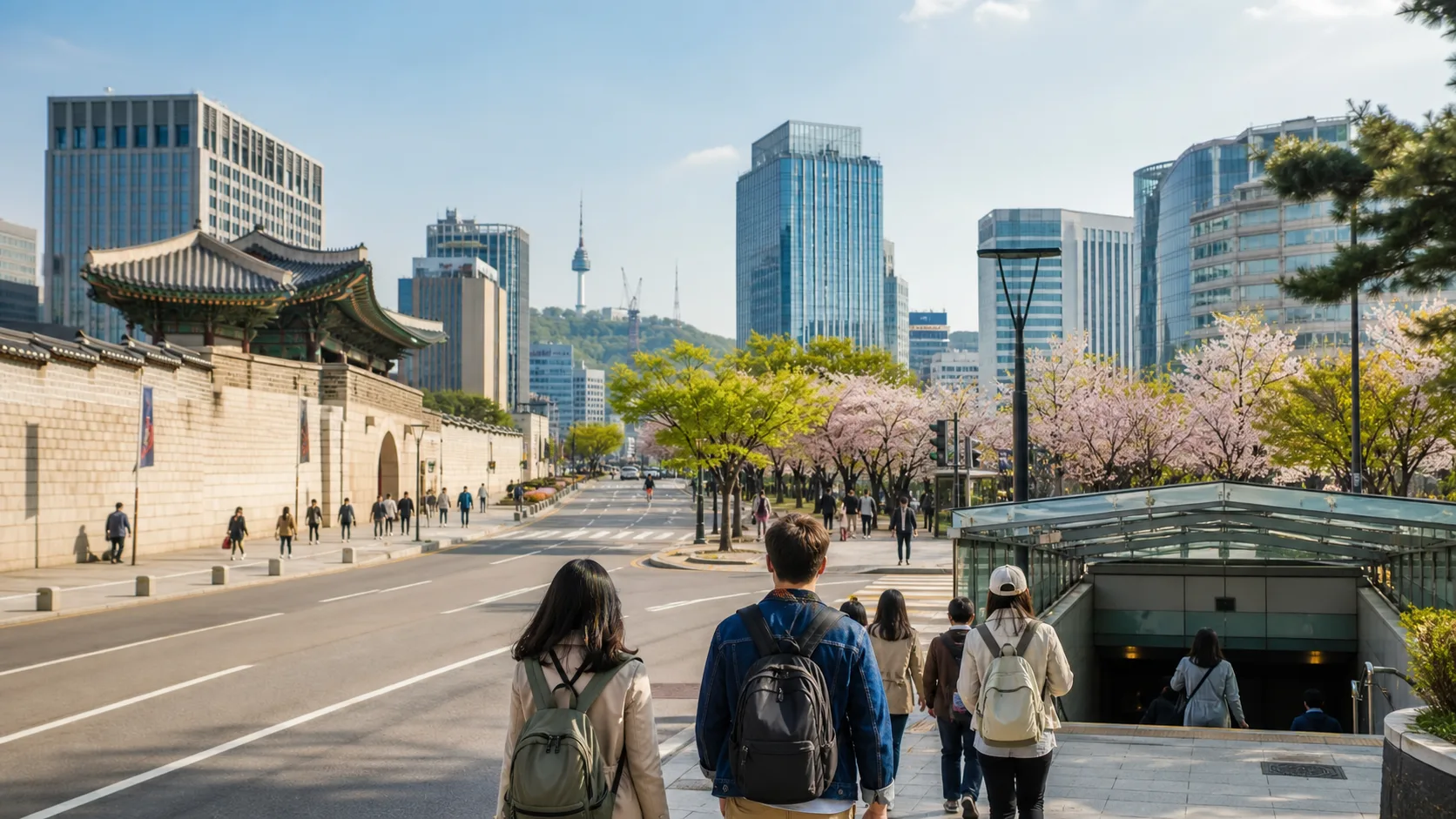
If you only have a few days in Seoul, the mistake is not choosing too little. The mistake is trying to do everything. First-time travelers usually waste half a short holiday on bad hotel locations, long airport transfers, and a route that zigzags across the city instead of grouping sights by neighborhood. The right plan makes Seoul feel compact, efficient, and surprisingly easy.
For a short trip, treat Seoul like a city of districts, not individual landmarks. Stay central, keep your first two days light, use the subway for cross-city movement, and reserve one flexible block for food, shopping, or a day trip only if the weather and energy level are good. That approach gives you more real time in Seoul and less time in transit.
1. Fast Answer
The fastest way to win a first Seoul short trip is to stay in one of three areas: Myeongdong, Hongdae, or near Seoul Station, then plan by neighborhood instead of chasing famous spots all over the map. If you have 3 to 5 days, prioritize one palace-and-hanok day, one modern-Seoul day, one food-and-market day, and leave room for an easy café, shopping, or river walk block.
That is the practical version of Seoul for short holidays. The city is huge, but its tourist districts are easy to combine if you avoid cross-town backtracking. A Singapore-based traveler will usually reach Seoul through Incheon, so the first decision is whether to take the faster AREX-style airport rail, a limousine bus, or a taxi depending on luggage, arrival time, and how late you land. After that, the best trip pattern is simple: sleep centrally, use subway and taxi selectively, and book only the experiences that truly need advance planning.
If this is your first time, do not try to fit in Seoul plus Busan plus Jeju on a tiny calendar. Seoul alone can fill a short holiday without feeling rushed. You will enjoy it more if you spend your energy on the parts that matter most to first-timers: palace architecture, neighborhood food, convenience-store culture, night views, and one or two iconic shopping streets.
2. Context You Need
Seoul is South Korea’s capital and largest city, but for a short holiday it behaves less like a sprawling megacity and more like a cluster of highly distinct districts connected by excellent transit. That is why first-time visitors often underestimate it. On paper, a palace, a market, a river walk, and a shopping area may all look close together. In practice, they are only close if you choose them in the right order.
The city also rewards confidence. Seoul is not a place where you need to over-plan every hour. The subway is dense, taxis are relatively easy to use, and most major neighborhoods have enough food, coffee, shopping, and photo stops to fill a half-day or more. That means a short trip should be designed around mood and geography, not just a list of attractions. If you are already tired from a flight, you do not want a route that starts in the north, jumps to the south, then ends at the airport edge just because the blog list said all three places were “must-sees.”
For first-time travelers, the strongest mental model is this: Seoul has a few different personalities.
- Historic Seoul: palaces, hanok streets, tea houses, and traditional markets.
- Modern Seoul: design malls, K-beauty shops, nightlife, and sleek cafés.
- Youth Seoul: Hongdae-style student energy, indie shops, and casual late-night food.
- Upmarket Seoul: Gangnam, luxury hotels, premium dining, and polished retail.
- Riverside Seoul: Han River parks, bike paths, and easy evening walks.
You do not need every personality in one trip. For a short holiday, the goal is to sample two or three without burning time in transit. The best first-time itinerary usually gives you one anchor neighborhood for the hotel, one historic block, one modern block, and one slow block for food or river scenery. If you build around that structure, Seoul feels generous instead of exhausting.
Another important point for Singapore travelers: the city is extremely manageable if you treat currency, phone data, and transport as part of the trip rather than last-minute chores. Bring a card that works overseas, plan some cash for small purchases, and assume you will use local navigation apps rather than expecting every map app to behave the same way it does at home. That preparation makes the trip smoother than trying to improvise after landing.
3. Step-by-Step Guide
Step 1: Decide what kind of short trip this is
Before you book anything, define the trip type.
- 48-hour stopover: keep it to central Seoul, one historic area, one meal-focused district, and one night-view or shopping block.
- 3 to 4 nights: add a second neighborhood, one more museum or market, and one slower afternoon for cafés or a spa.
- 5 nights: you can add a day trip, a deeper shopping day, or a more relaxed cultural block.
The fastest way to ruin a short trip is to pick too many “musts” before you know your pace. If you are a first-time visitor, one palace, one market, one shopping district, and one evening view are enough to make the trip feel complete.
Step 2: Pick the right base
For a short holiday, hotel location matters more than hotel style.
| Area | Best for | Tradeoff |
|---|---|---|
| Myeongdong | First-timers, shopping, easy airport and subway access | Busy and tourist-heavy |
| Hongdae | Casual food, nightlife, young energy, simple airport rail access | Less polished, noisier at night |
| Seoul Station area | Airport transfer convenience and central connections | Can feel less atmospheric |
| Jongno / Anguk | Palaces, hanok streets, traditional Seoul | Fewer late-night dining options |
| Gangnam | Premium stays, shopping, business-style comfort | Less convenient for old Seoul sights |
If your trip is very short, Myeongdong and Seoul Station are the safest all-around picks. If you want more neighborhood character and nightlife, Hongdae is a good compromise. If you care most about palace access and quieter mornings, Jongno or Anguk is often the best fit.
Step 3: Book the airport arrival in reverse
Most first-timers think about the hotel first and the airport transfer later. Reverse that order.
If you arrive during the day and have light luggage, airport rail is often the easiest value choice. If you land late, are traveling with family, or simply do not want a transfer puzzle after a long flight, a taxi can be worth the extra cost. If you are arriving in a peak travel season or during a weather disruption, pre-booked airport transfer or limousine bus can reduce stress.
The decision tree is simple:
- Light luggage, daytime arrival, central hotel: use airport rail.
- Heavy luggage or group of 3 to 4: compare taxi against multiple rail tickets before deciding.
- Late-night landing: prioritize the simplest door-to-door route.
- Hotel far from a rail station: a transfer that avoids an extra subway ride may be worth the price.
Step 4: Build your Seoul days by neighborhood
Do not structure the trip as a generic checklist. Structure it by area.
Day pattern A: Historic core
- Gyeongbokgung or another palace
- Bukchon or nearby hanok streets
- Insadong tea or craft stop
- Traditional market dinner
Day pattern B: Modern shopping core
- Myeongdong, Seongsu, or Dongdaemun depending on your style
- K-beauty, fashion, or design stores
- Café break
- Night walk or river view
Day pattern C: Youth and food core
- Hongdae or a nearby student district
- Street food, casual restaurants, and indie shops
- Late afternoon café-hopping
- Optional nightlife block
Day pattern D: Slow Seoul
- Han River park, spa, museum, or long café session
- No cross-town rush
- Early dinner and an easy return to the hotel
The key is to keep each day psychologically simple. Seoul becomes much easier when you stop asking, “What is the most famous thing in the city?” and start asking, “What is the best set of things in one walkable zone?”
Step 5: Use transit for distance, taxis for friction
Seoul’s subway is one of the best in Asia for short-trip travelers because it removes the need to negotiate every route. But the smartest travelers do not make it a purity test. Use the subway for longer cross-city movement, and use taxis when the last mile is annoying, the weather is bad, or you are carrying shopping bags.
Practical rules:
- Use the subway for district-to-district movement.
- Use a taxi when you are moving with luggage, kids, or late at night.
- Avoid crossing the city at rush hour unless you need to.
- Group attractions by the same subway line or the same neighborhood.
If you only remember one thing, remember this: a short trip is won by reducing transitions.
Step 6: Reserve only the time-sensitive items
You do not need to pre-book every meal. You do need to pre-book the things that commonly sell out or have limited entry.
- Popular palace night openings or special tours
- High-demand spa or wellness slots
- K-pop themed events or temporary pop-ups
- KTX seats if your short holiday includes a longer onward hop
- Airport transfer if your arrival time is awkward
For everything else, keep a flexible block. Seoul is one of the rare cities where a very good meal, a good café, or a good shopping street can be found without a hard reservation plan.
Step 7: Leave one block unscheduled
This is the most underrated advice for first-time travelers. Leave one half-day open.
Use that window for one of these:
- an extra café-hopping session
- a second market
- a spa or jjimjilbang
- a museum if the weather turns bad
- a relaxed Han River evening
Short holidays feel richer when they have breathing room. If everything is scheduled, you will spend the whole trip moving from one obligation to the next. If one block is open, the trip starts feeling like a holiday.
4. Costs, Hours, and Logistics
The biggest logistics question for a short Seoul trip is not “Can I get around?” It is “How much time and money do I want to spend making movement easy?”
Typical transport costs
Exact fares change, but these are the right planning ranges for a short trip:
- Airport rail to central Seoul: usually in the low-thousands to around ten thousand won depending on service type.
- Subway rides in the city: usually around the low-thousands of won for short hops.
- Taxi from central districts: often reasonable for short distances, but can add up at night or in traffic.
- Airport limousine bus: useful if your hotel sits on a main route.
For most first-time travelers, the cheapest option is not always the best option. If you save 8,000 won but lose 45 minutes after a red-eye flight, that is usually a bad trade.
Hours and closures to expect
Seoul is friendly to travelers, but not everything runs on the same schedule.
- Palaces and museums often have one weekly closing day, commonly Monday or Tuesday.
- Markets may be lively in the evening but quieter in the morning, or the reverse.
- Restaurants can close earlier than you expect, especially outside nightlife areas.
- Cafés may require a queue at peak hours in fashionable neighborhoods.
For a short holiday, that means you should build backups. If your main palace is closed, have a nearby museum or hanok street as a fallback. If your restaurant line is too long, move one block away and eat somewhere simpler.
Payment and connectivity
Seoul is highly cashless, but short-trip travelers should still plan for mixed payment.
- Use a card for hotels, transport top-ups, and most restaurants.
- Carry a little cash for convenience stores, small market stalls, and places with minimums.
- Have mobile data ready before you leave the airport.
For a first-time traveler, connectivity is not a luxury. It is your map, translator, and backup plan. Once your data works, the city becomes much easier to navigate.
2026 booking caveats
The most important booking caveat for 2026 is to check the latest entry and transit details before departure rather than relying on an old screenshot. Travel rules, airport procedures, and attraction schedules can change with very little warning. For short trips, the most useful habit is to verify three things the week before departure:
- Your passport validity and entry requirements.
- Your airport transfer choice.
- Any timed-entry attraction or restaurant reservation.
If you are traveling from Singapore, this matters because the whole trip can be derailed by a single assumption: assuming you can improvise everything after landing. You usually can’t on a short holiday. The better plan is simple and verified.
5. Variations and Edge Cases
If you are visiting in winter
Winter changes the rhythm of a Seoul short trip. The city still works well, but you should compress outdoor sightseeing and use indoor blocks more strategically. Palaces, night views, and markets can still be excellent, but long open-air walks become less enjoyable when the wind cuts through your layers.
Best winter strategy:
- Keep hotel and transit routes simple.
- Build more café, shopping, and museum time.
- Choose shorter outdoor windows with warm indoor backups.
- Plan for early sunsets so you do not waste the best light.
If you are visiting in spring or autumn
These are the easiest seasons for a first visit, especially if you want scenic walks, palace photos, and comfortable evenings. The tradeoff is demand. Popular neighborhoods, hotel rates, and day trips can feel more crowded and more expensive.
Best spring/autumn strategy:
- Book the hotel earlier than you think.
- Use early mornings for the most photogenic sights.
- Keep one flexible block for weather changes.
If you are traveling with parents or kids
A short Seoul trip with family should be calmer than a solo or couple trip. Reduce station changes, choose a hotel close to food, and avoid too many staircase-heavy walking sections.
Helpful adjustments:
- Use taxis more often for the last mile.
- Add one major attraction per half-day, not three.
- Keep snack stops and restroom access in mind.
- Choose neighborhoods with easy dinner options near the hotel.
If your budget is tight
Seoul can be expensive, but short trips are actually easier to control because you can focus spending on the highest-value parts.
Spend on:
- a good central hotel
- airport transfer convenience
- one or two memorable meals
- a timed-entry experience if it is worth it to you
Save on:
- overusing taxis
- buying too many tourist souvenirs
- hopping between neighborhoods without a plan
Budget travelers should resist the urge to chase the cheapest hotel on the outskirts. A short trip is where location matters most. A cheaper room that costs you an hour per day is not really cheaper.
If you want nightlife
If nightlife matters, put the hotel near a district with late dining and easy returns. Hongdae is usually friendlier for casual energy, while central Seoul gives you more balanced access to both day and night activities. Do not overpack the daytime if your real goal is evening food, bars, or live music.
6. Mistakes to Avoid
1. Choosing a hotel too far from the action
This is the most common first-time error. A “nice” hotel that adds 20 to 30 minutes to every move can quietly destroy a short holiday. Pay for location if your time is limited.
2. Planning too many district changes
Seoul is efficient, but cross-city movement still eats time. If you change neighborhoods five times in one day, you will feel the distance even if the subway is excellent.
3. Treating day one like a full sightseeing day
Arrival days are deceptive. Your body is there, but your clock is not. Keep the first day light so you do not waste the trip recovering from fatigue.
4. Assuming every attraction is open every day
Many palaces, museums, and shops have closures or reduced hours. Check before you go, especially for a one- or two-night stay.
5. Forgetting that food queues are part of the experience
In trendy districts, a famous café or restaurant may look easy to fit in and still cost you 30 to 60 minutes in line. If your trip is short, choose places with high turnover or go at off-peak times.
7. FAQ
How many days do you need for a first Seoul trip?
Three full days is the minimum for a satisfying first visit. Four or five days feels much better because it gives you time for a slower block and one optional day trip or extra neighborhood.
What is the best area to stay in for first-time travelers?
Myeongdong is the safest all-around choice for convenience. Hongdae is better if you want a younger, more casual vibe. Jongno or Anguk is best if historic Seoul matters most. Seoul Station is useful if airport convenience matters more than atmosphere.
Is Seoul walkable for short trips?
Yes, but only within districts. Seoul is not a city where you casually walk from palace area to Gangnam in one afternoon. Think neighborhood-to-neighborhood, with transit between them.
Should I use subway, taxi, or both?
Both. Use the subway for distance and taxis when the route is awkward, the weather is bad, or you are carrying bags. Short trips are easier when you stop trying to force one transport mode to do everything.
Do I need to book everything in advance?
No. Book the hotel, airport transfer, and any timed-entry experiences first. Leave food and casual sightseeing flexible unless you have a very specific restaurant or event in mind.
What should Singapore travelers watch out for?
The main risks are overplanning, choosing an inconvenient hotel, and underestimating how much time airport arrival and evening transfers can consume. Also check entry requirements and any travel document rules before departure so you are not solving paperwork at the airport.
Is a short Seoul trip worth it on its own?
Yes. Seoul is one of the few cities where a short holiday can feel complete without becoming rushed. If you plan by neighborhood and keep the schedule realistic, a 3- to 5-day trip can cover history, shopping, food, and a little downtime very well.
8. Next Steps
The best next step is to turn this guide into a neighborhood-first plan. Pick your hotel area, choose one historic day and one modern day, and decide whether you want one flexible block for food, spa, or nightlife. After that, book the practical pieces first and let the rest stay loose.
If you are still deciding, start with your arrival logistics, then narrow the itinerary to two or three Seoul districts that match your travel style. That is usually enough to make a short holiday feel smooth, not rushed.
Related: korea-seoul-short-trip-esim-and-wifi-guide-for-singapore-travelers
Related: korea-seoul-short-trip-tour-vs-diy-guide-for-singapore-travelers
Related: korea-seoul-short-trip-itinerary-for-singapore-travelers