Tokyo DisneySea vs Disneyland: Which Park Should You Book?

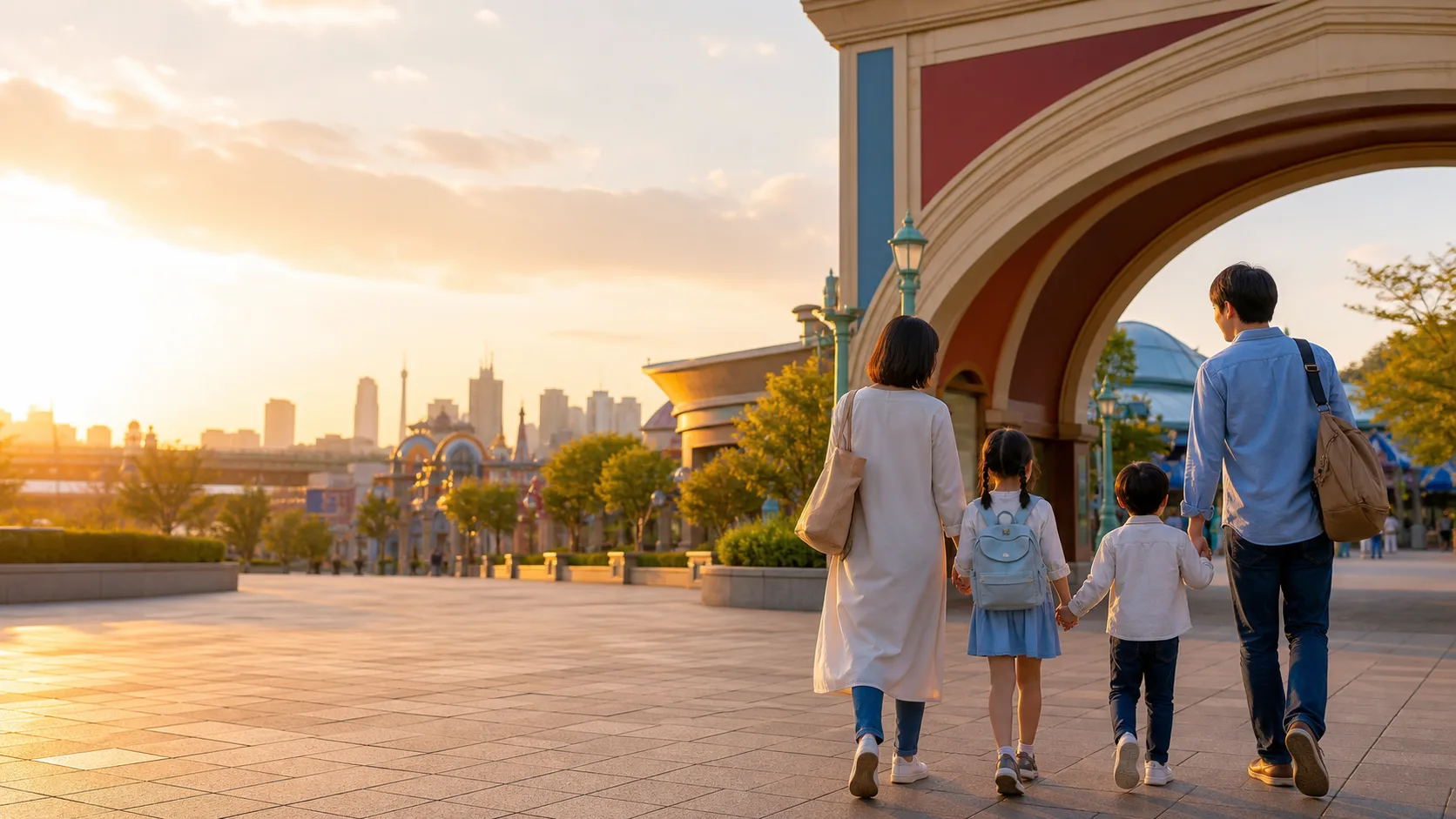
Tokyo Disney Resort has two parks, so the tempting answer is to buy whichever ticket appears first. That is rarely the best choice. Tokyo Disneyland and Tokyo DisneySea reward different kinds of visitors, and a one-day decision affects your route, meal breaks, queues, energy, and expectations. This guide helps Singapore-based travellers choose the park that fits their party and date, using the official resort information as the final authority for live ticket and operating rules.
The short answer
Choose Tokyo DisneySea if your group is more excited by a park built around ports, exploration, large-scale atmosphere, and a day that feels less like a catalogue of familiar Disney stories. Choose Tokyo Disneyland if classic Disney characters, parades, a broad all-ages ride mix, and a first Disney-style park day matter most. Neither is automatically “better”. For a one-day visit from Singapore, select the park whose three must-do experiences best fit your party, then buy the dated ticket from the official Tokyo Disney Resort channel once your date is firm.
Why this choice is harder than it looks
Both parks sit at Tokyo Disney Resort, share the same rail access, and use dated admission. That makes them look interchangeable on a map. They are not interchangeable once you factor in atmosphere, walking pattern, ride intensity, child confidence, food breaks, night-time expectations, and what each member of the party hopes to photograph or experience. The common mistake is to compare a list of headline rides and stop there. A useful choice also asks whether a six-year-old will enjoy the waiting environment, whether a grandparent needs frequent seated breaks, and whether an adult fan will be disappointed by missing a particular themed port.
What Tokyo Disneyland is best at
Tokyo Disneyland is the straightforward choice for a group that wants recognisable Disney storytelling from the moment it enters. Its themed lands, castle-centred visual rhythm, character appeal, and family-oriented attractions make it easier to build a day with different intensity levels. That does not mean every ride is gentle or every queue is short. It means the park usually gives a first-time party more obvious substitutes when a priority attraction is unavailable: a nearby show, a classic dark ride, a parade viewing break, or a child-friendly activity can preserve the feeling of a complete day.
What Tokyo DisneySea is best at
Tokyo DisneySea suits travellers who value setting and exploration as much as rides. The park’s ports create distinct waterfront views, slopes, bridges, indoor spaces, and places where a group can pause without feeling that it has left the experience. It can be a particularly strong choice for adults, older children, couples, and repeat Disney visitors who want a park day with a more travel-like atmosphere. Its scale also asks more of your planning: do not assume you can criss-cross the park repeatedly without a time and energy cost. Put priorities in the same area whenever possible.
A first-time family decision
For a family with young children, begin with height, confidence, and nap needs rather than the most photographed attraction. Tokyo Disneyland can be easier when the group wants many familiar characters and a mix of mild rides, while DisneySea can work brilliantly for a child who enjoys visual detail and slower exploration. Look at the official attraction pages for each child’s actual height and any health or safety restriction; do not infer eligibility from another child’s age. Choose the park where every member has several plausible wins, not the one where one adult has a single perfect ride.
A couple or adult-group decision
Adults should not choose DisneySea merely because it is often described as “for adults,” nor dismiss Disneyland as childish. Decide what kind of day you want. A group that enjoys immersive environments, harbour views, unusual food stops, and a wandering rhythm may prefer DisneySea. A group that wants iconic Disney music, parades, character energy, and a compact checklist of classics may prefer Disneyland. In either case, agree before the visit whether your goal is rides, photographs, a seasonal event, or simply a long themed day together. That agreement prevents the usual conflict between a person who wants to queue and a person who wants to explore.
Fantasy Springs changes DisneySea planning, not the basic choice
Fantasy Springs is part of Tokyo DisneySea, but it should not be treated as a separate ticketed park by default. The current official Fantasy Springs page says guests admitted to DisneySea may enter the area freely, and attractions can be experienced by joining the line or by purchasing Disney Premier Access where offered. That information can change with operations, so check it again for your visit date. The practical implication is simple: choose DisneySea because you would enjoy the whole park, not because you assume one new area will be effortless to complete. Give it a priority, then keep alternatives nearby.
The ticket decision
Tokyo Disney Resort currently sells fixed-date tickets up to roughly two months ahead, with daily sales opening at 2:00 p.m. JST for the same date two months later. The official site also says ticket booths are closed, personal-reason cancellations or refunds are not accepted, and ticket sales can be suspended. These are reasons to be deliberate, not to panic. Confirm the chosen park, date, party ages, and the live operating calendar before paying. Keep your confirmation, use the official app as instructed, and read the change rules for the exact ticket source you use.
Do not buy both parks out of fear of missing out
A two-park plan is worthwhile only when you have enough time, energy, and a ticket type that actually supports it. A limited-period Park Hopper product may allow a guest to start in a selected park and hop from 11:00 a.m., but availability and terms must be verified on the official page for the actual date. Park hopping creates transit, navigation, and decision costs. For most first visits with one full day, one park well chosen is better than two parks sampled anxiously. Give the second park its own day only when the trip has room for it.
Compare your top three, not every attraction
Make two short lists. For Disneyland, list three attractions, shows, characters, or visual moments that genuinely matter to your party. Do the same for DisneySea. Then identify which list contains more things that would still matter if a queue became long or a reservation did not work. This turns an abstract comparison into a resilient plan. If DisneySea wins only because of one attraction while Disneyland wins across five people, Disneyland is likely the safer pick. If everyone keeps returning to DisneySea’s ports and specific stories, that is useful evidence too.
Build a realistic arrival and first hour
Neither choice works well if the group arrives exhausted. From a Tokyo hotel, calculate the entire journey: walking, station navigation, trains, security, tickets, toilets, and the chance that someone needs breakfast. Do not copy an arrival time from a video made on another date. Check the official operation calendar, then leave a buffer. In the first hour, pursue one priority and one backup in the same zone. The goal is to avoid standing in the middle of the park while every person opens a different map. A calm start is more valuable than an overambitious route.
Use the official app as a live planning tool
Install the Tokyo Disney Resort app before travel, sign in to the required account, and make sure all tickets are accessible to the appropriate adults. The app is useful because opening hours, wait information, access products, and service availability are live rather than remembered from an article. It should guide choices, not consume the whole day. Check it after entry, before a major walk, and when your next plan changes. Between checks, look up. A party that constantly refreshes its phones can miss the atmosphere it paid to experience.
Queues and paid access
A paid access product can be reasonable when it protects a single high-value experience for a time-limited party, but it is not a general solution to crowds. Before buying, confirm the attraction, return window, party eligibility, price, change conditions, and what the product does not include. Ask whether the saved time will actually improve the day or merely create another fixed appointment. A family with one nap window may gain a lot from certainty; a flexible couple may prefer to wait, explore, and spend the money elsewhere. Do not assume a product exists, is sold every day, or guarantees every ride.
Food, weather, and breaks belong in the comparison
DisneySea’s waterfront and layered spaces may appeal to travellers who want scenery and pauses built into the route; Disneyland’s familiar lands may make it simpler for a child to choose the next activity. But weather can alter either experience. Rain gear, a heat plan, water, medicine, a sit-down break, and a flexible meal are not minor logistics. They decide whether an afternoon still feels enjoyable. Pick dining times that do not force a long cross-park walk immediately before a priority experience. If a restaurant is a must, study its current booking and cancellation rules on the official site.
Accessibility and group comfort
Use official accessibility information and attraction-specific rules for your party rather than generic labels such as “family friendly.” Mobility needs, sensory needs, pregnancy, motion sensitivity, height, and transfer requirements can change the practical value of a park. Bring any required documentation or equipment, and ask official guest services about the current process before the day if your plan depends on it. A choice that gives one traveller only one suitable experience is not a good choice, even if the park is famous. Comfort, shade, bathrooms, seating, and the ability to step away without losing the group are part of the itinerary.
A simple scoring method
Give each park a score from one to five for your specific party: must-do experiences, child suitability, adult interest, ability to handle heat or rain, food interest, walking tolerance, first-visit value, and schedule flexibility. Weight the first three categories twice. Then write one sentence explaining the score. If the scores are close, choose the park with fewer irreversible assumptions: fewer expensive add-ons, fewer tightly timed commitments, and more backups within one area. The scorecard is not mathematical truth. It exposes which person or constraint your initial instinct ignored.
Common mistakes
Do not call Tokyo DisneySea a universal upgrade over Disneyland. Do not treat Disneyland as merely the smaller or less interesting option. Do not buy a ticket before confirming the park name and date. Do not assume a sold-out date never returns, but do not plan a whole trip around that possibility either; the official site notes availability can change without notice. Do not promise a child a specific attraction before checking restrictions and live conditions. And do not squeeze the park into the departure day simply because it is geographically nearby.
Final recommendation
Choose Tokyo Disneyland for a first or mixed-age visit where classic Disney storytelling, familiar characters, parades, and a broad comfort zone matter most. Choose Tokyo DisneySea when the party is drawn to distinctive themed environments, exploration, and the stories or attractions found only there. If your answer remains tied, let the calendar decide: pick the date with the better official availability and operating hours, then commit to one park. A well-paced single-park day is usually the better memory than an ambitious comparison exercise.
Before you check out
Open the official ticket calendar one final time, confirm the selected park and date, and read the current terms for any optional access product. Tokyo Disney Resort says dated tickets can be bought through its official website or app, and current ticket conditions should outweigh advice that was accurate for a previous trip. Save the confirmation in more than one place, plan a realistic arrival, and leave room for a change in weather or pace.
Three sample choices
A parent travelling with a seven-year-old and a teenager. Start with what the seven-year-old can and wants to do, then give the teenager two genuine priorities. If the shared list is built from classic characters, parades, and a mixture of gentle and more exciting attractions, Disneyland is often easier to justify. If the older child is focused on a DisneySea-only story while the younger child has several nearby alternatives, DisneySea may still win. The important conversation is not “which park is for children?” It is “what can each person enjoy without spending most of the day waiting for someone else?” Bring the official height and safety rules into that conversation early.
Two adults with one full day near Tokyo Disney Resort. Decide whether the memory you want is an iconic first Disney park visit or a day of detailed environments and shared wandering. Disneyland can deliver a concentrated dose of familiar Disney imagery and entertainment. DisneySea can make the route itself part of the appeal, especially when the group is happy to trade a strict ride count for atmosphere, photographs, and meals. Neither choice needs a paid queue product by default. Pick one only if it protects an experience that would change the day for both of you, and if the assigned time leaves room for a relaxed meal or an unplanned detour.
A repeat visitor with a limited seasonal objective. Read the official event page, operation calendar, ticket conditions, and attraction information for the exact date. A seasonal show, decoration, merchandise release, or limited food item is a reason to choose a park, but it is a fragile reason if no other part of the day appeals. Build a second and third purpose for the visit. If weather, a capacity limit, or an operational adjustment affects the first purpose, the day should still feel worthwhile. This is also the group most likely to over-schedule; the park you already know can tempt you to fit in every favourite. Leave time for the things that are new or unexpectedly pleasant.
The Singapore traveller’s practical angle
A direct flight from Singapore makes Tokyo Disney Resort seem like an easy add-on, but arrival time and hotel location still matter. If your flight lands late, plan the park after a proper night’s sleep. If you are changing hotels, do not put the park between checkout and luggage collection. Use a hotel location and rail route that you can explain to the least confident traveller in the party. Put the resort ticket, hotel reservation, transit instructions, and any dining or access confirmations in one shared folder. That small piece of organisation makes it easier to change the day’s rhythm if rain, a delayed train, or an unexpected queue affects the original plan.
The sensible winner is the park that leaves your party with the fewest regrets before noon. A ticket is not a promise that every attraction will be open, every queue will be short, or every desired reservation will be available. It is an invitation to one specific park on one specific date. Choose the place whose atmosphere and alternatives your group will still enjoy when real conditions replace the ideal itinerary.
Related: japan-tokyo-short-trip-theme-park-and-family-ticket-guide