Japan Budget Trip Packing Guide for Singapore Travelers

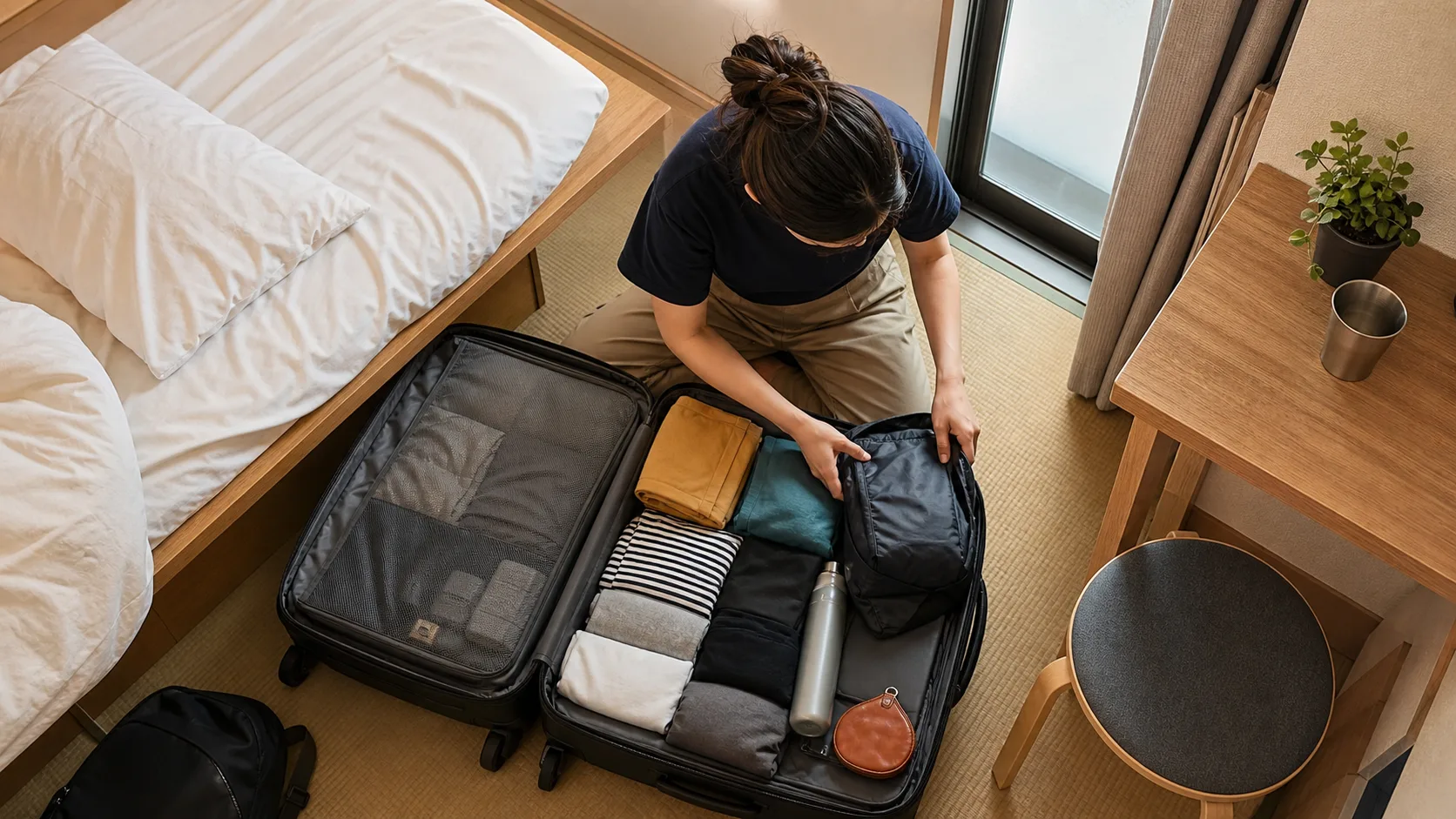
If you are flying from Singapore to Japan on a budget, packing well is one of the easiest ways to keep the trip cheap and low-stress. The right bag, layers, shoes, chargers, and documents help you avoid overweight baggage fees, expensive last-minute purchases, and wasted space that you could have used for souvenirs on the return leg.
1. Fast Answer
The best budget packing strategy for Japan from Singapore is simple: bring one carry-on if you can, a small personal bag, and clothes that layer cleanly across indoor heating, cold mornings, and wet weather. Japan rewards organized packing because transport is easy, convenience stores fill small gaps, and laundry is widely available, so you do not need to overpack just in case.
For most Singapore travelers, the sweet spot is a compact suitcase or backpack, two pairs of comfortable walking shoes, a light but warm outer layer, quick-dry clothing, and a small set of essentials you know you will use every day. That keeps your luggage fee low, makes train transfers easier, and leaves room for local shopping without needing a second bag on the way home.
The biggest mistake is packing for “one perfect weather” instead of packing for the real trip: mornings can feel much colder than afternoons, coastal cities can be windy, snow regions can be much harsher, and rainy days can ruin shoes that are not ready for wet sidewalks. Budget travel in Japan works best when every item earns its place in your bag.
2. Context You Need
For Singapore travelers, “budget trip packing” in Japan does not mean carrying less comfort for the sake of it. It means understanding where you are likely to spend money and where packing can save you money. In Japan, the main avoidable costs are baggage fees, buying duplicate toiletries or clothing, replacing wet or uncomfortable shoes, and paying for things you forgot that you could have brought for free.
Japan is also a destination where your daily routine can be surprisingly active. Even on a relaxed itinerary, you may change trains several times, walk more than expected between stations and attractions, and spend long periods indoors with strong heating or air conditioning. A pack that works for a mall day in Singapore may fail in Tokyo, Osaka, Kyoto, Sapporo, or a mountain town because the weather and walking load are different.
The simplest way to think about this trip is to pack for transitions. You will move from airplane to airport train, from train to street, from cold outdoor air to heated indoor spaces, and from sightseeing to dinner to convenience store runs. If your clothes, shoes, and small gear can handle those transitions without forcing purchases, your trip stays efficient and cheap.
Budget packing also matters because Japan tempts you to shop. Singapore travelers often underestimate how quickly a suitcase can fill with snacks, cosmetics, pharmacy buys, and gifts. If you start with too much in your bag, you lose flexibility on the return trip and may end up paying for checked baggage or an extra tote. If you start lighter and smarter, the trip becomes easier to manage and often cheaper overall.
What “budget” means for this guide
- Avoiding overweight baggage fees and unnecessary checked luggage.
- Reducing duplicate purchases by packing the right basics from home.
- Choosing versatile clothing that works in city walking, dining, and transit.
- Leaving enough room for souvenirs, food gifts, and personal shopping.
- Using Japan’s convenience stores, laundries, and pharmacies as support, not as a replacement for basic preparation.
If you are deciding whether to pack for comfort or economy, the answer is usually both. You want a small, organized bag that gives you enough clothing flexibility to repeat outfits without feeling underprepared. For Singapore travelers especially, that means treating Japan as a layered-clothing trip, not a tropical one.
3. Step-by-Step Guide
Step 1: Pick the right bag size before you choose clothing
Your bag choice determines almost everything else. If you start with an oversized suitcase, you will fill it. If you start with a compact carry-on or a small checked bag, you will naturally choose more useful items and leave behind the things that add weight but not value.
For a short Japan budget trip, many Singapore travelers do well with:
- One cabin-size suitcase or backpack for the main load.
- One small daypack or tote for daily use.
- One lightweight foldable bag for shopping on the return trip.
The key question is not “Can I fit everything?” but “Can I move through stations, stairs, and sidewalks easily?” Japan’s transport system is excellent, but that does not make large luggage pleasant. If your route includes busy metro stations, older station buildings, or transfer-heavy days, a smaller bag is worth more than a few extra outfit options.
If you know you will buy gifts or winter clothes, leave room at the start. A half-empty bag on departure is cheaper than a baggage fee on return.
Step 2: Build a clothing system, not a pile of outfits
The cheapest way to pack is to choose clothing that can be mixed and repeated. You do not need a different outfit for every day. You need a system that handles walking, changing temperatures, and laundry.
Think in layers:
- Base layer: breathable T-shirts, long-sleeve tops, or thermal tops depending on season.
- Mid layer: a sweater, fleece, or cardigan that can be removed indoors.
- Outer layer: a compact jacket that blocks wind and light rain.
- Bottoms: trousers, jeans, or travel pants that work with multiple tops.
- Socks and underwear: enough for the number of days between laundry stops.
For a Singapore traveler, the biggest adjustment is usually not the cold itself but the gap between outdoors and indoors. Many buildings are warm, train platforms can be chilly, and outdoor sightseeing can involve wind or drizzle. Clothing that is easy to add and remove is more useful than thick clothing that only works in one condition.
Step 3: Choose shoes carefully because shoes decide your budget
Shoes are the part of packing people regret most often. If your shoes are bad, you will spend money fixing the problem in Japan, and you will feel it every day.
Bring:
- One pair of walking shoes you trust.
- One backup pair that is comfortable enough for short days.
- Socks that match the season and reduce blisters.
If you are traveling in colder months, make sure at least one pair has enough grip for wet pavement. If you are visiting during rainy season or shoulder season, water resistance matters more than style. If you plan to do temples, city walks, or long shopping days, your shoes need real support. Budget travel gets more expensive when you buy emergency footwear halfway through the trip.
It is also smart to break in your shoes before departure. A cheap pair that gives you blisters is not cheap anymore once you need plasters, rest stops, or replacement shoes.
Step 4: Pack for weather transitions, not just the month on the calendar
Japan’s weather can change sharply by region and elevation. That is why a packing list built around “summer” or “winter” alone is too simple. A Tokyo-Kyoto trip can still involve cold train platforms, hot afternoons, and sudden rain. A northern or mountain trip can feel completely different again.
Use this packing logic:
- Warm season: breathable tops, light trousers or shorts where appropriate, and a light rain layer.
- Cool season: thermal base, sweater, light-to-medium coat, scarf or neck warmer if needed.
- Cold season: proper insulated outerwear, gloves, warm socks, and heat packs if you are sensitive to cold.
- Rain-prone days: compact umbrella, water-resistant shoes, and fast-drying clothing.
Singapore travelers often overpack one thick item and underpack flexible layers. That creates two problems: the thick item takes up too much space, and it does not help much when the weather changes during the day. A better budget choice is often one good outer layer plus several lighter pieces.
Step 5: Decide what toiletries and medicines to bring from home
You can buy most toiletries in Japan, but buying everything locally is not always cheaper, and it wastes time in your first days. Bring the items you already know you use every day. That usually includes:
- Toothbrush and toothpaste.
- Face wash or cleanser.
- Shampoo or travel-sized hair products if you are picky about brands.
- Deodorant that suits you in humid or cold weather.
- Sunscreen, lip balm, and moisturizer if you use them regularly.
- Basic medicine you are allowed to carry and already know how to use.
Singapore travelers often find Japan drugstores very convenient, but convenience does not equal perfect fit. If you are particular about skin care, allergy relief, or stomach remedies, pack your own first-line supplies. The budget saving comes from avoiding unnecessary duplicate buys, not from refusing to bring anything.
If you wear prescription items, keep them in your carry-on and in original packaging when appropriate. That is not just safer for travel; it also avoids stressful replacement purchases at destination.
Step 6: Build a tech kit that does not need emergency shopping
Japan is easy to navigate with a phone, but only if your power setup and connectivity are reliable. Your budget packing should include:
- Phone and charging cable.
- Power bank.
- Travel adapter if your plugs need it.
- Earbuds or headphones.
- Any backup device you genuinely need, such as a watch charger or camera battery charger.
The cheapest travel mistake is a dead battery followed by a chain of purchases: power bank, cable, plug adapter, and maybe an emergency charging cable you did not need. Keep your tech kit together in one pouch so you do not lose pieces in a hotel drawer or station locker.
If your budget trip will rely heavily on maps, train apps, and translation, think of your charger as core trip gear, not an accessory. An uncharged phone can create transport mistakes that cost both money and time.
Step 7: Use a simple packing sequence the night before departure
The easiest packing process is repeatable. The night before you leave, lay everything out in the same order every time:
- Clothes by layer.
- Shoes and socks.
- Toiletries and medicine.
- Tech and chargers.
- Documents, wallet, and travel cards.
- Foldable bag for returns.
- Weather-specific items such as umbrella, scarf, or heat packs.
Then ask one question for each item: “Will this be used at least twice?” If the answer is no, the item is probably optional. That one question does a lot of work for budget travelers because it removes the items people pack out of anxiety instead of utility.
Step 8: Prepare for laundry so you can pack less
Laundry is one of the biggest budget-travel tools in Japan. If you can wash a small amount of clothing during the trip, you can pack less from the start and still stay fresh.
Before you leave, decide whether you will:
- Wash by hand in the hotel sink.
- Use a hotel laundry service.
- Use a coin laundry.
- Stay in accommodations with a washing machine.
For many budget travelers, the best option is a combination of sink-washing small items and using a nearby laundromat for heavier loads. This lets you pack fewer shirts and fewer socks while keeping your bag light. It is also a good way to manage unexpected rain, sweat, or spills without buying replacements.
Quick packing checklist
| Category | Budget-friendly choice | Why it helps |
|---|---|---|
| Bag | Cabin-size suitcase or compact backpack | Easier transit, lower baggage risk |
| Tops | Mix-and-match layers | Less overpacking |
| Outerwear | One versatile jacket | Handles indoor-outdoor temperature shifts |
| Shoes | One reliable walking pair | Prevents replacement purchases |
| Toiletries | Only your must-use items | Avoids duplicate buys |
| Tech | Phone, charger, power bank | Prevents emergency spending |
| Laundry | Small wash kit or detergent sheet | Lets you pack fewer clothes |
| Return space | Foldable spare bag | Helps with shopping and souvenirs |
4. Costs, Hours, and Logistics
Packing for Japan on a budget is partly about spending less before you leave and partly about avoiding “small” costs that add up after arrival. The main expense categories to think about are baggage, laundry, toiletries, and transport convenience. Even if you do not pay for all of them, they influence how much you should pack.
Baggage costs
Airlines servicing Singapore to Japan commonly sell different baggage bundles, and low-cost carriers can be especially strict about size and weight. That means a few extra kilograms can become a meaningful trip cost. If your itinerary is short, it is often cheaper to stay within carry-on limits than to pay for a larger bag just to bring things you barely use.
The practical packing takeaway is to weigh your bag at home and keep a margin for return shopping. Budget travelers often forget that the return leg is where baggage problems happen, not on the outbound flight.
Laundry logistics
Coin laundry and self-service washing are widely useful in Japan, especially in urban areas and around budget hotels. Hours vary by location, but many laundromats are usable late into the evening. Hotel laundries may be more convenient but can cost more and may require more waiting time.
If you are traveling for more than a few days, laundry can reduce the need for extra clothing significantly. That matters because the cheapest shirt is still not cheap if it forces a larger bag or a baggage fee.
Toiletries and convenience purchases
Convenience stores and drugstores make it easy to replace forgotten items. Most are open long hours, and many are effectively available whenever you need them in city areas. That said, buying a few forgotten items is fine; buying an entire first-aid or toiletry kit because you packed badly is not budget travel anymore.
Use local shopping as a backup, not as a strategy. If you know you are particular about brands, skin sensitivity, or medication routines, pack those items from home.
Transit and station movement
Japan’s transit is efficient, but station navigation can involve stairs, long corridors, platform changes, and crowded exits. That is why bag size matters so much. A lighter pack reduces taxi temptation, improves your pace on transfer days, and lowers the chance that you will pay for convenience because your luggage feels annoying.
If your hotel is near a station, great. If it is not, compact luggage matters even more. Singapore travelers sometimes plan the cheapest hotel first and then forget to budget for the walking burden that comes with a bad location.
Money and payment
Japan is increasingly card-friendly, but cash is still useful in some places. Your packing list should include a wallet setup that separates daily spending money from backup funds and keeps cards easy to reach. A slim card holder or compact wallet often works better than a bulky one.
You do not need to overpack cash-related accessories. What you do need is an organized system:
- One primary card for general spending.
- One backup card stored separately.
- Some cash for small purchases and places that prefer it.
- A secure place for passports and spare documents.
Seasonal logistics to remember
- Summer: pack for humidity, sweat, and sun exposure.
- Rainy periods: make sure shoes and bags can handle wet pavement.
- Autumn and spring: mornings and nights may be much colder than midday.
- Winter: gloves, inner layers, and a coat that handles wind matter more than fashion.
If you are only choosing one thing to spend more attention on, choose footwear. Shoes affect how much you can walk, how tired you are, and how often you need a detour. A budget trip gets more expensive when it becomes a recovery trip.
5. Variations and Edge Cases
If you are doing a short city break
For a three- to five-day trip in Tokyo, Osaka, or Kyoto, pack lighter than you think. You can repeat outfits, wash small items by hand, and rely on one outer layer. A short trip is the best time to test a minimalist approach because there is less time for weather extremes to create problems.
If you are traveling in winter
Winter packing is the one case where Singapore travelers most often underprepare. Cold wind, indoor-outdoor temperature swings, and long walking days can make a weak coat feel useless. Bring a coat that blocks wind, not just a fashion layer. Add socks, gloves, and a scarf or neck warmer if you know you are sensitive to cold.
If you are heading to snow regions, do not assume city winter packing is enough. Snow and icy sidewalks change your shoe needs, and dry indoor air can make skin and lips feel uncomfortable faster than you expect.
If you are traveling with family or a group
Group travel introduces another budget concern: shared items can save money if they are truly shared, but they can also create confusion. Agree in advance on what is communal. For example, a group umbrella, shared snacks, or one medicine pouch can make sense. Shared chargers, however, often become the opposite of a savings strategy because nobody knows who has which cable.
If you are packing for children, the cheapest mistake is not enough spare clothes. Carrying one or two extra sets for them is often worth the space because it prevents expensive emergency purchases and stress.
If you plan to shop a lot
If your Japan trip includes department stores, outlet shopping, or a lot of snack and beauty purchases, leave real return-space in your luggage. A foldable duffel or spare day bag can save you from buying a new suitcase or paying for checked luggage upgrades.
That said, do not assume shopping means you need to pack a giant bag outbound. Often the smarter move is to pack lightly, use your shopping capacity as a reward, and buy only what actually fits.
If you have dietary or health constraints
Travelers with strict dietary needs, allergies, or health routines should pack more carefully than the average tourist. This does not necessarily mean more volume, but it does mean more certainty. Bring the items you rely on and do not leave them to chance in a foreign pharmacy or convenience store.
For budget trips, certainty is savings. If one forgotten item causes a chain of replacements, special meals, or transport detours, the “saved” packing space becomes false economy.
If you are combining cities and rural areas
City-only packing can fail when the route includes rural stops, mountain areas, or overnight stays away from major stations. In those cases, bring at least one more weather-resistant layer and a slightly more flexible laundry plan. Rural convenience is different from urban convenience, and the safer pack is the one that does not assume a shop will be around the corner.
6. Mistakes to Avoid
Packing too many “just in case” items
This is the classic budget trap. Every extra shirt, gadget, and toiletry seems harmless until the bag gets heavier, the zip gets tighter, and the return trip becomes more stressful. Pack for actual use, not imagined emergencies.
Ignoring shoe comfort
Shoes are not the place to optimize for appearance. If your walking shoes are poor, the rest of your itinerary gets worse. Blisters and sore feet cost money in the form of rest time, medication, and emergency purchases.
Bringing full-size toiletries without a reason
If a product is easy to buy locally and you do not need your exact brand, bring less. Full-size liquid bottles take space and weight with very little upside on a short trip.
Forgetting weather flexibility
Packing for only one temperature band is a mistake. Japan can surprise you with wind, rain, indoor heating, or colder nights than expected. Layers are your budget-friendly solution.
Not reserving bag space for the return leg
Budget travelers love a bargain until the souvenirs need a new bag. Leave room from day one so you are not forced into checked baggage or an unplanned suitcase purchase.
7. FAQ
How many outfits do I need for a budget trip to Japan?
Usually fewer than people think. If you can do laundry once during the trip, you can often manage with a small set of mix-and-match tops, two or three bottoms, and one reliable outer layer. The goal is not outfit variety; the goal is to stay clean, comfortable, and light.
Should I pack a winter jacket from Singapore?
If you are traveling in real cold weather, yes, bring an actual jacket that handles wind and insulation. A light cardigan or tropical blazer is usually not enough. If you run cold, prioritize warmth over style. If you are unsure, check the weather by city and pack layers that can be added or removed.
Is it cheaper to buy toiletries in Japan?
Sometimes, but not always in a way that helps your trip. You may find many items easily, but that does not mean the exact product is cheaper or better for you. For regular-use toiletries, bring what you already trust and only rely on local stores for gaps.
Do I need to bring cash?
Yes, some cash is still useful. Japan is very card-friendly in many places, but small purchases, some local shops, and certain transport or food situations can still be easier with cash. Keep it organized and do not carry all of it in one place.
Can I travel Japan with only hand luggage?
For many short city trips, yes. If you pack lightly, choose versatile clothing, and do laundry when needed, carry-on only is realistic. This is often the best budget option because it reduces baggage fees and makes train travel easier. The main tradeoff is that you need to be disciplined about what you bring.
What is the one item Singapore travelers most often forget?
The most common problem is not one single item; it is underestimating the value of layers. Many travelers pack for the average day and forget about cold evenings, indoor heating, or wind. A light but useful outer layer solves a surprising number of travel discomforts.
Should I bring an umbrella?
Yes, a compact umbrella is usually worth it. It takes little space and can save you from buying a more expensive one in the rain. If you are trying to keep your bag minimal, make sure the umbrella is small enough to justify its place.
How do I keep my bag light without forgetting essentials?
Use a rules-based packing process: one bag category at a time, one backup only when necessary, and one final check for weather and laundry. If you want a practical test, ask whether each item will be used multiple times. If not, leave it out unless it solves a real risk.
8. Next Steps
The best next step after this guide is to build your actual packing list from the specific cities, months, and activities in your Japan itinerary. Start with bag size, shoes, outer layer, and laundry plan, then add weather and health items only after the basics are covered. That approach keeps the trip cheaper, easier, and far more comfortable.
If you are still deciding your route, match your pack to your itinerary rather than the other way around. A short city break, a winter trip, and a mixed city-and-rural itinerary all need different packing priorities. Once the bag is under control, the rest of the trip becomes much easier to plan.
Related: japan-budget-trip-neighborhood-guide-for-first-time-visitors
Related: japan-budget-trip-first-time-travel-guide-for-short-holidays
Related: japan-budget-trip-itinerary-for-singapore-travelers