Japan Budget Trip Neighborhood Guide for First Time Visitors

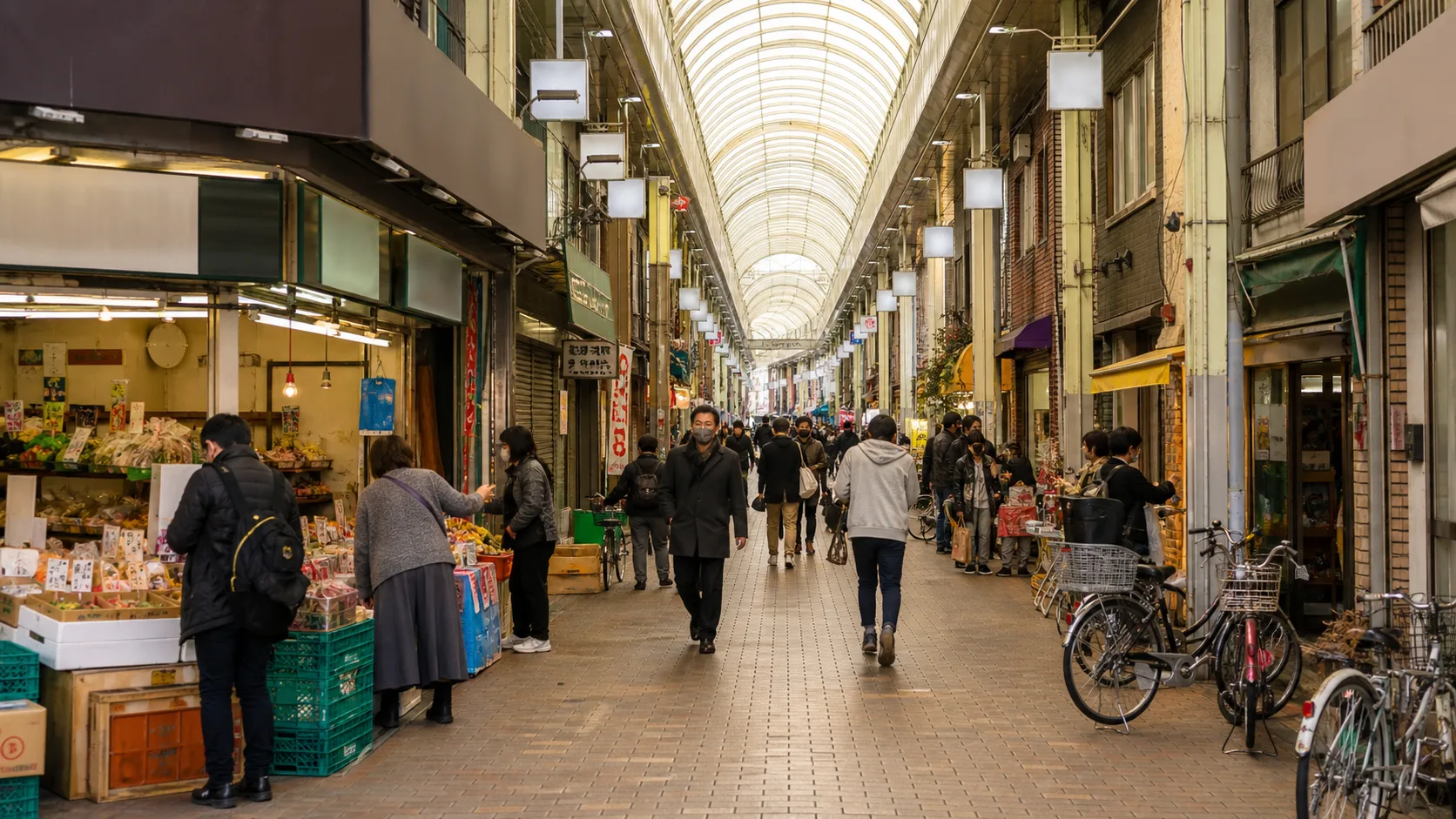
If you are planning your first budget trip to Japan, the cheapest hotel is not always the cheapest trip. The right neighborhood can cut transit costs, reduce walking with luggage, and make a tight itinerary feel easy instead of rushed. For most first-timers, stay near a rail hub and build the trip around it.
Fast Answer
For a first Japan budget trip, stay near a major rail hub, not the lowest-rate room you can find on the map. In Tokyo, Ueno and Asakusa are the best value; in Osaka, Namba and Umeda; in Kyoto, Kyoto Station or Gojo; in Fukuoka, Hakata or Tenjin. These areas give you better train access, simpler airport transfers, more food options at different price points, and enough late-night convenience stores that you can travel light without overpaying for every meal.
The reason this matters right now is simple: Japan is still a city-by-city country for first-time visitors. A trip that looks cheap on paper can become expensive if you keep bouncing across town for every museum, meal, and hotel check-in. Budget travelers usually do better by paying a little more for a strong location, then saving money through easy station access, casual food, and fewer taxi rides.
If you are coming from Singapore, the best planning mindset is to treat each Japanese city like a separate base. Pick one neighborhood that fits your arrival airport, one that fits your main sightseeing rhythm, and one that fits your luggage tolerance. If you do that well, the whole trip becomes more efficient without feeling rushed.
Context You Need
In Japan, "neighborhood" is more than a dot on a hotel search map. It usually means a cluster of train stations, food streets, convenience stores, and local business blocks that shape how your day feels. Two hotels with the same room rate can produce very different trips depending on whether one sits beside a major station and the other sits in a quieter pocket that requires two extra transfers every time you leave.
That is why budget travelers should think in terms of base neighborhoods, not just attractions. First-timers often want to see Tokyo, Kyoto, and Osaka in one trip, but those cities reward different styles of staying. Tokyo is huge and fast, so a well-connected neighborhood saves time. Osaka is food-friendly and straightforward, so staying near a lively station area helps. Kyoto is more spread out and slower-moving, so location matters because bus and train connections are less forgiving. Fukuoka is compact and easy, which makes it ideal for a low-friction first trip or a final recovery stop.
The old habit of trying to "do Japan cheaply" by staying far from everything usually backfires. Japan is efficient, but it is not magically free. Transit is excellent, yet repeated rides add up. Taxis are clean and convenient, yet they can eat into a budget faster than a nicer hotel room would have. Most first-time visitors get better value by staying in a dense, walkable district with easy train access and then using local rail plus walking for the rest of the day.
There is also a cultural reason to choose neighborhoods carefully. Japanese city centers are designed around rail stations, not around giant road corridors. The station district is usually where you get department stores, drugstores, bakeries, casual restaurants, coin laundries, and late-night snacks all within a few blocks. That is useful for a budget traveler because it turns the neighborhood itself into part of the trip. You do not need luxury amenities; you need frictionless everyday logistics.
For a Singapore-based traveler, this is especially practical because many short trips are built around four to eight nights. You may not have enough time to recover from a bad location choice. A strong neighborhood base can save an hour a day, which is often more valuable than a small nightly discount.
Step-by-Step Guide
The easiest way to plan a budget trip is to choose your neighborhood in the same order you choose your flights: arrival, main base, side trip, departure.
1. Decide what kind of trip you are actually taking
Before you book a room, decide whether the trip is:
- Tokyo-focused with one or two side trips
- Osaka-Kyoto focused with day trips
- A multi-city route with one long stay and one short stay
- A first trip that needs to stay simple, not ambitious
This matters because the "best" neighborhood changes with your goal. Tokyo is best for city energy and broad transport access. Osaka is best for easy food and lower-pressure sightseeing. Kyoto is best when you want a calmer cultural base. If you try to split a short trip across too many neighborhoods, you spend money moving your luggage instead of enjoying the trip.
2. Choose the neighborhood that matches your main rail pattern
Use the station network first, then the sightseeing list.
| City | Best budget base | Why it works | Tradeoff |
|---|---|---|---|
| Tokyo | Ueno or Asakusa | Easy rail access, good value hotels, practical food options | Less polished than Shibuya or Ginza |
| Tokyo | Shinjuku if the fare gap is small | Huge transport hub, many direct routes | Busy, noisy, and easy to overspend |
| Osaka | Namba | Great for food, nightlife, and Kansai access | Can feel crowded |
| Osaka | Umeda | Strong rail connections and shopping | Hotels can be pricier than Namba |
| Kyoto | Kyoto Station | Best for first-timers with luggage and day trips | Less atmospheric than central temple districts |
| Kyoto | Gojo or Karasuma | More balanced value and calmer streets | You may walk a little more |
| Fukuoka | Hakata | Airport access and easy transit | Businesslike rather than scenic |
| Fukuoka | Tenjin | Food, shopping, and walkability | Slightly less direct for airport transfers |
If you want the shortest version of the advice: stay near the main station unless the city has a clearly better budget district nearby, such as Ueno in Tokyo or Namba in Osaka.
3. Match the neighborhood to your hotel style
Budget in Japan is not just about the nightly room rate. It is also about room shape, check-in style, and how many convenience purchases you avoid.
Good first-trip budget options usually include:
- Business hotels near the station
- Small city hotels with compact but clean rooms
- Well-reviewed hostels or capsule hotels if you travel light
- Apartment-style stays only if you are willing to manage check-in and cleaning rules carefully
For a first-time visitor, business hotels are often the sweet spot. They are not glamorous, but they usually offer the best balance of location, private space, luggage storage, and predictable service. If you are traveling with a parent, partner, or a lot of shopping intentions, private rooms usually save stress even when they cost a little more.
4. Plan the neighborhood around your arrival airport
Your airport should influence your first night more than your second or third.
- If you arrive at Haneda, Tokyo neighborhoods with direct rail access are easier to handle on arrival.
- If you arrive at Narita, Ueno, Asakusa, or other well-connected east-side bases can reduce the tired first transfer.
- If you arrive at Kansai Airport, Namba or Umeda in Osaka are natural first-night bases.
- If you arrive at Fukuoka Airport, Hakata is usually the most efficient first-night choice.
When you arrive late, the best neighborhood is the one that gets you to a clean bed with the fewest transfer decisions. Do not force a "perfect" sightseeing location on your first night if you are landing after a long flight.
5. Build your day trips from the neighborhood outward
Instead of asking, "Where should I stay to see everything?", ask, "What can I reach easily from this base?"
Examples:
- From Ueno, you can move quickly toward Asakusa, Tokyo Station, Akihabara, and the airport-side rail network.
- From Namba, you can get easy access to Dotonbori, Shinsaibashi, Nara day trips, and useful transfer points.
- From Kyoto Station, you can move to Arashiyama, Nara, Osaka, and central Kyoto without re-planning every day.
- From Hakata, you can combine city food stops with smaller regional trips while keeping transfers simple.
The point is not to eliminate transit. The point is to make transit boring enough that it disappears into the trip.
6. Keep one rule for budget travel: one base, one backup
For a short first trip, choose one main neighborhood and one backup area only if your dates are split across cities. Do not book three "clever" cheap neighborhoods that all require long rides. The cheapest hotel pattern is often:
- One strong base near the main station.
- One second base only when you move cities.
- No unnecessary mid-trip hotel switches.
That rule saves money on taxis, luggage forwarding, and the hidden cost of wasted time.
Costs, Hours, and Logistics
Budget neighborhoods in Japan are cheap only when you compare the full trip, not just the nightly room rate. In 2026, a practical first-time budget traveler should think in ranges rather than chasing the absolute lowest price.
Typical hotel cost bands
- Business hotels near major stations often sit in the middle of the budget range and are usually worth it.
- Hostels and capsule hotels can be cheaper, but you trade away privacy and sometimes luggage convenience.
- Central tourist districts can cost more, especially during cherry blossom season, Golden Week, Obon, weekends, and major event periods.
For many first-time visitors, the real sweet spot is a clean private room in a station neighborhood where the room rate is a bit higher but the total trip is easier. That is especially true in Tokyo and Kyoto, where a cheaper hotel in the wrong place can create extra transport costs every day.
Transit and timing basics
Japanese city transport is reliable, but not 24 hours. The last train matters, especially in Tokyo and Osaka. If you are out late, keep an eye on station closing times and do not assume you can wander home whenever you like. This is one of the main reasons to stay in a central neighborhood rather than a far-flung cheap area.
For local travel, IC cards and mobile equivalents make life easier. If you can use a Suica-, PASMO-, or ICOCA-style payment method, you will save time on trains, convenience stores, and some vending machines. Cash is still useful, but you do not need to rely on it for every small purchase.
Booking and arrival logistics
Japan usually rewards early booking for good-value rooms, especially in popular neighborhoods. If your dates overlap with spring bloom season, school holidays, or major travel periods, lock in a flexible room early and keep watching rates. Budget districts fill up quickly because everyone else is trying to be smart about the same stations you are considering.
Practical booking habits:
- Book a room near the station, not "near" the station in a vague sense.
- Check the walking route from the station exit to the hotel entrance.
- Read room size carefully; budget rooms can be compact.
- Check luggage storage rules if you arrive before check-in.
- Confirm late check-in if your flight lands after midnight or near midnight.
What to expect from 2026 logistics
In 2026, the biggest travel lesson is still that Japan runs best when your neighborhood and transit plan line up. That means choosing a base that reduces transfers, not one that simply looks fashionable on a map. It also means allowing for slightly higher local prices in exchange for lower friction. The trip often feels cheaper because you avoid taxis, avoid unnecessary station mistakes, and eat well without seeking out expensive "destination" restaurants every night.
Variations and Edge Cases
The right neighborhood changes depending on season, trip style, and group type. A first-timer traveling alone does not need the same base as a family with two large suitcases.
If you are traveling solo
Solo travelers can tolerate smaller rooms and slightly denser neighborhoods because flexibility is high. Ueno, Asakusa, Namba, and Hakata are strong options because they are lively, efficient, and easy to navigate at street level. If you want nightlife, choose a neighborhood with good late transport and avoid staying too far from a main station.
If you are traveling with family
Families usually do better in easier-transfer areas such as Kyoto Station, Umeda, or Hakata. The reason is not just the train access. It is also the ability to grab food, medications, snacks, and backup items without turning every errand into a mission. More space and fewer connections matter more than saving a small amount per night.
If you are visiting during cherry blossom or autumn peak
During peak seasons, the best neighborhoods sell out first. Do not wait for a last-minute bargain in Tokyo or Kyoto if your dates are locked. It is often smarter to stay slightly less "perfect" but still central than to chase a lower rate in a weak location that costs you time every day.
If you are doing a short Japan trip
For four to six nights, keep your base simple. Tokyo with one side trip, or Osaka with a Kyoto day trip, is often enough. That approach lets you spend more time exploring neighborhoods and less time moving bags.
If you are doing a multi-city route
The usual first-trip structure is Tokyo first, Kyoto or Osaka second, then departure from Kansai or back through Tokyo. In that case, choose one airport-friendly base and one rail-friendly base. The less often you change hotels, the more your budget goes into food, admission, and useful experiences.
If you are watching every yen
The most budget-sensitive move is not always the cheapest room. Sometimes it is a room in a district with excellent walking access to cheap food, a convenience store, and a major station. A place that saves you one taxi and two extra train legs can outperform a visibly cheaper room on the outskirts.
Mistakes to Avoid
First-time visitors make the same neighborhood mistakes again and again.
-
Booking the cheapest hotel far from the station. The room rate looks good until you add the time and transit cost of getting anywhere.
-
Choosing a famous district without checking the station layout. "Central" does not automatically mean easy. Some central areas have awkward transfers or long walks between exits.
-
Assuming Kyoto is the same as Tokyo. Kyoto rewards different planning. You want a calmer, more practical base and a stronger focus on station access.
-
Changing hotels too often. Moving around sounds efficient on paper and wastes time in real life.
-
Ignoring room size. Budget rooms in Japan are compact by design. If you are bringing big suitcases, check the dimensions and storage options before booking.
-
Forgetting that the last train exists. If you stay too far away, a late dinner or evening stroll can turn into an expensive taxi ride.
The fix for almost all of these mistakes is the same: pick a strong station neighborhood first, then compare hotels inside that area.
FAQ
Is Tokyo or Osaka better for a first budget trip?
Tokyo is better if you want the widest range of sights and transport. Osaka is better if you want a simpler, more food-driven trip with easy access to Kyoto and Nara. For many first-timers, Osaka feels easier on the wallet, while Tokyo feels broader and more layered.
Should I stay in Shinjuku?
Shinjuku is convenient, but it is not always the best value for a budget-first visitor. If the price gap is small, it can work well. If you are paying a premium just to say you stayed there, Ueno or Asakusa is usually the smarter move.
Is Kyoto worth staying overnight?
Yes, if you want early mornings, slower evenings, or a less rushed temple schedule. Kyoto is better as a stay than as a long day trip from Tokyo. For a first trip, one or two nights in Kyoto often makes the whole route feel more balanced.
Can I do Japan on a budget without a rail pass?
Yes. Many first-time visitors do better by paying for point-to-point transport and using city transit normally, rather than forcing a pass to work. The best choice depends on how many long-distance rides you actually take.
What is the best neighborhood for a late arrival?
Choose the place with the simplest transfer from your airport. That is often Ueno or Asakusa in Tokyo, Namba or Umeda in Osaka, and Hakata in Fukuoka. After a long flight, convenience beats a prettier map.
How many nights should I spend in each base?
For a short first trip, two to four nights in each main base is usually enough. One-night stops are only worth it if they dramatically improve your route or save a long transfer.
Do I need to stay near nightlife?
No. For a budget trip, food, station access, and convenience stores matter more than nightlife. If you want evening energy, choose a district with restaurants and bars nearby, but do not let that override transit convenience.
Next Steps
Pick one main base city and then choose the neighborhood that best matches your airport and train pattern. If your trip is Tokyo-heavy, start with Ueno or Asakusa. If it is Kansai-heavy, start with Namba or Kyoto Station. Once the base is set, the rest of the itinerary becomes much easier to price, book, and enjoy.
Related: where-to-stay-in-japan-for-a-short-budget-trip-holiday
Related: japan-budget-trip-packing-guide-for-singapore-travelers
Related: japan-budget-trip-itinerary-for-singapore-travelers