Japan Budget Trip Itinerary for Singapore Travelers

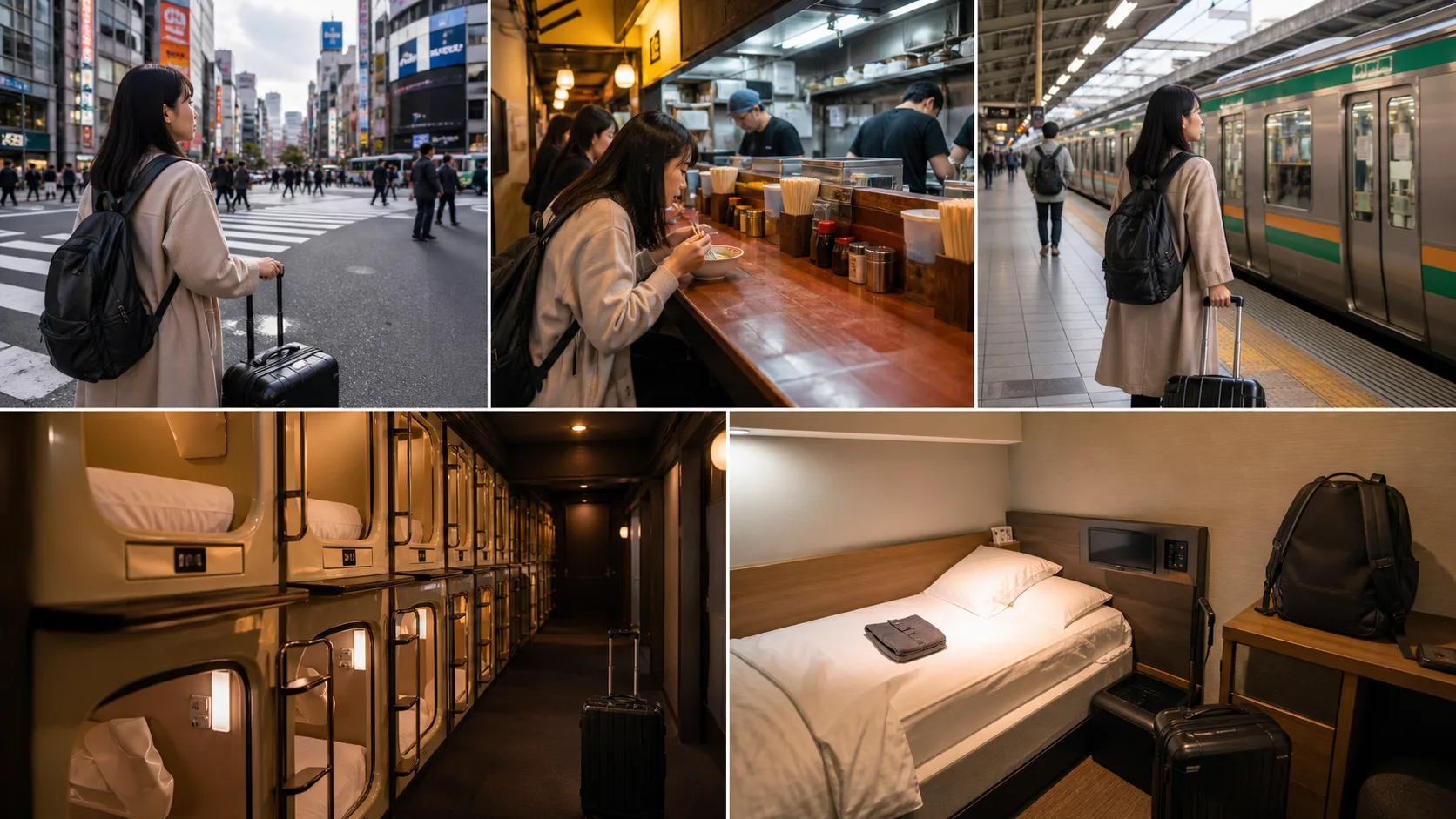
Japan is one of the easiest long-haul trips for Singapore travelers to plan well on a budget, but it only stays affordable if you make the right calls early. The biggest savings come from choosing the right route, limiting hotel changes, and using trains and local food strategically instead of defaulting to the most convenient option every time.
Fast Answer
If you want a budget Japan trip from Singapore, build the itinerary around one or two base cities, use point-to-point transport instead of assuming the Japan Rail Pass will save money, and keep meals simple on travel days. For most Singapore travelers, a Tokyo plus Kansai route gives the best balance of price, variety, and ease.
This guide is written for travelers who want a realistic trip, not a fantasy one. You do not need to see every famous place in one go. You need an itinerary that fits your leave balance, keeps your transport costs under control, and leaves enough room in the budget for food, local trains, and the occasional splurge without blowing up the whole plan.
The cheapest sensible version of Japan is usually not the one with the fewest experiences. It is the one with the fewest expensive mistakes: too many hotel moves, too many fast-train tickets bought on impulse, and too many meals taken in the most expensive part of town just because it is convenient.
Context You Need
Singapore travelers have one major advantage when planning Japan: the route is straightforward. Japan and Singapore are only one time zone apart, which makes jet lag manageable, and Singapore passport holders are eligible for short-term visa exemption for tourism, with a stay of up to 90 days under Japan's current visa exemption arrangement. That means the planning problem is not immigration paperwork. It is itinerary discipline.
For a budget trip, the first decision is whether you want a city-heavy route or a rail-heavy route. City-heavy trips are simpler and usually cheaper because you can stay in the same hotel for several nights, use local transit, and eat near your base. Rail-heavy trips feel more adventurous, but they can quickly become expensive if you keep jumping between cities just because the rail map makes it look easy.
That is why this article leans toward a Tokyo and Kansai itinerary. It gives you the classic Japan experience without requiring a premium budget. Tokyo gives you the urban side of the trip: neighborhoods, convenience food, temples, museums, and easy rail access. Kyoto and Osaka give you temples, culture, nightlife, and food without needing to add a third or fourth major city.
Budget travel in Japan also works better when you understand what is expensive and what is not. Public transport inside cities is usually manageable. Food can be cheap if you choose normal local meals. Accommodation becomes expensive when you insist on central locations during peak dates. Long-distance rail is where many travelers overspend because they buy the fastest option before doing the math.
If you are traveling from Singapore, think in this order:
- Decide your total trip length.
- Choose one primary region.
- Compare rail pass value against separate tickets.
- Book the nights that are hardest to replace.
- Keep the rest flexible.
That order matters because the budget is usually lost in the middle of the trip, not at the start. A good flight deal is helpful, but the bigger savings usually come from how you move after landing.
What "budget" really means in Japan
Budget in Japan does not have to mean uncomfortable. It usually means choosing value rather than luxury. A practical budget trip might use business hotels or well-located hostels, a mix of convenience-store breakfasts and simple lunch sets, local trains for city movement, and one or two reserved long-distance train rides only when they are worth it.
The most important mindset shift is that not every convenience is worth paying for. If walking five extra minutes or transferring one extra time saves you a large fare or a bad hotel location, the cheaper choice may also be the better travel choice.
A good fit for Singapore leave schedules
For many Singapore travelers, Japan works best as a 6 to 8 day trip. That is long enough to justify one long-distance transfer, but short enough to keep hotel costs and annual leave under control. A 7-day route is the sweet spot because you can do Tokyo plus Kansai without rushing every day.
If you only have 5 days, keep the trip mostly to Tokyo or Kansai. If you have 8 to 10 days, add a slower side trip or more neighborhood time rather than forcing in another major city. A budget itinerary gets worse when it becomes a race.
Step-by-Step Guide
The most practical budget plan is a Tokyo to Kansai route with just enough movement to feel like a proper Japan trip. You start in Tokyo, spend several nights there, move once to the Kansai region, then finish in Osaka or fly out from Kansai International Airport. This keeps transport simple and avoids paying for a string of short-hop hotel changes.
Step 1: Pick the right trip shape
Decide whether your trip is:
- Tokyo only.
- Tokyo plus Kansai.
- Kansai only.
- Tokyo plus one side trip.
For a first trip from Singapore, Tokyo plus Kansai is usually the strongest value. You get the iconic city experience, a historical city, and a food-focused city without needing to cover the whole country.
If your main goal is saving money, do not force Hokkaido, Tohoku, or Kyushu into the same trip unless the flight deal or your interests strongly justify it. More regions usually means more intercity transport, more time spent moving bags, and more opportunities to overpay.
Step 2: Use a simple 7-day route
Here is a budget-friendly sample itinerary that keeps the trip varied without becoming expensive:
| Day | Base | What to do | Budget logic |
|---|---|---|---|
| 1 | Tokyo | Arrive, check in, easy evening in a nearby neighborhood | Keep the first day light so jet lag does not create taxi costs |
| 2 | Tokyo | Asakusa, Ueno, Akihabara, or another rail-friendly cluster | Use one transit zone instead of crossing the city all day |
| 3 | Tokyo | Shibuya, Harajuku, Meiji Jingu, or a low-cost day trip | Mix free walking with one paid attraction |
| 4 | Tokyo to Kyoto or Osaka | Move once by train, then do a light evening | One major transfer is enough for a budget itinerary |
| 5 | Kyoto | Temples, old streets, and a slow food day | Kyoto is worth a full day, but not a rushed checklist |
| 6 | Osaka | Namba, Dotonbori, or a Nara half-day | Osaka works well as a lower-friction final base |
| 7 | Osaka | Departure day or final city walk | Keep the last day simple and close to the airport route |
This route works because it concentrates your long-distance spend into one move. Everything else can be handled with local trains, walking, and the occasional bus or subway ride.
Step 3: Book flights around the route, not the other way around
The cheapest flight is not always the cheapest itinerary. When you search from Singapore, compare:
- Round-trip into Tokyo.
- Round-trip into Osaka.
- Open-jaw into Tokyo and out of Osaka.
Open-jaw often gives the best budget balance for a Tokyo plus Kansai trip because it removes the need to backtrack. If you land in Tokyo and leave from Osaka, you only need one long-distance move in the middle. That usually saves both time and money.
If your flight deal is much better for one airport, build the route around the deal. Do not force the route to match the destination if it turns the rest of the trip into a transport puzzle.
Step 4: Choose your transport strategy before you land
For city travel, use a local transit card or mobile payment option if available on your phone. The goal is to remove friction, not to chase tiny fare discounts. For intercity travel, compare point-to-point tickets against any regional pass before you book.
The nationwide JR Pass is no longer a default budget answer. Current pricing makes the ordinary 7-day, 14-day, and 21-day passes expensive enough that they only work for certain rail-heavy routes. If your trip is mostly one city plus one transfer, separate tickets are often better value.
If you do need a fast shinkansen for the Tokyo to Kansai leg, book it with the rest of the trip so you can see the real cost in context. Budget travel gets messy when the train ticket is treated as an afterthought.
Step 5: Book the stays that matter most
The first and last nights matter most because those are the nights when arrival fatigue and departure timing create the most pressure. Put those nights near the station or on a clean transfer line. After that, look for a location that reduces daily transit rather than the absolute lowest price.
In Japan, a cheaper room can become expensive if it sits in the wrong place. A hotel that looks attractive on price alone may require extra subways, taxi rides, or a long walk with luggage. A compact room near the station often wins in total trip value.
Step 6: Plan your food rhythm
Food is one of the easiest places to stay on budget if you build a rhythm instead of improvising every meal. A simple pattern works well:
- Cheap breakfast from a convenience store or bakery.
- One proper lunch set or noodle meal.
- One simple dinner or supermarket meal.
- One splurge meal only when it feels worth it.
That rhythm keeps the trip affordable without turning it into a survival exercise. Japan is full of good inexpensive food, so there is no reason to treat every meal like a special occasion.
Step 7: Keep one flexible buffer day
The best budget itineraries have one soft day built in. It can be used for bad weather, extra shopping, a slower temple visit, or simply rest. When you do not have a buffer, every delay becomes expensive because you are forced to improvise.
In a 7-day route, the buffer can be an easy Kyoto or Osaka day with no fixed tickets. That way, if the weather changes or you are tired from a busy Tokyo stretch, you can adjust without losing money.
Costs, Hours, and Logistics
The safest way to budget Japan is to break it into categories instead of asking for one total number. Flights, hotels, intercity transport, local transport, and food all behave differently. If you control the big categories, the trip becomes much more predictable.
What to expect on the money side
For a Singapore traveler on a budget trip, the main cost buckets usually look like this:
| Category | Budget approach | What drives the price |
|---|---|---|
| Flights | Book early, use open-jaw if useful | School holidays, weekends, and peak seasons |
| Hotels | Business hotels, hostels, or compact city hotels | Station proximity and booking date |
| Transport | Local transit card plus one intercity ticket | Route choice and whether you overuse shinkansen |
| Food | Convenience store breakfasts, lunch sets, supermarket dinners | Tourist districts and late-night eating |
| Attractions | Mix free neighborhoods with a few paid sites | Temples, museums, gardens, and special exhibits |
For rail, the key current reference is the Japan Rail Pass. The ordinary adult passes are 50,000 yen for 7 days, 80,000 yen for 14 days, and 100,000 yen for 21 days. That pricing is high enough that many shorter itineraries will not justify the pass unless they include several expensive long-distance trips.
There is also a practical 2026 point to remember: exchange orders were scheduled to stop at the end of 2025, which means the pass is now effectively a direct-buy product through the official route rather than something you casually price through old agency habits.
Hours and opening patterns
Japan does not run on one universal schedule, but many budget-friendly sights follow a predictable pattern:
- Temples and shrines often open early, especially the famous ones.
- Museums usually keep more regular daytime hours and may close one day a week.
- Shopping streets and department stores tend to start later and run into the evening.
- Train stations and convenience stores keep the day moving when other places close.
That matters because a budget trip gets more value from early starts and neighborhood walks than from expensive last-minute decisions. If you reach a shrine before the tour groups, you usually get a better experience without paying extra.
Booking caveats for 2026 planning
The most important caveat is not to confuse convenience with value. If you are using the nationwide JR Pass, check whether your route actually needs it. If you are not using it, compare ordinary tickets early enough that you can still choose a smarter route or a different airport.
Another caveat is timing. Japan is very sensitive to holiday demand. Golden Week, Obon, New Year, and cherry blossom season can all distort prices and availability. If your Singapore leave dates overlap with school holidays or a major Japanese holiday, book earlier than you think you need to.
Visa and entry basics
Singapore passport holders currently fall under Japan's visa exemption arrangement for short-term stay, with a normal period of stay of 90 days. That makes pre-trip paperwork light, but it does not remove the need to check passport validity, onward travel plans, and any airline or entry form requirements before departure.
Because the official rule is simple, many travelers forget to verify the boring details: passport expiry, hotel addresses, and the actual airport you are using. Those are small things until they delay check-in or slow you down at arrival.
How to handle cash and cards
Japan is more card-friendly than it used to be, but budget travelers still do better when they keep a little cash available for older shops, smaller temples, local buses, and coin lockers. A practical strategy is to bring a card with low foreign transaction friction and keep a backup amount of yen for places that are not fully cashless.
Do not overcomplicate this. The point is not to carry a huge stack of cash. It is to avoid being stranded by a small purchase or a place that still prefers cash.
A realistic budget picture
If you are staying in central areas, eating sensibly, and moving mainly by local transit with one intercity transfer, your trip can stay controlled without feeling stripped down. If you keep changing hotels or using the fastest train for every hop, your costs rise fast.
The budget itinerary works because it is selective. You spend on the parts of the trip that create real value and you refuse to spend on repetition.
Variations and Edge Cases
Not every Singapore traveler should build the same Japan route. The best budget itinerary depends on the season, the length of the trip, and whether you are traveling solo, as a couple, with friends, or with family.
If you are traveling during cherry blossom season
Cherry blossom season is beautiful, but it is also one of the hardest times to keep a Japan trip cheap. Hotels tighten up, popular districts book out earlier, and flexibility disappears. If you must travel then, keep the itinerary simpler and book the fixed nights first.
The right move in blossom season is to reduce complexity, not add more of it. One base in Tokyo and one base in Kansai is enough. Trying to fit in too many side trips during peak season usually costs more than it is worth.
If you are traveling in winter
Winter is often good value, especially outside the holiday week. The tradeoff is shorter daylight hours and colder evenings, which can increase the appeal of indoor attractions and early dinners. A winter budget trip works well if you stay near major stations and use compact day plans.
The main winter edge case is weather disruption. If snow or strong wind affects a leg of your trip, having one buffer day or one spare morning makes the itinerary much more forgiving.
If you are a solo traveler
Solo travelers can usually cut costs more easily because one small room or one bed in a good location can be enough. The risk is overplanning and moving too much. A solo budget trip gets better when you choose a walkable base, use public transit confidently, and avoid paying for unnecessary privacy upgrades.
Solo travel also makes it easier to eat cheaply without feeling locked into a group schedule. That is a real advantage in Japan, where quick noodle shops, set meals, and convenience-store stops can keep costs under control.
If you are traveling as a couple or family
Couples and families should pay more attention to room layout than headline price. A room that is slightly larger, better located, or easier to reach from the station may be better value than the absolute cheapest option. Once luggage and sleep quality are involved, "cheap" can become expensive very quickly.
For families, reduce hotel changes as much as possible. Every move creates friction. The less you have to repack, carry, and recheck in, the easier it is to stay within budget and keep everyone in a good mood.
If you want to focus on food
If your trip is partly about eating, shift the route toward Osaka and Tokyo neighborhoods with strong casual-food options. That does not mean only chasing famous restaurants. It means mixing cheap meals with a few special ones so the food budget stays sane.
Food-focused travelers often overspend because every stop becomes a search for the next viral meal. A better approach is to anchor the day with cheap breakfast and lunch, then pick one dinner worth paying for.
If you want fewer train rides
The fewest-train version of Japan is not the same as the most boring version. In fact, staying in fewer places can make the trip feel better because you spend more time exploring and less time recovering from movement.
If you want an ultra-simple budget route, do Tokyo plus Osaka with one Kyoto day trip, or even just Tokyo plus one Kansai base. That is enough for a first trip and usually easier to keep affordable.
Mistakes to Avoid
The most common budget mistake is assuming that movement is cheap just because it is efficient. In Japan, movement is efficient, but it still costs money. If you keep adding small trips, the total rises quickly.
Do not overuse the JR Pass
The JR Pass is not the default answer anymore. With current pricing, many itineraries will do better with point-to-point tickets. Always compare before buying. If the pass is only marginally useful, it is probably the wrong choice.
Do not switch hotels too often
Hotel changes add hidden costs. You lose time, carry bags more often, and usually spend more on transport. For budget travelers, a stable base is worth a lot.
Do not book the fastest train by habit
Fastest is not always best value. If the trip is short, a standard service or a local route can save enough money to matter. Use the faster train only when it is actually solving a problem.
Do not spend every meal in tourist zones
Tourist-heavy areas are convenient, but they are not the cheapest places to eat. Walk a little farther from the obvious landmark streets and you will usually find better value.
Do not ignore location when booking stays
A cheap hotel far from the station can become a bad deal. In Japan, location directly affects how much you spend every day. Budget travelers should pay for a better map position before paying for a bigger room.
Do not make the itinerary too ambitious
Trying to do too many cities in one short trip is the easiest way to break the budget. If you want to keep the trip affordable, do fewer things more deliberately. Japan rewards depth more than speed.
FAQ
How many days do I need for a budget trip to Japan from Singapore?
Seven days is a strong default because it gives you enough time for Tokyo plus Kansai without turning the trip into a sprint. Five days is possible, but it usually works better for a single-city trip. Eight to ten days is ideal if you want a slower pace or a day trip buffer.
Is Japan expensive for Singapore travelers?
It can be, but it does not have to be. Japan gets expensive when you overuse fast trains, stay in bad locations, or eat every meal in tourist districts. If you stay near stations, eat normally, and move with a plan, the trip can stay very reasonable.
Is the Japan Rail Pass worth it for a budget itinerary?
Sometimes, but not often for shorter routes. At current prices, the pass only makes sense when you are covering enough long-distance rail to justify it. For many Tokyo plus Kansai trips, separate tickets are the better budget move.
Can Singapore passport holders travel to Japan without a visa?
Yes, for short-term tourism under Japan's visa exemption arrangement. The current landing permission for Singapore is up to 90 days, but travelers should still confirm passport validity, return or onward travel, and airline requirements before flying.
Should I book Tokyo first and Osaka last, or the other way around?
Either works, but open-jaw flights often make the most sense. If you land in Tokyo and fly out of Osaka, or vice versa, you can avoid backtracking and save one big transport leg. That usually helps the budget more than forcing a round trip into one airport.
What is the easiest way to keep food costs down?
Use a simple rhythm: cheap breakfast, normal lunch, simple dinner, and one paid splurge when it matters. Convenience stores, bakeries, noodle shops, and supermarket meals are all useful tools. The budget breaks when every meal becomes a sit-down decision.
Do I need to carry a lot of cash in Japan?
No, but you should not rely on cards alone. Keep enough cash for older shops, coin lockers, small fees, and places that still prefer cash. The practical answer is a card for most spending and a small yen reserve for the rest.
Next Steps
The best next move is to choose your route shape before you start chasing individual deals. Decide whether you want Tokyo only, Tokyo plus Kansai, or Kansai only. Then compare flight options, lock in the nights that are hardest to replace, and check whether a rail pass actually improves the trip.
For most Singapore travelers, the smart budget plan is simple: one major region change, one efficient long-distance train, and as few hotel switches as possible. If you keep the itinerary that focused, Japan stays rich in experience without becoming expensive in the wrong places.
Related: japan-budget-trip-first-day-setup-guide
Related: where-to-stay-in-japan-for-a-short-budget-trip-holiday